A week on Korčula at one of the better hotels runs about 30-40% under the equivalent week on the Amalfi Coast or Mykonos. That is the number that makes the rest of this guide make sense. The five-room palazzo on Korčula goes for around €520 a night ($580) in shoulder season; an Amalfi suite of similar pedigree is north of $900. The view is just as good. The boat hire is the same boat. The wine is more interesting. And nobody has to elbow past a cruise tour to get to dinner.
In This Article
- Where to start: the island hierarchy
- Vis: the closed island that opened late
- Korčula: the wine island, and where I'd send you first
- Hvar: the island that split into two crowds
- Dubrovnik: walk the walls once and stay outside them
- Boats, not buses
- The food and wine you have not heard enough about
- Day trips that actually work
- Mljet
- Pelješac peninsula by car
- Cavtat for lunch instead of Old Town
- Plitvice Lakes
- Mostar
- Split: the city that lives inside a Roman palace
- The Istria detour I keep recommending
- When to go (and when not to)
- The 7-day itinerary: Dubrovnik, Korčula, Hvar
- The 14-day itinerary: add Vis, Mljet, Split, Pelješac, and Istria
- Practicalities the brochures skip
- One more thing
This is not a “first time in Croatia” guide. If you have already done Italy and France at the high end and you are wondering whether the Adriatic is worth a fortnight, I am writing for you. The short answer: yes, but only if you build the trip around boats and small islands rather than around cities. The cities are a frame; the water is the picture.
I have been going back to Croatia for years. I keep coming home convinced of two things. First, the hierarchy of the islands matters more than any list of “top experiences” you will find online. Second, almost every standard itinerary spends too long in Dubrovnik and not nearly enough on Korčula or Vis. Both of those calls drive everything below.
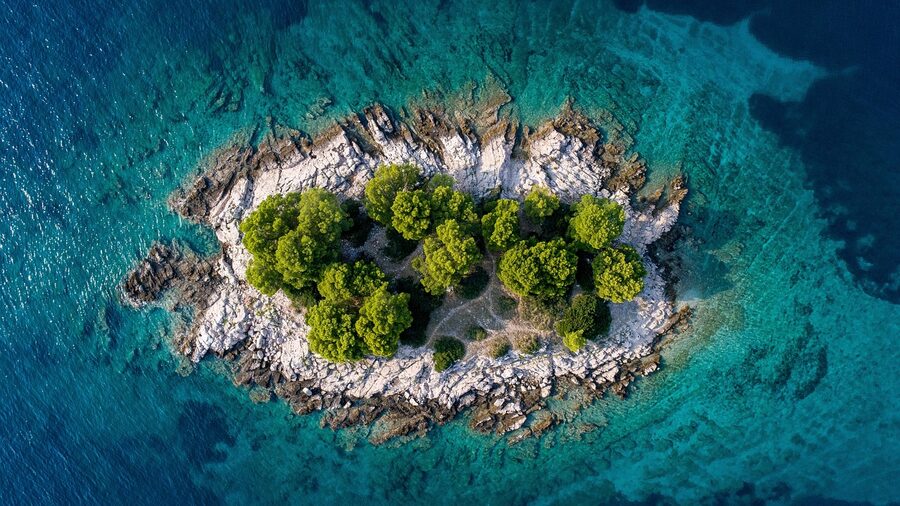
Where to start: the island hierarchy
I rank the four major destinations on the same scale most people quietly use after a trip or two: most authentic to most processed by tourism. Vis > Korčula > Hvar > Dubrovnik. Each one has a reason to be on your itinerary, but the reasons are very different and the time you give to each should reflect that.
Vis: the closed island that opened late
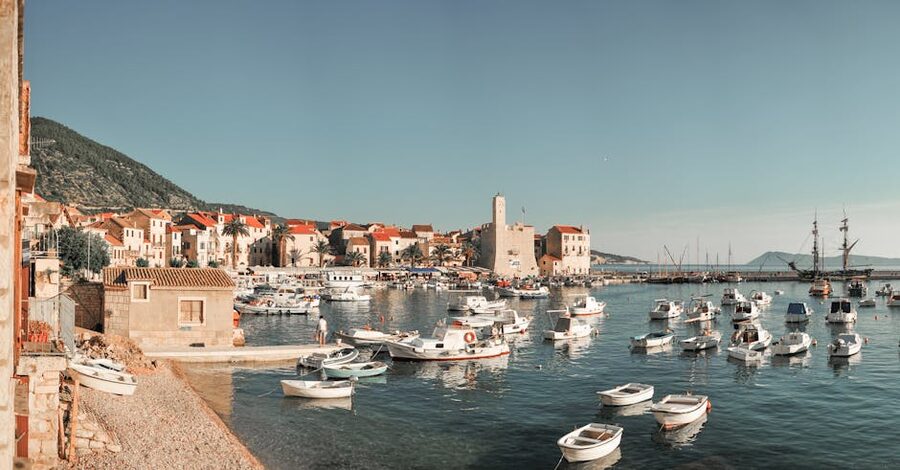
Vis was a Yugoslav military base, closed to foreign visitors until 1989. That single fact has shaped everything about the island since. The infrastructure is small. The hotels are small. The villages, Vis Town on the east coast and Komiža on the west, feel like Greek islands felt in the 1990s before the budget airlines arrived. Several restaurants still do not have English menus, and they get by perfectly well anyway.
You go to Vis to slow down. There is no nightlife on the scale of Hvar; there are no cruise terminals. What there is: the Stiniva cove (a 200-metre swim through a rock channel into a hidden beach), the Blue Cave on neighbouring Biševo (go early morning before the day-trip boats arrive), and a handful of family-run konobas in the interior where dinner takes three hours because nobody wants to leave.
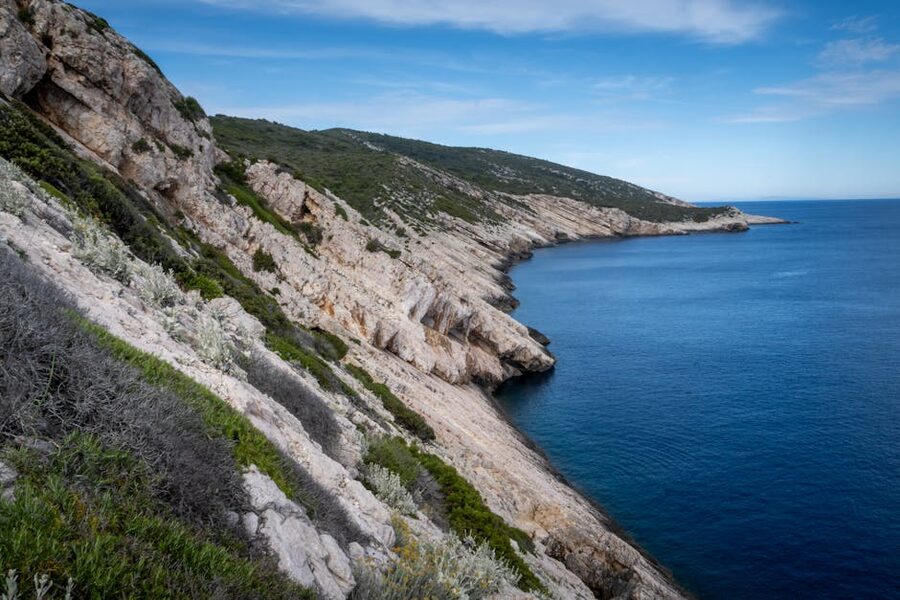
Where to stay: Hotel San Giorgio in Vis Town is the local favourite, a small boutique on Kut, the old fishermen's quarter. Eleven rooms. Owned and run by the same family for years. It is not cheap, but in the context of what you would pay for the same vibe in Italy or Greece, it is fair. The alternative end is renting a villa for the week, which Vis does well because the supply is small and what exists has been filtered naturally rather than commercially.
Korčula: the wine island, and where I'd send you first
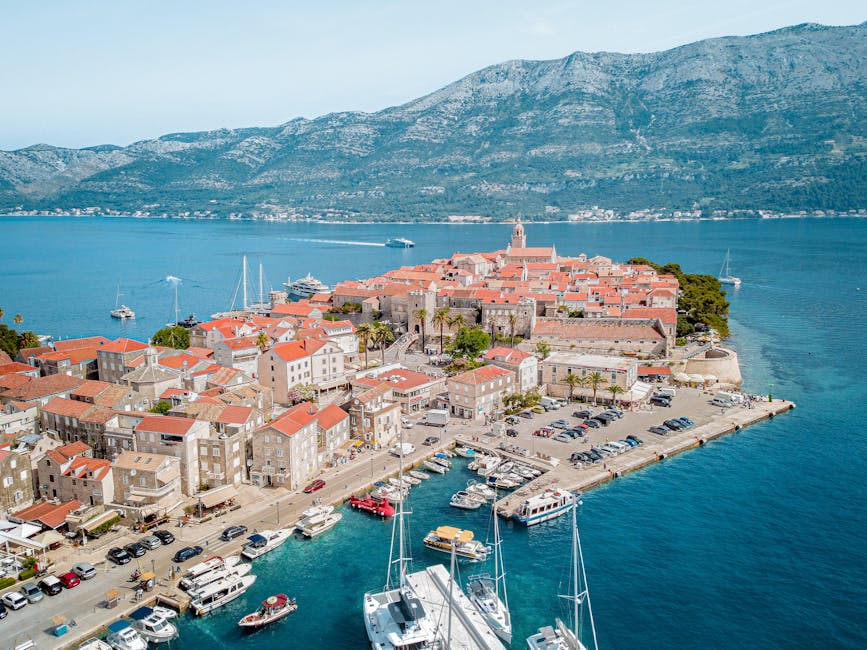
If you have five days for one island, make it Korčula. I will say that as plainly as I know how. Korčula is where the Dalmatian coast finally lands the balance between authentic and comfortable: the old town is a small fortified gem with one of the most clever street plans in the Adriatic (a herringbone laid out so the summer wind ventilates every alley); the wine country in the interior is properly serious; and the hotels at the top end are good without being precious.
The town is, plausibly, the birthplace of Marco Polo. Plausibly because the documentation stops at “Venetian-controlled Korčula in the right century” rather than at a birth certificate, but the Polo family connection is real and the locals enjoy the story too much to put much energy into the historical asterisks. Walk it once, walk it again at dusk, and you have done the town justice.
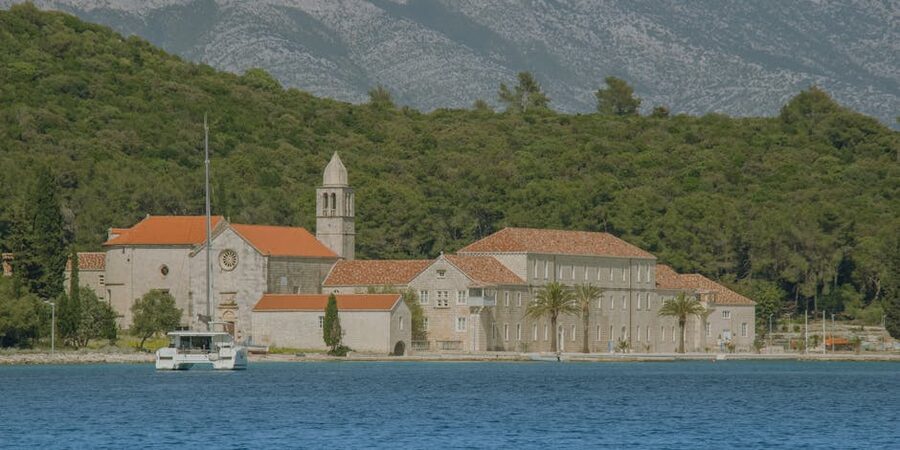
Where to stay: Lešić Dimitri Palace is a five-suite conversion of an 18th-century bishop's palace just inside the walls of the old town. The conversion is exquisite; the in-house restaurant, LD, has held a Michelin star and the tables look out over the Pelješac channel. Suites in shoulder season run roughly €480-720 a night ($535-800). For a mid-luxury alternative outside the walls, the Marko Polo and Korčula De La Ville are both fine.
The wine: Korčula is the heartland of Pošip, the indigenous white grape. Pošip is what you drink with the local fish; it is bright, slightly stony, and ages better than most people give it credit for. Pošip vineyards cluster around the villages of Smokvica and Čara in the interior. The producers worth seeking out are Krajančić, Bire, and Toreta. None of them does anything close to a slick tasting room operation. You knock, the owner pours, and you leave with a couple of bottles that you cannot find anywhere outside Croatia. That is the entire experience.
Hvar: the island that split into two crowds
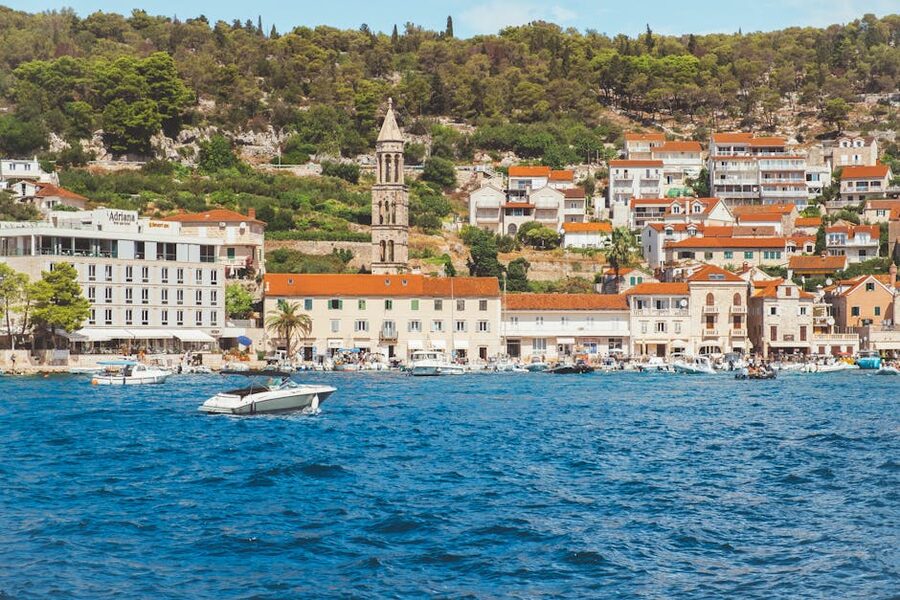
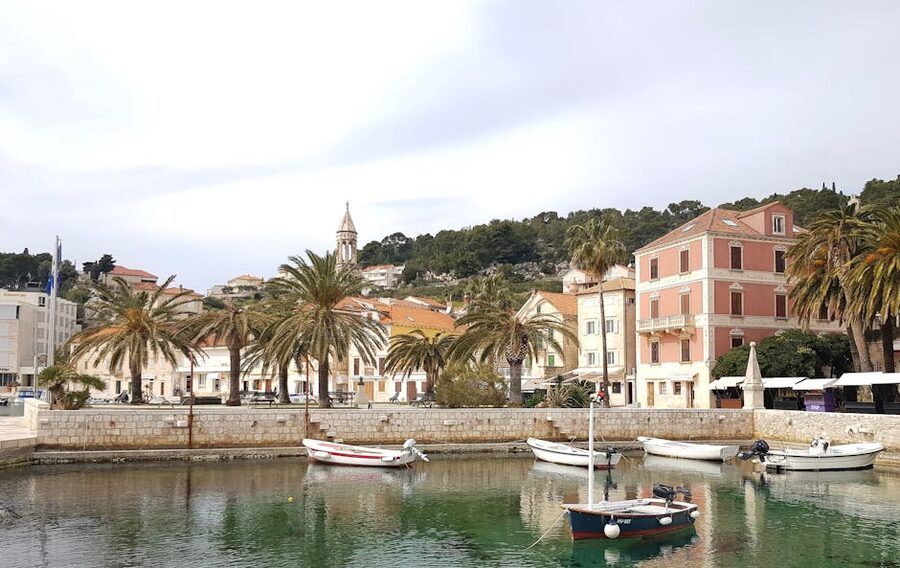
Something happened on Hvar around 2015. The day-trippers and yacht crowd colonised the harbour-front of Hvar Town: late-night clubs, a particular kind of loud bar, the kind of restaurant where the tasting menu costs more than dinner at Ém Sherif in Beirut. The luxury crowd moved out to the Pakleni Islands offshore and to Stari Grad and the interior. The split is now permanent, and once you understand it, Hvar makes sense.
If you want the island, stay outside the main town. Maslina Resort sits on a private bay near Stari Grad, a 20-minute drive from Hvar Town and a different climate of trip altogether: olive groves, a single restaurant, a beach you walk to in five minutes, and the option of a boat to anywhere. It opened in 2020 and has quietly become the property to know about on Hvar. Suites in shoulder season are roughly €620-950 a night ($690-1,060).
If you want central Hvar Town because you like the buzz, the Adriana Hvar Marina & Spa has the rooftop pool with the best view of the harbour and runs around €420-650 a night ($465-725) in shoulder season. The Suncani Hvar group also operates the Palace Elisabeth and the Riva Yacht Harbour if you want a heritage option in the middle of the action.
Dubrovnik: walk the walls once and stay outside them
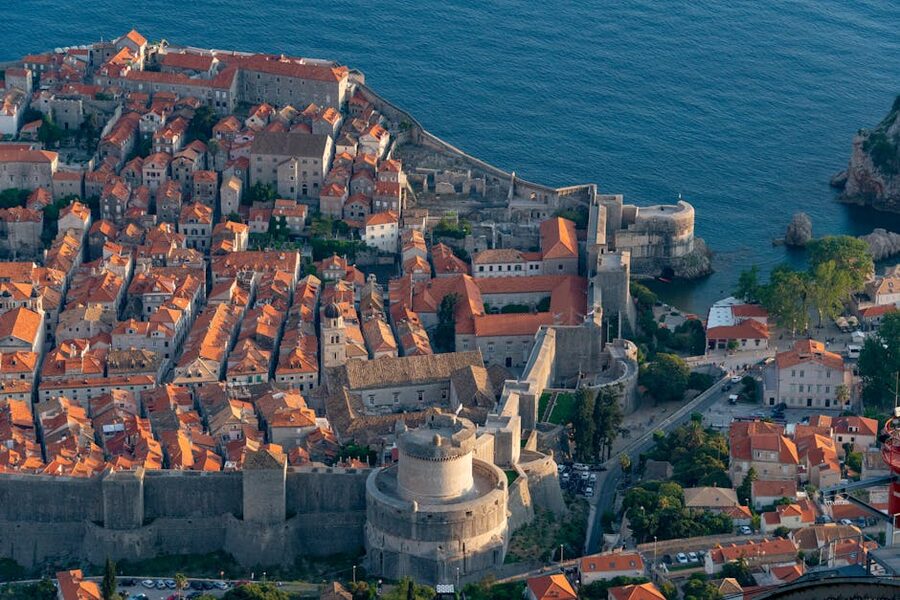
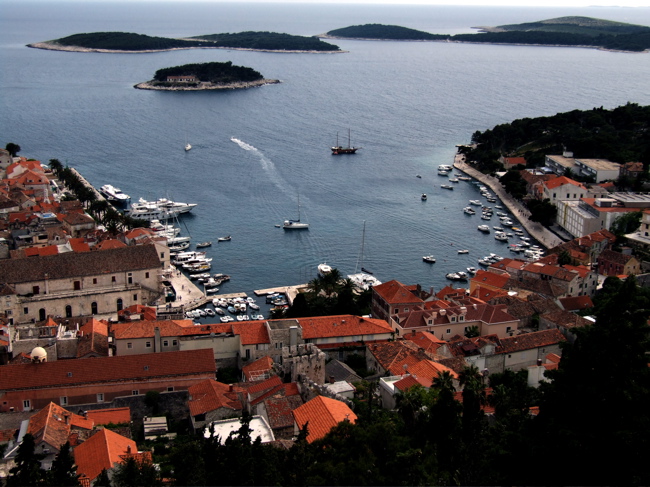
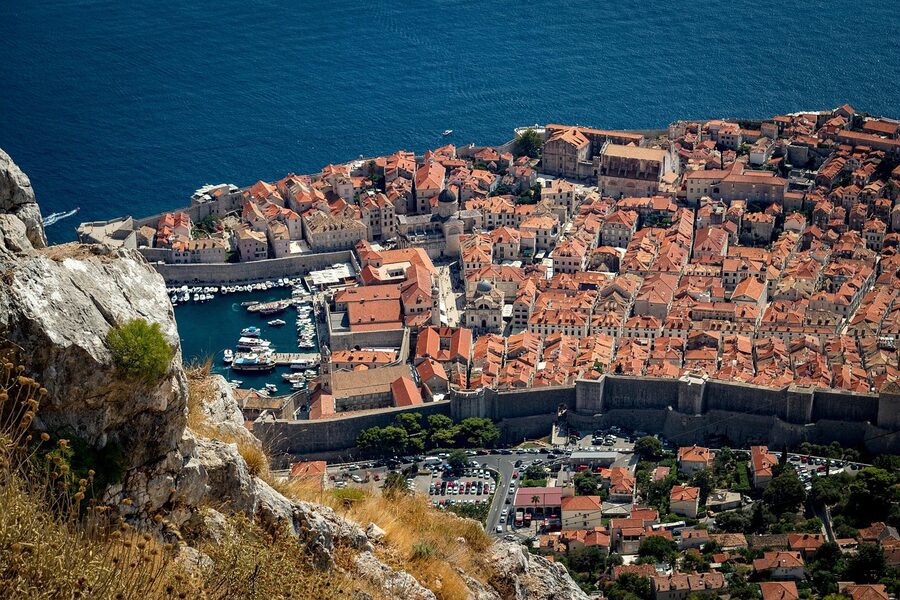
Dubrovnik is gorgeous. It is also a victim of its own visibility. Three to seven cruise ships dock most days in summer, each disgorging two to four thousand passengers between roughly 8am and 4pm. If you stay inside the walls during high season, you will spend the morning fighting through tour groups and the afternoon eating overpriced pasta. If you stay outside the walls and walk in for an evening dinner once the cruise crowds have left, Dubrovnik becomes magical again.
So: do not stay in the Old Town. The two practical options are the cliff-edge grand hotels east of the gates (notably Hotel Excelsior, Tito's favourite, with the best swimming-platform view in the city, around €540-820 a night [$600-915] in shoulder season; and Villa Dubrovnik next door, smaller and more design-led at €620-900 [$690-1,005]); or the Lapad peninsula, a 15-minute taxi from the gates, where the hotels are quieter and there is a swimming beach.
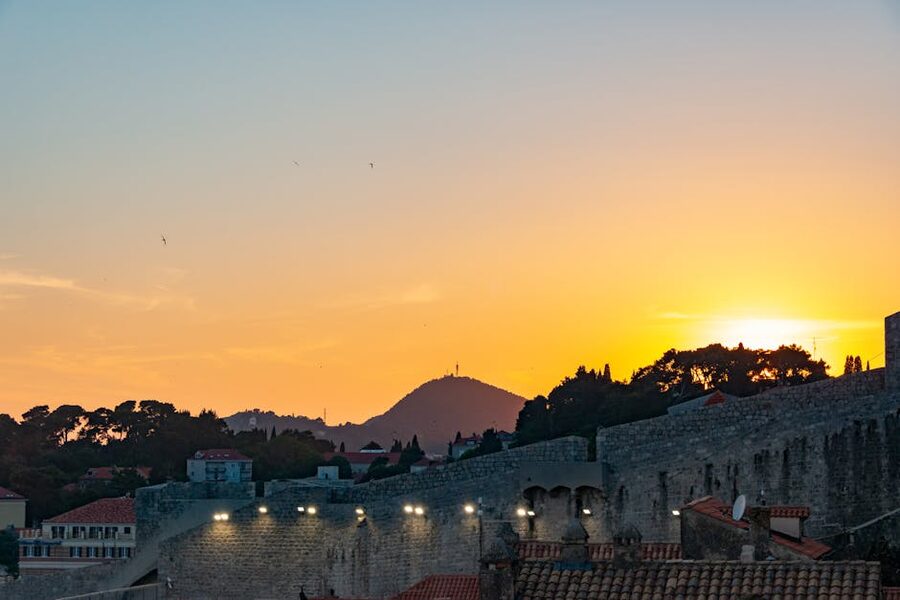
One more honest note. Dubrovnik is “King's Landing” in Game of Thrones, and the locals have heard about it. Do not book a Game of Thrones tour. Walk the walls. Stop at the Pile Gate steps where the Walk of Shame was filmed. Take a photo. That is the entire tour and you saved €55 ($61).
Boats, not buses
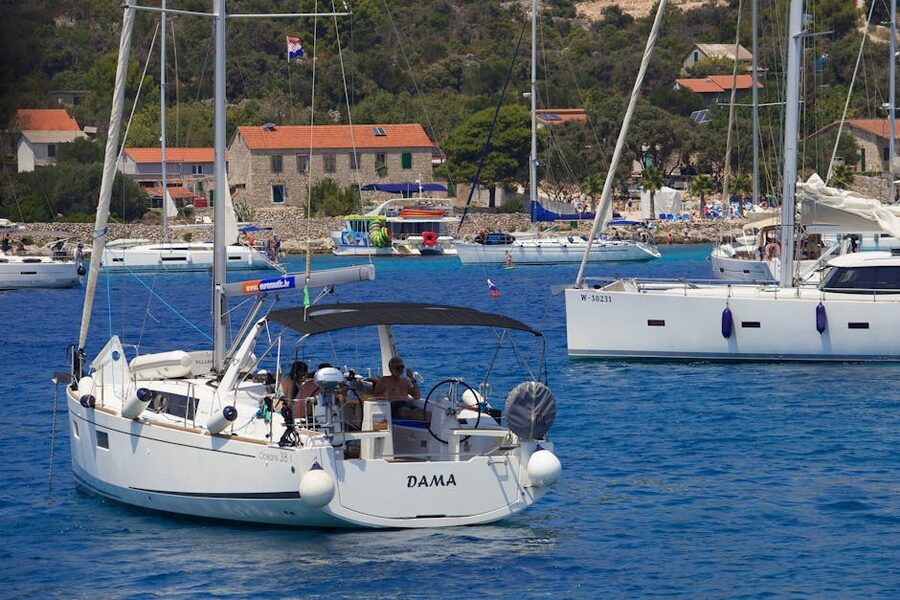
Here is the most useful single recommendation in this article. Skip one museum, skip one fine-dining tasting menu, and put the money into a private skippered boat for a day. A speedboat with a captain for up to eight people runs roughly €700-900 a day ($780-1,005) on Hvar or around Vis, slightly less on Korčula, plus fuel and a tip. The concierges at Adriana, Maslina, Lešić Dimitri, and San Giorgio book this routinely; you do not need to find an operator yourself unless you want to.
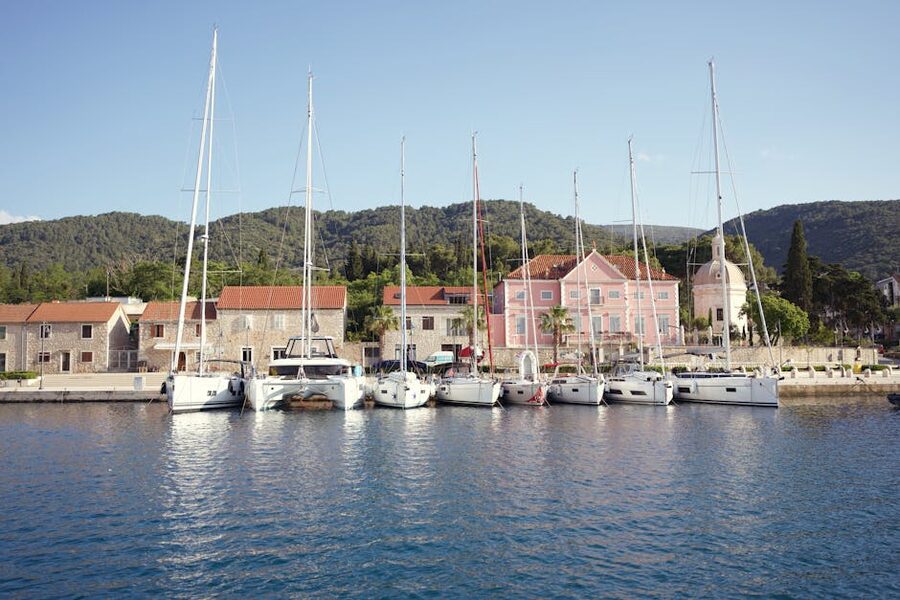
What you actually do with that day: from Hvar, you head to the Pakleni Islands, swim at Palmižana on Sveti Klement (lunch at Palmižana Meneghello), and round to the south side of Sveti Jerolim for an empty cove in the afternoon. From Vis, you go around to the Blue Cave on Biševo (early), Stiniva cove for lunch, and the Green Cave for the swim. From Korčula, you head down the Pelješac channel and stop in the empty bays between Lumbarda and Vela Luka.
You return to the hotel in the late afternoon, salty and tired in the right way. There is no agenda. You did not see anything in particular. That, oddly, is the day you remember.
The food and wine you have not heard enough about
Croatian wine is the most undervalued category on the European wine list right now. Two reasons: exports are tiny (most producers make a few thousand bottles a year and sell them all to the local restaurants) and the grape names are difficult, which scares off lazy importers. The result is that you can drink very seriously good wine at restaurant prices that make no sense once you understand what you are drinking. Take advantage now; in five years it will not be this cheap.
The varieties to know:
- Plavac Mali: the indigenous Dalmatian red, related to Zinfandel. The everyday version is fine; the cult version, Dingač, is grown on the impossibly steep south-facing slopes of the Pelješac peninsula, picked by hand because nothing else can stand on the gradient. Producers worth chasing: Grgić (yes, the same Mike Grgich of Grgich Hills in Napa, who returned to his ancestral village to make wine here), Miloš, Bartulović.
- Pošip: the Korčula white. Citrus, almond, a dry stone finish. Drink it with grilled fish.
- Malvazija Istarska: the Istrian white, the lightest and brightest of the Croatian standards. The whole peninsula drinks this with everything.
- Graševina: the inland white from Slavonia. You will see this on every wine list in Zagreb. Pleasant, easy, perfectly fine; not the reason you crossed an ocean.
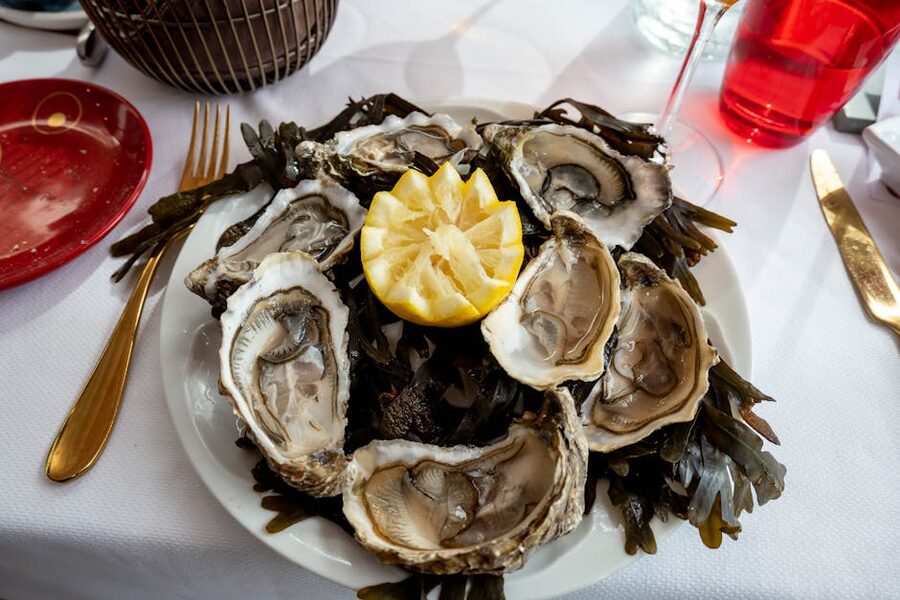
The pairing the rest of the world has not discovered yet is Mali Ston oysters with chilled Pošip. Mali Ston is on the Pelješac peninsula, an hour and a half north of Dubrovnik by car, and it produces the European flat oyster (Ostrea edulis) in conditions identical to those of the celebrated French oyster beds. The Romans were eating these. Pliny the Elder mentioned them in Natural History. You sit at a wooden table fifty metres from where they were pulled out of the bay an hour ago, you ask for a dozen and a bottle of Pošip, and you pay something between €30 and €45 ($33-50) for the entire round. Bota Šare on the bay is the place; Kapetanova kuća is the slightly fancier version. Either is a contender for best lunch of your trip.
Two more food calls. First: Konoba Mate in Pupnat, a hill village on Korčula, is the kind of small family konoba that does not need a list of awards because it does the food right. Goat from the same village, vegetables from the garden behind, the host's mother in the kitchen, no menu translation. Second: in Hvar, walk past the harbour-front restaurants and go to Konoba Menego in the alley behind the cathedral. Slow food, regional ingredients, half the price of the harbour restaurants and twice the meal.
Day trips that actually work
Mljet
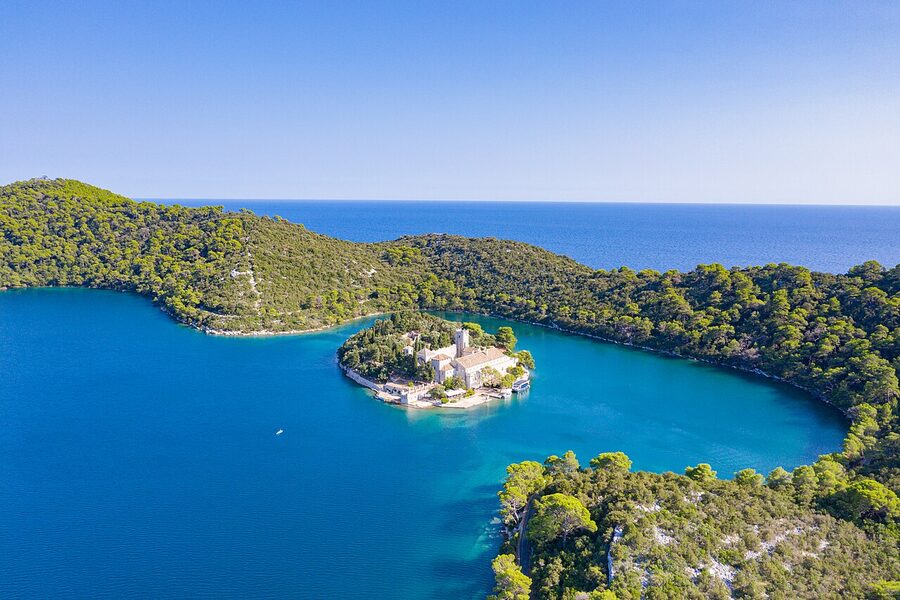
Mljet is the long, thin, mostly-forested island northwest of Dubrovnik. The western third is a national park containing two saltwater lakes connected by a narrow channel; in the larger lake sits a small island; on the island sits a 12th-century Benedictine monastery. You take a passenger ferry from Pelješac (Prapratno) to Sobra in 45 minutes, rent a bike, and spend the day cycling around the lakes and swimming. The water in the lakes is two or three degrees warmer than the open sea because the channel restricts circulation. Worth a full day. Pack your own lunch from Korčula or Pelješac; the food on the island is mediocre.
Pelješac peninsula by car
From Korčula, the short ferry to Orebić puts you on the Pelješac peninsula in 15 minutes. Drive west to Mali Ston for the oyster lunch; drive east to the Dingač vineyards for tastings; have dinner in Trpanj on the north coast or Orebić on the south. A car day on Pelješac is the best wine education you can give yourself in Croatia in nine hours. Recommended winery stops: Korta Katarina in Orebić for a serious modern operation with a tasting room and a hotel attached; Edivo Vina for the underwater wine cellar where bottles are aged in the bay; Saints Hills for a serious indoor tasting; and Miloš for the cult Plavac.
Cavtat for lunch instead of Old Town
Cavtat is a small fishing town 18km south of Dubrovnik, an easy 25-minute drive or a pleasant 45-minute boat shuttle from the Old Town port. Lunch on the harbour-front, swim from the rocks, walk the loop trail around the peninsula, and you have spent a day at the calmer version of Dubrovnik for half the cost and none of the cruise crowds. Bugenvila is the better restaurant on the bay.
Plitvice Lakes
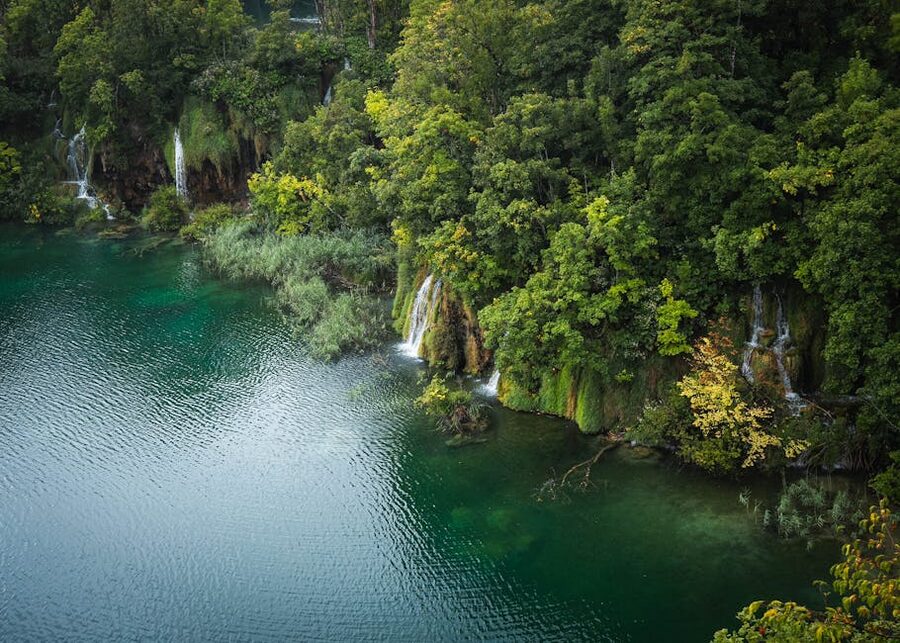
Plitvice is the famous one: 16 terraced lakes connected by waterfalls, in a karst valley four hours by car from Split. It is genuinely beautiful, and it is genuinely overrun for most of the day. The trick is the time of arrival. The first buses from Zagreb and Split arrive around 10am; the cruise day-trips arrive around 11am. If you can be at the gate at 7am (which means staying overnight nearby, at Hotel Plitvice or Plitvice Holiday Resort), you have the lower lakes to yourself for two hours. After 9am, the boardwalks become a queue.
If you cannot get there early, skip Plitvice. The same effect at smaller scale, with no crowds, is at Krka National Park near Šibenik. Krka is also a karst-and-waterfall valley; the falls are wider and a bit shorter; you can swim in the lower pools (which is no longer permitted at Plitvice); and even at midday in August it does not feel besieged.
Mostar
Mostar is in Bosnia, two hours by car or by guided coach from Dubrovnik or Split, and it is the easiest add-on second-country day on the trip. The Old Bridge (Stari Most), reconstructed after the 1990s war, is the obvious sight; the bazaar is good for an hour; lunch is €15-20 ($17-22) for a serious plate of cevapi. Worth a day if you have not been to the Balkans before. Skip if you have.
Split: the city that lives inside a Roman palace
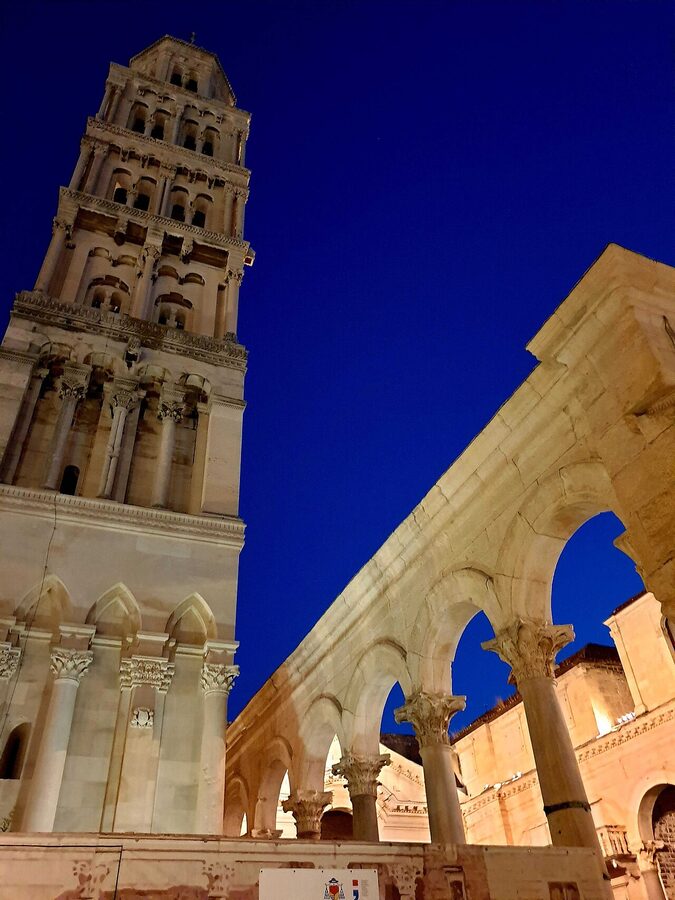
Split is your transit point: the airport, the fast catamaran to Hvar, the car ferry to Korčula. Most people give it a half-day and leave. Give it 24 hours instead. Diocletian's Palace, built in 305 AD as the Emperor's retirement villa, is unique in Europe in that people still live inside the original walls. There are apartments above the peristyle. There is a cathedral inside what was Diocletian's mausoleum. There are cafes where the Roman cellar floor is the cafe floor. It is a 1,700-year-old building still in use, and once you start walking it that way, it stops being a museum.
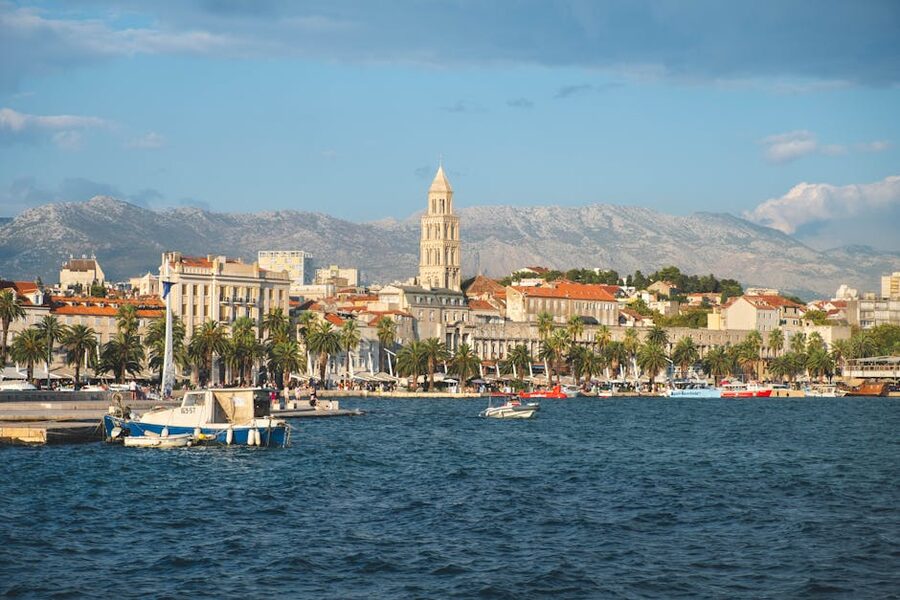
The catch is the food inside the palace, which trades on the location and is not, as a rule, very good. Walk five minutes north of the Golden Gate to Konoba Marjan or up the hill toward Marjan park to Konoba Fetivi, and you will eat seriously well for half the palace prices. For a serious dinner, Bokeria in Stari Pazar is the modern Dalmatian kitchen worth a reservation.
Where to stay: Heritage Hotel Antique Split (16 rooms, inside the palace walls but on a quiet alley), Cornaro (north of the Golden Gate, larger and more reliable), or for the splurge, Briig Boutique Hotel on the Bačvice side just outside the palace.
The Istria detour I keep recommending
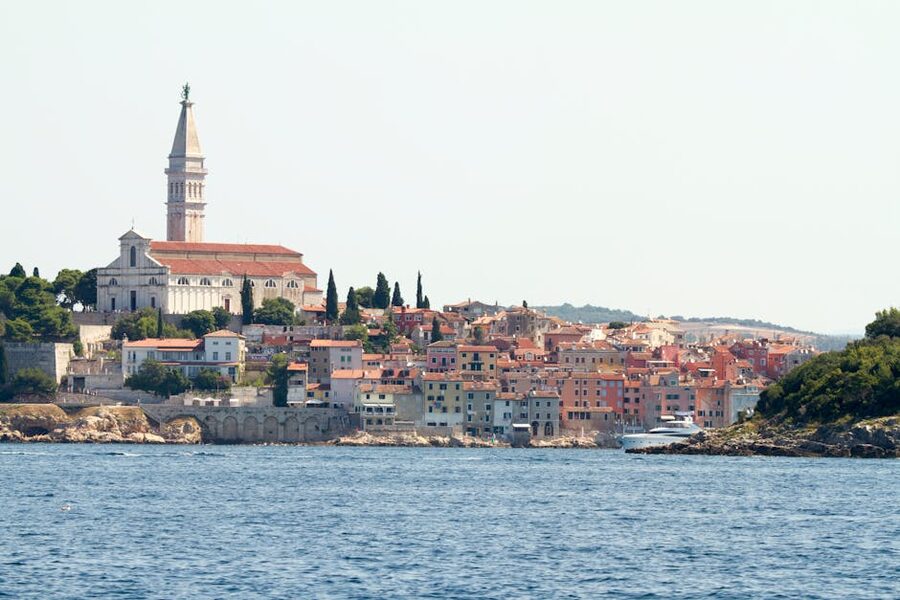
Here is the call most luxury Croatia guides will not make: the food in Istria is better than the food on the Dalmatian coast. If you have a fortnight and you have done the islands, give Istria three or four days at the back end of the trip. Three reasons.
First, the Italian-Venetian inheritance is closer here than anywhere else in Croatia. The food language is closer to Italian than to Balkan: handmade pastas (fuži, pljukanci), seasonal vegetables, thinner sauces, less grilled meat. Second, the truffles. The Motovun forest in central Istria produces white truffles every autumn that are graded the same as Alba's and traded into the same restaurants; you can hunt them on a half-day with a local trifulao and his dog from September into early December. Third, Rovinj. The town is one of the most beautiful small ports in the Adriatic, and the hotel scene at the top is the best in Croatia per night spent.
Where to stay in Rovinj: Hotel Lone (Maistra group, design-led, the architecture is a quiet reason to come) is the easiest call; the Grand Park Hotel Rovinj next door is the bigger, more lavish sister property if you want a full resort. Both run roughly €480-780 a night ($535-870) in shoulder season.
Day trips inside Istria: Motovun for truffles and the medieval hill town; Grožnjan for the artists' village and the lunch at Konoba Pintur; Lim Bay for the oysters (yes, Istria has its own oysters, and they are different and arguably better than Mali Ston's); and the Brijuni Islands national park for the safari park Tito built for visiting heads of state.
When to go (and when not to)
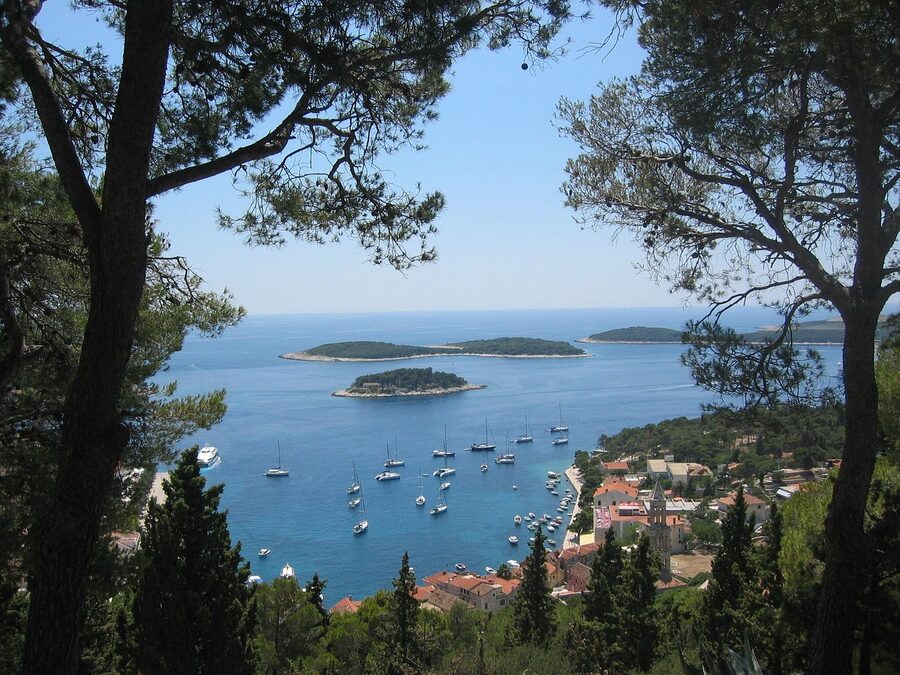
Late May through the third week of June, then the second half of September into early October. Those are the windows. The weather is reliable; the sea is warm enough for swimming (around 22-24°C in June, 23-25°C in September); the day-trippers are not yet arriving in volume; and the hotels still have rooms. Prices in shoulder season run roughly 25-35% under high-season rates at most properties.
July and August are hot, crowded, and operationally hard. Hotels on the islands fill up six months out. The cruise ship traffic at Dubrovnik peaks. Konoba reservations on Hvar require persistence. The interior of Vis can hit 38°C without a breeze. You can have a perfectly fine high-season trip if you book early and accept the trade-offs, but you are not seeing the islands at their best.
November through April is the off-season, and most island hotels close down between November and Easter. Dubrovnik and Split work year-round; the islands genuinely do not.
The 7-day itinerary: Dubrovnik, Korčula, Hvar
This is the version for a first trip. You see the three places that anchor any luxury Croatia trip and you do not waste days transiting.
- Day 1. Arrive Dubrovnik. Check in to Hotel Excelsior or Villa Dubrovnik. Recover at the pool. Walk into the Old Town for sunset; dinner at Restaurant 360 (the one Michelin-starred restaurant inside the walls, on the city walls themselves) or Pantarul in Lapad for the more honest Dalmatian.
- Day 2. Walk the city walls at 8am, before the cruise crowds. Coffee at Festa. Boat shuttle to Lokrum island for the afternoon swim and the abandoned Benedictine cloister. Dinner at Proto.
- Day 3. Day trip down the coast to Cavtat for lunch and the loop walk; or the Pelješac wine half-day if you would rather drink than walk.
- Day 4. Drive or transfer up to Orebić (two hours) and ferry across to Korčula (15 minutes). Check in to Lešić Dimitri Palace. Walk the old town. Dinner at LD.
- Day 5. Private boat day from Korčula. Lumbarda beaches in the morning, Badija for the cloister, lunch in a bay near Vela Luka. Sunset back at the hotel terrace.
- Day 6. Catamaran from Korčula to Hvar (about 90 minutes; check the Krilo timetable). Check in to Maslina Resort in Stari Grad or the Adriana in Hvar Town. Dinner accordingly.
- Day 7. Boat day from Hvar to the Pakleni Islands. Lunch at Palmižana. Catamaran or onward transfer to Split for the airport in the late afternoon.
You will be tempted to add a day here or there. Resist. Seven days is a clean trip; nine days is two trips.
The 14-day itinerary: add Vis, Mljet, Split, Pelješac, and Istria
This is the trip if you have it in you. Roughly: four nights Dubrovnik area, four nights on Korčula plus a Mljet day and a Pelješac day, three nights on Hvar including a Vis side-trip, one night in Split, two nights in Rovinj. The fourteen days break like this:
- Days 1-3. Dubrovnik. As above plus a full Pelješac day (Mali Ston oysters lunch + Dingač winery in the afternoon).
- Day 4. Transfer to Korčula via Pelješac. Settle in.
- Day 5. Korčula private boat day.
- Day 6. Day trip to Mljet (ferry from Pelješac, bike the lakes, swim, return).
- Day 7. Korčula recovery day. Pošip vineyard half-day in the interior.
- Day 8. Catamaran to Hvar.
- Day 9. Hvar Town and the Spanish Fortress. Late dinner at Konoba Menego.
- Day 10. Day trip to Vis (catamaran from Hvar Town, about an hour to Vis Town). Lunch in Komiža at Konoba Bako. Return on the late afternoon catamaran.
- Day 11. Pakleni Islands boat day from Hvar.
- Day 12. Catamaran or ferry to Split. One night in Split (the Heritage Hotel Antique inside the palace, or Cornaro just outside). Dinner at Bokeria.
- Day 13. Drive or fly to Pula (Istria). Transfer to Rovinj. Check in to Hotel Lone. Walk the old town at sunset.
- Day 14. Half-day truffle hunt in the Motovun forest with a local hunter and the dog. Lunch at Konoba Mondo or Zigante. Late dinner back in Rovinj at Monte (the Michelin-starred fine-dining option) or La Puntulina for the rocks-side fish dinner. Fly out from Pula the next morning.
Practicalities the brochures skip
Currency. Croatia switched to the euro on 1 January 2023. Forget anything you read about kuna; nothing prices in it any more. Card acceptance is universal in cities and at the larger hotels; you want some cash for konobas in the interior of Korčula and Vis, for the small ferries, and for the tip envelope at the end of the trip.
Ferries. Two operators run the Adriatic: Jadrolinija (the state-owned company, runs the car ferries and most local routes) and Krilo (the private fast catamarans, more comfortable, slightly pricier). Jadrolinija's schedules are on its site; Krilo's here. Book popular routes (Split-Hvar, Split-Korčula, Hvar-Korčula) two or three weeks ahead in shoulder season, six weeks ahead in July and August. The fast catamarans book out faster than the car ferries.
Driving. The A1 motorway from Zagreb to Split is European-standard and mostly empty. The coastal road south of Split is two-lane and slow in summer; budget twice the Google Maps time. The Pelješac Bridge (opened 2022) finally cut the Bosnian-border detour; Dubrovnik to the Pelješac wine country is now under two hours.
Tipping. 10% in restaurants if service was good; round up taxi fares; €10-20 ($11-22) per day for hotel housekeeping; €5 ($5.50) per piece of luggage for porters. The locals do not tip extravagantly; you do not need to either.
Transfers. Klook and Viator both list private transfers between the major airports and the islands; for a hand-picked set of cars and boats, the concierges at the hotels listed above arrange private transfers as a matter of course and the price is competitive. Viator's Croatia page has a serviceable starting list of day tours and transfers; GetYourGuide covers the same ground if you prefer their interface.
One more thing
If this is your first trip, the temptation will be to add cities. Zagreb, Zadar, Šibenik, Trogir, Pula. Resist. Croatia rewards depth on a few coastal points more than breadth on a long inland circuit. Pick three islands or one city and two islands. Stay two nights minimum at every stop. Eat at konobas more often than at hotel restaurants. Get on a boat at least every other day. Drink Plavac with the lamb and Pošip with the fish. Let the cruise crowds be in Dubrovnik at lunchtime while you are swimming off Lokrum.
Then, in five years or so, come back and do Istria properly. By then you will know why.
For more on the region, see the Croatia archive and our Lebanon and around-the-world private jet guides for two more itineraries we keep recommending.