The gates at the Pista di Fiorano open just before nine on a weekday morning in late spring, and for ten minutes before that you can stand on the lane outside, the Apennine air still cool, and listen to a flat-plane V8 idle from somewhere inside the perimeter. The track sits five hundred metres from the factory front gate. The wall between the two is mostly hedge. A test driver brings a development car out, runs three laps, brings it back. Nobody is signalling. Nobody is announcing. The whole thing is so domestic-feeling that you forget you are listening to one of the most carefully kept private circuits in motorsport.
This is the bit of Maranello most articles do not bother with, because most articles about Ferrari tours are really about the museum across the road. The serious Ferrari trip is about the morning at Fiorano, the road south through the Apennines that follows, and the next four days you spend behind the wheel of cars that were designed for those exact roads. Everything else is photographs.
In This Article
- The two products that share the same name
- Where the proper tours actually run
- Ultimate Drives
- Grand Tourist
- Mulberry Travel (with Red Travel heritage)
- Arianna and Friends
- Italian Factory Motor Tour
- Mymotorland and Drive in Motion
- Operators that look the part but no longer are
- The museums, the factory, and the test track
- The roads the cars were designed for
- The Apennines crossing, Modena to Florence on the SS12
- The SS222 Chiantigiana
- The Stelvio Pass
- The Furka Pass
- The Mille Miglia route
- The Amalfi Coast SS163
- Which model to ask for
- The Roma, pick this one
- The 296 GTB / GTS, the new one
- The F8 Tributo / Spider, the theatrical one
- The SF90 Stradale, the bragging rights
- The Portofino M, the entry point
- What is actually included
- Hotels for the Ferrari portion
- Casa Maria Luigia
- Belmond Castello di Casole
- Villa La Massa
- The food angle
- How to fold this into a longer Italian trip
- Takes that survive the brochure
- Two related questions readers ask
- The shape of the trip
The two products that share the same name
There are two completely different things being sold under the heading “Ferrari tour”, and conflating them is how readers end up disappointed. The first is the factory-and-museum visit: a half-day or full-day pilgrimage to Maranello and Modena, usually shuttled in by a guide, with timed entries to the Museo Ferrari Maranello and the Museo Enzo Ferrari, possibly a bus tour around the factory perimeter, and at most a thirty-minute test drive on a fixed route in a dual-clutch coupe with an instructor. Useful if you are already in Bologna for a wedding. Not a Ferrari tour.
The second is a 3 to 5 day driving itinerary in which you actually drive a Ferrari (or a rotating selection of Ferraris) on real roads with a support vehicle, a route plan written by people who do this for a living, and luggage handled between hotels so you arrive each evening with the car clean and refuelled at the hotel door. The good ones cost €4,500 to €12,000 per couple per car and they are the version of this trip the article assumes you mean. The factory visit can sit inside the longer tour as a half-day; it cannot stand alone as the whole thing.
If you only have one day in Maranello, do the museums and a track-time drive at the Modena Autodrome, eat somewhere in town, and stop pretending you have done a Ferrari tour. If you have four, plan it properly.
Where the proper tours actually run
The operator landscape moves around. A few of the names that used to dominate this category have rebranded or quietly closed, and a few of the ones that look impressive in search results are aggregators reselling someone else’s product. Three years of looking at this market reasonably closely produces a short list of operators who are running the actual driving itineraries in the spring–autumn window.
Ultimate Drives
Switzerland-based, runs a tightly programmed three-night Ferrari and Mille Miglia self-drive from a Florence base, with hotels at the Villa Cora end of the spectrum. Routes work the Mille Miglia southern leg, Passo della Futa, Passo della Raticosa, Passo dell’Abetone, the SS12 over the Apennines, with the Maranello museum visit folded into day two. Pricing per couple from €9,200 in a Portofino M up to €12,400 in the 812 GTS, with the F8 Spider, 296 GTS, Roma and Roma Spider in between. The fleet rotates, so what you ask for in March may not be what is available in September. The package includes the car, insurance, “ample km”, arrival transfer, three nights, daily breakfast, an eRoadbook with CarPlay integration, and on-call support. Worth knowing: support is by phone, not a chase vehicle, which is fine for the Tuscan Apennines but worth verifying if your itinerary climbs into the high Alps in shoulder season.
Grand Tourist
The Grand Tourist Tuscany Ferrari programme is the calmer, more bespoke alternative. Three nights at a country house hotel near Florence, Villa La Massa is the favoured property, on the Arno just east of the city, with two full driving days through Chianti, Val d’Orcia, and the back roads west of Siena. The Ferrari fleet is broader than the major operators (488 Spider, 488 Pista, F8 Spider, Portofino) with the option to mix marques mid-tour if you want to swap into a Lamborghini for a day. From €4,500 per person / £4,000 / $5,000, two people sharing, two driving days. The price is roughly half the Ultimate Drives quote because the routes are tighter, the daily distance is shorter, and the car is rented rather than included as a delivery item. For a first-time Ferrari driver who wants to be in Chianti rather than crossing two passes a day, this is the closer match.
Mulberry Travel (with Red Travel heritage)
UK-based luxury operator running Ferrari self-drive itineraries that originated as the Red Travel Maranello programme. Mulberry took over the customer-facing booking after Red Travel itself reorganised. Trips run from one-day taster experiences up to eight-day grand tours, with Rome–Rome, Florence–Florence, Milan–Milan, Rome to Monte Carlo, Rome to the Amalfi Coast, and a Lake Como variant in their stock catalogue. Guide pricing £8,825 per person from UK departures, which includes British Airways flights and private transfers, so the all-in number is doing a lot of work. Each tour comes with a private Tour Director and luggage transfers. Worth asking when enquiring whether the Tour Director travels in a separate vehicle (the spec implies yes, but verify) and which Ferrari models are actually current in the fleet, the marketing literature still references some pre-current cars (California T, 458 Speciale) that have been retired from the rental rotation.
Arianna and Friends
Tuscany-only specialist running short Ferrari tours through Chianti and Val d’Orcia from any starting accommodation in the region. Half-day to full-day rather than multi-day, so the right product for someone whose Italian itinerary is already booked at a Tuscan villa and who wants to insert a Ferrari day rather than restructure the trip. Two main routes: the Chianti vineyards loop and the Val d’Orcia loop south through Montalcino and Pienza. Pickup at your accommodation, lead vehicle with English-speaking staff, parking and tolls included, lunch and wine tasting included. From €3,500 for one car, two people. The drink-and-drive policy is unusually clear-eyed: a few sips of wine over lunch is the limit if you intend to keep driving in the afternoon, otherwise they put you in a chase car and drive the Ferrari back themselves. That detail tells you most of what you need to know about how the company runs.
Italian Factory Motor Tour
Bologna-based operator running the Motor Valley factory and museum circuit, Ferrari, Lamborghini, Pagani, Ducati, Maserati. Useful as a half-day add-on inside a longer trip, less useful as the trip itself. They handle the practical realities of getting into the factory tour (which is bookable directly through ferrari.com but books up months ahead) and combining it with a Ferrari road test drive in the afternoon. Plain prose: if you want the museum-and-factory day done well, this is who runs it. If you want to drive for three days, look elsewhere on this list.
Mymotorland and Drive in Motion
Two smaller Italian-based operators worth knowing about. Mymotorland (run by a Ferrara travel agency) is the one most often used by readers booking the Ferrari factory shuttle-bus tour as an upgrade from the standard ferrari.com booking, they offer VIP add-ons including private guide, welcome coffee at the Ferrari Cafeteria, and a small extra Ferrari publication. Drive in Motion runs Ferrari driving experiences across northern Italy with a similar half-day-to-multi-day spread. Both are worth a look if Ultimate Drives or Grand Tourist are sold out for your dates.
Operators that look the part but no longer are
Three names that show up in older articles about Ferrari tours in Italy and that are worth checking the current status of before booking. Red Travel, the original “official” Ferrari-partnered operator, has restructured its core business and now operates primarily as a communications-and-events agency for luxury automotive brands. The traditional Red Travel Ferrari self-drive product is still bookable, but through partner channels (Mulberry being the main UK route in). If you read a 2018-vintage piece recommending you book Red Travel direct for a Maranello tour, that route no longer works the way it did. Adamastor shows up in some older “best Ferrari tour operator” lists; the search-result top hits now belong to a Portuguese supercar manufacturer rather than a tour company, and there is no current Adamastor Ferrari touring product. Plan-It-Italy, Fully Loaded Adventures, and Ferrari Vibe are similarly hard to find as standalone Ferrari touring brands on current search.
The museums, the factory, and the test track
The two Ferrari museums are run by Ferrari itself and are bookable through ferrari.com. They are different products, and a serious visitor does both.
Museo Ferrari Maranello sits across the road from the factory’s Cittadella entrance and is, structurally, the brand museum: the racing trophies, the F1 cars, the limited-run hypercars (the Enzo, the LaFerrari, the FXX-K Evo, the one-off P80C), the Scuderia history, and the F1 simulator suite. The displays rotate, so a return visit two years apart is a different museum. Tickets run €27 for the off-season single-museum pass (October to April) and €32 for the high-season equivalent (May to September). The Panoramic Factory Bus Tour is an additional €25 and gives you the only legal route into the Cittadella as a non-employee, guided, no photography in the active assembly areas, but it does pass the Renzo Piano wind tunnel and the Fiorano paddock. The F1 simulator is €30, the GT simulator €25, both bookable on top of museum entry.
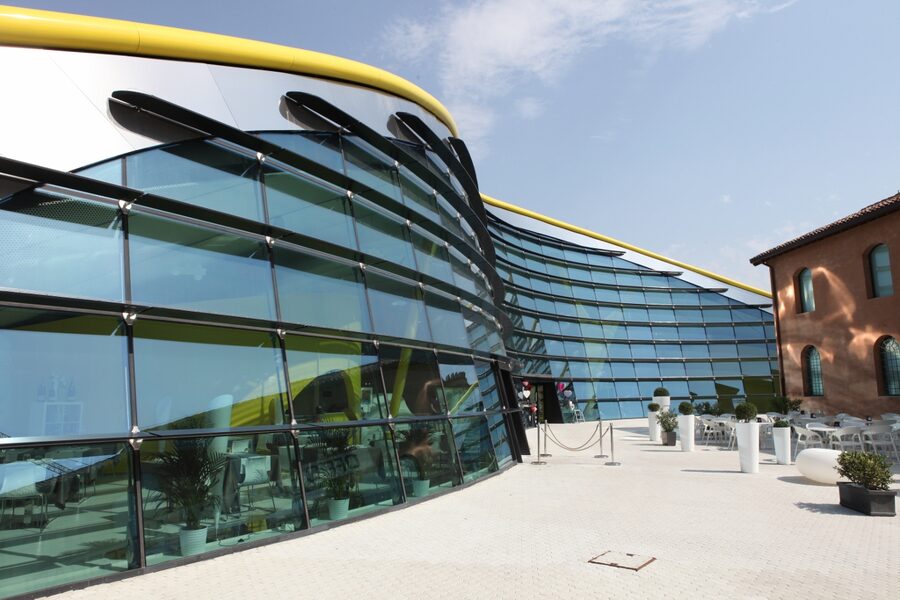
Museo Enzo Ferrari Modena is in central Modena, fifteen minutes from Maranello, at the house where Enzo Ferrari was born in 1898. The architecture is the point: a yellow aluminium hood-shaped pavilion designed by Future Systems and built around the original Alfredo Ferrari workshop. The exhibitions are more historical than the Maranello museum, the engines wing inside the original workshop is the place to spend an unhurried hour, with a chronological run through every Ferrari engine from the 125 S to the current V12 hybrids. The Maranello museum shows you what Ferrari is now. The Enzo museum shows you what Enzo built it from.
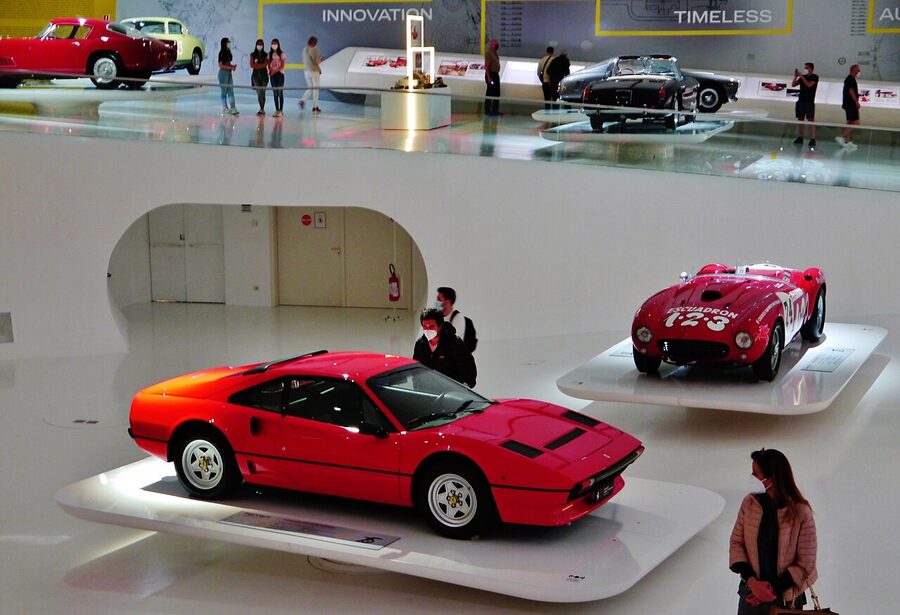
Both museums sell a combined two-museum pass, €38 in the off-season, €42 in high season, which is the right buy for a serious visitor. Save the Maranello museum for the morning and the Enzo museum for the afternoon; the drive between them is twenty minutes through Formigine, the lunch-stop town for engineers heading home, and the contrast in the museum experiences is exactly what the gap is for.
Pista di Fiorano, Ferrari’s private test track adjacent to the factory, is not open to the general public and not part of the standard museum visit. It is occasionally accessible through the Modena Museum and Autodrome programme that Ferrari runs for the longer factory-track combination, but the access is limited and the booking window opens about ten weeks ahead. The track celebrated its fiftieth anniversary in 2022. Even if you cannot get inside, walking the lane that runs along its eastern boundary on a weekday morning is a small private experience the museum tours do not offer; the development cars run from about 09:00 onwards in good weather, and they are loud enough to identify by ear if you know what you are listening for.
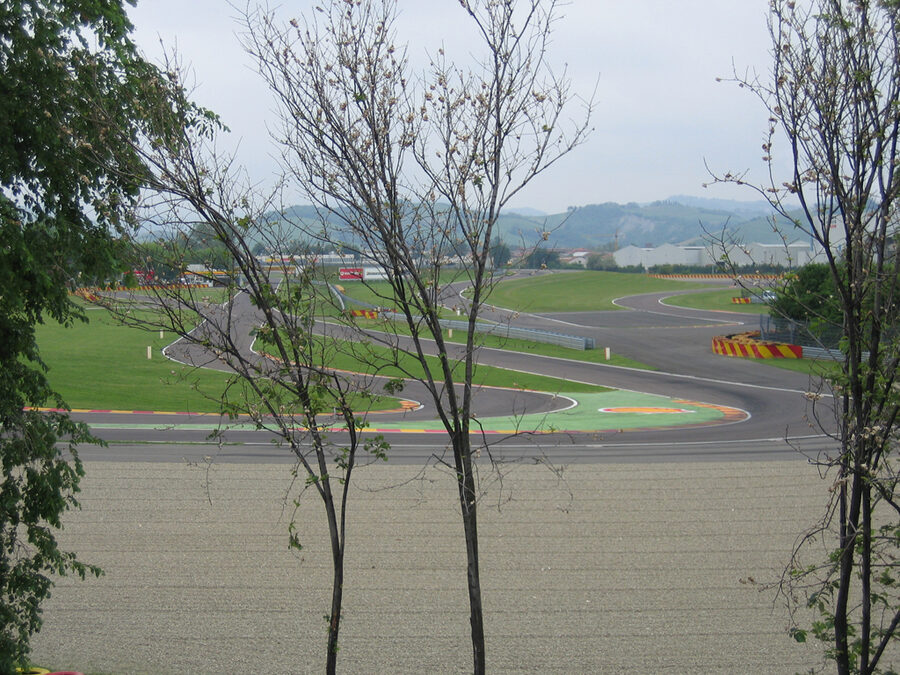
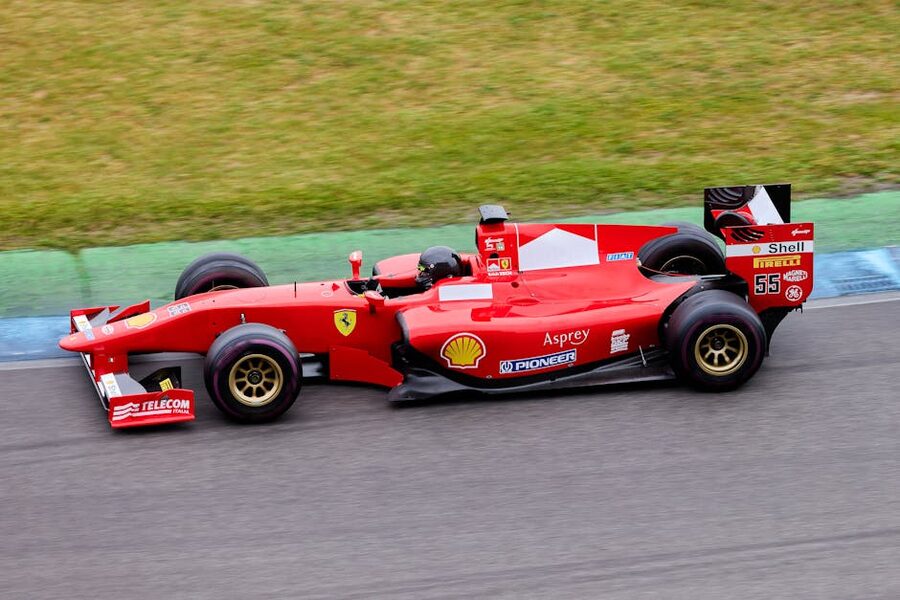
If you want actual track time as part of your tour, the Modena Autodrome is the place. Most of the multi-day operators include either a half-day at Modena or a session at Misano (sixty minutes east towards the Adriatic) inside the package, and the longer Ultimate Drives itineraries can fold in Imola for an extra-cost upgrade. Misano is the more forgiving of the three for a guest driver, long straights, generous run-off, and Imola is the difficult one. Modena Autodrome is what most operators use as the default because it is twenty minutes from the museum and bookable as a single-afternoon experience.
The roads the cars were designed for
This is the part the brochures handle worst. A Ferrari tour is only as good as the routes it puts you on, and the great routes in this part of the world are not the ones with the highest Instagram count. Five worth knowing.
The Apennines crossing, Modena to Florence on the SS12
The historic Mille Miglia route from Modena south over the Passo dell’Abetone, dropping into the Pistoia plain and then into Florence. Roughly 165 kilometres of mostly two-lane road, climbing through Pavullo nel Frignano and Fanano before the long sequence of switchbacks up to the Abetone summit at 1,388 metres. This is the road most operators put on day two of a Florence-based itinerary because the elevation gain rewards the engine, the corners are open enough to drive properly without feeling like you are picking through a hairpin set, and the Apennine villages on the way down, Cutigliano, San Marcello Pistoiese, have proper mountain trattorias rather than tourist coaches. The Passo della Futa and Passo della Raticosa, slightly east, are alternatives on the same theme. Allow four hours for the crossing if you are stopping for lunch, three if you are not.
The SS222 Chiantigiana
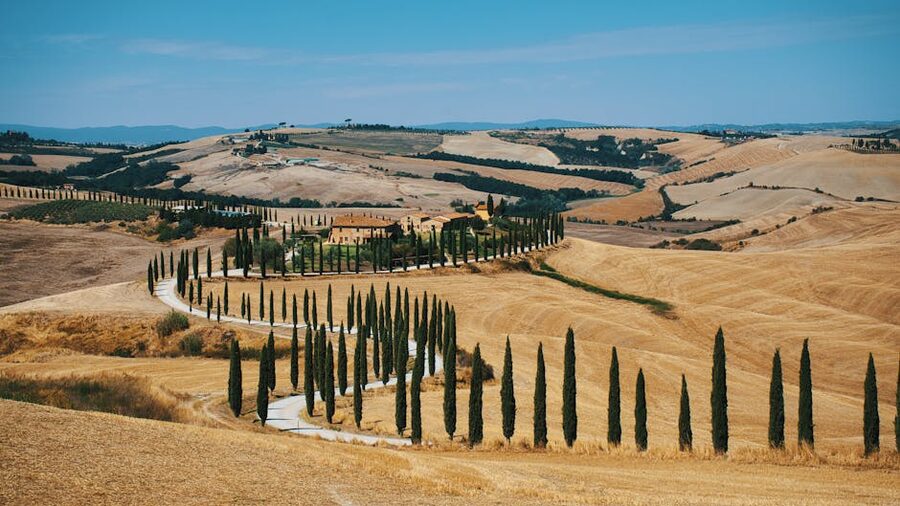
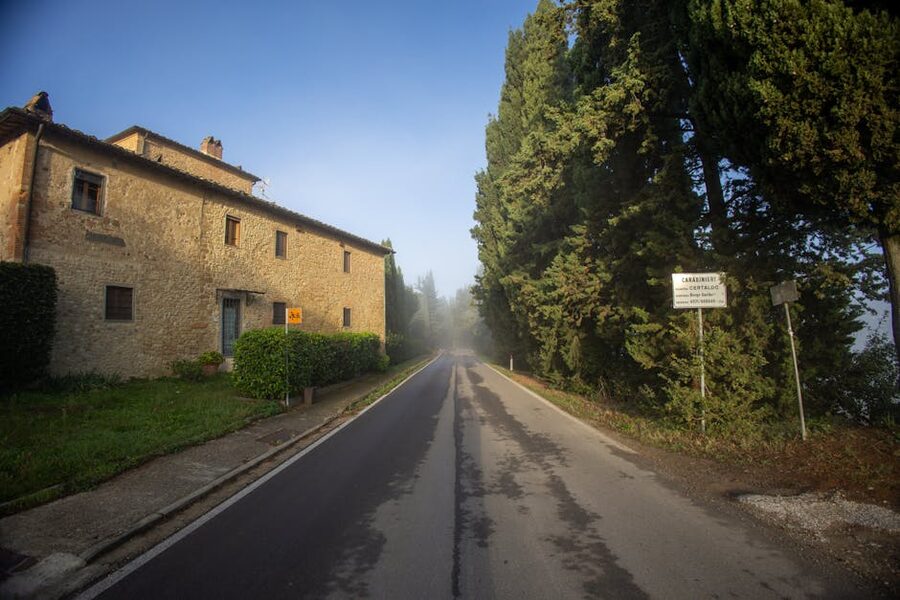
The Florence to Siena road through the heart of Chianti, Greve, Panzano, Castellina, Radda. Sixty-eight kilometres, mostly second-gear-to-fourth-gear corners, vineyards on both sides, no real elevation drama. This is the road for a first Ferrari tour. The pace is conversational rather than confrontational, the lunch options are unsurpassable (Officina della Bistecca in Panzano if you want the Cecchini show, Mangiando Mangiando in Greve for a quieter version), and the cars look right against the cypress lines. If a guest is nervous about the supercar, this is where you start them.
The Stelvio Pass
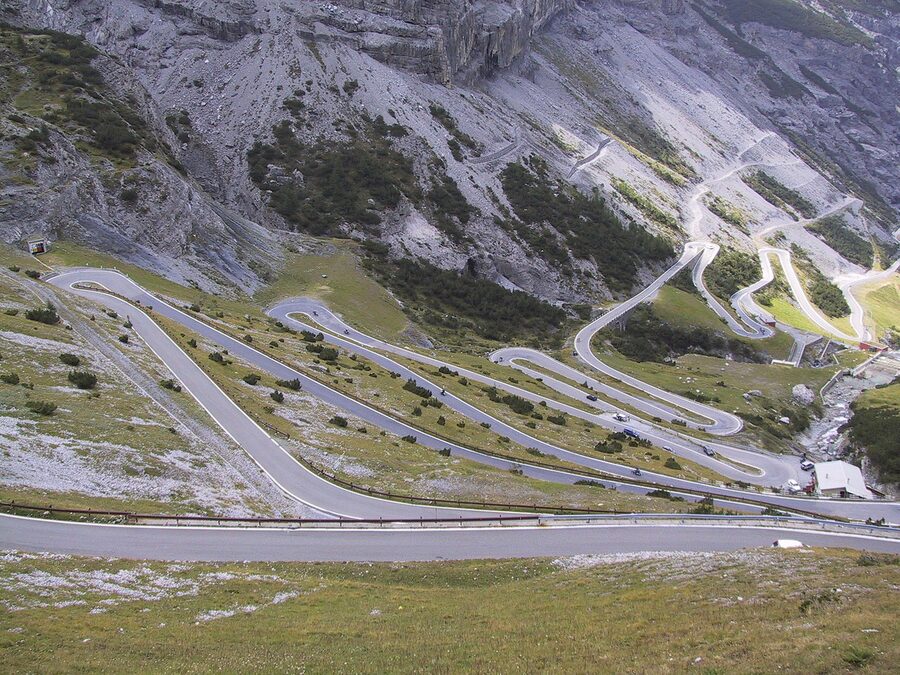
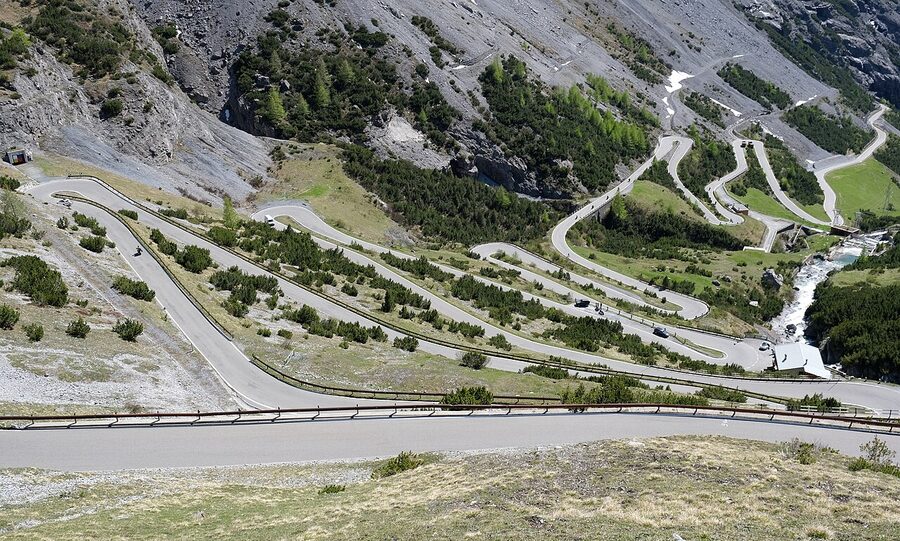
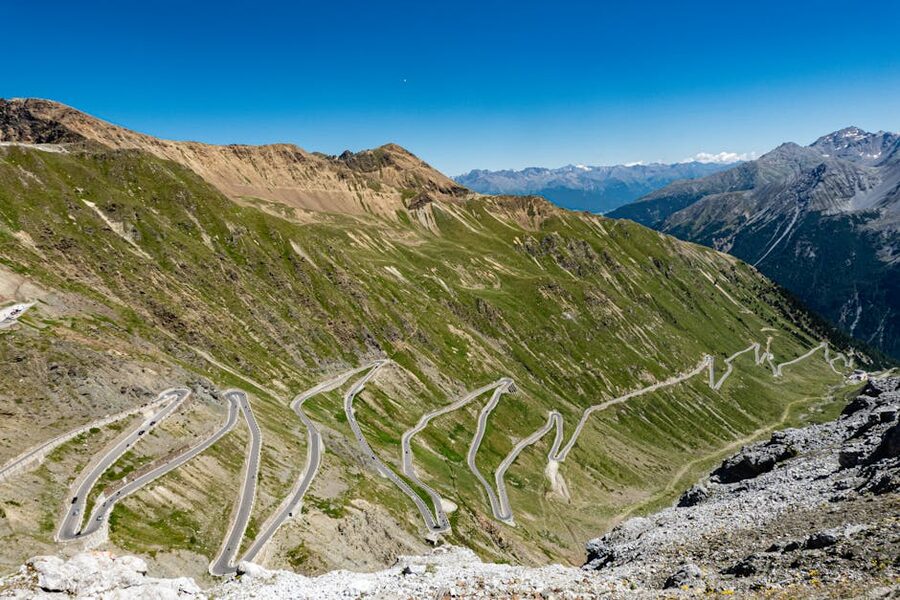
The most famous mountain road in the Alps, and the one most readers come asking about. Forty-eight numbered hairpins on the Trafoi side, twenty-six on the Bormio side, summit at 2,757 metres, open roughly the first week of June through late October depending on snowpack. The Stelvio is genuinely one of the great driving roads on Earth, and it is also the road where you most often see a beautiful supercar reduced to a rolling traffic jam. Three things to know.
First, the Stelvio is busy. Cyclists, motorcycles, tour coaches, sometimes a herd of cows. Plan for an hour minimum on the climb; on a midsummer Sunday you can be on the hill for three. Second, the Bolzano-side ascent (the side with the forty-eight numbered hairpins) is the famous photograph but the technically harder drive, the corners are tight, the camber works against you in places, and the surface is patched. The Bormio side is the better drive, wider corners, smoother surface, less traffic. If you have a choice, do it as a there-and-back from Bormio, summit, and turn around. Third, do it on a weekday in early June or late September. The summer weekend Stelvio is not the road you came to drive.
The Furka Pass
Switzerland, not Italy, but on most Stelvio itineraries the Furka comes the next day. 2,429 metres, opened in May, forty kilometres of sweeping curves rather than tight hairpins, the road from Goldfinger. Quieter than the Stelvio because it crosses fewer tourist corridors. Pair the two days from Bormio: night one in Bormio, drive Stelvio in the morning, lunch in Sankt Moritz, drive Furka in the afternoon, sleep in Andermatt. This is a luxury itinerary the major operators do not always include because it crosses a border, but the small operators will route it for you on request.
The Mille Miglia route
Brescia to Rome and back, a thousand miles, the original 1927–1957 endurance race. The modern Mille Miglia (the May classic-car re-run) does it in four days; a private touring version typically does it in five with luxury overnight stops. The route is the historic SS12, SS3, SS17, SS78, and a thousand smaller threads in between. The Museo Mille Miglia in Brescia sits in the converted Sant’Eufemia monastery and is the right primer the day before you set off, half a day, lunch in town at Trattoria Cipriana, then north to Lake Iseo for the night before the proper start. The Mille Miglia is the most ambitious of the routes on this list and the only one that needs five days; everything else folds into a three-day tour.
The Amalfi Coast SS163
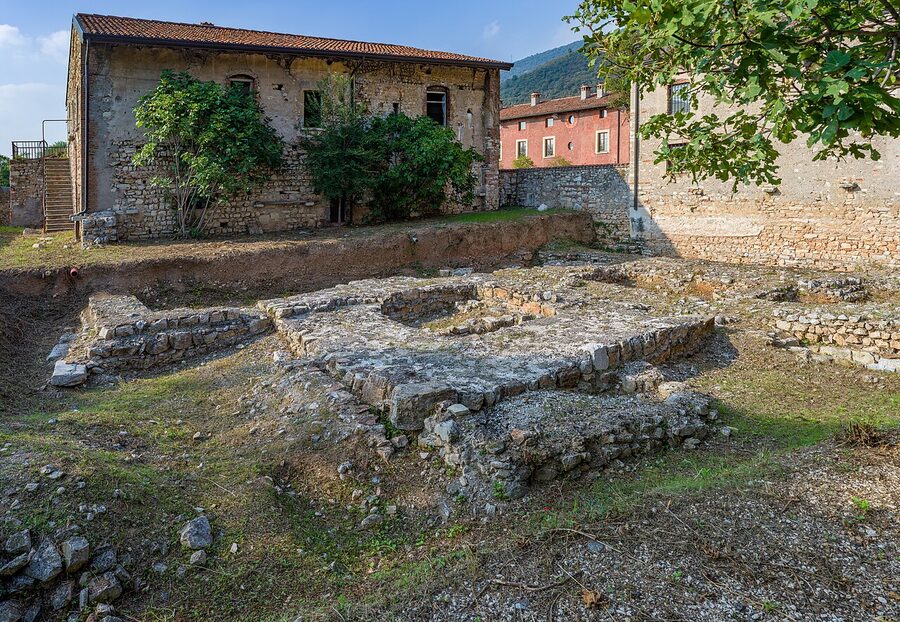
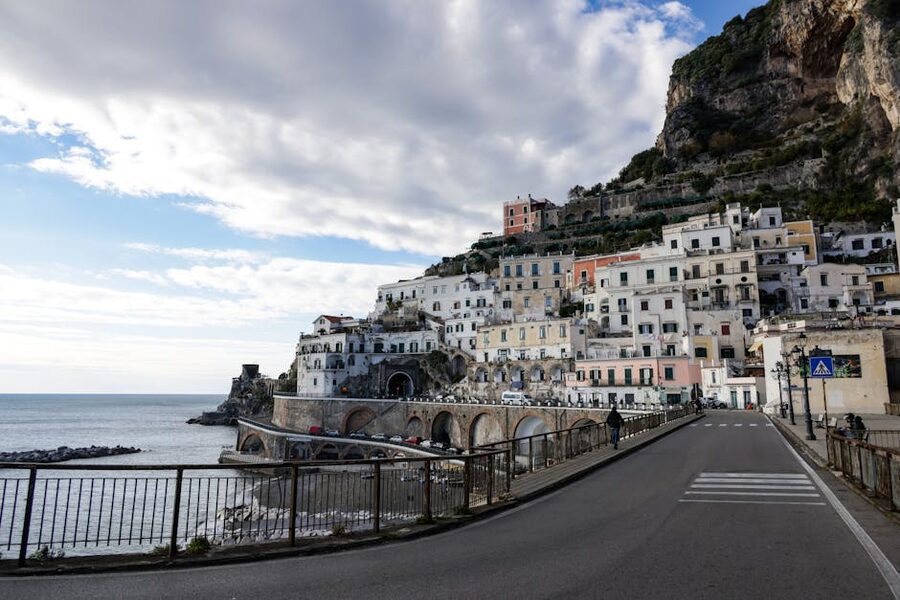
This needs a clear-eyed warning. The SS163 Amalfitana, Sorrento to Salerno along the cliff edge, is one of the most photographed coastal roads in the world and it is also the worst possible Ferrari road for most of the year. From mid-June through early September it is a near-continuous queue of tour coaches, scooters, hire cars, and reversing trucks; the surface is cratered in places; the traffic enforcement is intermittent but real. Driving a Ferrari there in summer is a slow, expensive way to spend a day. If you must do it, go in late April or October on a weekday morning, leaving Sorrento by seven, and turn around at Amalfi rather than pushing on to Salerno. Better still, drive the inland route over the Lattari mountains via Agerola and pick up the coast at Praiano, that road is mostly empty, has at least as much scenery, and rejoins the SS163 only for the spectacular Praiano-to-Positano stretch.
Which model to ask for
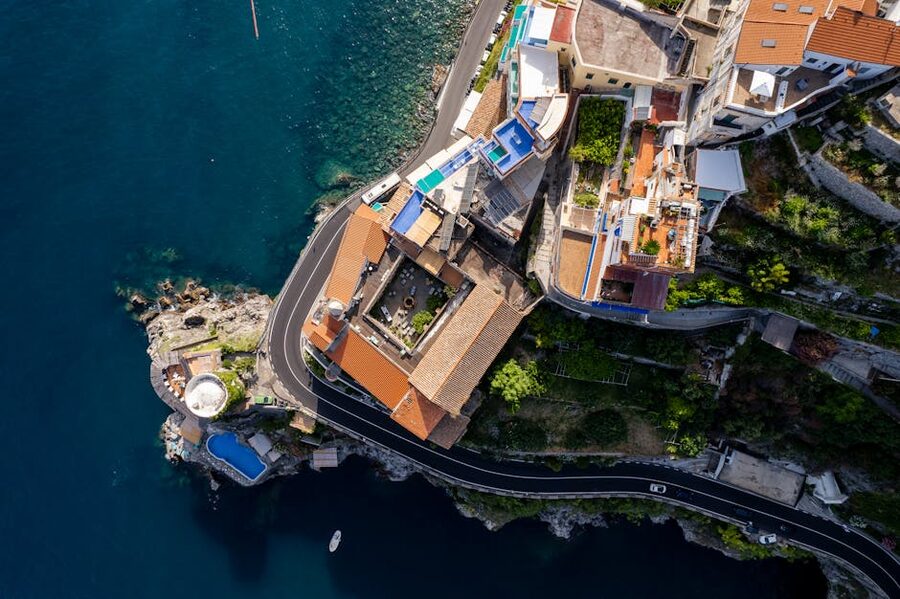
Most multi-day operators rotate you through the fleet, a different car every day or every two days. If you have a preference, the time to state it is at booking, in writing, with a willingness to lose €500 in surcharge for the model you actually want. The fleet on the Ultimate Drives roster is a fair sample of what is current: Roma, Roma Spider, Portofino M, F8 Spider, 296 GTS, 812 GTS. Mulberry’s catalogue lists older cars (488 Spider, 488 GTB, California T), those are no longer current rental fleet on most operators and should be flagged in your booking conversation.
The Roma, pick this one
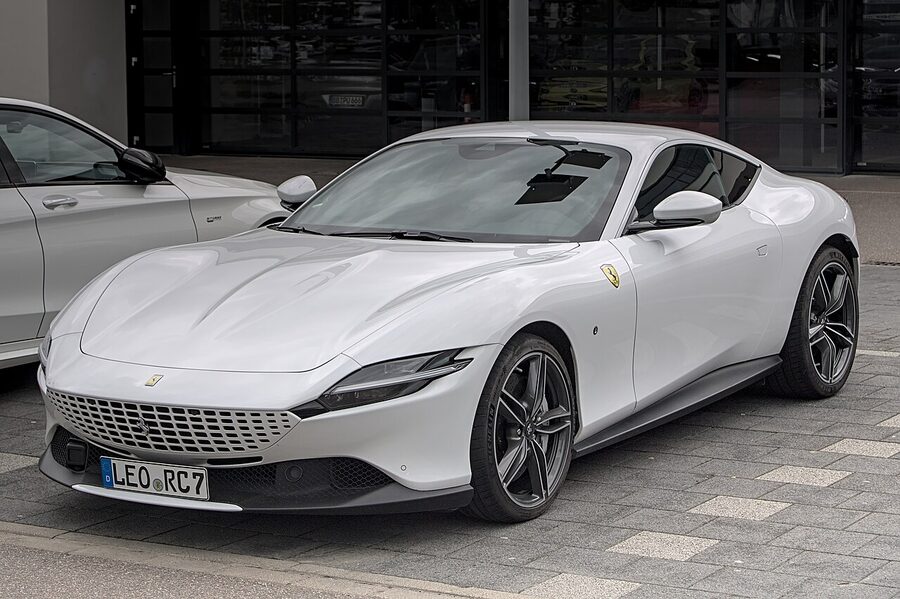
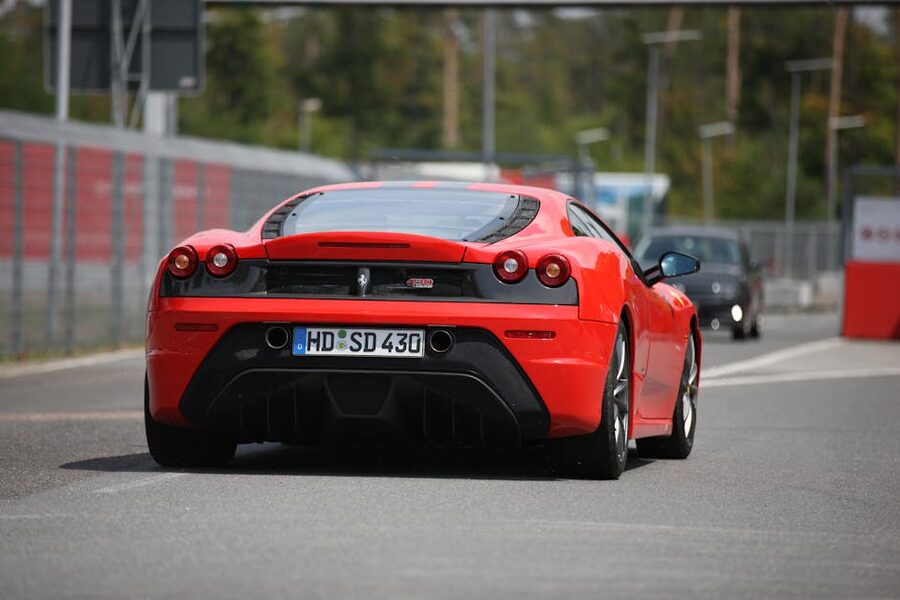
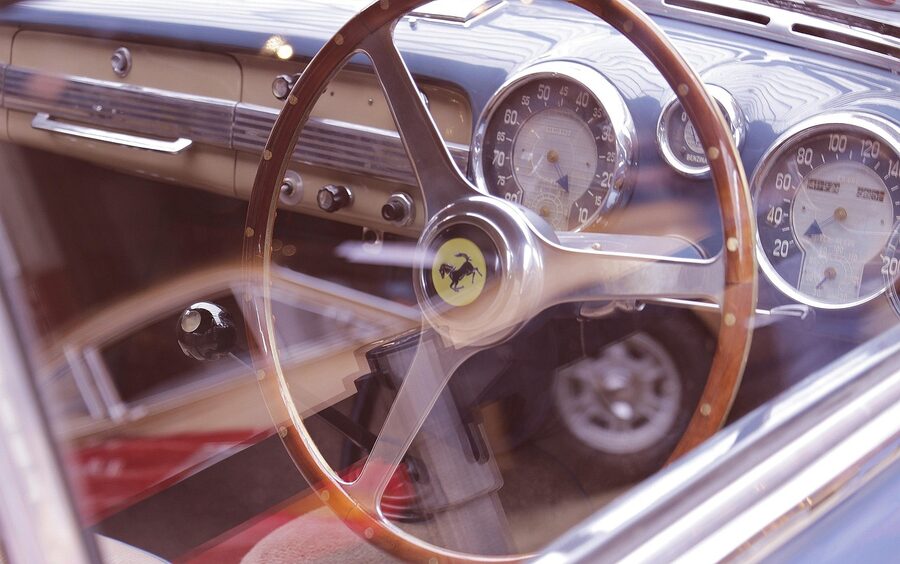
The Ferrari Roma is the easiest car on the list to live with for eight hours a day. Front-engined, paddle-shift, comfortable enough that you can drive Modena to Bormio without arriving destroyed. The boot will swallow two soft weekend bags. Climate works. The exhaust note is restrained when you are cruising and articulate when you are not. Most experienced Ferrari guests on a multi-day tour ask for the Roma on day three onwards, after the theatre of the F8 has worn off. If you only get one day in one car, this is the one. The Roma Spider is the same car with the roof off, pick it for July and August, pick the coupe for shoulder season.
The 296 GTB / GTS, the new one
The 296 is Ferrari’s V6 plug-in hybrid and the technically most interesting car in the current line-up. 819 hp, instant torque from the electric motor, surprisingly civilised in EV-only mode for the first thirty kilometres of the day. The hybrid layout means it is heavier than the F8 and slightly less forgiving when pushed; on a Stelvio descent it will let you know about it. On a flatter Tuscan day it is the most enjoyable car on a winding road. €11,000 for the GTS on the Ultimate Drives sheet, at the top of the rental tier but not the absolute top. Choose this one if you have driven a Ferrari before and want the new technology.
The F8 Tributo / Spider, the theatrical one
The flat-plane V8 Tributo is the loudest of the current cars and the most exciting on a switchback road. 710 hp, 0-100 in 2.9 seconds, an exhaust note that turns heads at any speed. It is also the most fatiguing on a long day, stiffer suspension, less storage, lower seating position. Day one of a four-day trip, ideally on the Apennines crossing or the Stelvio, and then rotate to the Roma for the rest. The Spider variant adds the convertible top; in shoulder-season Italy the Spider is worth the surcharge for the Stelvio summit photograph alone.
The SF90 Stradale, the bragging rights
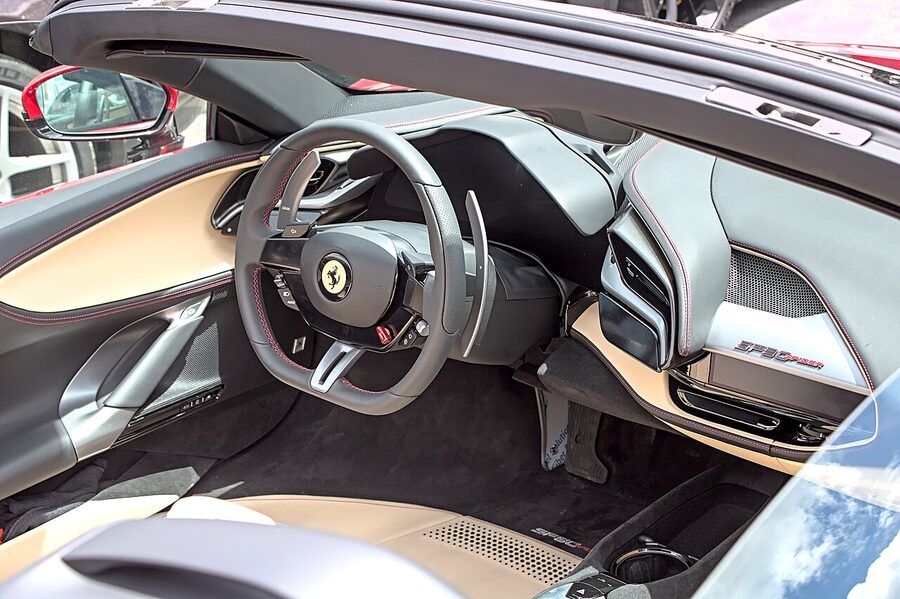
1,000 hp, all-wheel drive, the most expensive seat on most operator sheets. Astonishing on a track, complicated on a country road. The hybrid system is intrusive in normal driving, the steering wheel haptics take a session to learn, the cabin is more racing-car than grand-tourer. If you have driven Ferraris for thirty years, this is the next step. If this is your first Ferrari, the SF90 will spend most of its day intimidating rather than rewarding you. Ask for it as a one-day insert at the operator’s track, not as your daily ride.
The Portofino M, the entry point
Front-engined, retractable-hardtop convertible, automatic, the most accessible of the current cars. €9,200 at the bottom of the Ultimate Drives sheet. If a partner is reluctant about the whole Ferrari proposition and you are trying to bring them along, the Portofino M is the one that will not frighten anyone. Comfortable on autostrada, civilised in town, and the V8 still produces 620 hp when you ask for it. Less of a “Ferrari moment” than the F8 or the 296, and unapologetically the right car for the right kind of trip.
What is actually included
The advertised package on a four-day Ferrari tour breaks down into seven things, and you should verify each line at booking rather than at arrival.
The car or cars. Either one car for the whole trip or a rotation. Confirm which model on which day in writing. Confirm the kilometre allowance, most operators are “ample” rather than unlimited, with surcharges if you exceed.
Insurance. Ferrari rentals come with a deductible. The deductible can be as low as €5,000 on the entry-level cars and as high as €25,000 on the top-tier. The operator will offer to “buy down” the deductible to a lower number for an additional daily fee, typically €100–€300 per day. Read the cover. A standard Italian autostrada speeding ticket is not covered; a fine will appear on your card three to four months after the trip when the rental house is contacted by Italian police.
Hotels. Confirm the named property, not the star rating. “4-star superior” is a wide bracket. The right operators name the hotel, Villa La Massa near Florence, Villa Cora in Florence, Casa Maria Luigia near Modena, Belmond Castello di Casole in Tuscany, Grand Hotel Tremezzo on Como.
Daily breakfast. Standard. Lunches and dinners are sometimes included on the higher-tier itineraries, sometimes not.
Track time. Half-day at Modena Autodrome or a session at Misano. If track time is the main reason for the trip, verify which track and how many laps. The headline “track day at Imola” is sometimes a thirty-minute lead-and-follow session in a road car, not what most readers picture.
Support vehicle and route guide. Some operators run a chase car the whole way; others dispatch one only when needed. The chase car carries spares, takes the luggage between hotels, and is the de facto safety net. On a multi-day tour with mountain passes, a chase car is worth confirming.
Transfers. Airport-to-hotel and hotel-to-airport on the bookend days. Verify whether intra-tour transfers are included if the trip is not a closed loop.
Hotels for the Ferrari portion
The right hotel for a Ferrari trip is not necessarily the most famous one. Three things matter: secured parking (a Ferrari left on the street in central Italy is a target), a porch or driveway big enough that the operator can drop the car at the door, and a location that does not require driving through a ZTL zone to reach the front door. Three properties are worth knowing about by name.
Casa Maria Luigia
Massimo Bottura and Lara Gilmore’s restored 18th-century villa in the countryside outside Modena. Twelve rooms, two restaurants, Francescana at Maria Luigia (the country sister of the three-Michelin-star Osteria Francescana) and Al Gatto Verde, and an acetaia making genuine 25-year balsamic. This is the highest-end stay for a Ferrari tour rooted in Modena, and it is also the property that turns the dinner into the centre of the day rather than the drive. The drawback is location: it is twenty minutes from Modena centre, forty from Maranello, which makes the morning routine longer if your operator picks you up from town. Two nights here is the right call if Modena is your departure or arrival point.
Belmond Castello di Casole
Belmond’s Tuscan castello property between Siena and Volterra, restored 10th-century estate, 39 rooms, an enormous wine cellar, an extensive estate of olive groves and vineyards. Right base for a Tuscan Ferrari tour that uses the SS222 Chiantigiana for one day and the Val d’Orcia for the next. The estate is gated, parking is secured, and the front courtyard takes the Ferrari delivery without complication. Three nights here is the right Tuscan stay if your itinerary is two driving days plus a recovery day at the spa.
Villa La Massa
Riverside Renaissance villa on the Arno just east of Florence. The Grand Tourist programmes use this as the default Tuscan base and it is the right call if your Ferrari tour starts and ends in Florence. The wine cellar dinners, set up as private events for guests staying the week, are worth the night in their own right. Verify your transit from arrival airport to the villa avoids the Florence ZTL on the approach (the standard route from the autostrada does, but the GPS will sometimes route you the wrong way through the city centre).
For a Stelvio-leg itinerary, the right hotels along the way are the Grand Hotel Tremezzo on Como (for the night before the climb), Hotel Bagni Nuovi in Bormio (for the night after), and The Chedi Andermatt in Switzerland if you continue over the Furka. Tremezzo and Chedi will both expect a Ferrari at the door and have the parking infrastructure for it. Bagni Nuovi is the more domestic option, a 19th-century thermal spa hotel rather than a five-star statement, and the better choice for a real recovery night after the pass.
The food angle
Modena and Maranello sit in the densest concentration of Italian gastronomy in the country, and a Ferrari trip without a serious dinner here is missing half the point. Three names handle most of the planning.
Osteria Francescana in central Modena, Massimo Bottura’s three-Michelin-starred main restaurant, World’s 50 Best number one in 2016 and 2018. The waiting list is six to eight months for the dining room. If you are staying at Casa Maria Luigia, the kitchen team can sometimes accommodate guests at shorter notice through the property concierge; that route is worth a try if you have planned the trip without an Osteria booking. The country-sister Francescana at Maria Luigia is the easier route to the same kitchen, same chef team, simpler tasting menu, on-site at the villa.
Hosteria Giusti, fourth-generation Modena institution, three lunch services and three dinner services per week, four tables, one menu. Reservations open about three months ahead and close immediately. This is the working-Modena version of the dinner experience and the one most local engineers will recommend over Francescana. Note the spelling, Hosteria, not Hostaria, and not the unrelated trattoria of similar name in nearby Parma.
Trattoria Ermes, the historic working-lunch institution in Modena since the 1950s, seven or eight tables, no menu (the day’s tortellini in brodo, a couple of mains, the house wine). Lunch only. Cash only. No reservations. The point is that nothing about it has changed in seventy years and it is a real counter to the tasting-menu mood at the other end. Useful for the morning of museum day, when you want a real lunch before the afternoon drive south.
Maranello itself is short of serious dinner options, the engineers eat at the Cavallino canteen on the factory side or drive twenty minutes back to Modena. The local “trattoria del cacciatore”-style places in the hills above town are inconsistent and best treated as a lunch stop on a driving day rather than a destination dinner. If your operator offers a Maranello working-lunch option, it is the photo opportunity. The actual eating happens in Modena.
How to fold this into a longer Italian trip
Most readers booking a Ferrari tour are inserting it into a longer Italian itinerary, and the integration matters more than the Ferrari portion in isolation. Three structures work cleanly.
Ferrari plus Tuscany plus Florence. The natural pairing. Three days in Florence (the Uffizi, the Bargello, dinner at Cibrèo or Il Latini), four days of Ferrari driving from a Tuscan base (Villa La Massa or Belmond Castello di Casole), three days at the Florence end again or down to Rome. The Ferrari portion runs from a hotel rather than from a separate transit hub, luggage stays at the villa, the cars are delivered each morning, no airport transfers in the middle.
Ferrari plus Italian Lakes plus Milan. The northern variant. Two nights in Milan, four-day Ferrari self-drive from Como over the Stelvio and back (Grand Hotel Tremezzo, Hotel Bagni Nuovi, return to Tremezzo), two more nights on Como afterwards. This is the more dramatic of the two structures because the Stelvio is the headline drive in the country, and the Lake Como bookends mean the recovery days are spectacular in their own right. Milan two days is enough; do not stretch it to three.
Ferrari plus Amalfi plus Rome. The slightly awkward one. Rome is the cultural anchor, Amalfi is the photographic anchor, and the Ferrari portion has to be folded in carefully because the SS163 is not the right Ferrari road. The version that works: three days in Rome, train to Naples, hire the Ferrari at Naples for a four-day Campania-and-Cilento loop (avoiding the SS163 in summer entirely, drive the inland Lattari route to Praiano, pick the coast in late afternoon, overnight at Le Sirenuse or Il San Pietro, then loop south through Cilento), drop in Naples, train back to Rome. The Amalfi version is harder logistics and more rewarding in shoulder season.
For the self-drive variant of all three of these, picking the cars up yourself rather than running them as part of an operator package, the practical headaches deserve their own treatment, and that piece is in the self-drive Ferrari Italy guide.
Takes that survive the brochure
If you are a one-time visitor to Maranello and you have to choose between the factory shuttle bus and a half-day driving tour, take the driving tour every time. The factory tour is interesting once and only once. The drive is the thing you remember.
The Roma is the right car for a multi-day rotation even though it is not the loudest. The 488 and F8 win day one and lose day three. By the end of the week you will have asked for the Roma twice.
The Stelvio is the postcard but the SS222 Chiantigiana is the actual driving holiday, especially for someone driving a Ferrari for the first time. Twenty-six hairpins above 2,000 metres on a busy summer afternoon is not a relaxing afternoon. A row of cypresses at fifty kilometres per hour with the windows down is.
If you cannot drive a manual, you are not missing anything. Every current Ferrari rental car in Italy is paddle-shift. The decision to remove the manual gearbox from the road cars happened a decade ago and the current generation drives better for it.
Casa Maria Luigia is worth a stay even if you are not doing a Ferrari tour. It is the right hotel within an hour of Bologna airport for a different trip entirely. Build the Ferrari days around the dinner reservation rather than the other way round.
Pair the Ferrari portion with three nights in Bologna rather than Modena. Modena is small and the restaurant scene is concentrated; two nights covers Francescana plus Hosteria Giusti plus a working lunch. Bologna gives you two and a half days of city, the porticoes, the Fico Eataly food park if you want it, and an evening at one of the Quadrilatero osterias. The Ferrari portion is the activity; Bologna is the city.
Do the Stelvio in early June or late September on a weekday. Anything else is the wrong story.
If your tour operator’s quote is materially below the Grand Tourist or Ultimate Drives benchmark, ask which Ferrari you are actually getting. The cheaper end of the market sometimes substitutes a 458 or a California from the older fleet, those are still wonderful cars but they are not what the brochure photograph shows.
Two related questions readers ask
The Lamborghini factory tour is twenty minutes from Maranello in Sant’Agata Bolognese. It is possible to do both in one day but the experience compresses badly, you finish the morning at one and the afternoon is a rushed run-through of the other rather than a proper visit. If you want both, give them a day each. The Ducati factory in Borgo Panigale is similarly close. The Pagani factory in San Cesario sul Panaro is fifteen kilometres east of Maranello and the visit is shorter and more intimate than either Ferrari or Lamborghini, worth knowing if a member of the party is more interested in hand-built coachwork than in F1 racing heritage.
The classic Mille Miglia (the May historic re-run) is open to spectators every year and the route passes through Brescia, Bologna, Florence, Rome, Siena, and Brescia again over four days in mid-May. If you are timing your trip around it, do not try to also drive a modern Ferrari on the closed-road sections, those are reserved for the period entrants. Pick a high-volume corner on the route (Radicofani is a classic), park, and spend the afternoon there. A modern-car version of the Mille Miglia route in late May, the week after the historic event finishes, is the alternative for someone who wants the route without the crowd.
The shape of the trip
The right Ferrari tour is four nights. Day one arrives at Bologna or Florence airport, transfers to the base hotel, light afternoon, briefing and dinner. Day two is the proper driving day, Apennines, or SS222, or both, with lunch in a hill town and a return to base. Day three is the museums and a half-day at the Modena Autodrome, with a Bottura-orbit dinner in the evening. Day four is the second long driving day, the Stelvio if you have routed north, or the Val d’Orcia if you have stayed in Tuscany, with a hotel change and a final dinner. Day five is a transfer back to the airport or onward to the rest of your Italian trip. Five nights is the same shape with one more driving day inserted at the start and a recovery night at the end. Three nights is the same shape with the museum day cut, and is the one most readers wish they had not done because the museum day is the connective tissue of the trip.
The mistake most readers make is to do the Ferrari portion as a long weekend tacked onto an otherwise unrelated Italian holiday. The car arrives, you drive for two days, the car leaves; the Italian week resumes around the gap. The trip works better when the Ferrari portion is the spine and the Italian week threads through it, the city days frame the driving rather than the other way round. If you are reading this and the only fixed booking you have is a Tuesday-evening dinner at Osteria Francescana, you are doing it the right way already.
For a wider luxury Italian context, the touring section covers the cousin trips this slots into. For the long-form alpine continuation if your Stelvio ends at the Swiss border rather than turning around, Geneva is the natural northern bookend, and the Black Forest sits a day’s drive away across the Alpine north. If you are doing the trip in pieces, Ferrari days now, the Sun-King-era France piece next year, that is the Versailles itinerary at the other end of the same European road.
Nine in the morning, the gates at Fiorano open. The first development car of the day comes out, runs three laps, and goes back inside. By the time you have finished your second coffee at the cafe down the road, your own car is parked outside the hotel, the keys are on the table, and the route notes for the day’s drive are open in front of you. You do not need to be told what to do next.