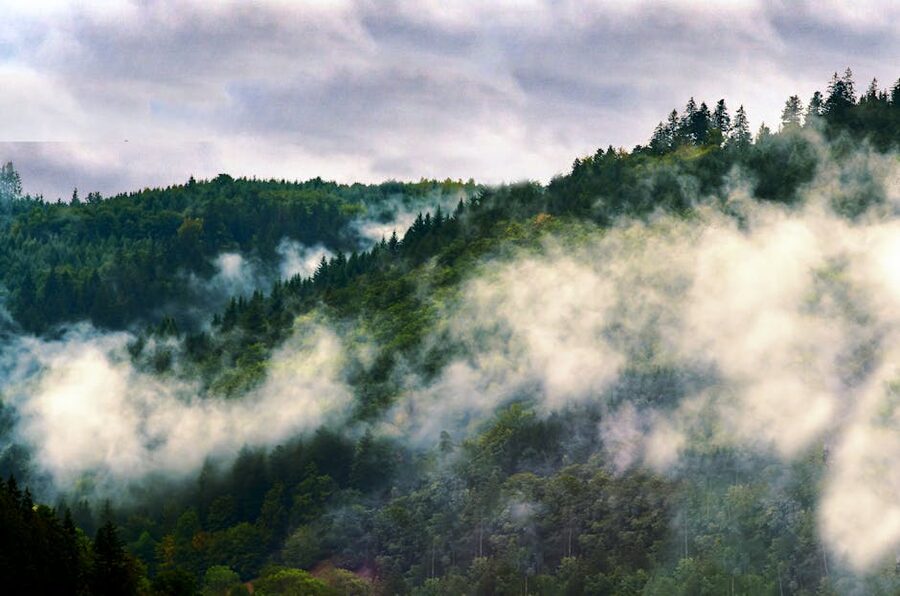
Seven in the morning above Baiersbronn, the trail behind the Wandelhof Sankerhof leaves the asphalt within fifty metres and tips into spruce. The valleys below are still under cloud. You can hear the cowbells in Mitteltal before you can see the village; the path threads between forty-metre firs and you do not pass another walker for ninety minutes. By the time the cloud burns off and the sun finds the ridge, you are on a soft mossy track at 900 metres, the Murg valley opening south, the Bareiss campus a small white cluster two valleys over. This is a Wednesday in June. The kitchen at Restaurant Bareiss will start prep in about three hours.
There are two Black Forests, and most of the writing about the region covers the first. That one runs along the southern strip from Triberg to Titisee, the cuckoo-clock museums, the Schwarzwaldhochstraße as a tour-bus afternoon, the cake stops, the lakeside paddle-boats. Pleasant enough. The other Black Forest sits an hour north and 400 metres higher, around Baiersbronn and the long ridge that carries the B500 to Baden-Baden. Two of Germany’s eight three-Michelin-star kitchens sit a single valley apart there. A 1789 inn still serves dinner from a dining room older than Tobias Finkbeiner’s signed founding licence. The trails leave the village and stay empty. The luxury trip to the Schwarzwald is the second one.
In This Article
- The Baiersbronn case
- Hotel Traube Tonbach
- Hotel Bareiss
- Make the call
- The Schwarzwaldhochstraße at sunset
- Walking the northern Black Forest
- The Westweg
- Day-walks worth the effort
- Freiburg as a half day, not a base
- Baden-Baden, briefly
- The food beyond the Michelin tier
- What about the southern Black Forest
- When to go
- Two itineraries
- Five nights, single base
- Seven nights, two bases
- Practical notes
The Baiersbronn case
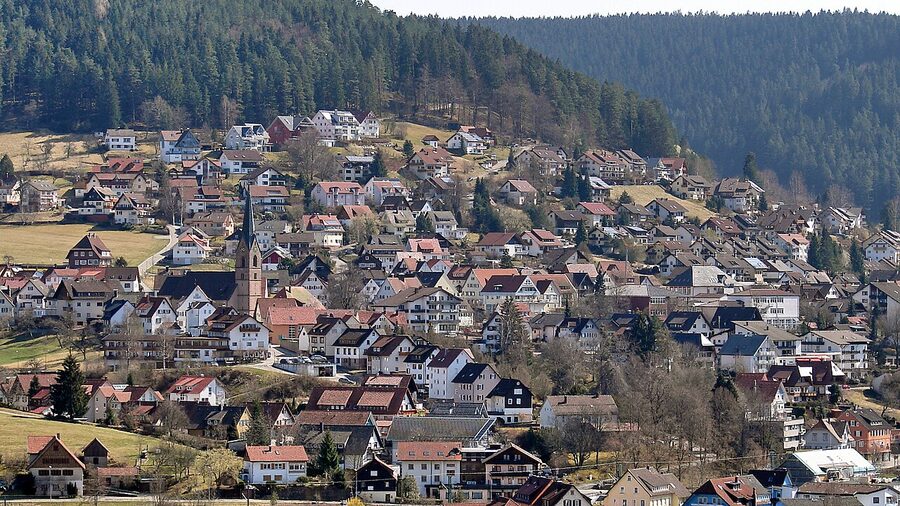
Baiersbronn is a parish, not a single village. It strings five hamlets along the Murg and Tonbach valleys at around 600 metres elevation, with a permanent population of about 14,000 and a Michelin scoreboard you would expect from a small French wine town. Restaurant Bareiss in Mitteltal has held three stars since 2007 under Claus-Peter Lumpp, who has run that kitchen since 1992 and was awarded the Michelin Mentor Chef title in the most recent guide. Schwarzwaldstube at Hotel Traube Tonbach, four kilometres up the valley in the Tonbachtal hamlet, has held three stars continuously since 1993, the longest unbroken three-star streak in Germany. The two restaurants between them anchor a parish that markets itself, accurately, as the Genießerland or “gourmet land”.
What this looks like in practice on the ground: at six in the evening, the Bareiss valet runs about a dozen 7-Series and Range Rovers from the front of the hotel to the back lot in twenty minutes. By seven the dining rooms at both flagships are seated and the rest of Baiersbronn is asleep. Both kitchens hold to a six- or seven-course tasting menu structure, both run wine pairings that lean on Baden-Württemberg producers, and both will, if asked at booking, do a full vegetarian parallel that is a serious cooking exercise rather than a token gesture. The pricing is what you would expect for the rooms involved. Hotel Traube Tonbach nightly rates run from about €420 in shoulder season to €700 plus in peak; Hotel Bareiss sits in a similar band, both half-board by default. The tasting at either three-star restaurant starts around €280 per person, wine pairings the same again, and you can check both via the official sites, Booking.com, or Expedia for Traube; Expedia or the official site for Bareiss.
Hotel Traube Tonbach
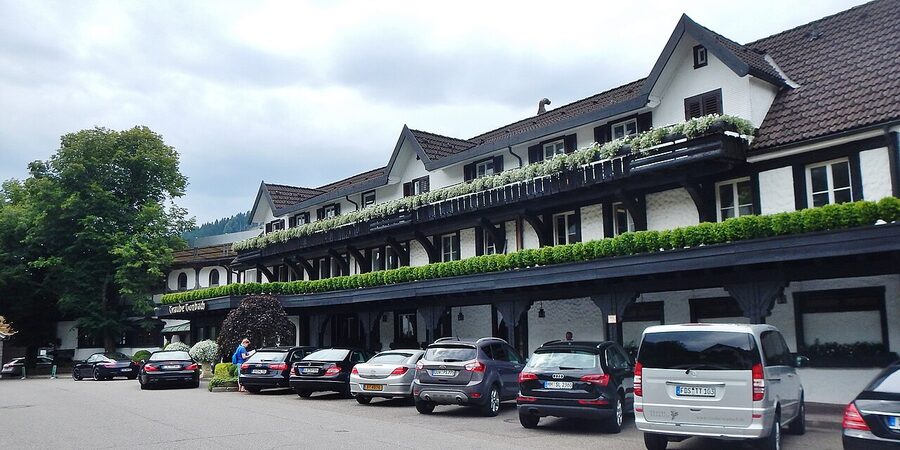
The Finkbeiner family received their licence to operate an inn for forest workers from Duke Karl Eugen of Württemberg in 1789. Eight generations later, the family still runs the place. The current configuration is a 151-room five-star with three restaurants, a 4,500-square-metre spa, a wine cellar of 30,000 bottles, and a culinary school where guests can take half-day pasta and pâtisserie sessions. The rooms tend toward a clean Schwarzwald vernacular: light pine, white linen, balconies on the south-facing block looking directly down the Tonbach valley. Stay on the upper floors of the Schwarzwaldstube building if the choice is offered.
The Schwarzwaldstube fire in January 2020 destroyed the original restaurant and the wing it sat in. The temporary “Temporaire” pavilion ran from May 2021 in a wooden temporary structure further up the slope, and held its three stars throughout. The new permanent building, designed by ARP Architektenpartnerschaft Stuttgart and built with rammed-earth façade elements and clay-plaster walls, opened on April 8, 2022. The restaurant moved back in the same week. Torsten Michel, head chef since 2017 (he succeeded the legendary Harald Wohlfahrt, who held the kitchen for thirty-four years), runs a tasting menu that sits firmly in the modern French tradition with quiet German signatures: black truffle from Burgundy, a Bresse pigeon course, but also Schwarzwald venison in the autumn and Murg valley trout when the season allows. The wine list is one of Germany’s best, with a strong showing from local Grauburgunder and Spätburgunder producers in the Markgräflerland and Kaiserstuhl.
Two other restaurants in the building serve as the more accessible options if you do not have a Schwarzwaldstube reservation: 1789 (the rebranded former Köhlerstube, named for the founding year and currently holding one star) and Köhlerstube the casual room. Many regulars do all three across a four-night stay.
Hotel Bareiss
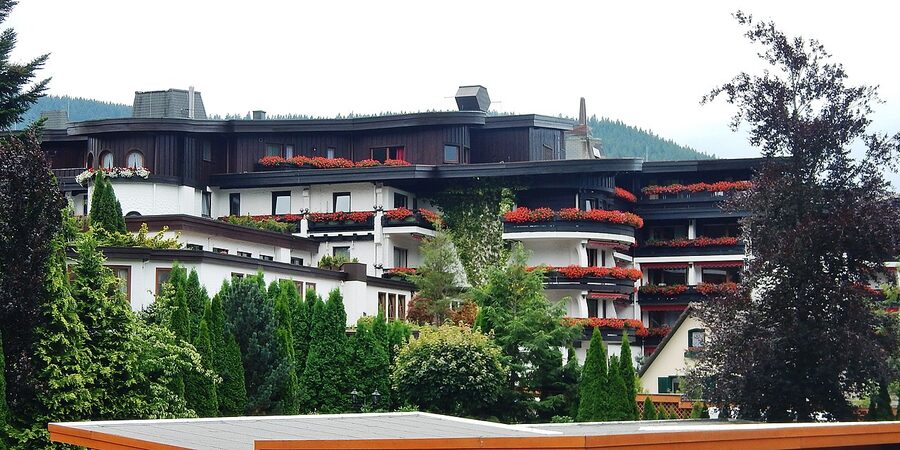
Hermine Bareiss opened the Kurhotel Mitteltal in 1951. Her grandson Hermann Bareiss runs the property today, third generation, family-owned, 99 rooms across an estate that spreads down the Mitteltal hillside in stages. The character is residential and quietly extravagant rather than alpine-resort: tall windows in the public rooms, stone fireplaces, a 5,500-square-metre spa that includes nine pools (five indoor, four outdoor) and a 30-metre lap pool, a children’s wing that operates almost as a small school during school holidays, and a service standard built around Hermine’s founding rule, “There is no ‘no’ for the guest”, which the staff still cite by name.
Restaurant Bareiss, the three-star room, sits in the older wing on the ground floor. Claus-Peter Lumpp’s cooking is more obviously German than Michel’s at the Schwarzwaldstube: heavier on Baden-Württemberg ingredients, a touch more classical in the saucework, the tasting menu running about seven courses with the option of an additional cheese trolley that Lumpp curates personally. Stefan Leitner runs pâtisserie; Teoman Mezda runs the wine cellar, which is Germany-leaning in a way Traube’s is not. There are two other restaurants on site for non-tasting nights, including the more relaxed Dorfstuben with its wood-stove cooking and the seasonal Kaminstube.
Make the call
Both are at the top of what European hotel cooking does. The Schwarzwaldstube has the historical pedigree, the rebuilt building, the more modern technical kitchen, and the slightly more international wine list. Bareiss has the better spa, the quieter residential feel, the longer single-chef continuity (Lumpp has run that kitchen since 1992; Michel arrived in 2017), and a more consciously German tasting menu. If this is a first Baiersbronn trip and you are choosing one for four nights, I would pick Bareiss. The hotel as a place to be in for ninety percent of your waking hours is the stronger property, and Lumpp’s cooking is settled in a way only thirty years of three stars can produce. The Schwarzwaldstube becomes a one-night detour from there: dinner across the valley, a taxi back. Reverse the call if the appeal for you is the rebuilt restaurant itself.
The Schwarzwaldhochstraße at sunset
The B500 leaves Baden-Baden’s southern outskirts and climbs to 700 metres within twelve kilometres. From there it stays at altitude, between 700 and 1,000 metres, for about sixty kilometres south to Freudenstadt. The ridge it follows is the original watershed of the northern Black Forest. The road was built between 1929 and 1932 specifically as a panorama drive, which is why it makes very little practical sense as a route between two places (the autobahn south is faster) and a great deal of sense as the single best afternoon-into-evening drive in southwest Germany.
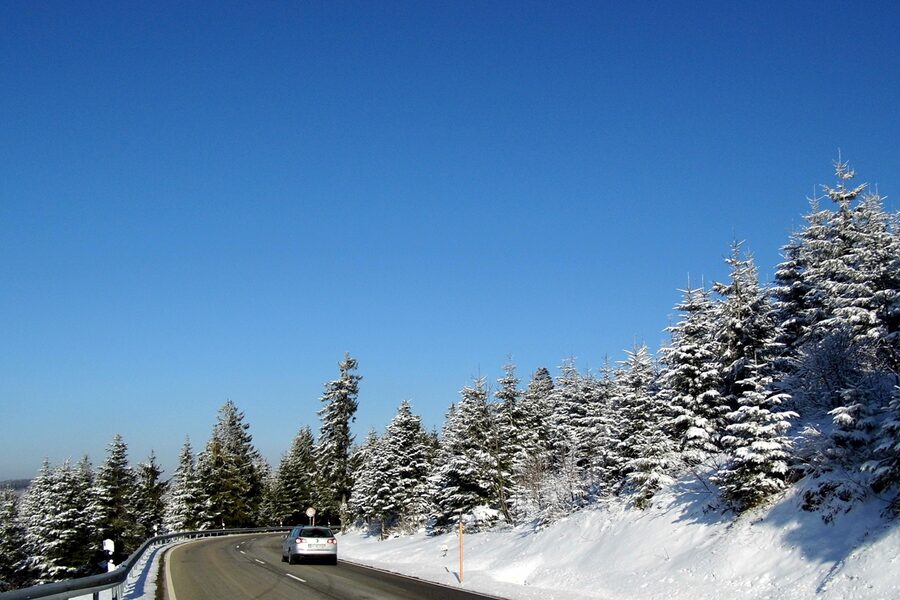
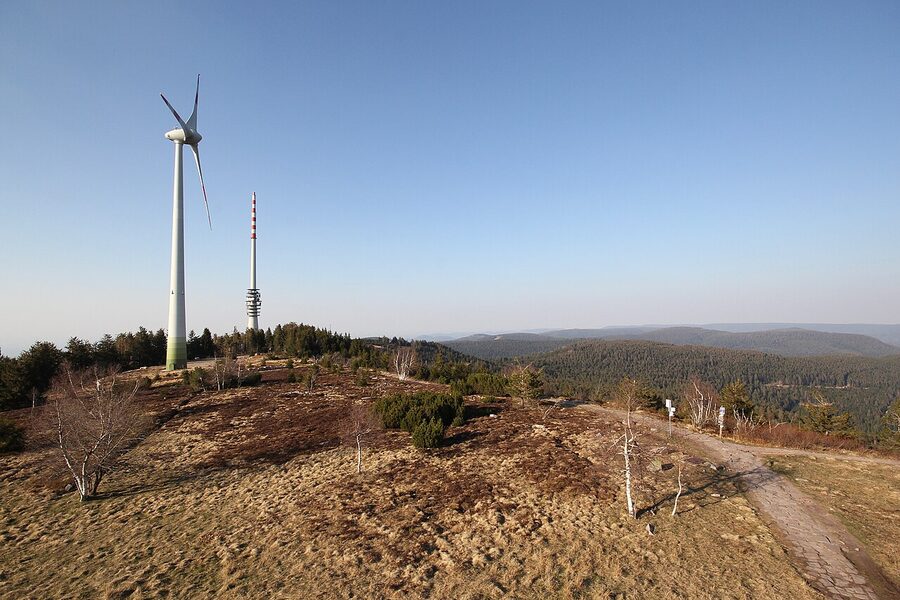
Drive it from north to south. Leave Baden-Baden at four in the afternoon in summer, three in autumn. Sunset on the right shoulder, the Rhine plain dropping away to the west, the Vosges visible on a clear day across the French border. The first significant pullout is at Mehliskopf about thirty minutes in: short uphill walk to the ridge cross, full panorama. Twenty minutes further on is the parking for Hornisgrinde, which at 1,164 metres is the highest point in the northern Black Forest. The summit is twelve minutes from the road; you walk it. The plateau on top is high moor, fenced off for habitat protection, with a wooden boardwalk that loops the bog. Late afternoon light hits the boardwalk at a low angle and the fog often pools below the ridge, giving you that classic German Romantic painting view that the brochures over-promise and the actual trail delivers without trying.
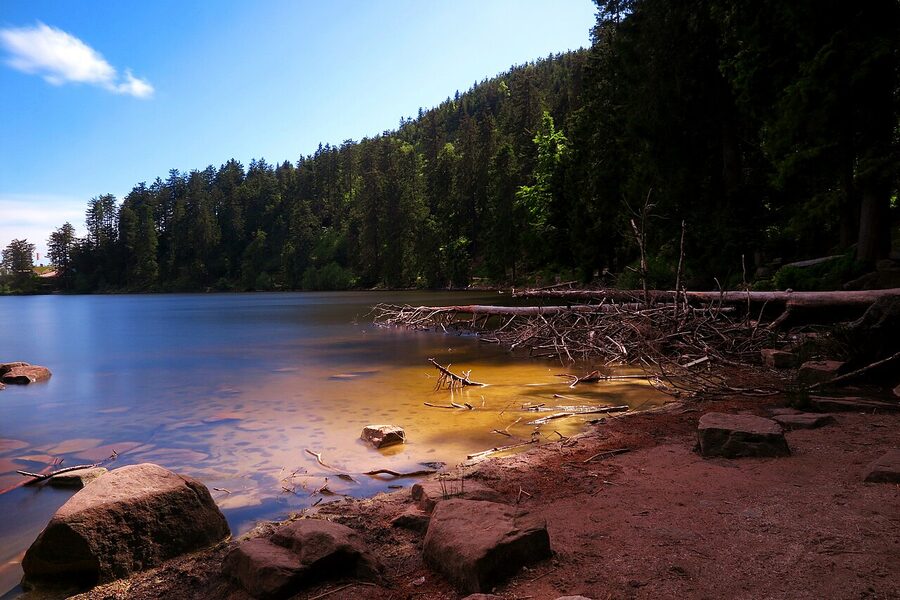
Five minutes south is Mummelsee, the small alpine lake at 1,030 metres. There is a cafe-restaurant on the lake edge that does Schwarzwälder Kirschtorte and Apfelstrudel, both fine if not destination-grade. The lake itself is the worth-the-stop part: dark, glacial, fringed with spruce, and ringed by a gentle 800-metre flat path that takes about fifteen minutes. Local lore puts a water spirit, the Mummel, in the lake, which Eduard Mörike wrote into a Romantic-era ballad in 1827. The cafe terrace has the postcard view but the path on the far side is quieter.
From Mummelsee the road continues south past Ruhestein (the National Park visitor centre, opened 2020, worth half an hour) and Schliffkopf (1,053 metres, second-highest summit in the northern Black Forest, ten-minute walk from a hotel-cum-pullout) before dropping into Freudenstadt. Total drive: ninety minutes if you stop nowhere, four hours if you walk three of the pullouts and have coffee at Mummelsee. Do the four-hour version. There is no point speeding the B500.
Walking the northern Black Forest
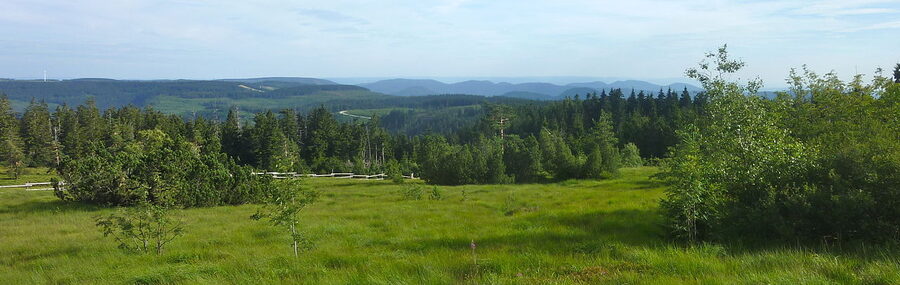
This is the part of the trip that surprises people. The hiking culture here is deep, old, and quietly first-rate. The Schwarzwaldverein, the regional walking club founded in 1864, marks and maintains roughly 24,000 kilometres of trail across the Black Forest, with a sign system so consistent and so well-maintained that you can walk a full week using nothing but the diamond markers nailed to trees. The terrain rewards moderate fitness rather than serious mountaineering. Most day-walks have between 300 and 600 metres of climb, paths are wide and dry under spruce cover, and a Wandelhof lunch (the regional name for a half-restaurant, half-mountain-hut institution that serves Maultaschen and Forelle through the afternoon) is rarely more than two hours from your starting point.
The Westweg
The Westweg is the senior trail of three long-distance routes that run the length of the Black Forest. It covers 285 kilometres from Pforzheim in the north to Basel in the south, opened in 1900, and is generally considered the hardest of the three (the Mittelweg and Ostweg run parallel further east). A through-hike takes ten to twelve days. The version most luxury readers will actually do is the four- or five-day northern half, Pforzheim to Hausach, which delivers the high-ridge sections (Hornisgrinde, Schliffkopf, the Murg valley descent into Baiersbronn) with hotel-luggage transfer between stages. Several Baiersbronn-based operators run this as a guided package: Baiersbronn Wandermag is the regional booking service.
Day-walk versions, not committing to the full long-distance trail, are how most people sample the Westweg. From Hotel Bareiss the most rewarding half-day is the climb up to the Buhlbachsee circuit, about twelve kilometres with 350 metres of climb, finishing at a tarn that holds a swim well into August. From Traube Tonbach you can pick up the Westweg at the Sankenbachsee trailhead and follow it south along the ridge for about three hours to Schliffkopf, taxi back.
Day-walks worth the effort
Three day-walks deserve a separate mention because they sit a step outside the standard guided packages.
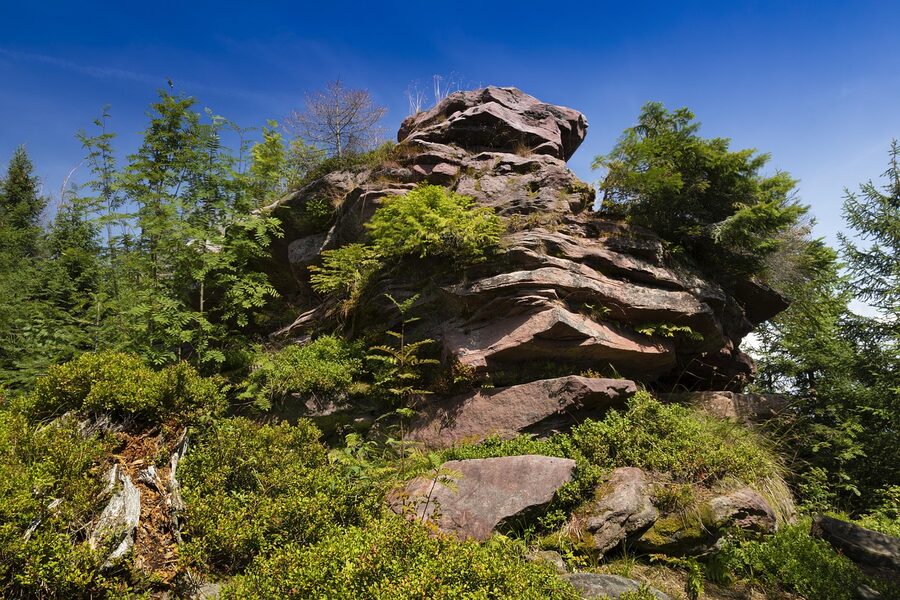
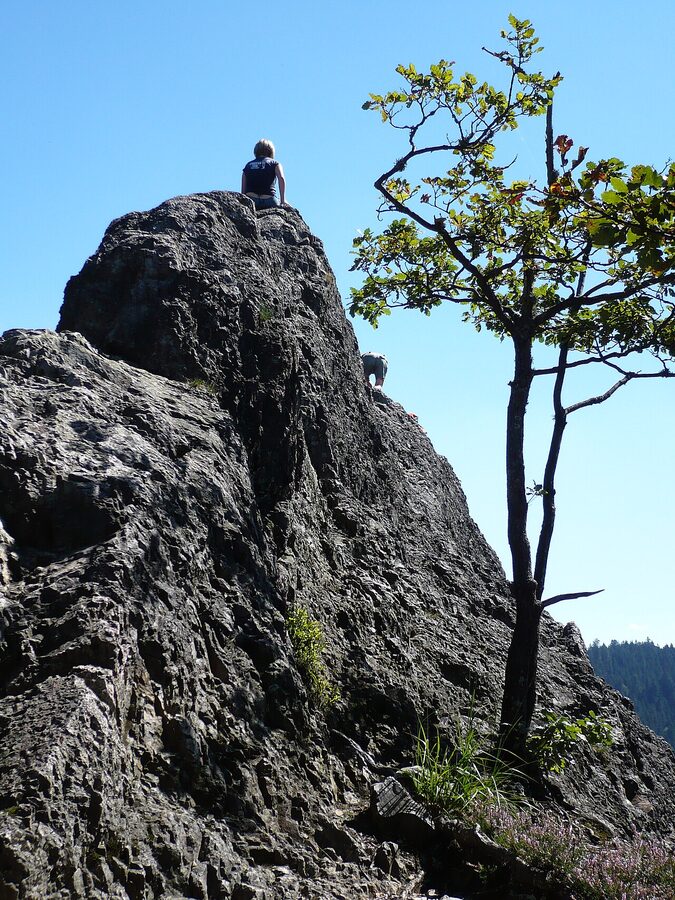
The Karlsruher Grat is the closest thing the Black Forest has to a proper Alpine ridge walk. It runs about four kilometres along a quartzite spine above the Renchtal valley, between Ottenhöfen and the Edelfrauengrab waterfalls. There are some hand-on-rock sections (no exposure that will trouble a confident walker, but trekking poles get stowed for those metres) and the views west across the Rhine plain are the best in the northern range. Allow four hours including the descent past the waterfall.
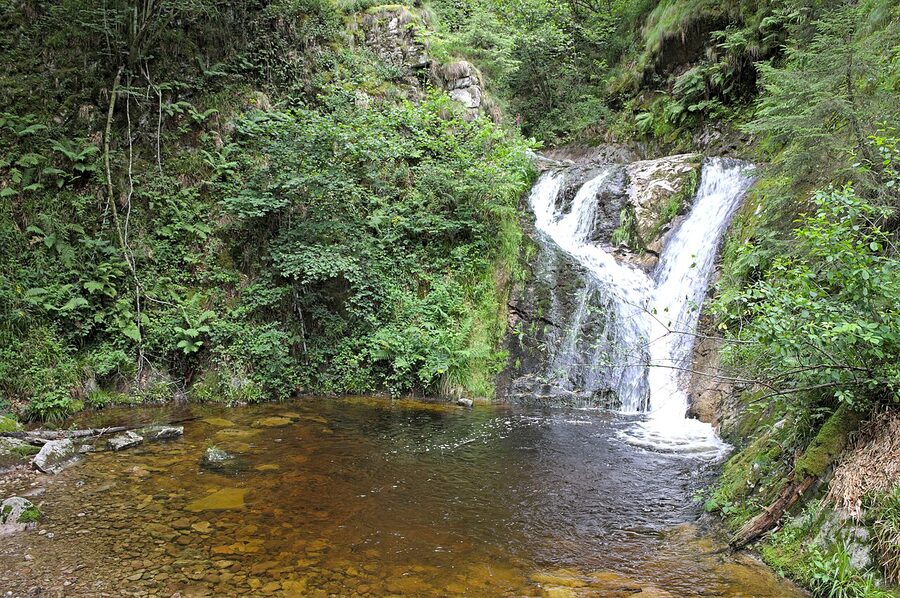
The Allerheiligen waterfalls and the ruined monastery sit in a steep wooded gorge about thirty minutes’ drive west of Baiersbronn. The Premium Wanderweg loop is six kilometres, takes about two and a half hours, and threads you up the seven-tier waterfall on a stone staircase carved into the gorge wall before delivering you to the 1196-founded Allerheiligen monastery, abandoned after the 1800 Napoleonic-era secularisation. The Klosterkirche walls still stand at full height, roofless. Walk this one in the morning; the gorge is in shadow until eleven and the wet rocks dry by midday.
The Sankenbach loop above Baiersbronn-Mitteltal is the easiest of the three. Eight kilometres, 250 metres of climb, two and a half hours at a gentle pace, finishing at the Sankenbachsee tarn. Walk this one before breakfast on your last day. Cows still summer-graze the upper meadows here and you will pass three or four cattle bells in the first half-kilometre.
Freiburg as a half day, not a base
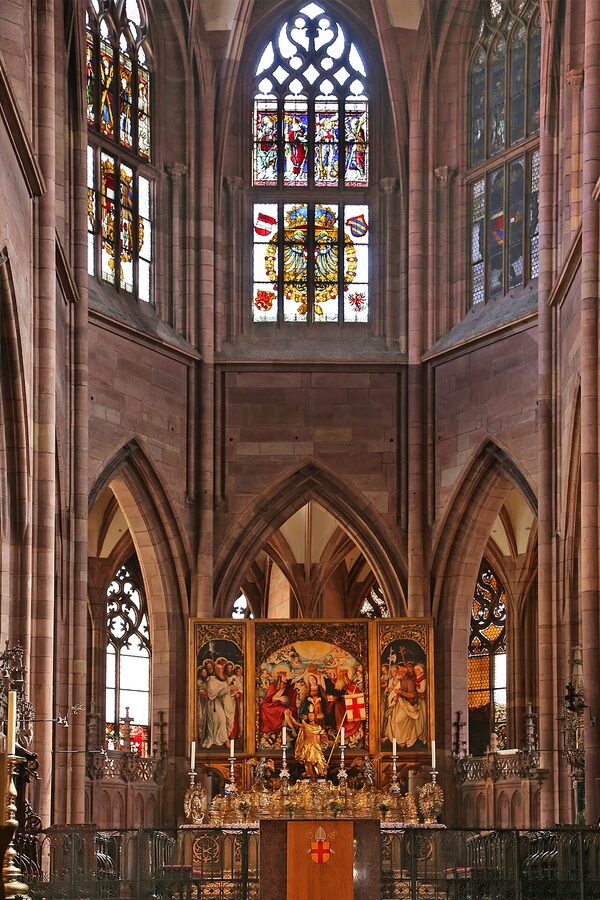
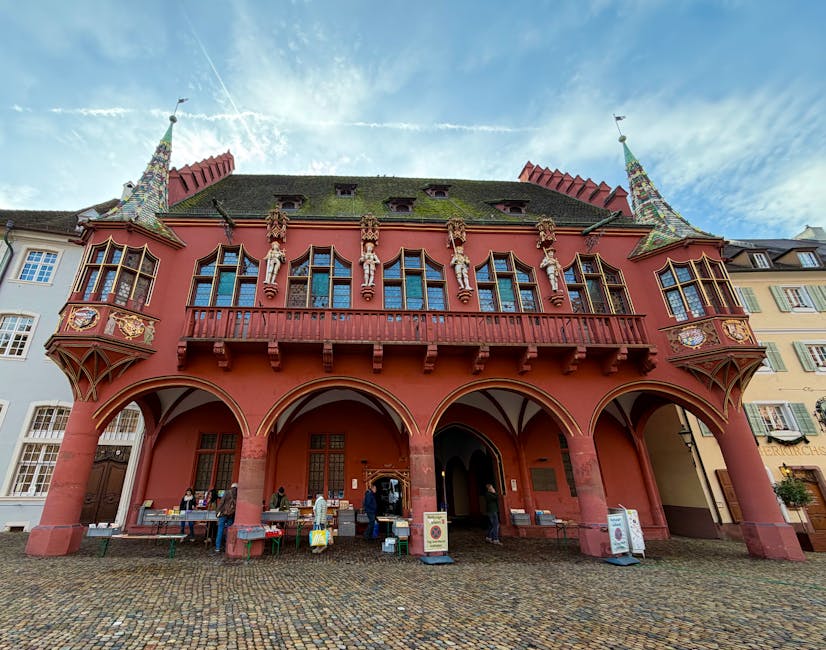
Freiburg im Breisgau, an hour south of Baiersbronn at the southern end of the Black Forest, is the regional capital and a genuinely lovely small city. The Münster, the late-Gothic minster cathedral begun in 1200 and finished in 1330, is the only major German Gothic cathedral that survived the war intact. The bächle, the open stone water channels that thread the old-town streets, have been part of Freiburg’s plumbing since the thirteenth century and now serve mostly to amuse children and trip up tourists who insist on looking at their phones.
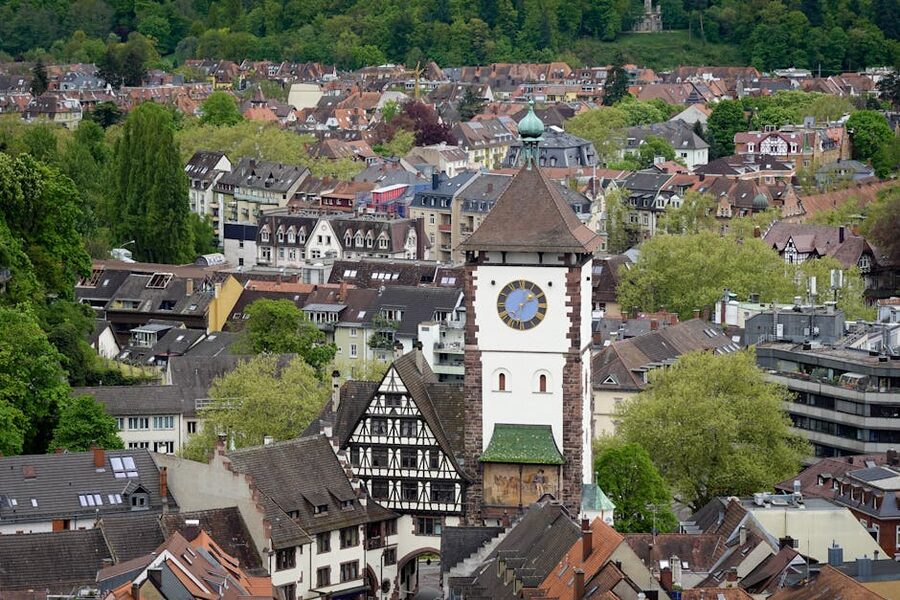
The thing to do in Freiburg is walk it: an hour from the Bertoldsbrunnen fountain at the centre, through the Münsterplatz (the Mon-Sat morning market is the best in any small German city I have been to, and lunch from a Lange Rote sausage stand at one of the trestle tables is a better lunch than most of the city’s restaurants serve), down to the Augustinerplatz, up the Schlossberg funicular for the rooftop view, back via the Schwabentor. Allow three hours. Add an hour for the Augustinermuseum if late-medieval German painting is your thing.
The reason this is a half-day rather than an overnight stop on a luxury Black Forest trip: there is no luxury hotel in Freiburg that approaches the Baiersbronn standard. The Colombi is the best of the bunch, a four-star at the edge of the old town with serviceable rooms and a one-Michelin-star restaurant (Zirbelstube). It is fine. It is not a destination. Drive down from Baiersbronn after breakfast, walk Freiburg until mid-afternoon, drive back via the southern arm of the B500 through Titisee, dinner at home.
Baden-Baden, briefly
Baden-Baden gets its own full piece on this site (see Baden-Baden). For Black Forest trip-planning purposes the only thing that matters is the geography: it sits at the northern end of the B500, on the western edge of the range, at the point where the foothills meet the Rhine plain. From Baiersbronn it is a sixty-minute drive (the B500 ridge route, slow and beautiful) or forty minutes (the autobahn down to Rastatt and back up, fast and dull). The B500 route is the only one to take.
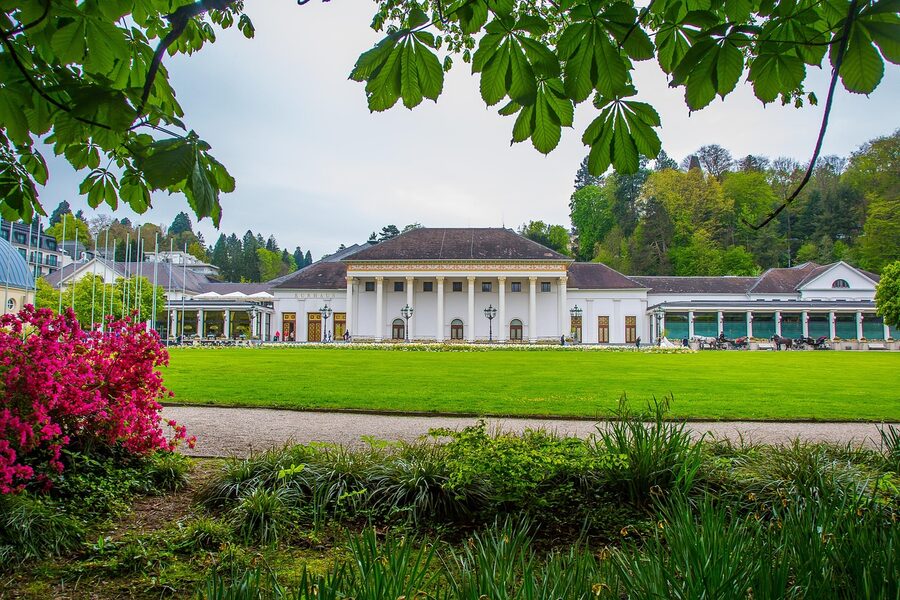
The single-day version of the side trip is straightforward: leave Baiersbronn at ten in the morning, two hours at the Friedrichsbad (the Roman-Irish bath ritual, opened 1877 and almost unchanged since; mixed-nude on Tuesdays, Wednesdays, Saturdays and all day Sunday, gender-segregated other days, and worth booking the early-afternoon slot to beat the after-work locals), an hour walking the Lichtentaler Allee promenade, dinner at the Park-Restaurant inside Brenners Park-Hotel (one Michelin), drive home through the dark via the autobahn so you are back at the Baiersbronn property bar by eleven. The Casino can wait for a separate trip dedicated to Baden-Baden itself.
The food beyond the Michelin tier
Three things are worth knowing about Schwarzwald food at the level below the tasting-menu rooms.
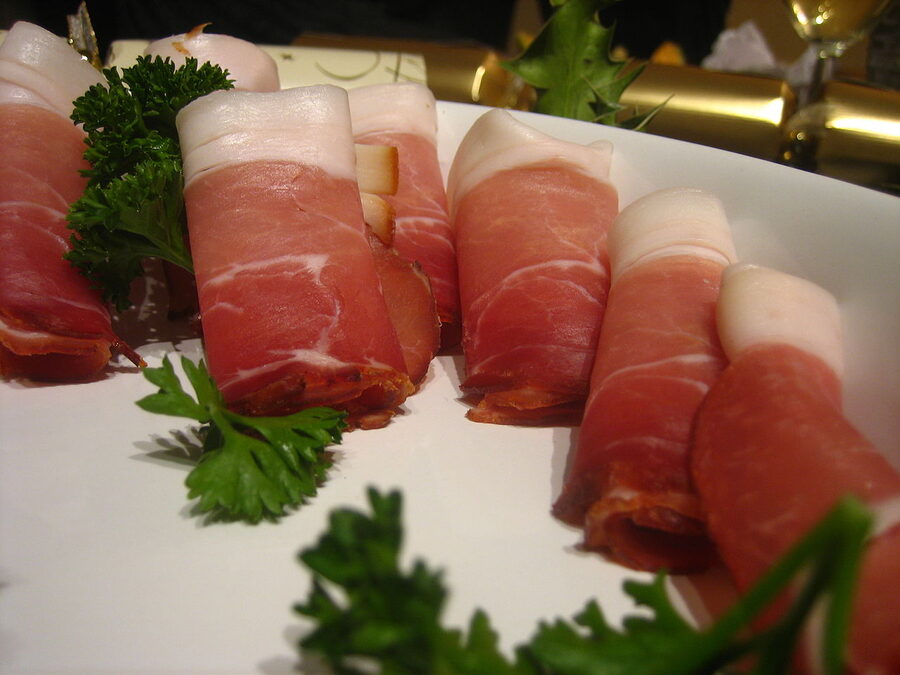
Schwarzwälder Schinken is the smoked ham that the region exports to the rest of Europe. The good version is dry-cured for at least three weeks, cold-smoked over fir and spruce for a further fortnight, and air-aged for three more months. Most supermarket versions in Germany are still respectable; the Hans Adler operation in Bonndorf and Kaltenbach in Triberg are the names worth seeking out, both with shops attached to their smokehouses. Buy a quarter-kilo before you fly home and have it sliced thin.
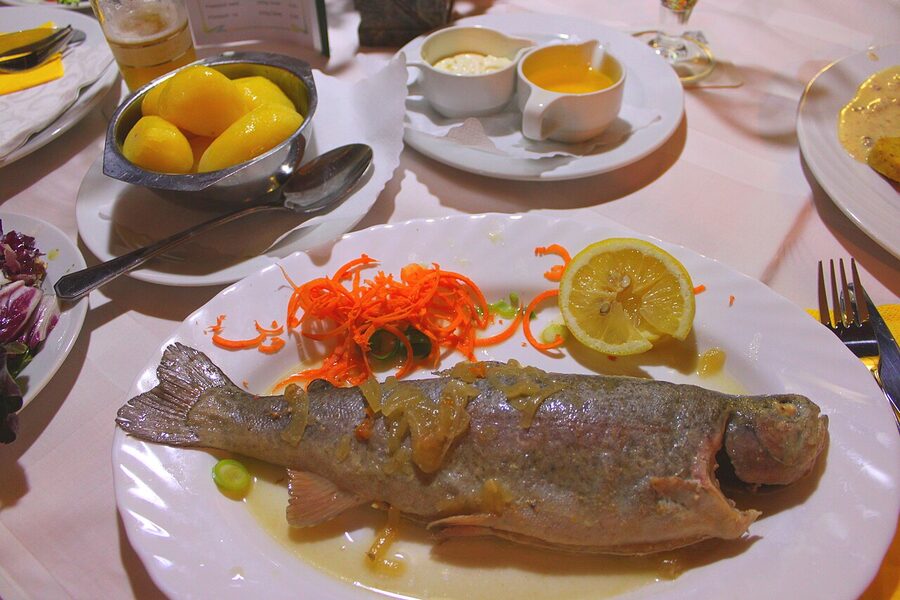
Forelle, the brown trout that lives in the Murg and Tonbach streams, is the regional fish. The straightforward preparation, Forelle blau, is a clean poach in court-bouillon with a vinegar splash, served with parsley potatoes and brown butter. The Wandelhof huts above Baiersbronn all do a version. The Forsthaus Auerhahn near Buhlbach is the one to seek out specifically.
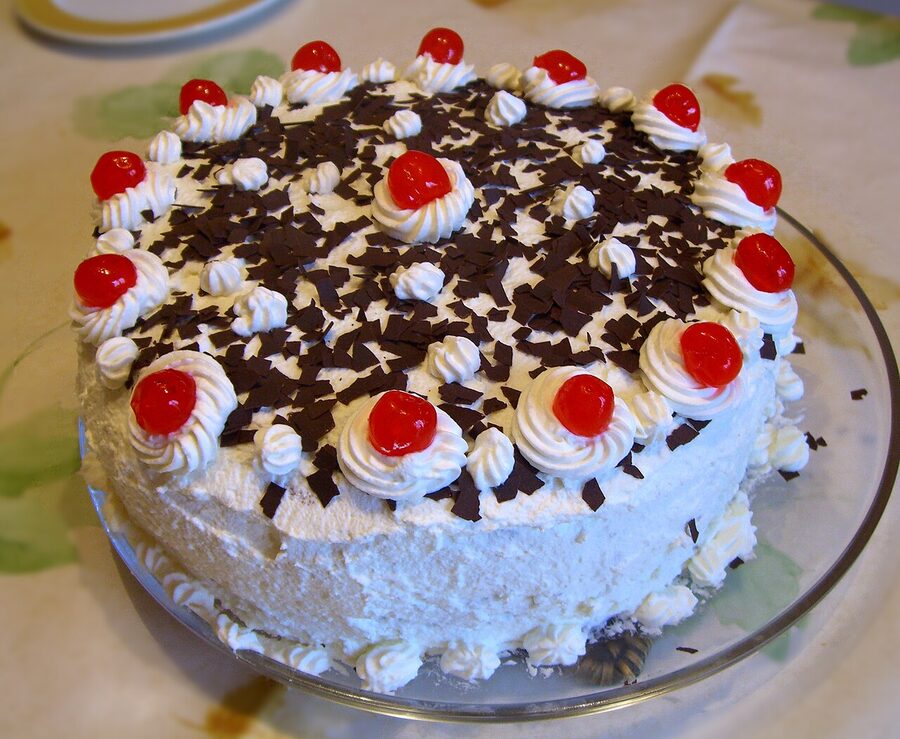
And Schwarzwälder Kirschtorte. The cake exists in three forms: the supermarket sponge horror, the standard hotel-buffet version (acceptable, made fresh somewhere on site), and the actual original at Café Schäfer in Triberg, where Claus Schäfer holds the registered recipe his grandfather Josef Keller is generally credited with inventing in 1915 (some scholarship gives the original to a Bad Godesberg pâtissier; Triberg has marketed harder). Schäfer’s version uses Schwarzwälder Kirsch (the region’s clear cherry brandy) properly, so the cream layers actually taste of cherry rather than vanilla custard. Drive the thirty-five minutes to Triberg specifically for this if you care about the cake. Skip the cuckoo-clock museum next door and the giant clock at the parking lot, which exist for tour buses.
Maultaschen, the regional ravioli, is technically a Swabian dish from further east in Baden-Württemberg, but every Baiersbronn restaurant serves them. The story attached is that monks in Maulbronn invented them in Lent to smuggle meat past God (“Herrgottsbescheisserle”, “the little God-cheaters”). They come in broth, fried, or with browned butter and onions. The fried-with-onions version is the one to order.
For wine: the Black Forest sits inside the Baden wine region, which produces seventy percent of Germany’s Pinot family wines. The Pinot Noir (Spätburgunder) from the Markgräflerland and the Grauburgunder (Pinot Gris) from the Kaiserstuhl volcanic soils are both serious wines. Producers worth ordering: Bernhard Huber in Malterdingen for Spätburgunder; Salwey on the Kaiserstuhl for Grauburgunder; Bercher for either. The Traube and Bareiss wine cellars carry these properly; the Wandelhof huts will have the supermarket-tier versions, which are still drinkable.
What about the southern Black Forest
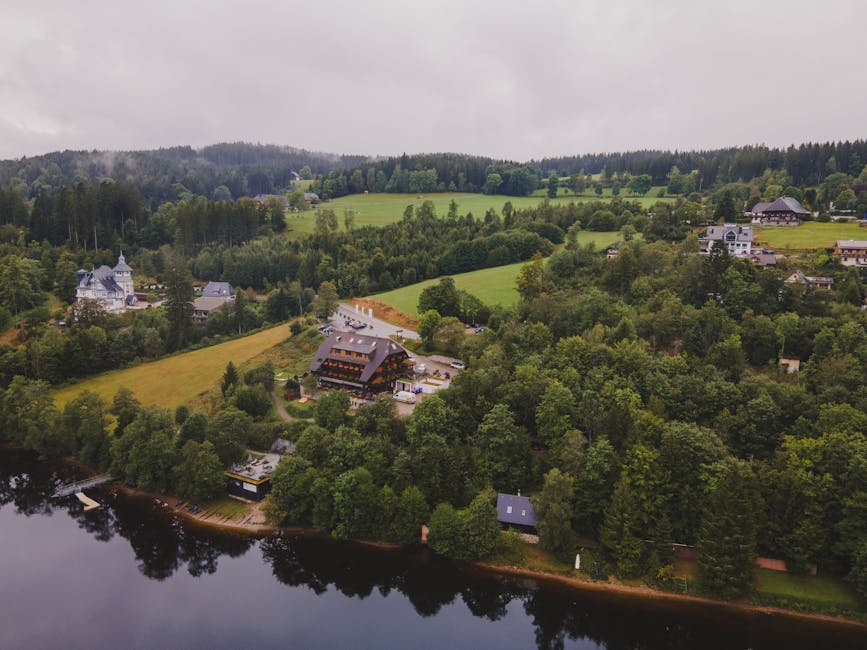
The southern Schwarzwald, around Titisee and Schluchsee, is the region most travel writing covers. It is not a write-off; it is genuinely scenic, and Lake Titisee has a particular evening quality when the day-tour buses leave at five. But it is not the luxury trip. The hotels are mid-tier (the best is Treschers Hotel Titisee, four-star, fine but not destination-grade; Booking.com or Agoda for booking), the food is hotel-restaurant standard, the towns themselves are tour-coach-coded, and the hiking does not have the high-ridge character of the north. If you have a day spare from the Baiersbronn base and the Schwarzwaldhochstraße, drive the southern loop via Schluchsee and Feldberg (the highest point in the entire Black Forest at 1,493 metres, with a chairlift to the summit and a panorama deck) as a scenic afternoon. Otherwise you are not missing much.
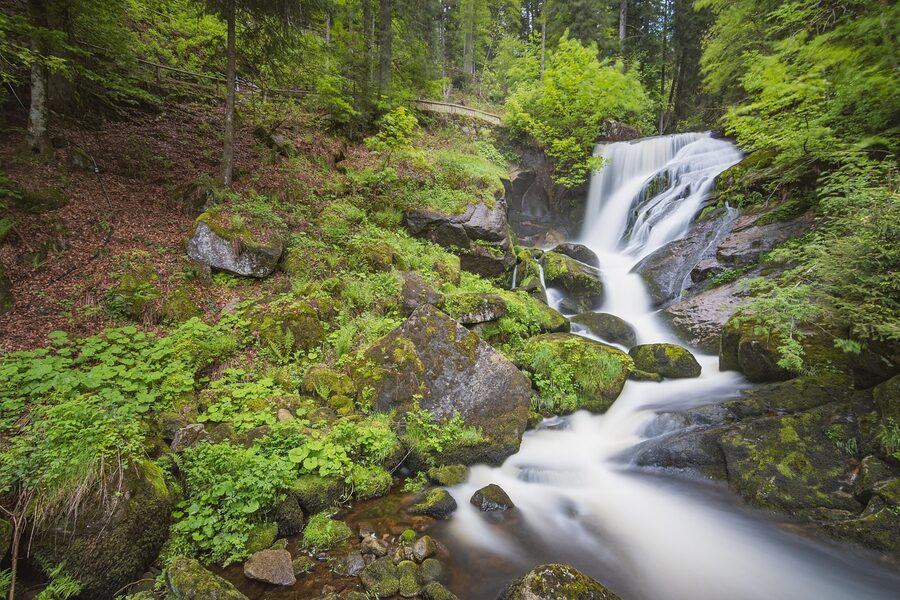
Triberg, the cuckoo-clock town, gets one specific recommendation (Café Schäfer for the cake, see above) and a skip on everything else. The Triberg waterfalls are the highest in Germany at 163 metres total drop, which sounds dramatic but is actually a series of seven small cascades down a wooded slope; the path takes thirty minutes, the entry fee is €7 per person, and you will find yourself in a queue behind a cuckoo-clock-museum bus tour. If you have not seen a German waterfall before, fine. The Allerheiligen falls (above) are the better choice in the same hour’s drive.
When to go
The Black Forest is a four-season destination with three good-faith windows.
Late May through June is the wildflower window. The meadows above Baiersbronn fill with buttercups, lupin, and the late-blooming Schwarzwald gentian. Daylight runs from five in the morning to nine-thirty in the evening, the trails are dry, and the hotels are not yet at high-season pricing. This is the window I would pick for a first trip.
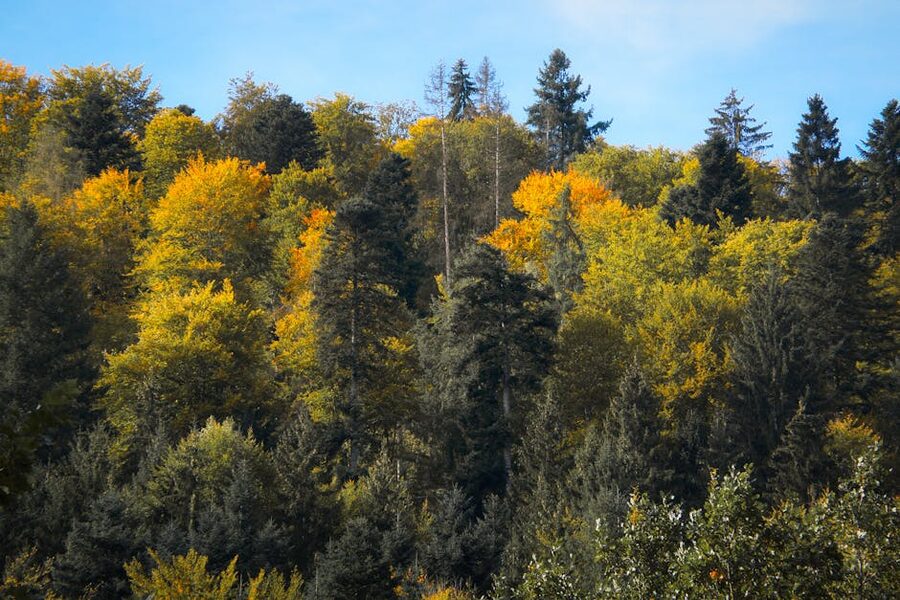
September into the first half of October is the harvest and walking window. The Baden wine festivals run through this period (Breisach hosts the largest in early September), the venison comes onto restaurant menus, the deciduous trees in the lower valleys turn yellow and copper while the upland conifers stay dark green. The hiking is at its best, dry and cool, no biting flies. This is the window for the food trip.
December for Christmas markets pairs naturally with a Baden-Baden base; the Freiburg market is the better atmosphere if you commit to a southern half-day. See the dedicated European Christmas markets piece for which markets are worth structuring a trip around.
January through March is the quiet luxury window. The Schwarzwaldstube and Bareiss kitchens are at their seasonal best (the dining rooms are quieter, the chefs personally circulate more, the truffle and game seasons overlap). The hiking switches to snowshoe walks from the Wandelhof huts. Daytime temperatures sit around freezing, the spruce holds snow well, and the post-walk Friedrichsbad day from Baden-Baden becomes the trip’s quiet highlight. Avoid the second week of February if you are not skiing; the German school half-term overlaps with French and Swiss equivalents and the autobahn south is congested.
Avoid: late October and November (off-season for everything, several Wandelhof huts close, the trails go slick), and the school summer holiday peak in the first three weeks of August (German families everywhere, hotel rates at their highest, the Baiersbronn properties are full of kids).
Two itineraries
Five nights, single base
The simplest version of this trip and the one I would recommend for a first visit. Five nights at Hotel Bareiss in Baiersbronn-Mitteltal, half-board.
Day 1. Arrive Stuttgart Airport (or fly into Frankfurt and drive ninety minutes south). Drive to Baiersbronn (about two hours from either airport via the autobahn south to Rastatt, then up the B462 valley). Check in late afternoon. Dinner in the Schwarzwaldstube wing at the hotel; the Kaminstube fire-cooking room is the right first night.
Day 2. The Schwarzwaldhochstraße north to Baden-Baden, leaving Baiersbronn at ten in the morning. Stop at Schliffkopf and Hornisgrinde and Mummelsee. Reach Baden-Baden by two, two hours at Friedrichsbad, walk the Lichtentaler Allee, dinner at Park-Restaurant Brenners, drive home via the autobahn.
Day 3. Hike day. The Sankenbach loop before breakfast (eight kilometres, two and a half hours, back by ten); the Buhlbachsee climb after lunch with a guide from the hotel concierge. Dinner at Restaurant Bareiss, which is the night to do this; reserve at the time of room booking.
Day 4. Freiburg. Drive south at nine, walk the old town until three, drive back via the southern B500 through Titisee. Light dinner in the Dorfstuben. Spa evening.
Day 5. The Karlsruher Grat or Allerheiligen waterfalls, depending on weather. Late lunch at Forsthaus Auerhahn (Forelle blau). Last evening at the cocktail bar in the hotel main hall; pack early.
Day 6. Drive to airport. The whole trip stays inside a forty-kilometre radius of the hotel.
Seven nights, two bases
For the trip that wants a city dimension and a second pace. Three nights Baiersbronn, four nights Baden-Baden.
Days 1 to 4. Baiersbronn at the Traube Tonbach (alternating with the five-night above; this is the trip where you want the rebuilt Schwarzwaldstube as your dinner anchor). Days 1 and 2 as above (arrival, then the B500 north including the Friedrichsbad afternoon). Day 3 is the all-day hike, Schliffkopf to Buhlbachsee with Westweg sections, hotel transfer of luggage. Day 4 is the Schwarzwaldstube dinner with a half-day Allerheiligen morning.
Day 5. Drive Baiersbronn to Baden-Baden via the B500 south-to-north (not the autobahn). Check into Brenners. Late afternoon at the Caracalla Therme (the modern thermal pool, swimsuits required, families welcome) for a light spa session.
Days 6 and 7. Baden-Baden. Friedrichsbad on day 6 morning, Casino on day 6 evening. Lichtentaler Allee walked twice on day 7 (once each direction, properly). Day 7 dinner at Le Jardin de France or Rizzi for the change of register from Brenners’ Park-Restaurant.
Day 8. Brunch at Brenners, drive to Baden-Baden Airport (twenty minutes; flies to London City and Mediterranean cities) or Frankfurt (ninety minutes).
Practical notes
Driving is essential. The Black Forest is connected by good local trains (the Murgtalbahn runs Baiersbronn to Karlsruhe, the Schwarzwaldbahn runs Offenburg to Konstanz) but a car opens up the Schwarzwaldhochstraße, the trailheads, the Allerheiligen and Karlsruher Grat day-walks, and the cross-region shifts. Pick up a car at the airport. The roads are well-maintained, the autobahn limits apply (no general speed limit, but the B500 is 80 km/h with curves that argue for less), and parking at the trailheads is free.
The Baiersbronn Tourist Card, included with your stay at all the larger hotels, covers free local bus transit (useful for the trail-ends where you want a one-way walk) and discounts on the cable cars and museums. Carry it in your wallet.
Tipping at the three-star kitchens: standard practice is to round up the dinner bill by five to ten percent and to leave an additional cash note for the sommelier if the wine pairing was strong. The Bareiss and Traube Tonbach service charges are already included; tipping is genuinely optional and the staff will not chase it.
For the rest of the region: Destinations covers the broader luxury portfolio, the Baden-Baden specifics live in the dedicated Baden-Baden piece, and the Black Forest pairs naturally with the alpine arc covered in Timeless Geneva; Geneva is two hours’ drive south via Basel, and the high-end traveller doing a long European trip often pairs the two.
The right time at the right hotel in Baiersbronn is the trip. The cake at Café Schäfer is the postcard. Everything else is the drive between.