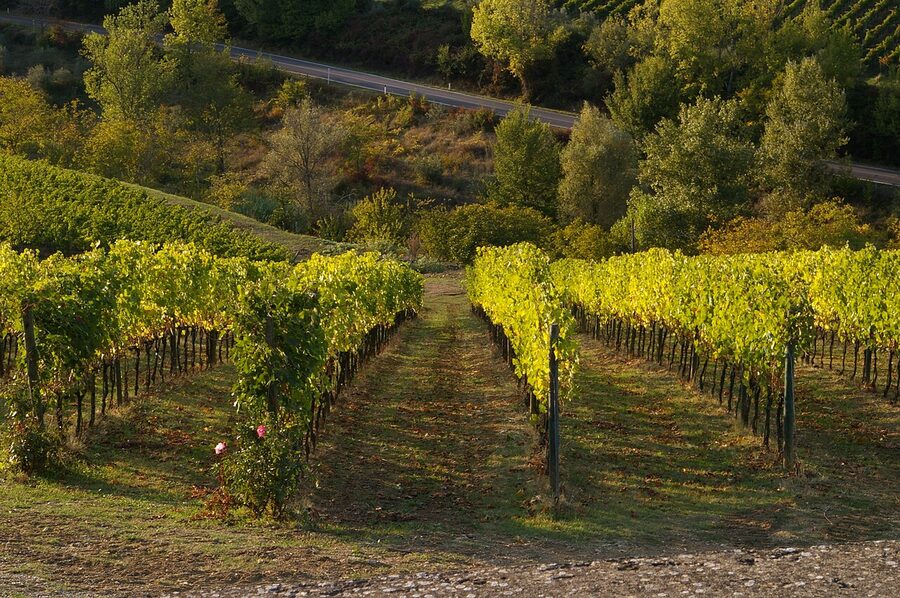
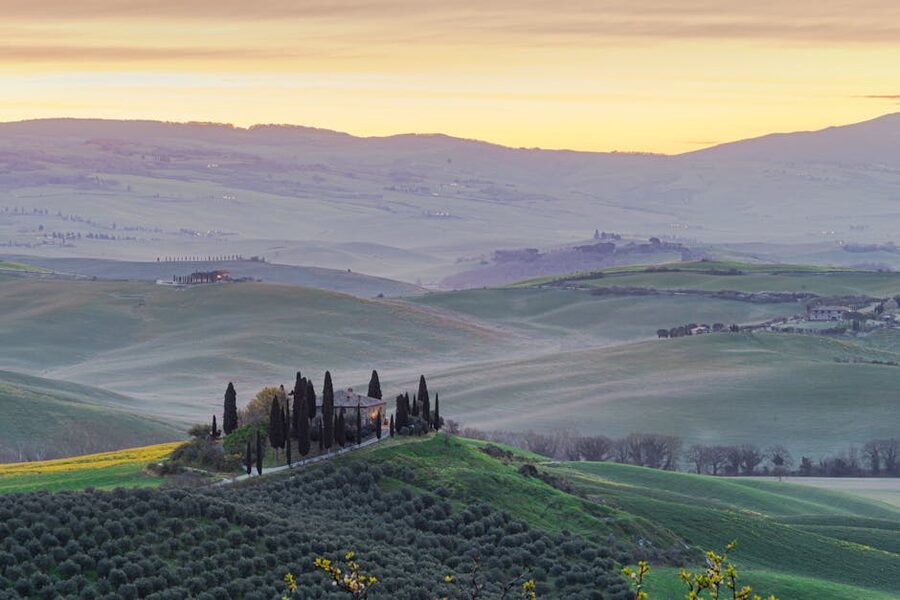
The SS222, the road the Italians call the Chiantigiana, runs from Florence south to Siena through hills planted in vines that have been here since the Etruscans. On a still April morning, two ridges south of Greve, the road opens into a long downhill curve cut between a row of cypress and a wall of olive trees. The Roma is in fourth, the V8 settled into a low burble behind your shoulders, the Targa di Velona pinned to the dashboard so the carabinieri at the next checkpoint know which hotel sent you. The vineyards on either side belong to people who have been pressing wine for nine generations, and they will not look up as you pass. A morning like this is the entire reason to do this trip without a guide.
Renting a Ferrari in Italy is a different product from a guided Ferrari tour. The guided programmes have their own logic, the support van behind you, the dinner at Casa Maria Luigia already booked, the model rotation handled. This is the alternative. You pick the car, you pick the route, you pick the hotel for tonight, and the only person responsible for getting the Roma to the gravel courtyard at Castello di Velona before the dining room closes is you. It is more flexible. It is more rewarding for confident drivers. It is also more practical-headache than the brochures suggest. This is a piece about how to do it well.
In This Article
- The shape of a self-drive Ferrari trip
- The practical realities you cannot ignore
- ZTL zones, the single most important thing on this list
- Parking
- Tolls and the Telepass
- Speed limits and police
- Fuel
- Insurance and the deductible
- The Ferrari rental landscape in Italy
- Route 1, Tuscany self-drive (4 days)
- Hotels for the Tuscan route
- Route 2, Amalfi Coast self-drive (3-4 days, shoulder season only)
- Hotels for the Amalfi route
- Route 3, Italian Lakes and the Stelvio Pass (5 days)
- Hotels for the Lakes route
- Route 4, the Mille Miglia loop (3-5 days)
- Hotels for the Mille Miglia route
- The model question, answered
- What this trip is not
- Adjacent routes and continuations
- The verdict
The shape of a self-drive Ferrari trip
The first decision is length, and most readers who get this wrong get it wrong by going too short. Italian rental houses will quote a daily rate, and the daily rate looks frighteningly steep on a single day. The economics make sense at four days and start to feel like a fair trade at five. Anything below three days is structurally a track-day rental dressed up. You spend the first morning getting used to the car, the last afternoon getting it back to Modena, and the middle is one road. Three to five days is the window. You cover one substantial route, you sleep at three or four hotels, and the Ferrari becomes the trip rather than an expensive prop in someone else’s trip.
The second decision is route, and the four that work are Tuscany, Amalfi, the Italian Lakes with a Stelvio Pass leg, and the Mille Miglia loop. Each has a defining drive, a defining hotel, and a defining structural problem to plan around. The rest of this piece walks them in turn.
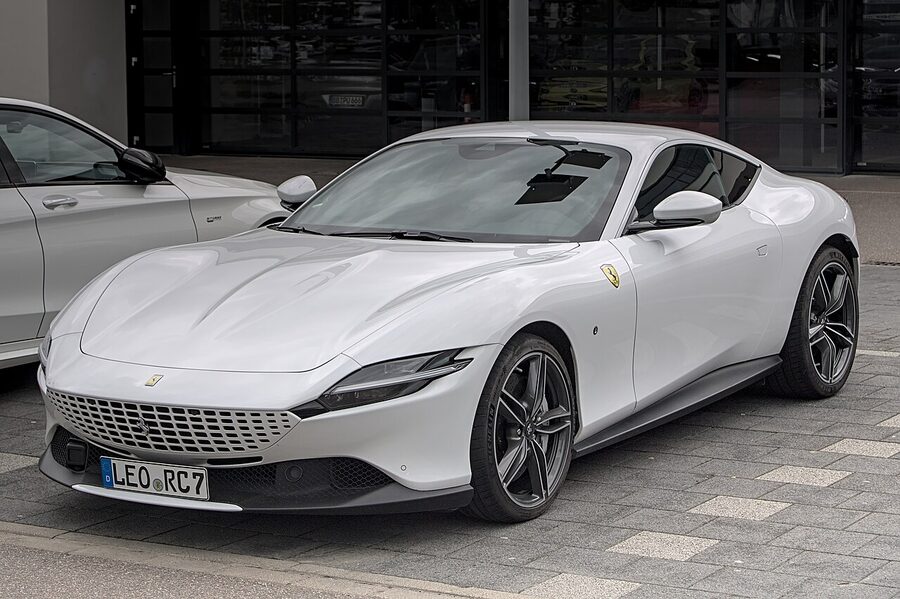
The third decision is the car itself. Counter-intuitively, the supercar is not the right answer for most of these trips. The Roma seats two and a half, has a usable boot, has cabin insulation that lets you talk at autostrada speed, and has a paddle-shift V8 that does everything the 488 does at 60 percent of the noise. For four days on Italian roads with luggage in the back and a partner in the passenger seat, the Roma is the practical pick. The 488, F8 Tributo, and SF90 are louder cars and better cars and worse companions. We will come back to this.
The practical realities you cannot ignore
Before any of the routes, the practical layer. None of this is glamorous, none of this is in the rental brochure, all of it will define whether the trip is a pleasure or a series of phone calls to a Modena duty manager.
ZTL zones, the single most important thing on this list
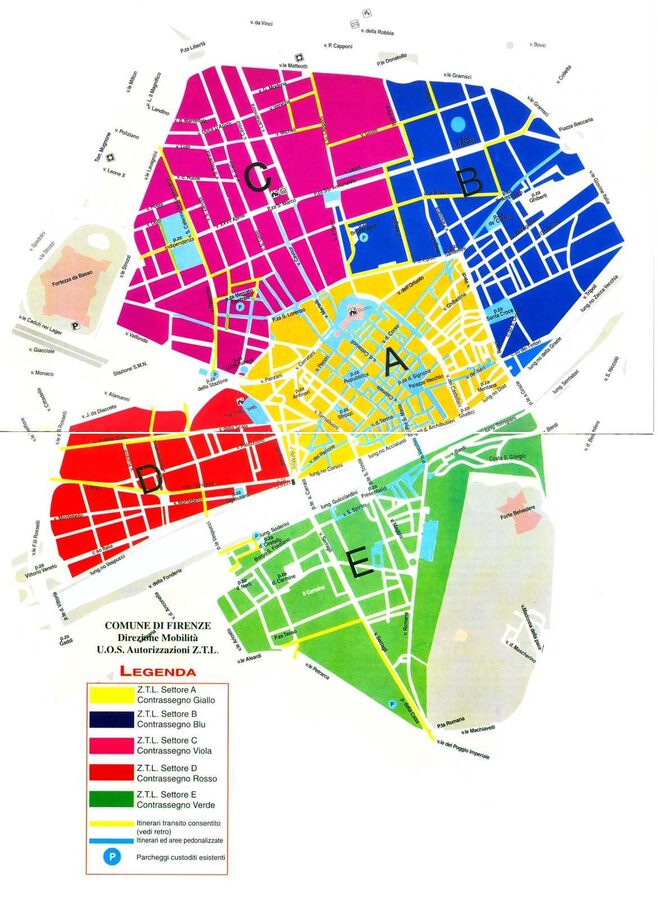
An Italian ZTL, Zona a Traffico Limitato, is a permit-only zone covering the historic centre of nearly every Italian city worth visiting. Florence, Siena, Bologna, Milan, Rome, Naples, Lucca, Pisa, Verona, Bolzano: all of them have one. The boundary is a camera, not a sign and not a barrier, and the camera reads your plate. If your plate is not on the daily permitted list, you are fined.
The fine is not nominal. As of writing, the standard ZTL infringement penalty is between €80 and €335 per offence depending on the city and the time it is paid. On a rental Ferrari that fine will reach you via the rental house, who will charge a separate administrative fee for the privilege of forwarding it on. Cross the same camera twice, entering the centre and leaving it again, and you have two fines. Several Florence-fined readers I have spoken to received the postal notification four months later and a second one a fortnight after that. The cameras are in operation 24 hours, the maps are not always intuitive, and the rental company will not warn you.
What to do. Hotels inside the ZTL boundary will register your plate as an authorised guest if you ask, but you have to do this in advance and the registration window is typically 24-48 hours long, not the duration of your stay. Reputable hotels know exactly how this works and handle it without fuss. Less reputable ones forget. The safe play, especially on the first ZTL hotel of a trip, is to ring the concierge two days before arrival and confirm in writing that the plate has been entered. The number to give them is on your rental contract.
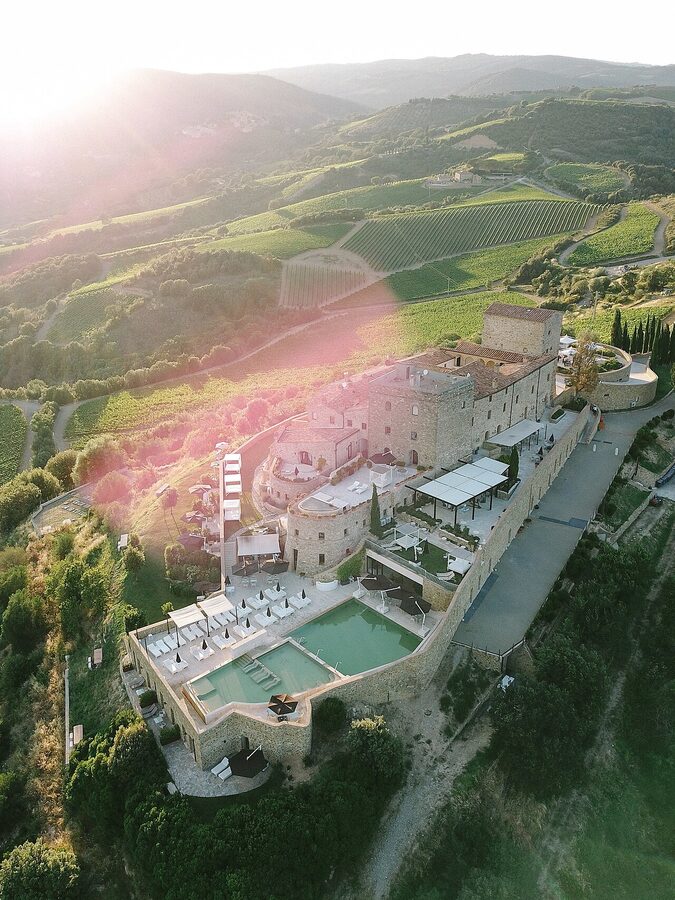
The simpler answer: pick hotels outside the ZTL where possible. Castello di Velona sits on its own hilltop in the Val d’Orcia twenty minutes from any restricted zone. Belmond Castello di Casole is fourteen kilometres outside Casole d’Elsa with its own gate and gravel approach. Mandarin Oriental Lago di Como is on the lake at Blevio, not in Como itself. These are also, not coincidentally, the hotels that work best for self-drive Ferraris. The pattern is not an accident.
Parking
Most Italian luxury hotels with gates and gravel courtyards have valet parking that puts the car in a covered, gated, and watched garage. Most Italian boutique hotels in city centres have a relationship with a nearby pay-garage and walk you back. Most Italian three-star hotels do not, and your Ferrari ends on the street. A Ferrari left on an Italian street overnight is not stolen (Italian car-theft economics on prestige cars are not what they were in the 1980s), but it is keyed, scratched by a passing mirror, and bird-soiled with reliability.
Ask the question at booking, not at check-in. The phrasing that gets a clear answer: “We are arriving with a Ferrari Roma rental, will it be in a covered locked garage overnight or is there a different arrangement?” Vague answers are no answers. The hotels in the route sections below all clear this bar.
Tolls and the Telepass
Italian autostrada is tolled. The Florence-to-Rome run is around €25 each way. Modena to Brescia and back is around €18. The Milan-Como leg is single-figure euro. The toll machines accept all major credit cards, and the queue for them at the busiest barriers in summer is the worst-tempered ten minutes of any Italian drive.
If your rental house offers Telepass, the windscreen-mounted electronic toll reader, take it. It is typically €5-8 per day on top of the rental and removes the entire toll-booth fumble. On a Ferrari with a low front splitter, the alternative involves opening the door and reaching over to the machine while the car behind you leans on its horn, a routine you will tire of by the second day.
Speed limits and police
The Italian autostrada speed limit is 130 km/h. There are radar traps and there are unmarked Polizia Stradale cars. The standard exceedance fine on a 130 limit is around €170 for 10-40 km/h over and rises sharply above that. You will be tempted, in the Roma in particular, to look up at the speedometer and find that what felt like a steady cruise is actually 175. The car insulates you from speed. Treat the limit as the limit, especially on the stretches between major exits where the radar deployments cluster.
One detail most rental contracts make explicit: tickets are charged back to the credit card on file with a processing fee, often months later. Your travel insurance will not cover the fine. Drive within the law. There is enough Ferrari in the experience at 130.
Fuel
Modern Ferraris want 98-octane unleaded, the European premium grade. Q8, IP, and Tamoil stations on the autostrada all stock it; Eni Agip stations stock it under the “Blu Super” branding. Every motorway service area carries it. Smaller village stations may carry only 95-octane, which Ferrari V8s and V12s technically tolerate but will run noticeably less smoothly on. Fill up at autostrada exits, not in hill towns.
One full tank covers around 350-400 km of mixed driving on the V8 cars. On a four-day trip you will refuel three or four times. Keep the receipts; some rental contracts require you to return the car full and verify it.
Insurance and the deductible
This is where the rental contract becomes a real document. Italian Ferrari rentals come with mandatory full-cover and collision insurance built into the daily rate. The number that matters is the deductible: the figure you are liable for if the car is damaged. On a Ferrari Roma rental that figure is typically €5,000-€10,000. On the SF90 it can sit closer to €15,000.
You buy that down two ways. The first is the rental house’s own deductible-reduction product, which usually halves the figure for an extra €60-120 a day. The second is the credit-card collision-damage waiver some premium cards include, which can cover the deductible directly. Read the small print, because most US-issued cards specifically exclude exotic and supercars. American Express Platinum, for instance, does not cover Ferraris on its standard Premium Car Rental Protection. Verify before you travel, in writing, with your card’s benefits team.
The simple read: if you are paying €1,400 a day for a Ferrari, paying another €100 a day to halve your downside is the correct call.
The Ferrari rental landscape in Italy
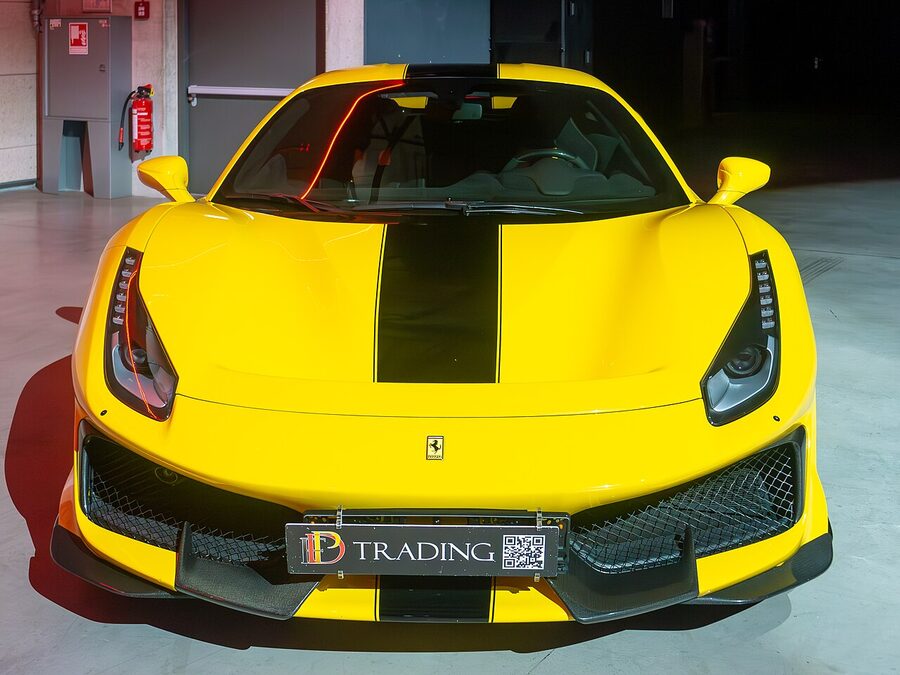
There are perhaps fifteen serious Ferrari rental houses in Italy. The five that come up consistently in self-drive itineraries:
Italian Ferrari Rental (Milan and Modena pickup). Operates one of the biggest Ferrari fleets in Europe: Roma, Portofino, 488 GTB and Spider, F8 Tributo and Spider, 296 GTB and GTS, 812 Superfast, GTC4 Lusso, Purosangue, SF90 Stradale. Daily rates published openly; the Roma is currently advertised at €975 a day on a weekly package, the Portofino around €795, the SF90 at €1,495. Minimum booking three days; insurance bundled, deductible buy-down available.
Power Service Luxury Car Hire (Modena). The original and the rental house most often partnered with the upper-end Italian touring outfits. Fleet skews to California T, 458 Italia and Spider, 488 GTB and Spider, GTC4 Lusso. Less of the latest-generation cars but very strong on hand-over service and a long memory for repeat clients.
Edelstark (Milan). German-Italian operator with a fleet that turns over fast: 296 GTB and GTS, F8 Spider and Tributo, Portofino, Purosangue, Roma and Roma Spider, 12Cilindri, SF90 Stradale. Pricing transparent on the site and tiered: the 296 GTB sits at €1,520 a day on a 3-6 day booking, the 12Cilindri at €2,540, the 488 GTB at €1,180. Free hotel and airport delivery in Milan.
Real Luxury (Florence and Tuscany). Smaller fleet, region-focused: F8 Spider, 296 GTB and GTS, 488 GTB, 812 Superfast. Strong as a Tuscany pickup if you are starting and ending the trip in Florence rather than Modena.
AutoEurope and Sixt Sports&Luxury. The international consortia with prestige-rental divisions; AutoEurope is what most US-based travel agents will quote because they have an English-speaking helpline and a US billing relationship. The cars themselves come from the same Italian rental houses above; AutoEurope is the booking layer with a margin on top.
Whichever you pick, three things to verify in writing before booking: the deductible figure, the kilometre allowance per day (most are 250 km, some are 200, some are unlimited above a four-day booking), and the late-return policy if a flight gets cancelled.
Route 1, Tuscany self-drive (4 days)
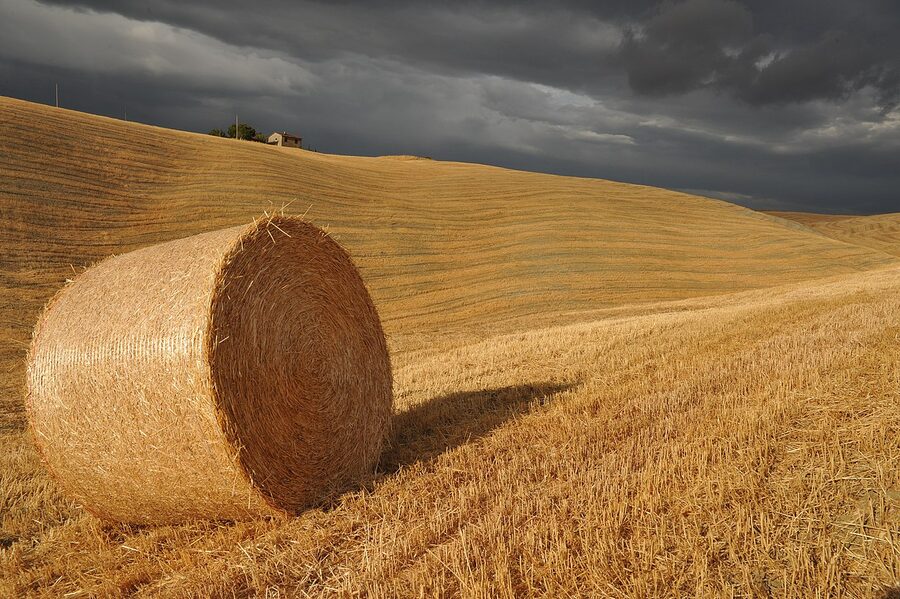
The strongest self-drive route in Italy and the one most rental houses optimise their fleet around. Pick up in Modena, drop in Modena, four nights, two principal driving days and two slow days at the hotels.
Day 1, Modena to the Val d’Orcia. Collect the car mid-morning. Down the A1 to Florence (an hour on the autostrada), pause for lunch at a Chianti agriturismo, then onto the SS222, the Chiantigiana, south through Greve, Castellina, and Castelnuovo Berardenga. Avoid the Siena ZTL by routing east of the city on the SS73. South through Buonconvento and onto the Val d’Orcia secondary roads. Arrive at Castello di Velona late afternoon. Total drive about 320 km, half autostrada and half good Tuscan two-lane.
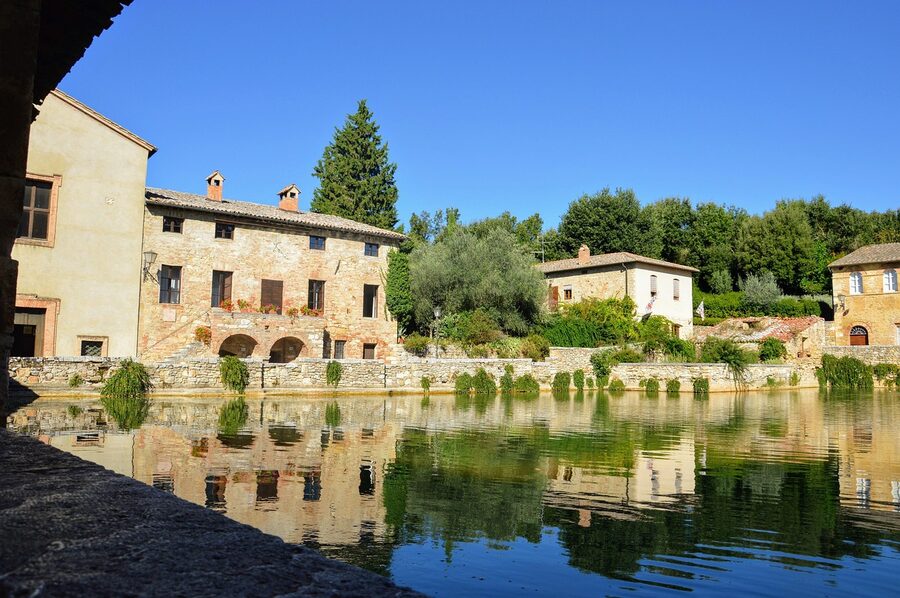
Day 2, Val d’Orcia loop. The day you do not have to drive far. Pienza for lunch, Montalcino for the wine, Bagno Vignoni for the thermal pool town, San Quirico d’Orcia for the cypress chapel road that appears on every Tuscany postcard. Around 90 km of driving on roads that were laid out before maps existed.
Day 3, Val d’Orcia to Castello di Casole. West to the Casole d’Elsa hills, via Volterra if you have appetite for an alabaster town and a long lunch. Belmond Castello di Casole is a 41-suite restored estate on 4,200 acres, fourteen kilometres from the nearest town and gated; the Ferrari sits in a covered courtyard and you walk to dinner. Around 130 km of slow drives across central Tuscany.
Day 4, Casole to Modena. North via Florence (skirting the ZTL via the autostrada loop around the city), back up the A1, drop the Ferrari at Modena by mid-afternoon, train to your next destination. Roughly 280 km, mostly autostrada.
Hotels for the Tuscan route
Castello di Velona Resort, Thermal SPA & Winery. A restored 11th-century fortress on a Val d’Orcia hilltop with the trip’s defining view from the swimming pool. Fifty-six rooms across the original castle and an adjoining historical building, a thermal spa fed by the natural sulphur springs, and a working winery making Brunello and Rosso di Montalcino. Member of Preferred Hotels & Resorts; rates run roughly €600-1,400 a night depending on season and category. Covered garage parking, no ZTL issues, the staff have handled prestige rentals for years. (Booking: Official site | Booking.com.)
Belmond Castello di Casole. A 4,200-acre estate built around a 10th-century castle in the Tuscan hills west of Siena. Forty-one suites, all with views, a working agricultural estate that supplies the kitchen, and the kind of gravel courtyard that frames a Ferrari like it was built for the photograph. Rates from around €900-2,500 depending on suite category. (Official site.)
Casa Maria Luigia. Massimo Bottura’s twelve-room restored country house north of Modena, technically too far north for the Tuscany route as a stay, but within reach as the dinner stop on Day 1 if you pick up the car early. The Francescana at Maria Luigia tasting menu and the Al Gatto Verde wood-fire restaurant are both on the property. Rates from around €1,000 a night for the rooms and substantially more for the suite. (Official site.)
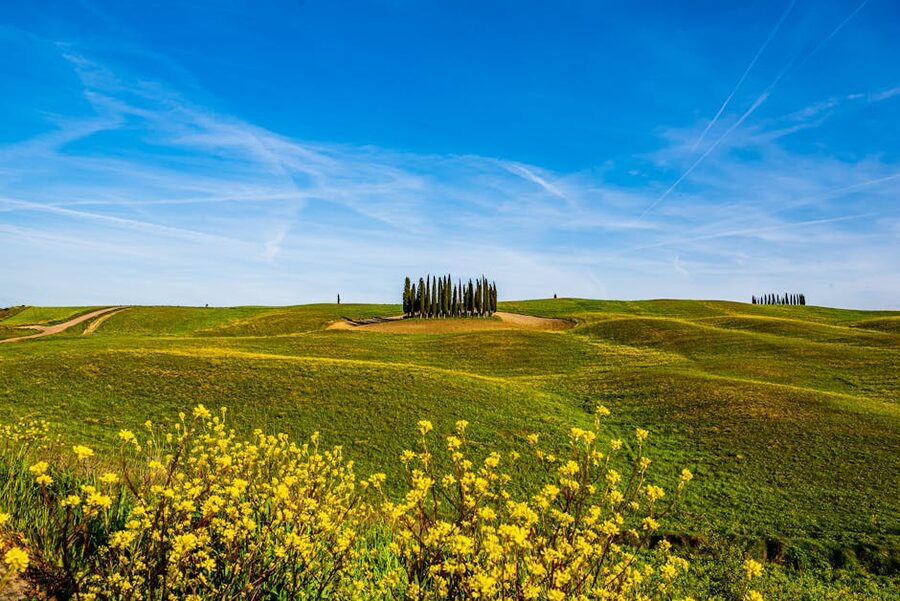
The Tuscany route is the one I would recommend to a first-time Italian Ferrari self-driver. The roads forgive a learning curve, the distances are sensible, the hotels are outside the ZTL, and the food is the trip’s other organising principle.
Route 2, Amalfi Coast self-drive (3-4 days, shoulder season only)
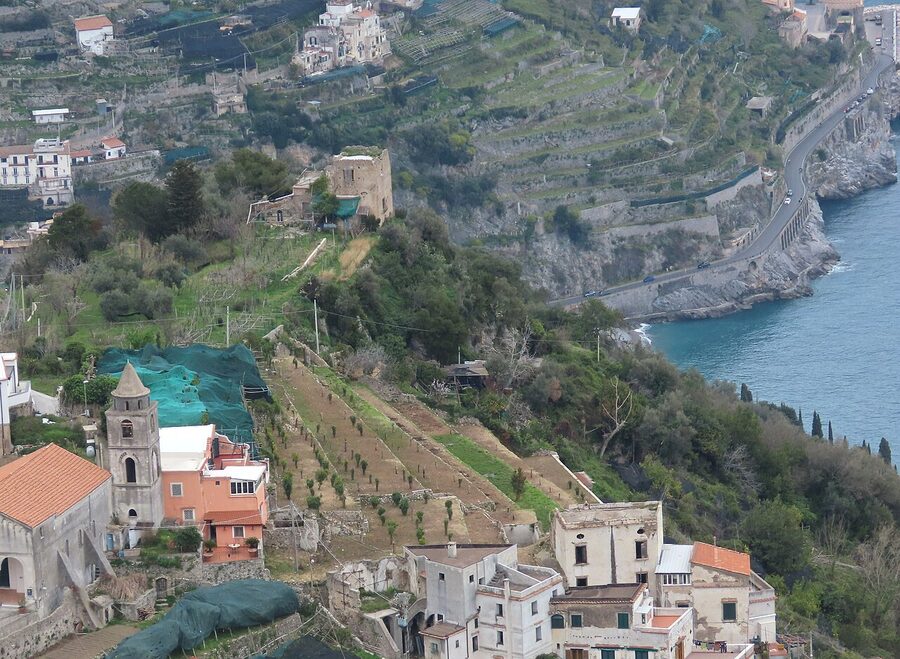
The Amalfi Coast is the route everyone wants to do and the one that disappoints most often. The road that matters is the SS163, the Amalfi Drive, the cliff-edge two-lane that connects Sorrento to Salerno via Positano, Praiano, Amalfi, and Ravello. In good conditions the SS163 is the most cinematic drive in Europe. In peak season it is a slow-motion traffic jam interrupted by tour-bus reversing manoeuvres.
Do this route in May, early June, late September, or early October. Skip July and August completely. In high season the SS163 is single-direction one-way at certain hours, the parking in Positano fills before 10am, and a Ferrari at 8 km/h behind a coach is a worse experience than not driving at all.
Day 1, Naples or Rome to Positano. Pick up the car in Naples (some rental houses will do a Rome delivery for an extra fee). Down the A3 to Castellammare, then across the Sorrento peninsula and onto the SS163 westbound. Two hours of cliff road into Positano. Stop in Praiano for a coffee at one of the cliff-edge bars and let the Ferrari sit at the kerb for the photograph.
Day 2, Positano to Ravello. A short drive (fifteen kilometres on paper, nearly an hour in summer). Ravello sits 365 metres above Amalfi town on a switchback road that climbs through citrus groves. The Belmond Caruso has its own approach off the SS373 and a covered garage. Stay two nights here.
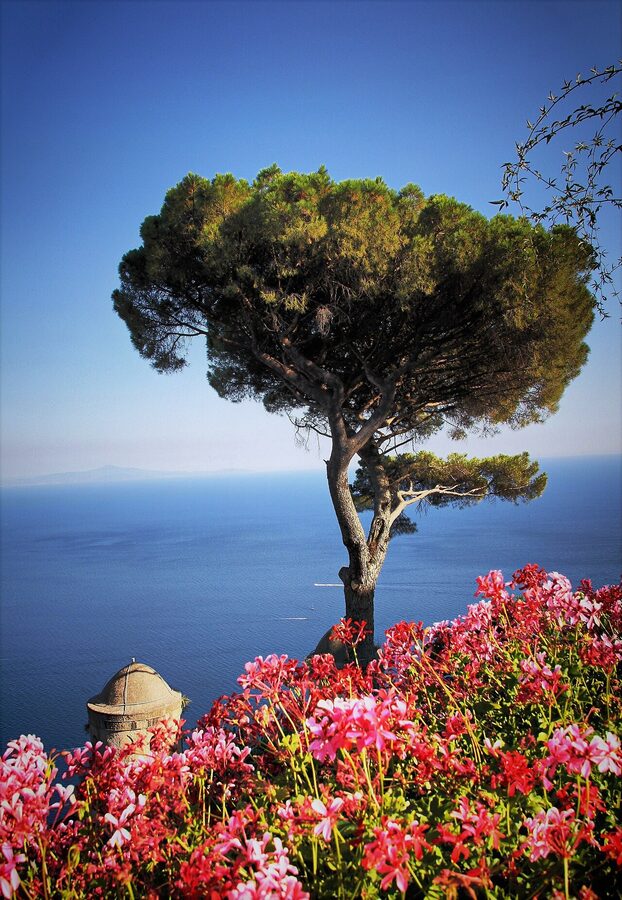
Day 3, Ravello loop, optional Capri tender. Drive the lemon-grove roads above Ravello, take the SS373 inland to the Valle delle Ferriere, lunch at a vineyard above Tramonti. The Ferrari is parked for most of the day. Optional Capri ferry from Sorrento for the afternoon, returning by evening.
Day 4, Ravello to Rome or Naples. Down the SS163 east to Salerno, A3 north to Naples, drop the car. Or extend west to Sorrento, ferry to Capri or Ischia, return another day.
Hotels for the Amalfi route
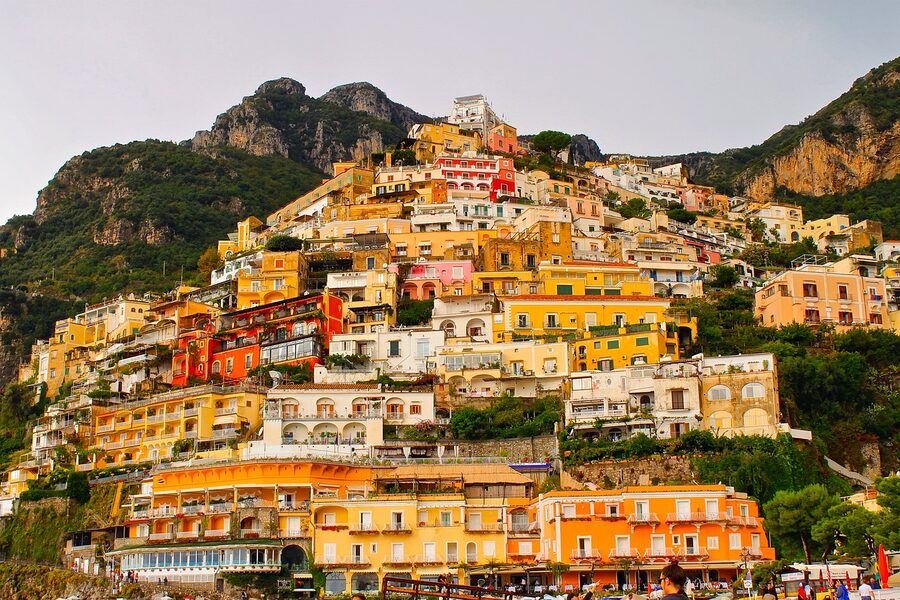
Il San Pietro di Positano. Cliffside, 57 rooms, a private cove reached by lift, and the property where the Amalfi Coast’s old jet-set crowd actually stayed in the 1960s and 70s. Garage parking on the road above the cliff; the hotel arranges the shuffle. (Official site.)
Belmond Hotel Caruso. An 11th-century building on the highest point of Ravello, restored as a 50-room hotel with what is genuinely the best swimming pool view on the coast. The infinity pool drops into the line where the Tyrrhenian meets the sky and the framing changes nothing. Covered hotel garage. (Official site.) Caruso is currently operating after Belmond’s restoration; recent guest reports have been consistently strong.
Le Sirenuse in Positano is the alternative cliffside book; Hotel Santa Caterina in Amalfi town is the formal grand-dame option if Ravello does not fit. Both have valet parking; both also sit inside their respective ZTLs and need plate registration in advance.
The Amalfi self-drive in plain terms: do it in May or September. Stay above the road in Ravello for at least one night. Do not attempt to drive a Ferrari into Positano centre at lunchtime. And the SS163 is a road you do for the experience of driving it once, not as a daily commute between hotels.
Route 3, Italian Lakes and the Stelvio Pass (5 days)
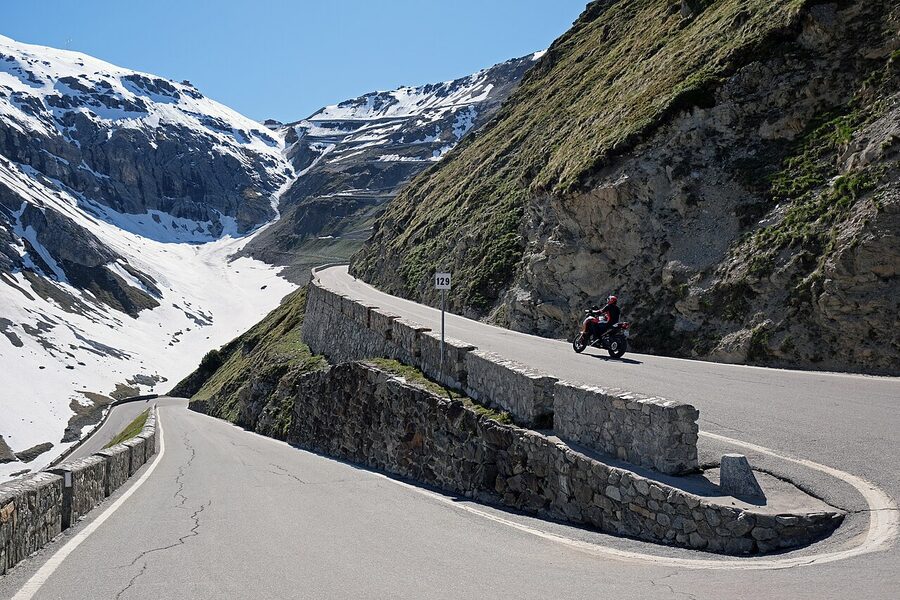
The route for confident drivers. Five days, two driving days that are the trip, and the Stelvio Pass is the reason you came. Pick up in Milan, drop in Milan, sleep on Lake Como.
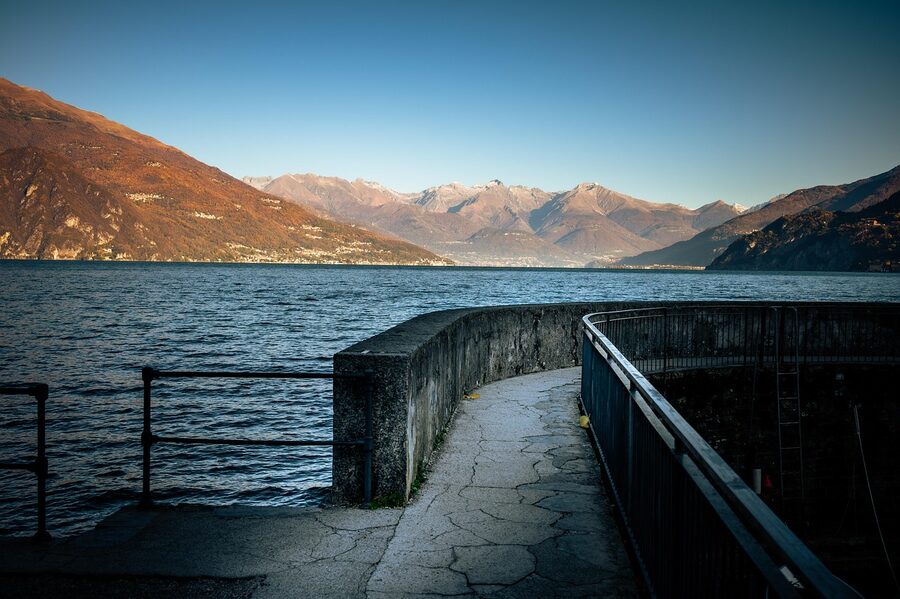
Day 1, Milan to Lake Como. Hour-long autostrada to Como, then the SS340 along the western shore of the lake. The road is narrow in places and the views earn the slow pace. Mandarin Oriental Lago di Como sits at Blevio on the eastern shore (a different turn off the A9) and has its own gated approach.
Day 2, Lake Como loop. Bellagio, Varenna, Tremezzo, Villa del Balbianello on the cape. Driving day that mostly involves stopping. The cars on this part of the lake are competition for the Roma at every village square.
Day 3, Como to Bormio via the Stelvio Pass. The day that defines the route. East from Como through Lecco, up the Valtellina to Bormio, then the SS38 north over the Stelvio Pass to Trafoi and back down. The pass tops out at 2,757 metres with 48 hairpins on the Trafoi-Bolzano side, and the whole climb is open from late May to early November. Drive it as a there-and-back from Bormio rather than as a one-way leg; the northern (Bolzano) flank is the famous side and worth doing twice. Plan for a long day; the Stelvio in summer carries motorcycle traffic and the road surface is excellent but narrow in places. Overnight in Bormio at one of the spa hotels (Grand Hotel Bagni Nuovi if it fits the booking).
Day 4, Bormio to Tremezzo or back to Como. Down the Valtellina retracing partly, with a different approach on the lake. Or stay one more night at the Mandarin and use the morning for Villa Carlotta and the gardens at Villa Melzi. Geneva is six hours west on the Italian-Swiss alpine roads if the trip extends further; if not, the second night on Como is the better call.
Day 5, Como to Milan. Hour back to the rental drop. Late-morning return; afternoon train to wherever next.
Hotels for the Lakes route
Mandarin Oriental Lago di Como. Three Neoclassical villas on Lake Como’s eastern shore, knit together as a 73-key resort across 49 suites, 24 rooms, and 2 villas. Boat shuttle to Como town and Bellagio, two pools, the kitchen runs at proper hotel-restaurant level. The trip’s defining stay if Como is the route. Covered parking and gated grounds. Rates from around €1,000-2,500 a night depending on view and season. (Official site | Booking.com.)
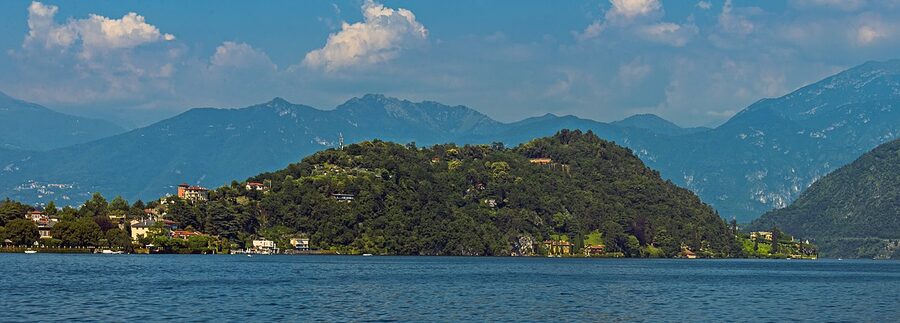
Grand Hotel Tremezzo on the western shore is the classic alternative, a 1910 grand-dame property with the floating pool and the lake views from breakfast. Villa d’Este at Cernobbio is the other heavyweight, a 16th-century cardinal’s villa turned hotel with the Concorso d’Eleganza Villa d’Este parked on the lawn every May. Either works as the principal Como stay.
The Lakes route is the right pick if you have driven a fast car at speed before and want the pass to be the highlight rather than a side trip. The Stelvio rewards confident drivers and punishes timid ones; if you are still learning the car after a day, save the pass for a second trip and stay on the lake.
Route 4, the Mille Miglia loop (3-5 days)
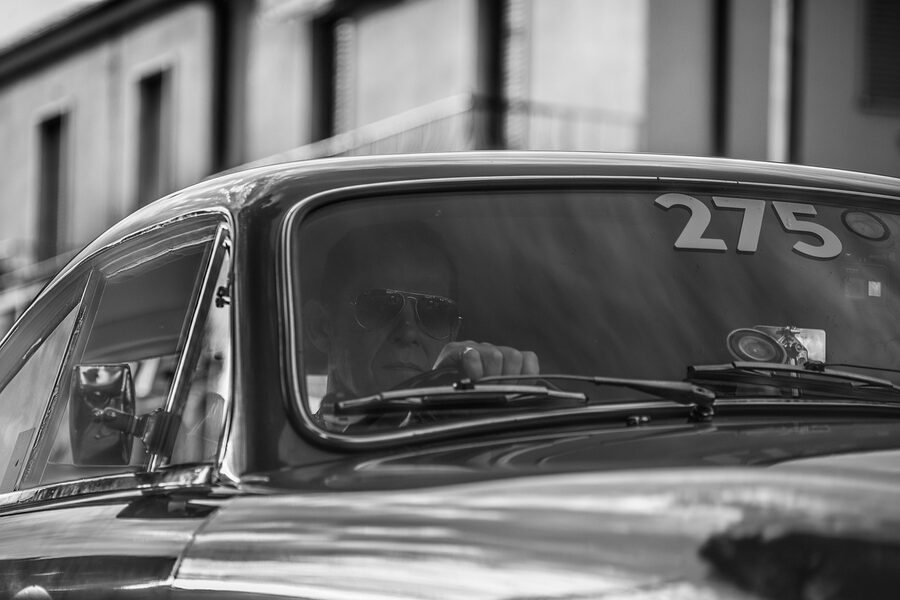
The original Mille Miglia ran from Brescia to Rome and back from 1927 to 1957, a thousand miles of public road in two days, and produced most of the great post-war Italian sports cars including the early Ferraris. The modern Mille Miglia (mid-June each year, classic cars only) follows variations on the same route. Driving a modern Ferrari over a version of it is the romantic pick.
Three days is the minimum and feels rushed. Five days is the right count, with overnights structured around the historical halts. Brescia north to start; south through Verona, Vicenza, Padua, Ferrara, Ravenna; over the Apennines via the Futa and Raticosa passes to Florence; south through Siena to Rome; and then the return leg via Bologna and Modena back to Brescia. Total around 1,600 km on a five-day pace.
The romantic days on this route: the Apennines crossing (the SS65 Futa Pass climbs to 903m and is the road every Ferrari engineer in Maranello drove on a Sunday); the descent into Florence at sunset; the long flat run from Pisa up to Brescia on the final day. The tedious bits: the Adriatic plain section north of Ravenna, which is autostrada with cornfields. Plan around it.
Hotels for the Mille Miglia route
Casa Maria Luigia at Modena (Day 1 or final stop). Hotel Savoy in Florence with its own ZTL plate registration is a serviceable Florence stay. Hotel de Russie or Hotel Eden in Rome for the southern overnight. The Mille Miglia is more of a driver’s route than a hotel-led trip; pick functional luxury hotels that handle plate registration smoothly and budget the spend on the kilometres rather than the suites.
Pair the trip with a half-day at the Museo Ferrari Maranello and a half-day at the Museo Enzo Ferrari Modena before the loop starts, and the route gains a structural arc: you see the cars in their birthplace before driving the road they were built for.
The model question, answered
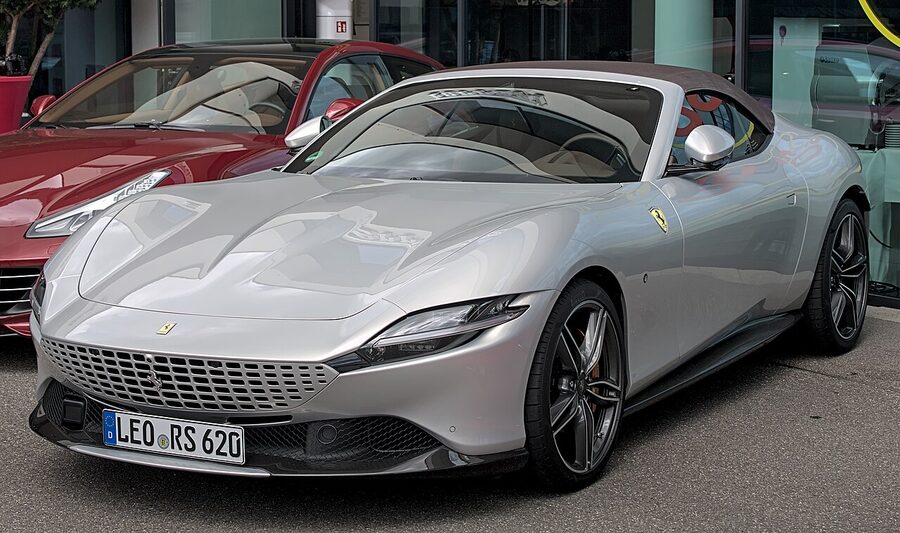
The brochure photograph is the SF90 Stradale, the V8 hybrid hypercar with 986 horsepower and a price tag in the €1,500-a-day region. The right answer for a four-day Italian self-drive trip is the Roma. Here is why.
The Roma is a front-mid-engined V8 grand tourer. Its job is to do high-speed long-distance driving in comfort. It has 612 horsepower, which is more than enough on Italian autostrada. It has a usable 272-litre boot, enough for a weekend bag and a smaller carry-on, which the 488 cannot manage. The cabin is insulated to the point that you can hold a normal conversation at 130 km/h. The seats are comfortable for six hours.
The 488 GTB and F8 Tributo are mid-engined supercars with the V8 behind your shoulders. They are louder. They are noticeably stiffer. They have less luggage space, effectively a sports bag’s worth. They are quicker on a track and they are more theatrical at a kerb. They are also harder work after three hundred kilometres. If you have driven mid-engined cars before and you know what you are getting into, the F8 is wonderful; if this is your first prestige car at speed, the F8 will tire you out.
The 296 GTB and 296 GTS are the new generation, plug-in hybrid V6s with 819 horsepower combined. They are extraordinary cars and they are also genuinely difficult to drive at the limit because the hybrid power delivery is not linear in the way the older V8s are. For a self-drive trip they are an acquired taste. The 296 GTS open-top is the convertible version of the same car.
The Portofino M and the Roma Spider are the convertibles you actually want for the Amalfi run. The Portofino M is the older model, more comfortable, more grand-tourer; the Roma Spider is the newer car, sharper, slightly less mature. Either works.
The SF90 Stradale and the 12Cilindri are the at-the-top-of-the-fleet models. The SF90 is the V8 hybrid hypercar; the 12Cilindri is the front-mid-V12 grand tourer. Either is glorious for a day. Either becomes a chore over four. If you are doing a single-day rental these are the choices; if you are doing four days, take the Roma.
The pattern: for a self-drive trip, the variable that matters most is comfort over four-plus days. The car that wins on that variable is the Roma. The supercars are for one-day track-day-with-road-bookend rentals or for the showroom photograph.
What this trip is not
It is not a track day at Imola. Track-day rentals are sold separately, usually as half-day packages with helmet and instructor included. They are a different category and worth doing on a different trip.
It is not a guided Ferrari tour. The guided programmes (the ones with the support van, the model rotation every other day, the dinner already booked at Casa Maria Luigia, the dedicated tour director) are a different and equally good product. Read the Ferrari Tours piece for that side of it. The two are not in competition; they are different trips.
It is not a Ferrari factory tour. The Pista di Fiorano test track and the actual factory production lines are not open to the public. The two museums, Museo Ferrari Maranello and Museo Enzo Ferrari Modena, are the public-access alternatives, and both are worth the morning. Neither replaces the drive.
And it is not a substitute for the rest of the Italian trip. A Ferrari self-drive sits inside a longer trip, not in place of one. Three days in Rome before the Naples pickup, four days on the Amalfi with the car, five days on the wider Italy without it. Or three nights in Bologna before the Modena pickup, four days on the Tuscan loop, three nights in Florence after. The Ferrari is the centrepiece, not the meal.
Adjacent routes and continuations
If the Italian Lakes route extends further, the Geneva alpine continuation reads naturally; the Stelvio leg ends pointing west, and the Italian-Swiss Alps roll into the Geneva basin in a long day. Our Geneva guide covers what to do at the other end. If the Italian trip is paired with a Mediterranean country a Ferrari cannot reach, the natural cross-over is Croatia by ferry from Ancona; our Croatia piece covers the Adriatic side. For a French extension, the Sun King’s France route (Versailles, Vaux-le-Vicomte, the Loire) reads as a contrast trip: the same affluent reader, the same week of the year, the opposite atmosphere.
The Touring category landing at /touring/ indexes all of these.
The verdict
Self-drive Ferrari Italy works. It works for confident drivers, in the right season, with hotels that handle the parking and the plate registration without making it your problem. It does not work for people who have never driven a fast car at speed, in summer on the Amalfi Coast, or as a one-night booking dressed up as a road trip.
The right shape, in summary: four to five days, a Roma if you want comfort and a Roma Spider if you want the open top, the Tuscany loop for a first attempt and the Lakes-and-Stelvio for a second. Castello di Velona for the Tuscan finale, Mandarin Oriental Lago di Como for the Lakes anchor, and Belmond Caruso for the Amalfi if you do it in May. Pay for the Telepass, pay for the deductible buy-down, and ring the hotel two days ahead about the ZTL plate.
The road in front of the Roma on the Chiantigiana, two ridges south of Greve, on a still April morning. That’s the picture. Plan the trip so you arrive at it.