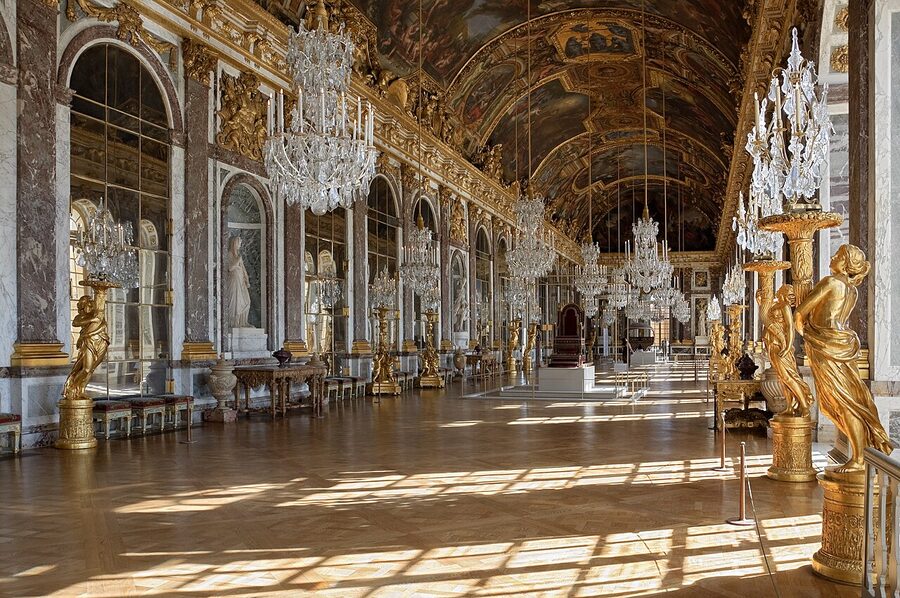
First light in the Hall of Mirrors, an hour before the doors open to the day’s queue, is the moment Versailles still belongs to the people who actually built it. The chandeliers are off. The parquet creaks under the guard’s shoes. The seventeen mirrored arches face the seventeen window arches across the long axis, and the morning sun slides across the Garonne marble underfoot in a single uninterrupted strip the way it would have done for Louis XIV every morning of his reign. The gilding is at its quietest. There are no children. There is no one taking a photograph in front of the King’s bust. There is, briefly, the room as it was, and that is the room you came to France for.
Most coverage of Versailles works the day-trip frame. Train from Paris, three hours inside, an afternoon in the gardens, the Petit Trianon if you are organised, the train back. That visit is fine. It is not what this trip is. The Sun King’s France is a real luxury-travel topic with its own structure, its own rhythm, and its own set of places, and it is more rewarding read across five to seven days than two. Versailles is the centrepiece, but Vaux-le-Vicomte is the chateau that triggered Versailles, Fontainebleau is the chateau the kings actually preferred, and the Loire Valley is where Versailles got its architectural language from in the first place. The Paris of Louis XIV, Place Vendôme, Place des Victoires, the Champs-Élysées, the Invalides, is what’s still standing of the city he built. Threaded together at the right pace, with the right hotel as your base and the right table for your last dinner, you have a trip that is the long magazine version of the day-trip article.
In This Article
- The thesis, stated plainly
- Versailles is two days, not one
- Tickets, in plain language
- The chateau itself
- The gardens are the building
- The Trianons and the Hameau
- What I’d actually do over two days
- Vaux-le-Vicomte: the chateau that triggered Versailles
- The candlelit Saturdays, the visit that beats Versailles
- How to do Vaux
- Fontainebleau: what Versailles would be without the tourists
- What to look at, and where
- The gardens, the carp pond, the forest
- The Loire Valley: where Versailles came from
- Chambord
- Chenonceau
- Cheverny, Amboise, Villandry
- Where to stay on the Loire
- The Sun King’s Paris
- Place Vendôme and Place des Victoires
- The Champs-Élysées and the western axis
- The Invalides
- Where to stay in Paris for this trip
- Hôtel de Crillon
- Le Meurice
- The Ritz Paris
- Saint James Paris and Le Royal Monceau
- Tables for a Sun King week
- Le Grand Véfour
- Lasserre
- L’Ambroisie
- Tour d’Argent
- Five days, then seven
- The five-day Sun King trip
- The seven-day version, with the Loire
- The honest takes
The thesis, stated plainly
You are giving this trip more than three days. The cluster of palaces and chateaux that the Bourbon kings built or remade between François I and Louis XV are not a one-line addition to a Paris itinerary. They are the trip. Paris is the base camp from which you reach them, and Paris itself is also a part of the route, the squares, the avenue, the soldiers’ hospital, the table on the Quai de la Tournelle. Five days is the floor. Seven is right.
The structural calls to make before you book anything else: which Paris hotel anchors the week (the four within walking distance of Tuileries, Concorde, and Place Vendôme are not interchangeable, and the differences matter); whether Vaux-le-Vicomte happens on a Saturday evening by candlelight or as a daylight visit; whether you pair Vaux with Fontainebleau as a single big chateau day or separate them; and whether the Loire Valley belongs in this trip at all. The honest answer to the last question is: yes, but only if you have at least three nights to give it. Two-night Loire visits are the most regretted leg of every Sun King itinerary I have written. If you are doing five days, do Versailles + Vaux + Fontainebleau + Sun King’s Paris. If you are doing seven, add the Loire properly.
Versailles is two days, not one
The standard one-day Versailles visit is a category error. The chateau itself, in peak season, takes most of a morning and a full lunch slot to walk through with any attention. The gardens, the Le Nôtre gardens, which are the more important half of the site, take the afternoon if you walk them seriously, and they take a full second day if you want the Trianons and Marie Antoinette’s hamlet on top. The peak-season crowds compound the problem. By 11am in July, the corridors of the State Apartments move at the pace of a slow underground train, and the Hall of Mirrors photographs as a sea of phones at head height. The premium move is to give the place two days, separate the chateau visit from the gardens visit, and put one of those days at the front of a pre-opening ticket.
Tickets, in plain language
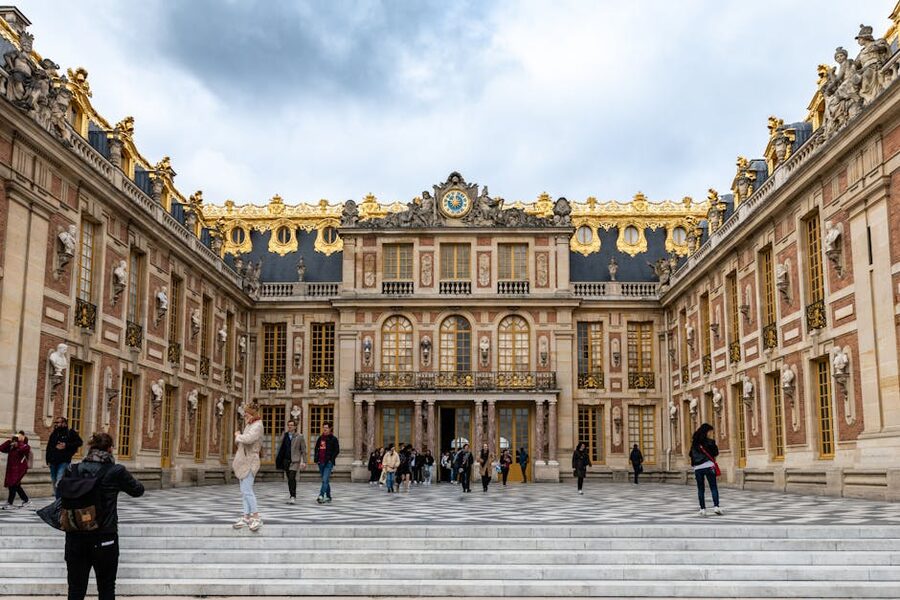
Versailles in 2026 runs three useful tickets and a pile of less useful ones. The Passport (€25 low season, €35 high season; €22 / €32 reduced for EEA residents) covers everything: the chateau, both Trianons, the Hameau, the gardens on fountain show days. The Late Passport (€18 from 3pm low season, €28 from 4pm high season) is the reasonable second-half-of-the-day ticket if you’ve been somewhere else in the morning, but you will be fighting the worst of the chateau crowds for the few hours you have. The Marie Antoinette estate ticket (€15 standard, €12 EEA-reduced, year-round) is the answer if you’ve already done the chateau on a previous visit and want to spend a clean afternoon in the Trianon-and-Hameau corner of the park. Buy any of them on en.chateauversailles.fr a fortnight ahead at the latest. Walk-up tickets in May or July are a trap.
The pre-opening private visit, sold by various Paris-based small operators at the upper-luxury end of the market, gets you into the State Apartments and the Hall of Mirrors before the day’s queue. It is the only honest way to see the Hall as a room rather than as a crowded passage. Prices vary by operator and by season; the bracket runs roughly €300–€600 per person above the cost of the entrance ticket itself, sometimes more for very small groups with a senior guide. If you only do this trip once, do this on day two of Versailles and forget the cost.
The chateau itself
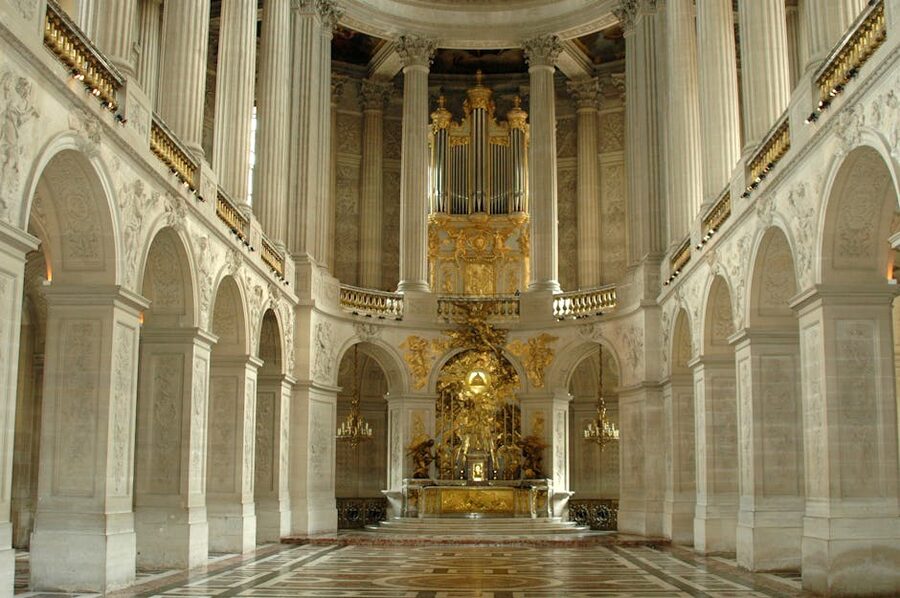
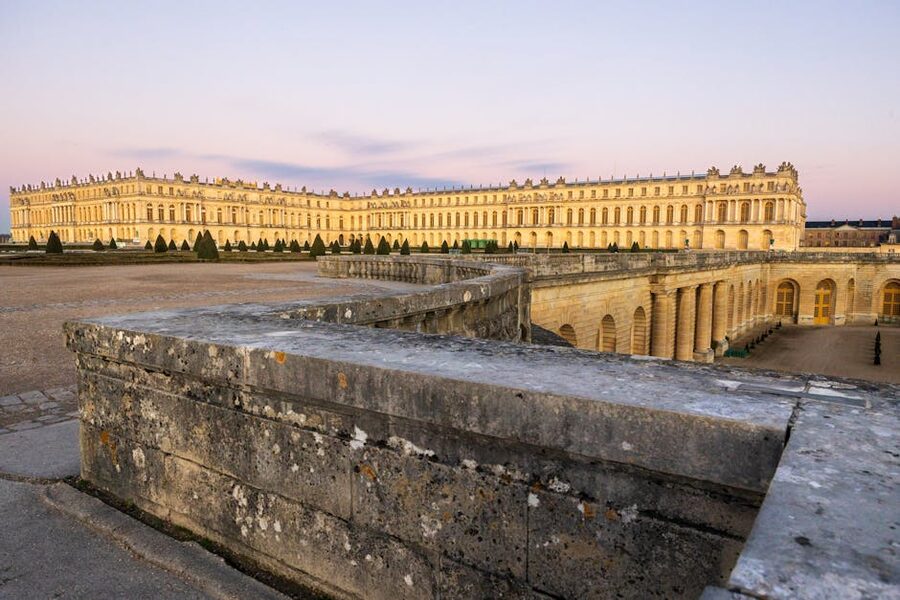
The room order matters. The State Apartments, the Salon of Hercules, the Salon of Abundance, then through Venus, Diana, Mars, Mercury and Apollo, were the public-facing reception rooms, each named for the planet whose mythology decorated the ceiling. The Salon of War leads into the Hall of Mirrors, the Hall of Mirrors leads to the Salon of Peace, and the Salon of Peace into the Queen’s Apartments. This is one continuous loop and you walk it in one direction. The King’s State Apartment is north of the loop; the Queen’s is south. The Royal Chapel, the most architecturally interesting room in the building if you set aside the Hall, sits at the western end of the chateau on the upper level and is often quieter than the state rooms because the tour groups press through it briskly.
The thing not to miss inside the chateau, beyond the Hall: the Galerie des Batailles, the long gallery in the south wing, hung with the largest battle paintings in France. It is a 19th-century addition, post-Sun-King, but it sits on the original axis and gives you a quiet half hour at the southern end of the building when the State Apartments are at their busiest. The Royal Opera, when it is open to general visit (it is sometimes reserved for performance bookings), is the other room to seek out, Gabriel’s 1770 wedding gift to the future Louis XVI, all painted-and-gilded woodwork imitating marble.
The gardens are the building
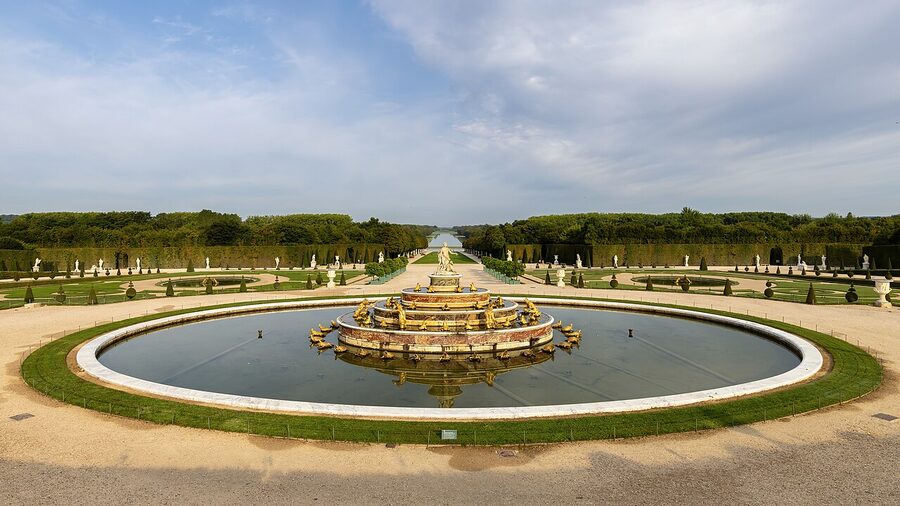
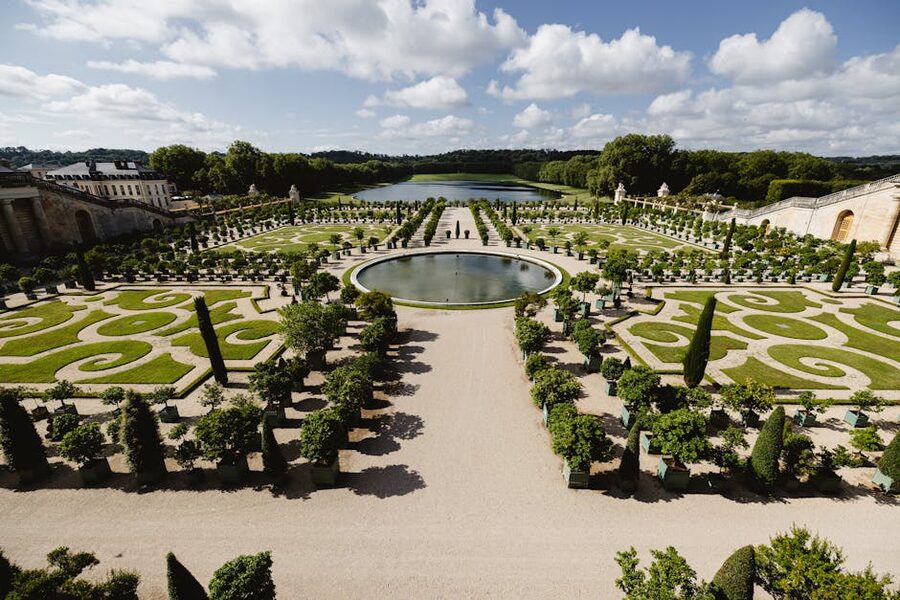
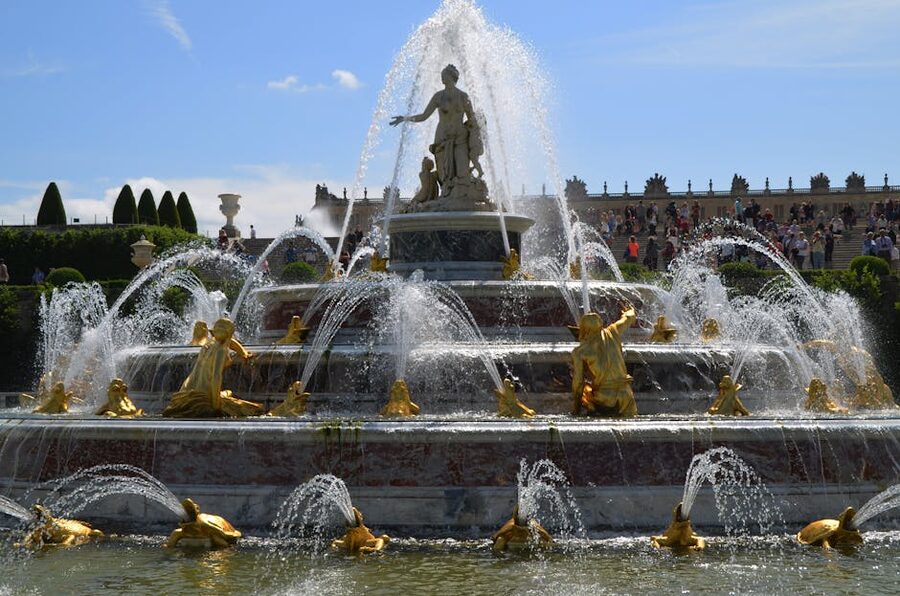
The Le Nôtre gardens are the half of Versailles most one-day visitors short-change, and they are the more historically important half. The central axis runs west from the chateau through the Latona Fountain, the Tapis Vert, the Apollo Fountain, then the Grand Canal, the kilometre-long water feature on which Louis XIV kept a small fleet of Venetian gondoliers. To either side of the central axis, the bosquets, Le Nôtre’s “rooms” carved out of the woodland, hold the rococo set-pieces: the Bains d’Apollon, the Salle de Bal, the Bosquet des Trois Fontaines. The Musical Fountains Show days (Tuesdays, Saturdays, Sundays in season) and Musical Gardens Show days (varying, check the chateau calendar) bring the bosquet fountains on and play period music through the woodland; they’re worth a Saturday afternoon, but they’re also the busiest gardens days. A quiet Wednesday in May with the fountains off and the gravel paths walking-pace empty is the better aesthetic call.
The Trianons and the Hameau
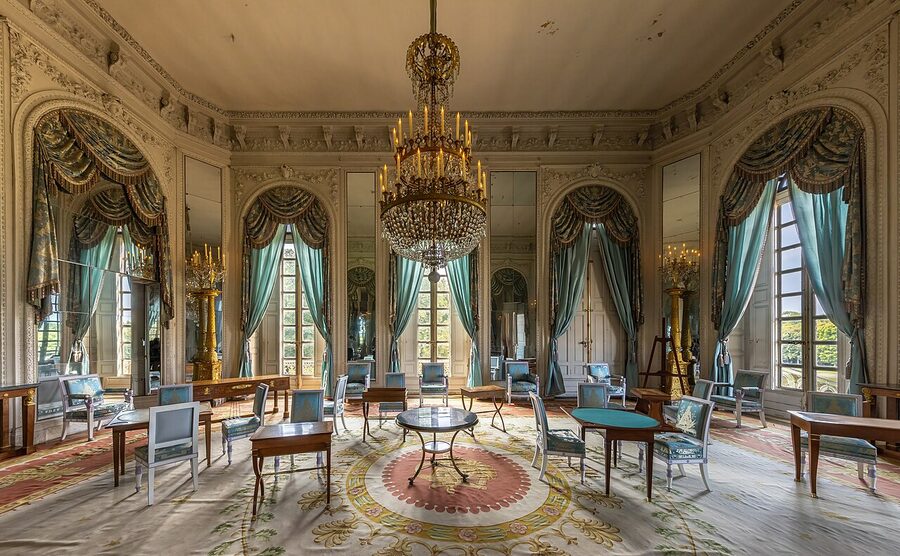
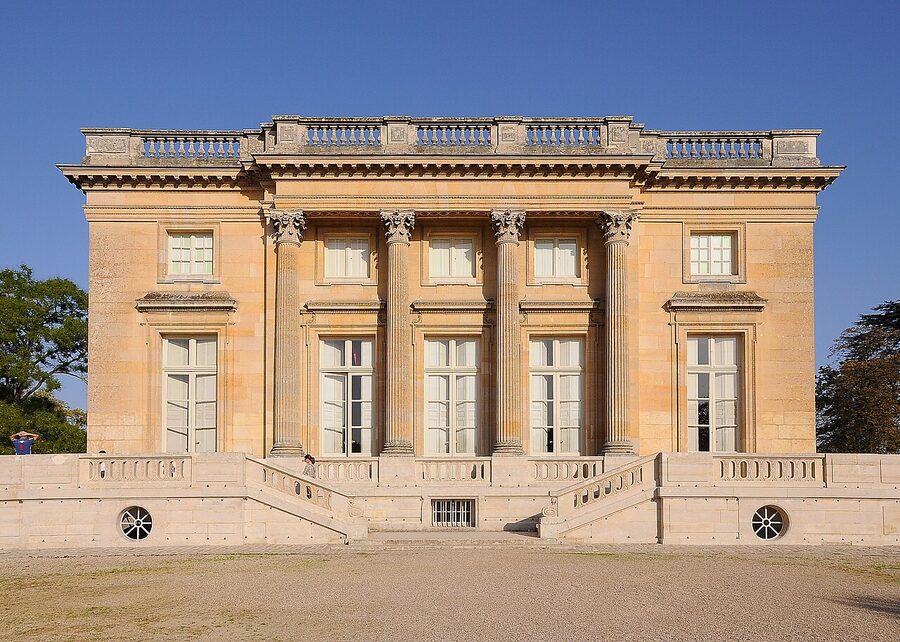
Most of the structural mistake of one-day Versailles visits is that the Trianons get cut. The Grand Trianon, Mansart’s pink-marble single-storey royal escape, built 1687, the place Louis XIV came to be away from the court without leaving the estate, is forty minutes’ walk from the chateau, or a Petit Train ride, or a hire bike along the Grand Canal. It is the most relaxed building on the whole site; you walk the long arcade between the two wings and the courtyard opens onto the gardens with the Salon of Mirrors at the end. The Petit Trianon, smaller and more intimate, was given to Marie Antoinette as her own retreat. Beyond it, the Hameau de la Reine, the queen’s faux-rustic village, with its thatched-roof farmhouses, its mill, its dairy, and its working farm with two cows, is the other side of the same coin. It is theatrical, but the theatre is the point.
What I’d actually do over two days
Day one: pre-opening private visit at 8am, the State Apartments and Hall of Mirrors quiet, the King’s Apartment, lunch at Ore (Alain Ducasse’s restaurant inside the chateau itself, in the Pavilion Dufour), the Royal Chapel and Galerie des Batailles in the early afternoon, then drift down into the gardens via the Latona Fountain and out to the Tapis Vert. Coffee at the Petit Venise pavilion at the head of the Grand Canal. Train back at five, before the rush.
Day two, gardens-only: Marie Antoinette estate ticket, into the park via the Trianon gate, Grand Trianon first thing, lunch at Angelina (the smaller branch in the Pavilion d’Orléans), Petit Trianon and Hameau in the afternoon, then a long walk back through the bosquets to the Apollo Fountain and the chateau facade for the western light. The two days separated this way are easier on the legs and double the photographs you’ll come home with.
Vaux-le-Vicomte: the chateau that triggered Versailles
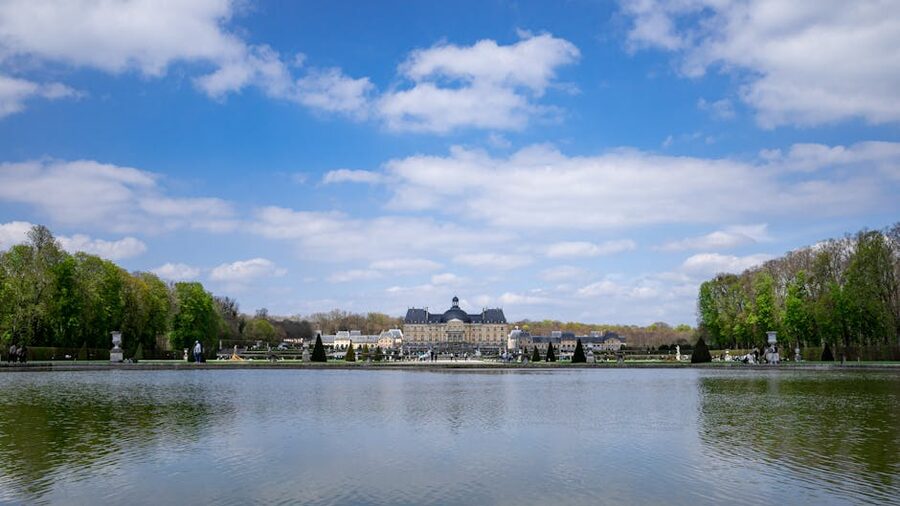
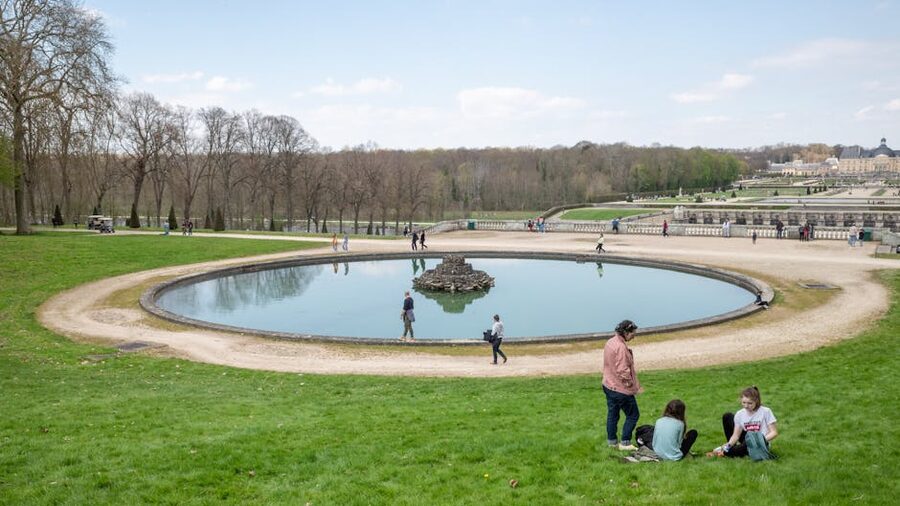
The story is the one travel writers get wrong half the time, so it’s worth telling carefully. In August 1661, Louis XIV’s finance minister Nicolas Fouquet held a housewarming party at his newly finished chateau at Vaux, southeast of Paris. He had hired the three best men in France for the job: Louis Le Vau as architect, Charles Le Brun as painter and decorator, André Le Nôtre as garden designer. The result, finished in five years, was the most beautiful private estate in the country. The party, fireworks, ballet, a Molière play, a dinner choreographed by François Vatel, was so spectacular that the young Louis, who attended, decided his minister could only have built it on stolen money. Three weeks later he had Fouquet arrested for embezzlement. The architect, the painter, and the gardener were transferred to royal service and put to work on Versailles.
Vatel, the maître d’hôtel of Vaux, gets a footnote of his own here. The famous suicide-over-the-fish story is set ten years later, at Chantilly in 1671, after Vatel had moved on to the household of the Prince de Condé. But the dinner he choreographed at Vaux in August 1661 was the one that made his name. The chateau today still keeps a candlelit-evening dinner service at the Grand Carré restaurant on the south facade, and the menu nods to the Vatel tradition without trying to imitate it.
The candlelit Saturdays, the visit that beats Versailles
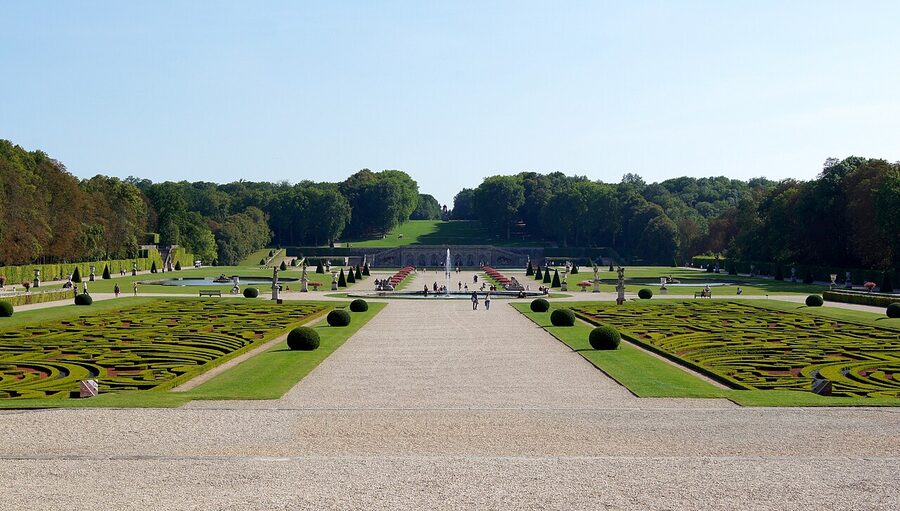
From 16 May to 26 September 2026, every Saturday from 5:30pm to 9:30pm, plus 13 July and 15 August, Vaux-le-Vicomte runs its candlelit evenings. Two thousand candles are placed in the chateau and across the formal gardens; the fountains run; the lanterns light the long perspective from the steps to the Hercules statue at the head of the cascade. Adult tickets are €22, reduced €17.50, and the venue stays comparatively unhurried for an event of this kind because Vaux is twenty kilometres outside the Paris commuter belt and most international visitors do not know it exists. A Saturday evening at Vaux in mid-June, with dinner in the chateau and a slow walk through the gardens at twilight, is one of the genuine premium-publication experiences you can have in France. It is also the closest you will come to seeing a 17th-century French country house operating in the manner the architects intended.
How to do Vaux
From Paris, the train to Verneuil-l’Étang on the Gare de l’Est line runs about thirty-five minutes; from Verneuil, a chateau shuttle (€8 return) bridges the last seven kilometres. By car it is an hour from central Paris on the A4 and A5. For a candlelit Saturday, leave Paris at 4pm, plan to arrive at 5:30pm with the gardens about to come alight, dine at the Grand Carré, walk the gardens between courses, and aim to leave around 10pm. If you are fitting Vaux and Fontainebleau into a single day, do them in that order: morning at Fontainebleau (the rooms first, the gardens after), an hour’s drive south to Vaux for late afternoon, then home from Vaux in the evening. They are both off the same A6/A5 corridor and well within day-trip range of central Paris.
Fontainebleau: what Versailles would be without the tourists
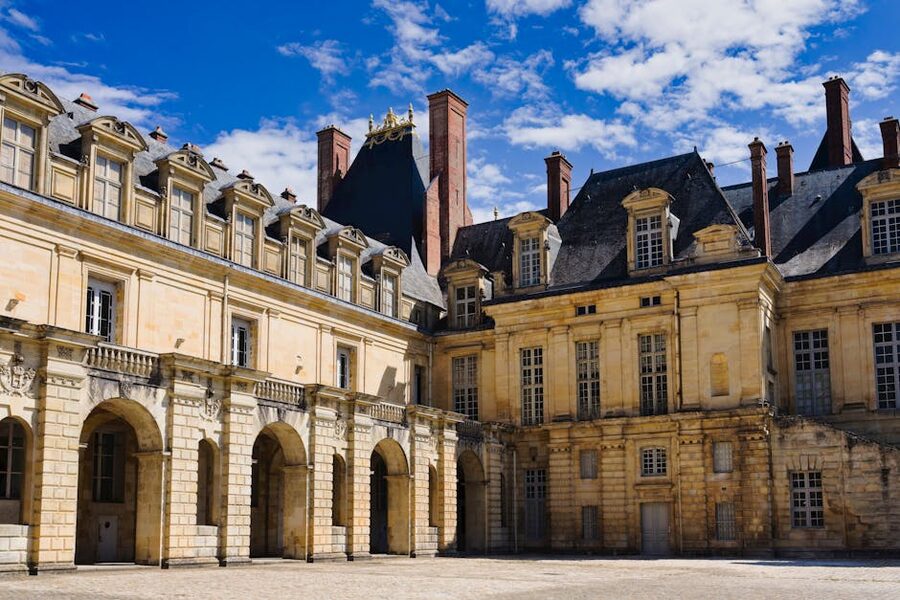
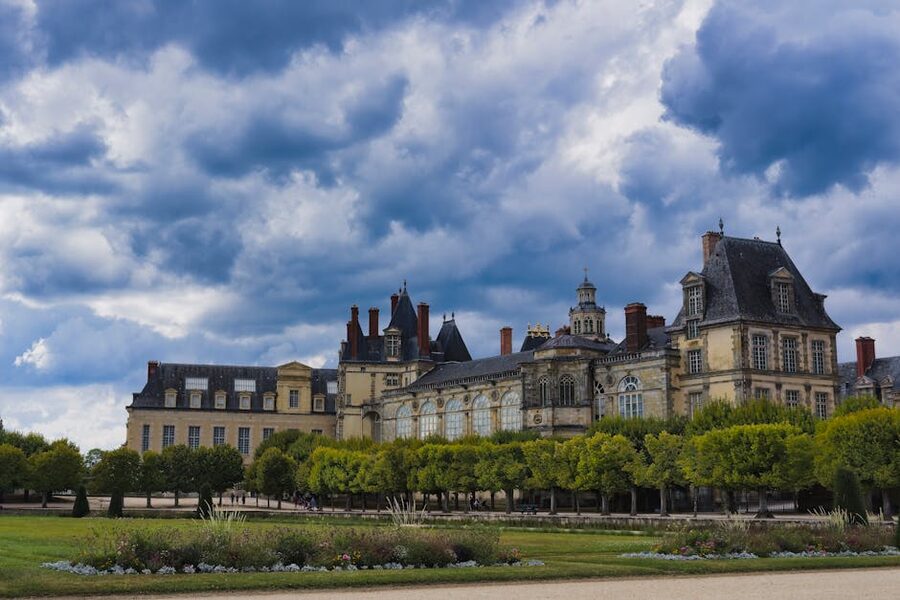
If Versailles is what every French monarch wanted his court to look like, Fontainebleau is where they actually wanted to live. The chateau in the forest, sixty kilometres south of Paris, was the favoured residence from François I (who rebuilt it on the bones of a medieval hunting lodge in the 1530s) through Henri IV, Louis XIII, Louis XIV himself when not at Versailles, and on through Napoleon and the Second Empire. Every monarch added something. The result is the most architecturally layered royal residence in France, with the François I Gallery, the Henri IV courtyards, the Louis XV theatre, and the Napoleonic apartments all visible on a single visit. The crowds run perhaps twenty per cent of Versailles’ on any given day, and the train from Paris (Gare de Lyon to Fontainebleau-Avon, then a short bus) takes about forty minutes.
What to look at, and where
The Galerie François I, the long first-floor gallery painted in the 1530s by Rosso Fiorentino and Primaticcio, is the most important room in the building and one of the most important interiors in France. It pre-dates the Versailles Hall of Mirrors by 150 years and reads as the manifesto for everything Bourbon court decoration would later become. Walk it slowly; the stuccowork between the paintings is as worth your time as the painted panels. The Salle de Bal, Henri II’s ballroom, finished under Henri IV, is next door and is the room where Louis XIV would later hold court when in residence. The Galerie de Diane, the long library on the upper floor, is where Napoleon set up his working office in 1814 in the few weeks before his abdication.
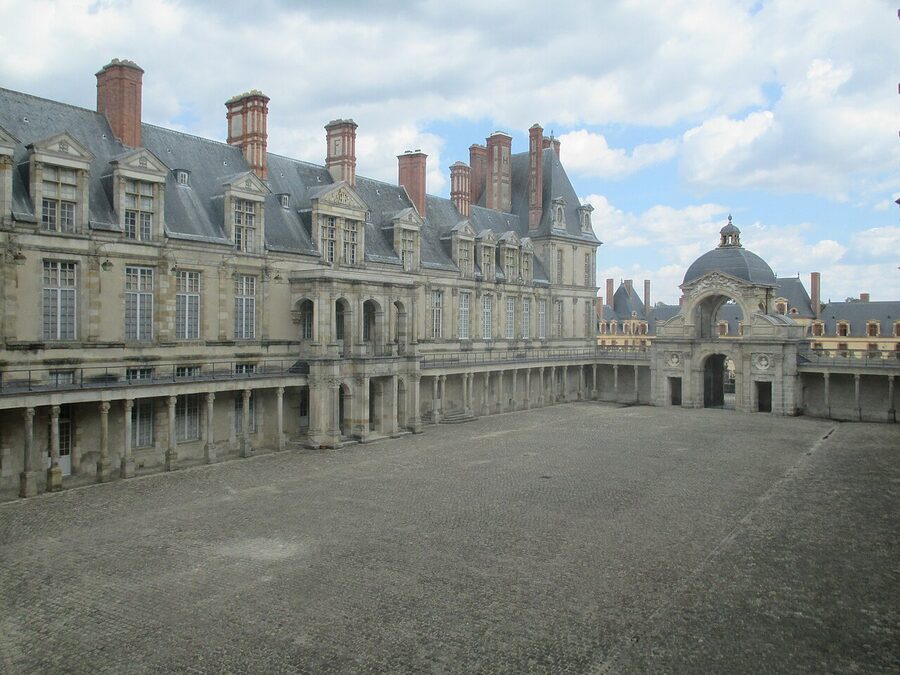
The Petits Appartements de l’Empereur, Napoleon’s private suite on the ground floor of the south wing, opened to general visit a few years ago and remains undersold by the chateau’s marketing. They are the most intimate Napoleonic interiors in France, with the camp bed, the writing desk, the library, the bathroom. Half the visitors who come to Fontainebleau for Louis XIV leave talking about Napoleon.
The gardens, the carp pond, the forest
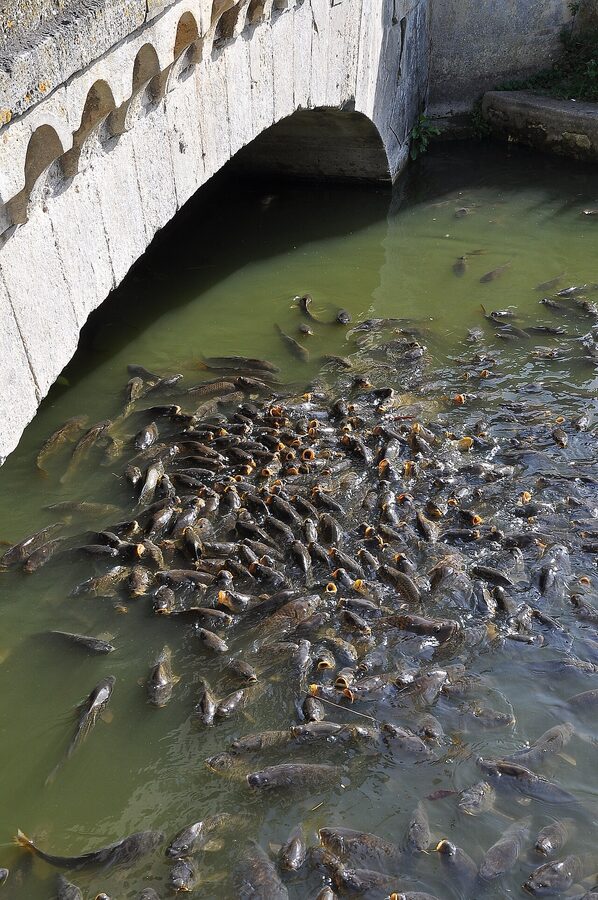
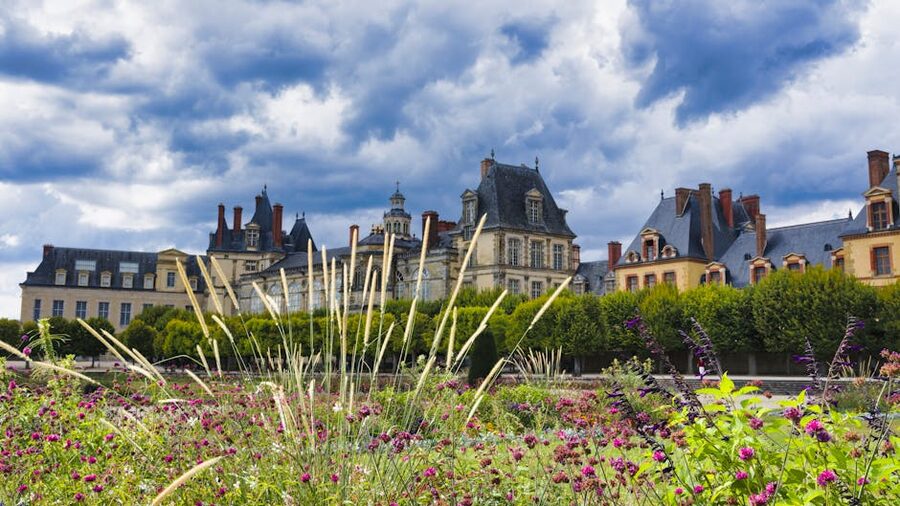
The Fontainebleau gardens are smaller than Versailles’ and more various: a long Le Nôtre parterre on the east side, the Diana garden tucked between the wings to the north, the Étang aux Carpes, the carp pond, to the west with its small island pavilion, and the Jardin Anglais, the romantic 19th-century landscaped garden that hides the Pavillon de l’Étang. The carp in the pond are not the original carp, but they are descendants of carp introduced under Henri IV and they will swim to the bank if you stand still for a minute. The Forêt de Fontainebleau, around the chateau, runs to twenty-five thousand hectares, the largest forest within easy reach of Paris, and a slow walk through the Tour Denecourt section in the afternoon is the way to round out the visit.
The Loire Valley: where Versailles came from
The case for the Loire Valley as part of a Sun King trip rather than its own trip rests on the architectural lineage. Le Nôtre and Le Vau and Le Brun were not the inventors of the formal French garden or the long axial perspective; they were the inheritors of a tradition that had already been running for a hundred and fifty years in the Loire under François I, Henri II, Catherine de Medici, and the chateau-builders of the 16th century. Chambord, finished in the 1540s, is the architectural ancestor of the Versailles roofline. Villandry’s potager, the formal kitchen garden, with vegetables planted in geometric beds, is the rehearsal for Le Nôtre’s parterres. Chenonceau, the bridge chateau, is where the long axis crossing the river anticipates the Versailles axis crossing the Tapis Vert. If the only Loire chateaux you visit are these three plus Cheverny and Amboise, you have the lineage covered.
Three nights is the minimum for the Loire as a chapter inside this trip. Two nights is not enough; you waste the first half-day on the train down and the last half-day on the train back, and the chateaux don’t get their proper time. Hire a car for the three nights, train into Tours or Saint-Pierre-des-Corps, hire car at the station, base in Amboise or south of the river near Chenonceau, drive the chateaux from there.
Chambord
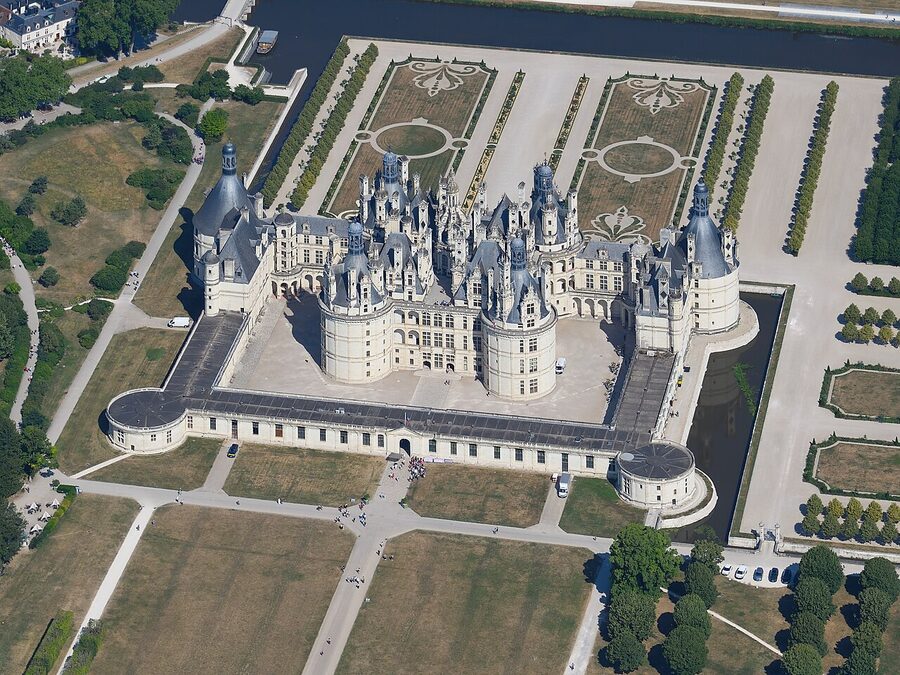
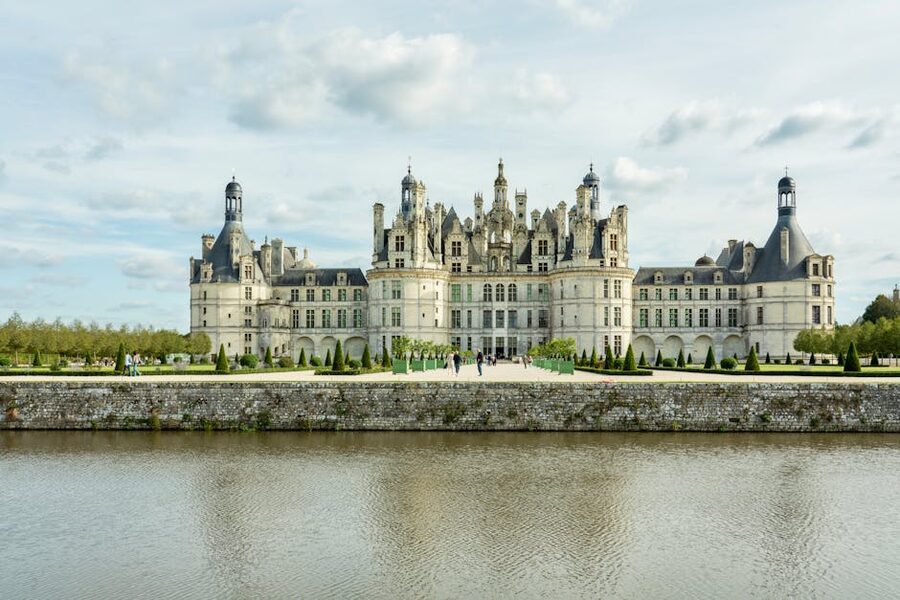
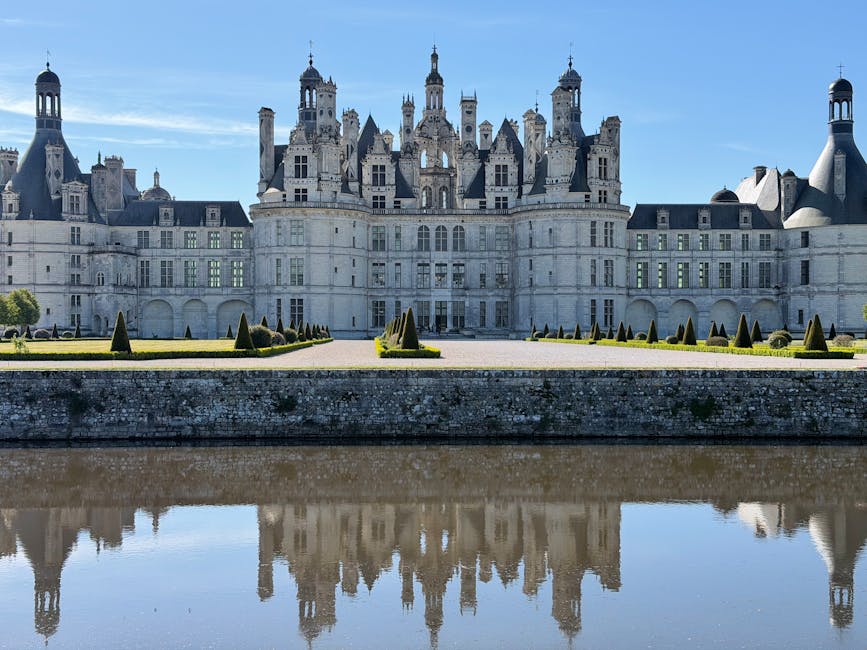
Chambord is the largest of the Loire chateaux and the strangest. François I commissioned it in 1519 as a hunting lodge, it has 440 rooms, eighty-four staircases, and a roof terrace designed for the court to watch the hunt, and it was never properly finished or properly inhabited. The double-helix central staircase, attributed to Leonardo da Vinci by tradition (Leonardo lived in nearby Amboise as guest of François I until his death in 1519), is the architectural set-piece. The roof terrace is the building’s true gift; you walk up the helix, out among the chimneys, and look across the kilometre-square deer park to the forest beyond. In 2026 the chateau opens 9am to 5pm from 4 January to 27 March (low season hours) and 9am to 6pm from 30 March to 27 October (high season). Buy tickets online at chambord.org; on a summer Saturday the queue at the gate runs over an hour.
Chenonceau
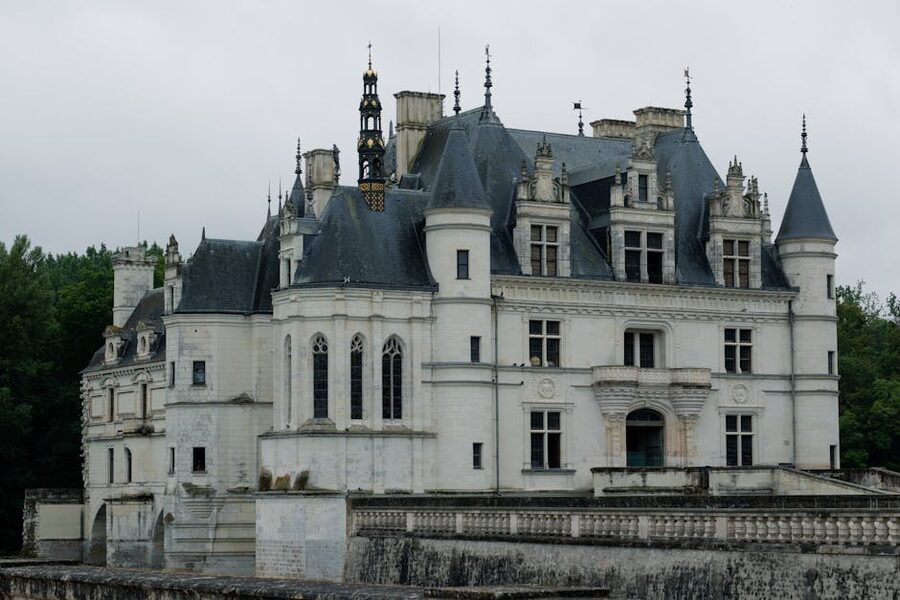
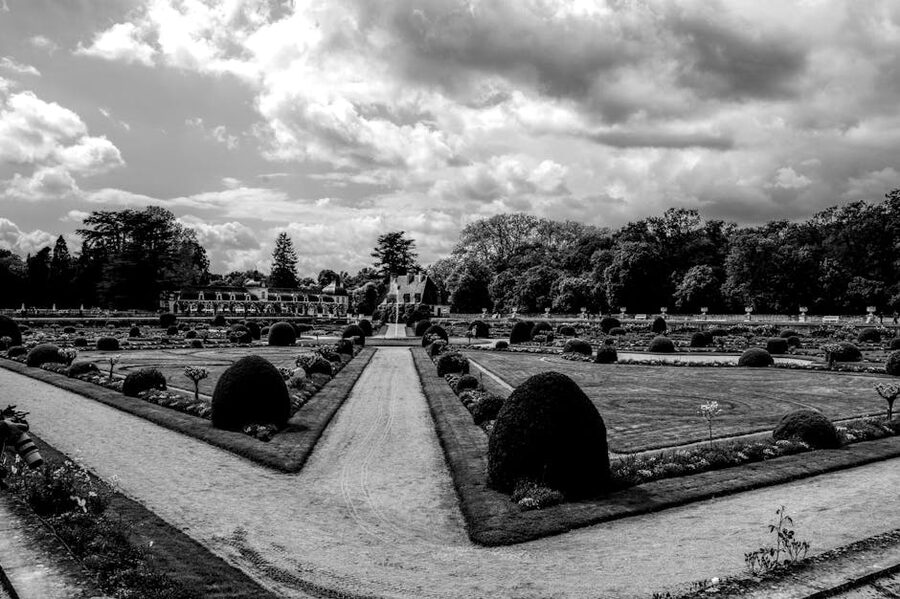
Chenonceau is the women’s chateau. Built in the 1510s by Catherine Briçonnet, given to Diane de Poitiers (Henri II’s mistress) in the 1540s, taken back by Catherine de Medici (his queen) on his death and extended across the Cher river as a five-arch gallery, the bridge that gives the building its calling-card silhouette. Marie de Medici, Louise de Lorraine, Louise Dupin: every important French woman of the 16th and 18th centuries has a room in this building. The gardens are split into two: the Diane garden, the formal parterre to the east; the Catherine garden, gentler and rounder, to the west. The kitchen, on the ground floor in the bridge section above the river, is the most interesting kitchen in any French chateau and a half-hour visit on its own. In 2026, the standard adult ticket with leaflet is €19, with audioguide €24, available at chenonceau.com. The chateau is unusual among the Loire palaces in being open year-round and on every day of the year; visit in winter for the firelit interiors.
Cheverny, Amboise, Villandry
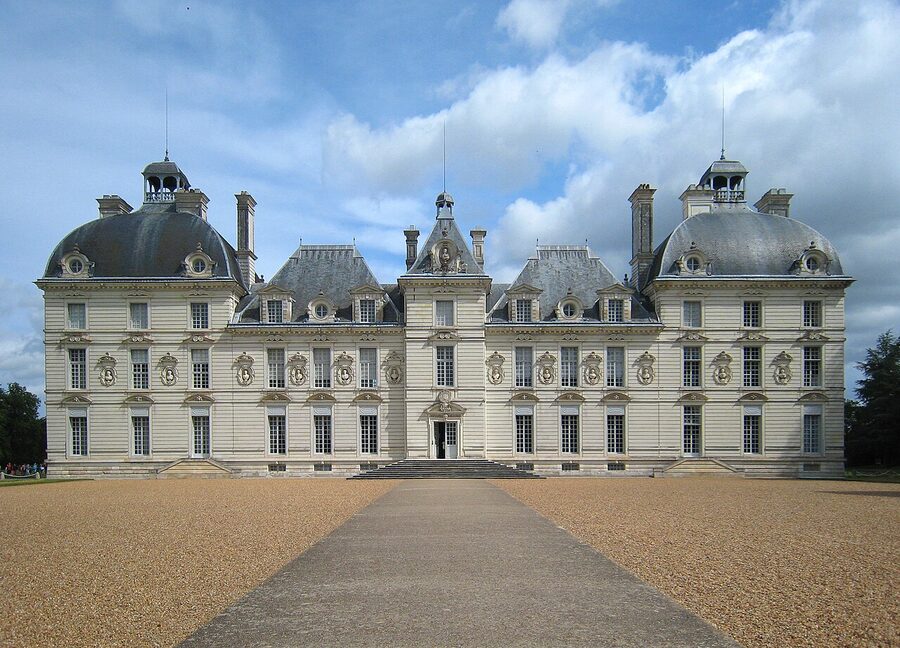
Cheverny is the chateau still in the same family that built it, the Hurault de Vibraye family, who have lived there since 1624, and the inhabited atmosphere is the building’s real selling point. The state rooms are open to general visit; the family’s apartments are not. The chateau is also the model for Tintin’s Marlinspike Hall, which the on-site exhibition leans into more than I would, but the building rewards a quieter visit centred on the smaller rooms and the small private chapel. The pack of seventy hunting dogs in the kennels gets fed every morning at eleven-thirty in front of an audience; it is a tradition rather than a tourist set-piece, and worth standing through.
Amboise sits on a bluff above the Loire and is the chateau Charles VIII grew up in. It is also the burial place of Leonardo da Vinci, who spent his last three years here as the guest of François I. The chateau is one of the prettiest small visits on the Loire; the chapel where Leonardo is buried (the Chapelle Saint-Hubert, on the ramparts) takes ten minutes and is the visit’s emotional centre. The Clos Lucé, the manor house five hundred metres uphill where Leonardo actually lived, is a separate ticket but a natural pairing, the gardens around it have working models of Leonardo’s machines built to his original drawings, and they are the best kind of half-serious museum.
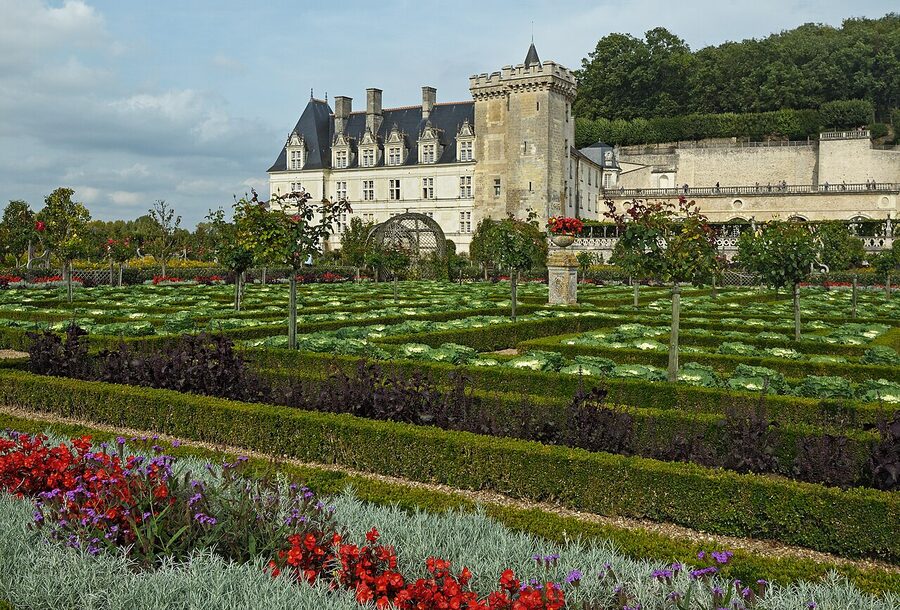
Villandry, in the western Loire near Tours, is the chateau you visit for the gardens, not the building. The potager, the formal kitchen garden, planted in nine geometric beds with vegetables and flowers in alternating colour, is the most beautiful working vegetable garden in France and the rehearsal sketch for everything Le Nôtre would later do at Versailles’ kitchen garden, the Potager du Roi. Visit between mid-April and early October when the planting is at full strength. The garden plan changes twice a year, spring planting and autumn planting, so you see different colour combinations depending on when you come.
Where to stay on the Loire
Three premium options bracket the Loire stay. Domaine des Hauts de Loire, in Onzain between Blois and Tours, is the Relais & Châteaux choice: a 19th-century hunting lodge in its own park, with a Michelin-starred restaurant. Rooms run roughly €350–€700. Le Choiseul, in Amboise itself on the riverbank below the chateau, is the most central base if you want to walk to the chateau and to Clos Lucé and finish the day at a table by the river, €280–€500 a room. Château de Pray, also in Amboise on the eastern edge of town, is a working chateau with twenty-odd rooms and a serious restaurant, a step below the other two on price but with a strong table of its own. If you want a single base for three nights, I’d go to Domaine des Hauts de Loire and drive out from there.
The Sun King’s Paris
The Paris built under Louis XIV, and to Louis XIV’s specifications, is mostly still standing. The squares, the avenue, the soldiers’ hospital, the formal gardens. A morning’s walk from your hotel takes in most of it. Start at the Place Vendôme, walk east through the Tuileries to the Louvre, then south across the Seine to the Invalides, and you have done a coherent half-day on Louis XIV’s city plan.
Place Vendôme and Place des Victoires
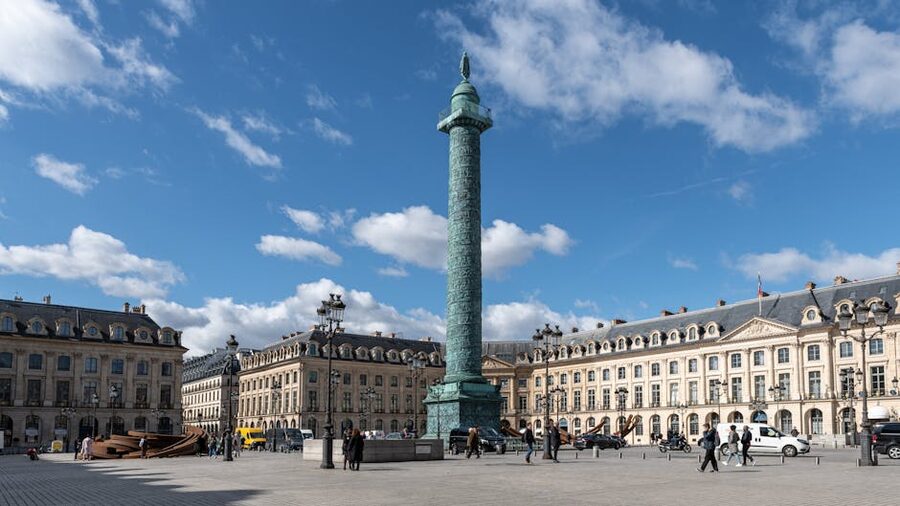
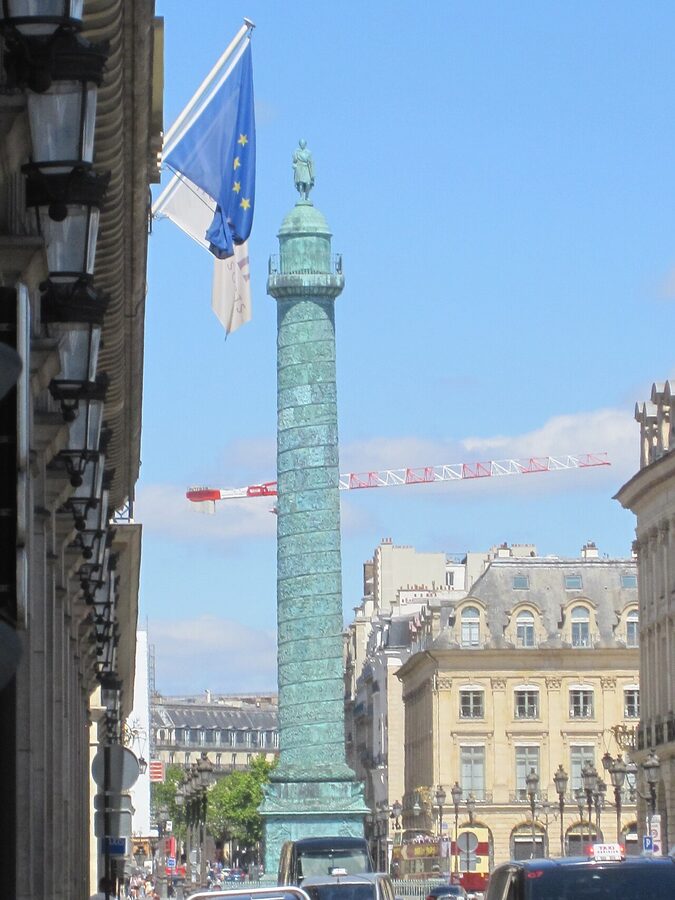
Place Vendôme is the more famous of the two. Hardouin-Mansart designed it in 1699 as an octagonal square in honour of Louis XIV’s military success; the original equestrian statue of the king at its centre was destroyed during the Revolution, and Napoleon replaced it in 1810 with the bronze column you see today, modelled on Trajan’s Column in Rome and cast from twelve hundred captured Austrian and Russian cannons. The square is now the headquarters of French luxury, Cartier, Boucheron, Van Cleef & Arpels, Bulgari, Chaumet, the Ritz at number 15. Walk the perimeter slowly; the symmetry is the point. The arched mouths in the southwest and northwest corners frame the Rue de Castiglione and Rue de la Paix as planned axes.
Place des Victoires, ten minutes’ walk to the northeast near the Bibliothèque Nationale, is the older sister square, Hardouin-Mansart again, commissioned in 1685 in honour of the king’s earlier victories. The bronze equestrian statue of Louis XIV at its centre is a 19th-century replacement of the destroyed original. Place des Victoires is rounder, smaller, less photographed, and worth the detour for the symmetry alone. Coffee at La Régalade Saint-Honoré on rue Saint-Honoré on the way back is the right midweek lunch in this neighbourhood.
The Champs-Élysées and the western axis
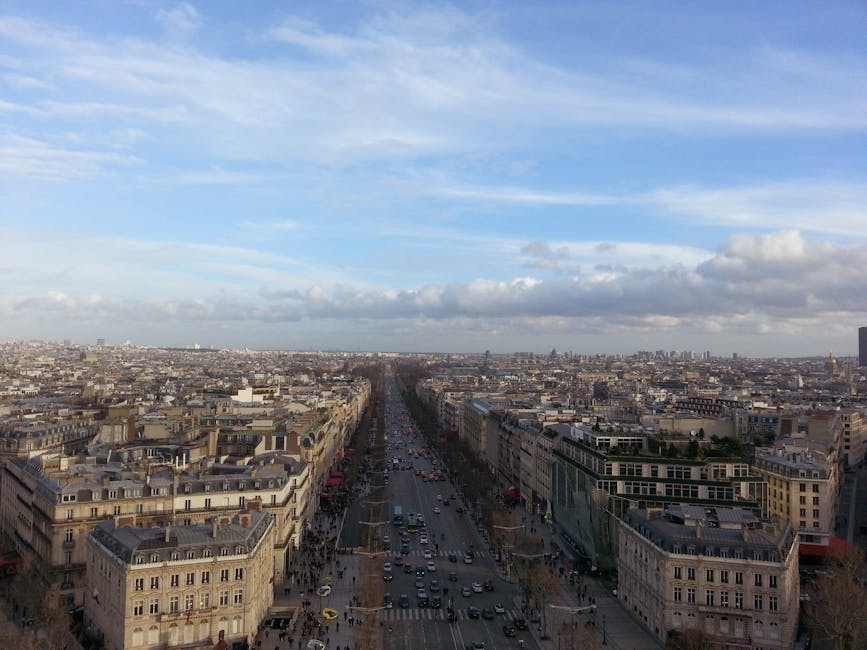
The Champs-Élysées was cut as a hunting trail by Le Nôtre in 1667, on Louis XIV’s instruction, to extend the Tuileries axis westward into open country. It is now the most touristed avenue in Europe, and the section from the Place de la Concorde up to the Rond-Point des Champs-Élysées is the half worth walking; the upper section past the Rond-Point to the Arc is mall-lined and tiresome. The Tuileries Gardens themselves were redesigned by Le Nôtre between 1664 and 1672, the parterres on the western half, the long axis to the obelisk on Concorde, the symmetry that became the Versailles gardens’ rehearsal. The 19th-century pond at the western end of the Tuileries is the spot for an afternoon coffee at the kiosk under the trees.
The Invalides
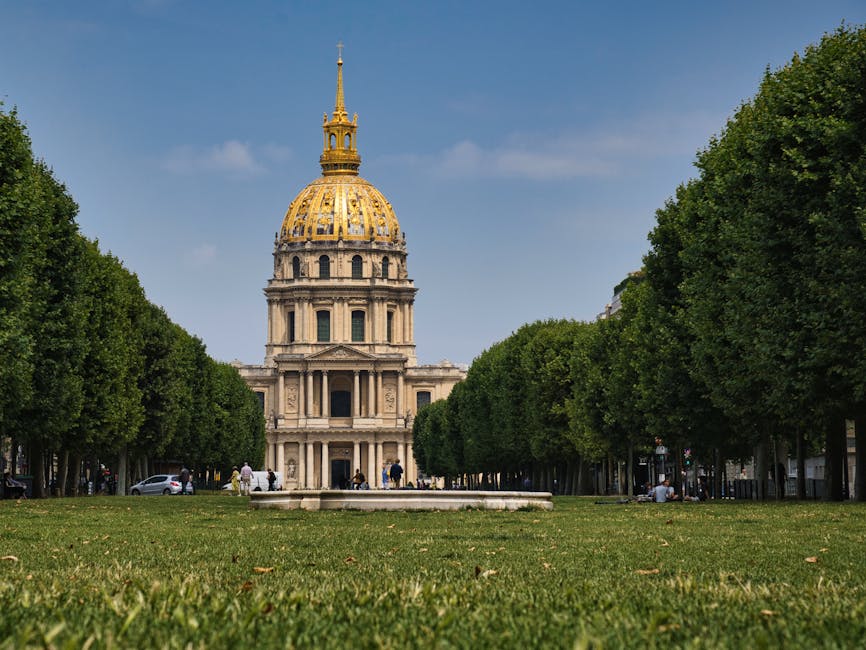
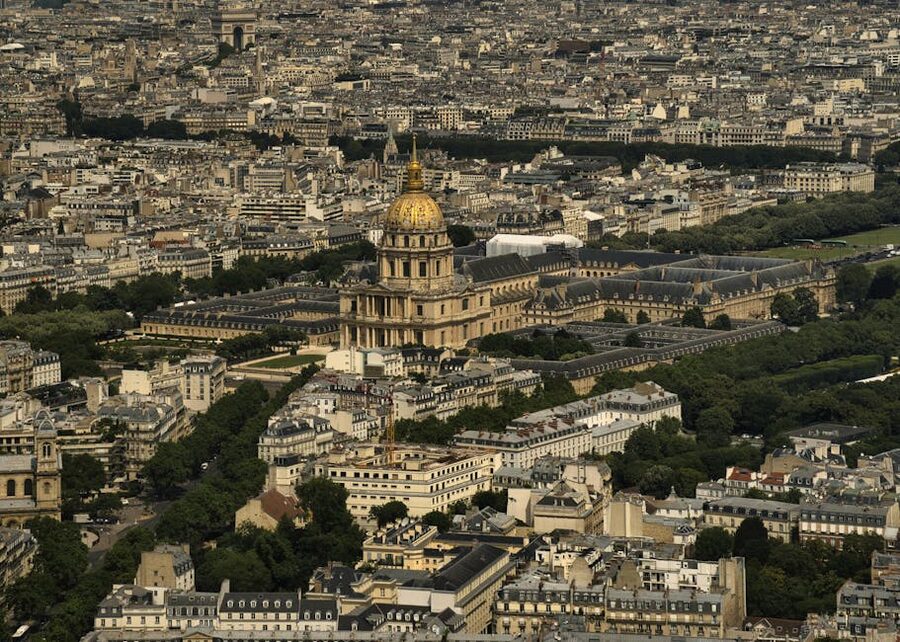
The Hôtel des Invalides is Louis XIV’s veterans’ hospital, founded by royal edict in 1670 and finished in the 1680s. The Église du Dôme, the gold-domed church on the south side, built by Hardouin-Mansart between 1679 and 1708, is one of the great Baroque churches of Europe and one of the highest interior spaces in Paris. Napoleon’s tomb sits under the dome (his remains were brought back from Saint Helena in 1840) and that is what most visitors come for, but the church’s architecture is the actual reason to come. The Musée de l’Armée, in the surrounding buildings, holds the strongest royal arms collection in Europe; if you only have an hour, do the second-floor Louis XIV-era rooms and skip the rest. The Cour d’Honneur, the working courtyard between the buildings, is still in use as a parade ground for state occasions.
Where to stay in Paris for this trip
The four to five hotels worth your week, ordered by their fit for a Sun King-themed visit. They are all within walking distance of the Tuileries axis and the Place Vendôme; you do not need a car in Paris and you do not need to base yourself outside the central arrondissements.
Hôtel de Crillon
The Crillon sits on the northwestern corner of Place de la Concorde, in one of the two matched palace buildings designed by Ange-Jacques Gabriel and built in the 1770s. The hotel reopened in 2017 after a four-year restoration under Rosewood ownership and is the strongest grand-dame Paris hotel for a historical-themed week. Rooms face the obelisk and the Tuileries axis directly. The Sun King’s western axis runs through the front door of the building. L’Écrin, the smaller of the two restaurants, is the most interesting in-house restaurant at any Paris luxury hotel right now; if the Crillon isn’t full, eat there at least once. Booking via rosewoodhotels.com.
Le Meurice
Le Meurice is on rue de Rivoli directly opposite the Tuileries Gardens; some of the rooms look straight onto Le Nôtre’s parterres. The hotel has been operating since 1835 and was Napoleon III’s preferred Paris address before the Empire moved the court back to the Tuileries Palace. The current Dorchester Collection ownership has the hotel running well; the Restaurant Le Meurice (formerly Alain Ducasse, now under chef Amaury Bouhours) holds two Michelin stars. If the Crillon is sold out, the Meurice is the closest equivalent and arguably has the better Tuileries view. Booking via dorchestercollection.com.
The Ritz Paris
The Ritz at 15 Place Vendôme is the third option and the one with the strongest direct Sun King association: the building it occupies is one of the original 1699 Hardouin-Mansart facades. Independent ownership again since the Mohamed Al-Fayed era ended; the 2016 restoration brought the hotel back to its peak form. Bar Hemingway is the famous bar, but L’Espadon, the main dining room, is the Sun King-flavoured table of the week. Book directly via ritzparis.com.
Saint James Paris and Le Royal Monceau
Saint James Paris, in the 16th arrondissement on Avenue Bugeaud, is the smallest and most idiosyncratic of these hotels, a 19th-century chateau-style building in its own walled garden, with fifty rooms and the feel of a country house in the city. It is the right call for a quieter week if you want to walk the Sun King’s Paris during the day and come home to a building that feels removed from it. Relais & Châteaux. Book via saint-james-paris.com.
Le Royal Monceau, on Avenue Hoche just off Étoile, is the Raffles property in Paris and the most modern of the five hotels here. It sits closer to the western end of Le Nôtre’s avenue than to the original Place Vendôme axis, but it is two minutes from Parc Monceau (one of the prettiest small parks in central Paris) and thirty minutes’ walk from Place Vendôme through neighbourhoods that are themselves part of the late Sun King-era city plan. Book via raffles.com/paris.
The call: the Crillon for a first trip, the Meurice if the Crillon is full, the Ritz for the Place Vendôme history, Saint James for the country-house quietness, Le Royal Monceau if the others are unavailable or your week is shorter and you want the Étoile-end base.
Tables for a Sun King week
Four restaurants make the Sun King theme work. None of them is from the 17th century, none of the buildings on the original list survived the Revolution and the Belle Époque rebuilds, but each occupies a slot on the Bourbon-era Paris map and serves the kind of classical French haute cuisine that came out of the Sun King’s kitchen tradition.
Le Grand Véfour
Le Grand Véfour, in the arcades of the Palais-Royal, has been operating as a restaurant since 1784. Marie Antoinette ate here, Napoleon ate here, Victor Hugo ate here. The dining room, gilded mirrors, hand-painted ceiling, banquettes named after their famous regulars (Hugo, Colette, Cocteau), is the most intact period interior of any working restaurant in Paris. Chef Guy Martin has held the kitchen since 1991 and the cuisine is classical with light contemporary work; the tasting menu is the way to do it. Closed weekends. Book a long way ahead via grand-vefour.com.
Lasserre
Lasserre, on Avenue Franklin D. Roosevelt off the Champs-Élysées, opened in 1942 and is the most theatrical of these four tables. The opening roof, the building’s calling-card mechanism, where the dining room ceiling slides open to reveal the sky in good weather, still works and is operated nightly when conditions allow. Chef Jean-Louis Nomicos runs the kitchen now; the cuisine is classical Parisian. The duck à l’orange and the millefeuille are still the right orders. Book via restaurant-lasserre.com.
L’Ambroisie
L’Ambroisie, on Place des Vosges in the 4th arrondissement, holds three Michelin stars and has done since 1988, one of the longest unbroken three-star runs in France. The restaurant is on the western arcade of Place des Vosges itself (Henri IV’s 1612 square, predating Louis XIV but on the route), and the dining room is a small first-floor salon with eight tables. Founder Bernard Pacaud handed the kitchen to chef Shintaro Awa in recent years; the cuisine remains the most precise example of classical French haute cuisine in Paris. Open Tuesday dinner, Wednesday through Saturday lunch and dinner; closed Sunday and Monday. Book via ambroisie-paris.com.
Tour d’Argent
La Tour d’Argent, on the Quai de la Tournelle directly across the Seine from Notre-Dame, has been in continuous operation since 1582, the longest-running fine-dining restaurant in Paris. The duck (each pressed duck served gets a numbered card; the practice has been going since 1890) is the signature, and the dining room view across to Notre-Dame is the best Seine-view dinner in the city. The kitchen reopened post-renovation in 2023 with a pared-back contemporary menu alongside the classical pressed duck service; the Michelin star came back the following year. Book the early sitting at sunset. Via tourdargent.com.
Five days, then seven
The structure works at five days for a focused trip without the Loire, or at seven with the Loire as the centre chapter. Below, both. Adjust to taste.
The five-day Sun King trip
Day 1, Paris arrival. Check in to the Crillon or Le Meurice in the early afternoon, walk the Tuileries from your hotel out to Place de la Concorde, coffee at the kiosk, dinner at Le Grand Véfour in the Palais-Royal. Stay in the central first arrondissement, get to bed early.
Day 2, Versailles, day one. Train from Saint-Lazare or RER C from Champs de Mars; pre-opening private visit at 8am if you’ve booked one, the Passport ticket otherwise. State Apartments and Hall of Mirrors before the day fills. Lunch at Ore (Ducasse, inside the chateau). Royal Chapel and Galerie des Batailles. Drift into the gardens via the Latona Fountain and out to the Apollo Fountain. Train back at five. Light dinner in the 1st or 8th.
Day 3, Vaux-le-Vicomte and Fontainebleau, single day. Hire a car at Gare de Lyon mid-morning. Fontainebleau first: Galerie François I, Salle de Bal, Cour Ovale, an hour in the gardens. Lunch in Fontainebleau village. Drive an hour south to Vaux. Afternoon at Vaux; if it’s a Saturday in season, stay for the candlelit evening and dinner at the Grand Carré, return to Paris at ten. Otherwise, finish at Vaux around six and back in Paris for late dinner at L’Ambroisie.
Day 4, Versailles, day two. Marie Antoinette estate ticket. Through the Trianon gate first thing. Grand Trianon, lunch at Angelina, Petit Trianon and Hameau in the afternoon, walk back through the bosquets for the western light on the chateau facade. Train back at six.
Day 5, Sun King’s Paris and departure. Morning walk: Place Vendôme, Tuileries, Concorde, across the Pont Alexandre III to the Invalides. Église du Dôme and an hour at the Musée de l’Armée. Lunch at the Tour d’Argent, the early sitting, with the view. Afternoon at the Place des Victoires and a slow walk back to the hotel through the Palais-Royal. Evening flight or train.
The seven-day version, with the Loire
Days 1–3 as above (Paris arrival, Versailles day one, Vaux + Fontainebleau).
Day 4, Train to Tours or Saint-Pierre-des-Corps in the morning (90 minutes from Paris Montparnasse). Hire a car at the station. Drive to Domaine des Hauts de Loire in Onzain or Le Choiseul in Amboise; lunch at the hotel. Afternoon at Amboise: the chateau, Leonardo’s tomb in the Chapelle Saint-Hubert, the Clos Lucé. Dinner at the hotel.
Day 5, Chambord in the morning (about thirty minutes from Onzain), the roof terrace and the helix staircase, lunch at Maison d’à Côté in Montlivault on the way back. Afternoon at Cheverny, the dog feeding at eleven-thirty if you’ve timed Chambord earlier, otherwise the state rooms in the late afternoon. Dinner at Domaine des Hauts de Loire’s Michelin-starred restaurant.
Day 6, Chenonceau in the morning, the bridge gallery and the kitchen, lunch in the village. Afternoon at Villandry, the potager, the maze, an hour on the terrace. Evening drive back to Tours, train to Paris (the late TGV runs to about 9pm), dinner at Lasserre on the way home.
Day 7, Sun King’s Paris and the Invalides as in the five-day version. Tour d’Argent for the last lunch. Evening departure.
The honest takes
Versailles is not a one-day visit. The crowds at the standard one-day visit will eat the experience even with a pre-booked ticket; if you only have one day in your week, do Vaux-le-Vicomte instead and save Versailles for the next trip.
Vaux-le-Vicomte on a Saturday evening between mid-May and late September, by candlelight, is a better experience than Versailles in peak season. Plan the trip around it. The candlelit Saturdays book up by April; reserve early.
Fontainebleau is the building the kings actually preferred to live in, and it shows. Quieter, older, more architecturally interesting than Versailles. Half the visitors leave talking about the Galerie François I; the other half leave talking about Napoleon’s apartments. Either is a valid takeaway.
The Loire Valley deserves three nights. Two-night Loire visits inside this kind of trip are the most regretted leg of every itinerary I have written. If you can’t give it three, either drop the Loire or extend the trip.
Stay at the Crillon if it’s available. The Tuileries-axis room view, the L’Écrin restaurant, the position of the building on Le Nôtre’s western axis, these are not interchangeable with the alternatives. Le Meurice is the second call.
Avoid Versailles between mid-June and late August. Even pre-opening tickets fight the gardens crowds by 11am. May, late September, and early October are the right months. November is colder than non-Europeans expect; the chateau is at its quietest, and the Hall of Mirrors at 9am on a December morning with the chandeliers on is the version of the room I will keep recommending until I find a better one.
If you want a single thread through the trip: this is one architect’s century working with one gardener’s eye. Mansart’s domes at Versailles, the Invalides, and Place Vendôme; Le Nôtre’s parterres at Versailles, the Tuileries, and Vaux. Walk the city looking for the same handwriting on different buildings. The trip starts to read as a piece.
And the building you remember from this trip will not be the one with the Hall of Mirrors. It will be the one with the gardens at twilight, two thousand candles, a Saturday in June, the dome of Vaux-le-Vicomte rising out of the woodland on the drive in. That is the trip. Plan for it.
For another European luxury touring trip with similarly opinionated structure, see the Ferrari tours article (the operator-led Italian driving holiday) or its self-drive sibling, Italy in a Ferrari. The closest alpine cross-link to a Sun King-era France trip is Timeless Geneva, Voltaire’s exile in Ferney, just over the Swiss border, was one of the touchstones of late-Bourbon European intellectual life. The Bourbon-era European spa-town tradition continues into Baden-Baden; the Strasbourg passages of Europe’s Christmas Markets sit on Sun King-era city geography.



.jpg)


