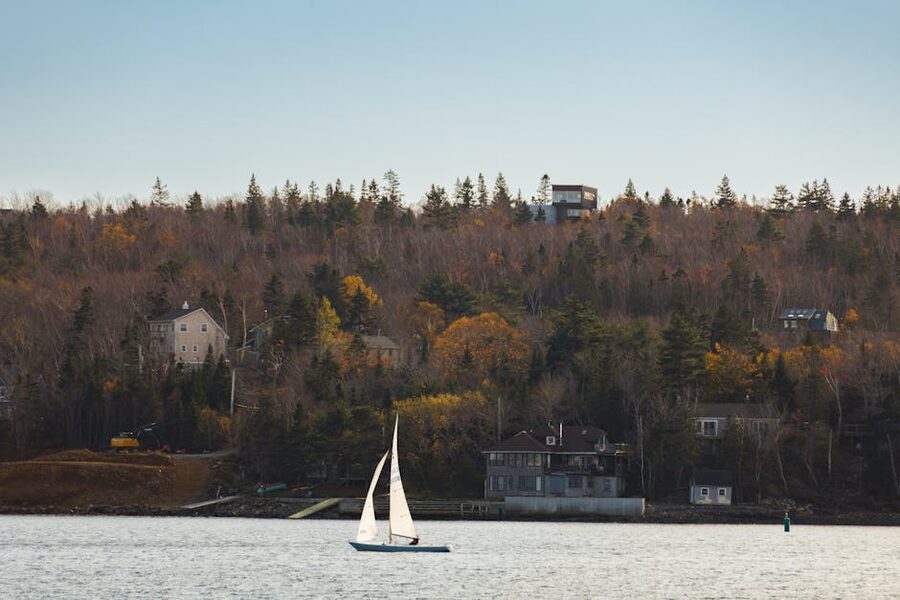
The ship turns the corner past Eastern Point at first light and Halifax slides into view in the way only an autumn morning on the Atlantic can give you. The water is still grey, the sky has gone soft pink behind the citadel, and along the slope above the harbour the hardwoods are doing the thing you came for. Yellow at the top of the hill, orange below it, then a band of red running down to the waterline. Coffee on the open deck. Forty-eight degrees Fahrenheit. A cargo ship somewhere south of you blowing its horn for the harbour pilot. Twenty minutes later you are alongside Pier 22 with the citadel above you and the day waiting.
This is the case for doing the New England and Eastern Canada fall foliage season by ship, and doing it by the right ship. Most of what gets written about this region in autumn is mass-market cruise marketing: the same five ports, the same Peggy’s Cove postcard, the same maple-leaf metaphor. The version of the trip that the small luxury operators run is a different product. Calmer. Better-fed. Tied to the autumn season specifically rather than treating mid-September to late October as a fill-in itinerary between the Caribbean repositioning and the Med season closing. If you are looking at this region at this time of year, the call to make first is which scale of ship you book on. Everything else flows from there.
In This Article
- The thesis, stated plainly
- The operators that run the autumn season properly
- Silversea
- Seabourn
- Regent Seven Seas
- Crystal
- Ponant
- Windstar
- Hapag-Lloyd Europa 2
- The premium tier, for completeness
- The standard itineraries, ranked
- Boston to Quebec City, 10 to 12 nights, the classic
- New York to Montreal, 11 to 14 nights
- Quebec to Halifax, 7 nights
- St Lawrence Seaway full transit, 12 nights or longer
- Port by port, what each is actually for
- Bar Harbor, Maine: Acadia, sunrise on Cadillac, the village walk
- Halifax, Nova Scotia: citadel, the museum, Peggy’s Cove if you must
- Sydney, Nova Scotia: Cape Breton Highlands, the Cabot Trail
- Charlottetown, Prince Edward Island: the smaller scale
- Saguenay Fjord: the day that earns the trip
- Quebec City: the overnight that the small-ship lines build into the schedule
- When to go for peak colour
- Weather and what to pack
- The land trip versus the cruise: different products
- The shore excursion call
- Practical bookings: how far ahead, what to ask
- One last piece of advice
The thesis, stated plainly
Three calls. Make them in this order.
One: small ship, not mega-ship. The under-700-passenger lines (Silversea, Seabourn, Regent, Crystal, Ponant, Windstar, Hapag-Lloyd Europa 2) build the autumn season as a season, with included excursions tailored to the foliage-window, longer port days, and the smaller piers in places like Saguenay and Sydney NS that the bigger ships either skip or tender into from miles offshore. The mega-ship lines (Holland America, Norwegian, Princess, Royal Caribbean, Celebrity) treat New England-Canada as another itinerary on the rotation. There is a tier difference here that the brochure copy will not flag for you.
Two: round-trip Boston, or one-way between Boston/New York and Quebec or Montreal. Round-trip out of New York is also a real option but compresses the time you actually spend in the maritime ports: too many sea days at the south end. The classic small-ship itinerary is a 10–12 night line between Boston and Quebec City, in either direction.
Three: book the first half of October. Late September is gambling on the colour arriving early. Late October is past peak in the south end of the route and the northern ports start losing leaf cover to the storms. The 1st through the 15th of October is the consistent peak across the full Boston to Quebec arc; the colour migrates south through the back half of the month and is past the window in southern Maine by Halloween.
The rest of this guide unpacks who runs the season, what each port is actually for, when to go and what to pack, and the call between a foliage cruise and a land-based New England fall trip. They are different products, not substitutes.
The operators that run the autumn season properly
The luxury small-ship lines all field at least one ship in the region between mid-September and late October. What separates them is itinerary length, which ports they actually call into versus tender, what is bundled into the fare, and the on-board personality that you are choosing to live with for ten to fourteen nights. Below, the operators worth looking at first, in the order I would consider them.
Silversea
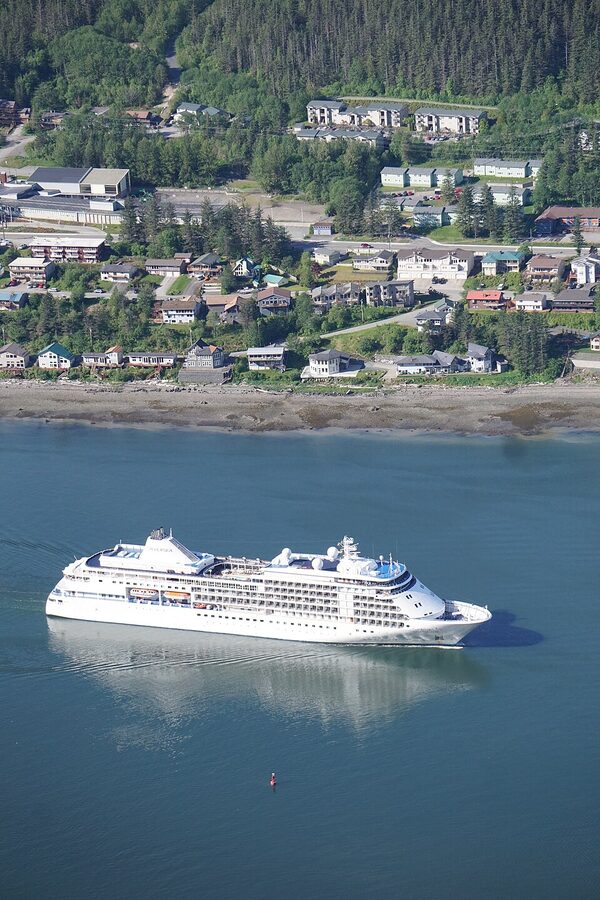
The strongest small-ship presence on the route. Silver Shadow is the ship Silversea most consistently sends here, with 392 guests, one of the smallest classic ships in the fleet, well-suited to the smaller piers along the St Lawrence. The 2026 programming runs an 11-night Bayonne (New York) to Montreal sailing in late September, and the same itinerary in reverse, calling at Newport, Boston, Portland, Halifax, Charlottetown, Saguenay and Quebec City. Eleven Canada and New England classic cruises are listed for the season across Silversea’s itinerary collection, the most thorough small-ship presence of any operator. All-inclusive includes butler service in every suite, gratuities, a wine and spirits programme; the All-Inclusive Plus tier adds a per-person shore-excursion credit and Business-class air on long itineraries. If you have not sailed the line before and you want a feel for what the ultra-luxury small-ship category actually delivers, this is the cleanest entry point in the region.
Seabourn
The dedicated “Canada and New England Fall Foliage” itinerary on Seabourn Ovation is one of the more thoughtfully built sailings of the season: 12 nights between New York and Montreal, two repositions per year (one in late September and one in mid-October), calling at Newport, Boston, Bar Harbor, Halifax, Charlottetown, Saguenay and Quebec City. 600 guests, all suites, all included drinks and a marina deck deployed on calm-water mornings (kayaks, paddleboards from the platform). The 2026 schedule confirmed at the time of writing has two Ovation sailings. The late-October departure is the colour-peak one for the maritime ports; the late-September is the better one for southern Maine. Pricing from the major UK luxury cruise specialists indicates the fall foliage itinerary opens around £3,800 per guest for the late-October sailing and steps up from there. The Seabourn 14-night New York to Montreal autumn itinerary is the highest-volume luxury fall sailing in the region.
Regent Seven Seas
Seven Seas Splendor is sailing the region in 2026 with a specific fall-foliage itinerary called Magnifique L’Automne: 11 nights, departing Boston 28 September 2026 and ending in Montreal, with port calls at Bar Harbor, Saint John (NB), Halifax, Sydney, Charlottetown, plus Gaspe, Sept-Iles and Saguenay before the Quebec City finish. 746 guests. The Regent positioning is the most all-inclusive on the route: fares cover unlimited shore excursions, gratuities, beverages, Wi-Fi, and the line covers business-class air on most longer itineraries. The math on a long-itinerary Regent fare versus an equivalent Silversea or Seabourn fare with the excursion add-ons does work out for some travellers; run it for your specific dates rather than taking the brochure shorthand. For 2027, sister ship Seven Seas Grandeur takes over the route with an 11-night New York to Montreal pattern.
Crystal
Crystal is sailing for the 2026 season. Crystal Symphony will be working the New England and Canada itineraries in September and October, after the line’s relaunch under A&K Travel Group’s ownership. The autumn 2026 programming includes a mix of New York round-trips and one-way New York to Montreal sailings. Worth checking dates against the dedicated Silversea, Seabourn and Regent itineraries before booking. The post-relaunch Crystal product is generally well-reviewed on board, but the operator’s autumn 2026 schedule is thinner than the lines that run this region as a programmed seasonal product.
Ponant
The French operator’s strongest play in the region is the Smithsonian Journeys partnership programming on the Saint Lawrence and along the Canadian Maritimes. The 2026 sailings include a 12-night Fall Foliage on the St. Lawrence from Toronto to Boston in late September, run with Smithsonian-led naturalist and historian programming on board. The French-flag positioning shows in the on-board language (bilingual French and English), the dining (more obviously rooted in French technique than the American-flagged lines), and the way the ships handle the smaller ports. Le Bellot and Le Dumont-d’Urville classes are designed to call into stops the bigger ships skip. If you have done a small-ship Mediterranean trip with Ponant and liked it, this is the matching autumn product.
Windstar
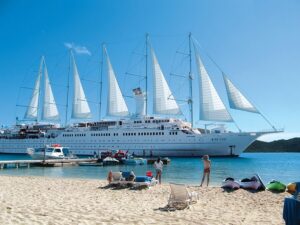
The 312-guest Star Pride is Windstar’s New England and Canada ship for the 2026 season. The new fall itineraries include overnights in Quebec City and the smaller Maritime ports (Halifax and Sydney for the Cape Breton lobster bakes), plus a 14-night Quebec and Newfoundland round-trip from Montreal that calls at Saint John (NB) for the Bay of Fundy and Hopewell Rocks. Windstar sits between Oceania-style premium and ultra-luxury small-ship; the per-night pricing reflects that. Suites rather than cabins, included some shore excursions, casual dress code throughout. A reasonable choice if Silversea or Seabourn are at your stretch but you still want the small-ship pier access and the included-marina-toys experience.
Hapag-Lloyd Europa 2
The German operator runs the 500-guest Europa 2, frequently rated by the Berlitz Cruise Guide as the highest-scoring ship at sea, with an occasional New York round-trip on the New England and Canada route in 2026. The on-board culture is recognisably German (more reserved than American luxury lines, exceptional kids’ programming if you are travelling multi-generationally, two-language announcements), and the dining is a notch above what most of the fleet’s competitors are doing at the buffet end. Europa 2 is also one of the very few luxury ships that cleanly handles a multi-language passenger mix without it feeling forced. Worth checking specifically because the autumn dates are not always on the brochure but show up in the long-haul calendar.
The premium tier, for completeness
Holland America’s Zuiderdam (1,964 guests) runs a 7-night Boston-Quebec one-way that hits the standard ports and is properly priced for what it delivers: premium rather than luxury, but the Pinnacle Grill specialty dining is genuinely good and the on-board atmosphere is grown-up. Oceania’s Vista (1,200 guests) sits one notch up: 11-night New York to Montreal sailings in September and October 2026, with the strongest culinary programme of any premium-tier ship in the region. Princess and Royal Caribbean and Norwegian all run autumn itineraries too; for the reader this guide is written for, those tiers are not the right call unless the budget is a hard constraint or there is a specific sailing date that does not match the small-ship calendar.
The standard itineraries, ranked
There are essentially four shapes of itinerary in this region. Pick by length and direction first; the operator question follows.
Boston to Quebec City, 10 to 12 nights, the classic
The benchmark route. Either round-trip from Boston (most common on the smaller ships that need to come back to a US homeport for the next sailing) or one-way between Boston and Quebec, in either direction. Standard ports: Bar Harbor, Halifax, Sydney NS (for Cape Breton), Charlottetown PEI, Saguenay, Quebec City. 10 nights gives you full days in five of those six; 12 nights gives you an overnight in Quebec City and an extra day at sea or a second Maritime port like Saint John, NB. This is the route to book if you have not done the region before. The sea days are at the right place in the itinerary (start and finish), the port density is high in the middle, and the foliage gradient runs from south (Bar Harbor) to north (Saguenay) in a way that lets you watch the colour change as the ship moves north.
New York to Montreal, 11 to 14 nights
The longer southern variant. Adds Newport (Rhode Island) at the south end and Montreal at the north, with one or two more sea days each side and sometimes a Boston call in the middle. Silversea, Seabourn and Regent all run versions of this. The advantage is that you avoid the Boston-airport routing and book straight into Manhattan or Cape Liberty, NJ, which is useful if you live in or near New York. The disadvantage is that the southern ports (Newport, occasionally Boston) eat itinerary days that could have gone to the maritime end. If you are picking between a Boston-Quebec 10-night and a New York-Montreal 12-night and the maritime ports are why you booked, take the shorter one.
Quebec to Halifax, 7 nights
The shorter option, run by Holland America and a few of the premium lines. Cuts straight to the foliage-strongest segment without the southern New England coast. Worth considering if you can get to Quebec City easily (direct flights from major US hubs) and back from Halifax (less direct but workable). Less small-ship, more premium-tier, but the route itself is the strongest seven-night condensation of the season’s highlights. American Cruise Lines also runs a US-flag small-ship version of this segment with deeper port calls and longer days ashore, built for travellers who want time in port over time on the ship.
St Lawrence Seaway full transit, 12 nights or longer
The unusual one. One-way Toronto, Montreal, Quebec, Saguenay, the Maritimes and Boston (or in reverse), navigating the locks of the Seaway as part of the experience. Ponant runs the strongest version of this: 12 nights, sometimes with the Smithsonian Journeys add-on. If you have already done the Boston-Quebec route and want a fresh angle, this is it. The Seaway transit itself is a real on-board experience; the ship is moving slowly through narrow channels for hours at a time, with the riverbanks close enough to see autumn-foliaged farms.
Port by port, what each is actually for
Six ports define the route. Here is the version of each that I would actually plan around. Skip excursions for the cliché stops and book the ones that earn the day.
Bar Harbor, Maine: Acadia, sunrise on Cadillac, the village walk
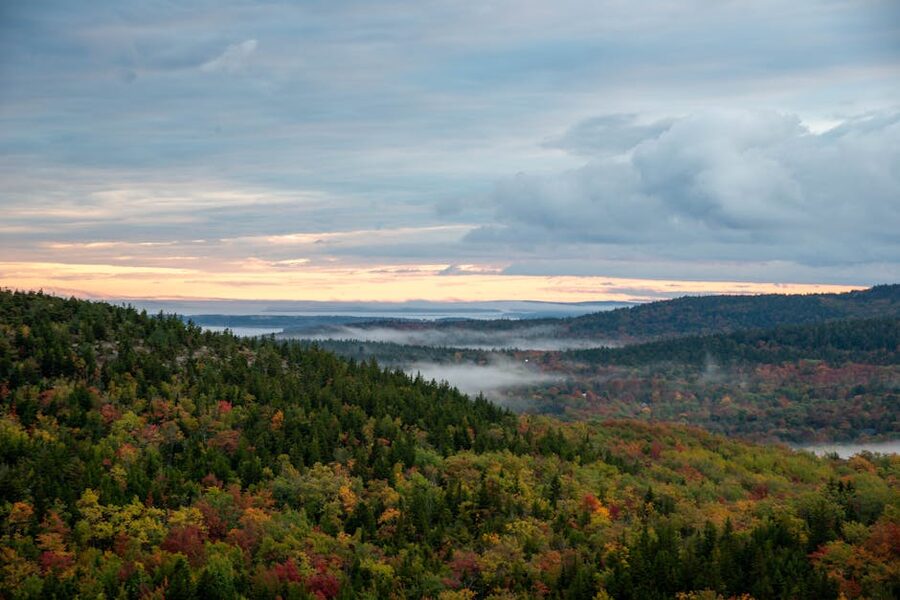
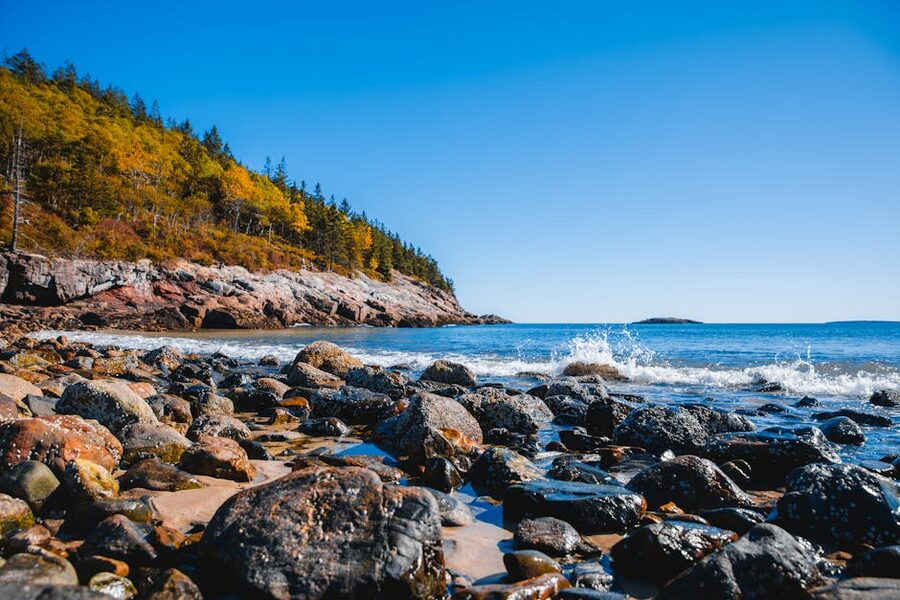
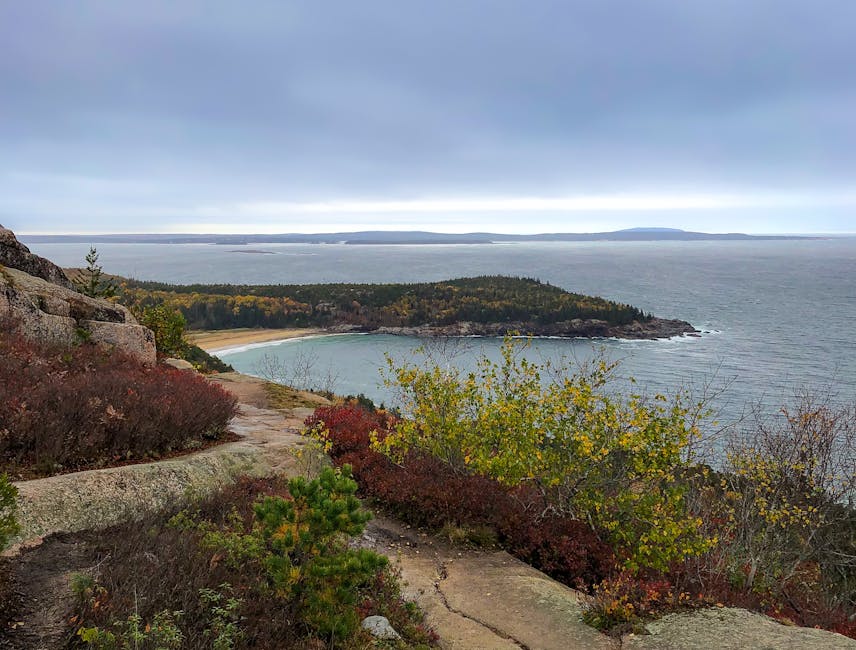
Acadia National Park is the only reason to book Bar Harbor as a port. The town itself is pleasant for a 90-minute stroll (the wharf, the ice-cream shop, two or three good seafood places), but the morning is for the park. If your operator runs the Acadia included excursion, take it; if it is optional, take it anyway. The Cadillac Mountain summit road is the standard cruise-stop excursion and it is the one stop where you actually need to think about access in 2026. The summit road has required vehicle reservations through Recreation.gov since 2021 and the system is still in place; tour-bus operators handle it for you on a coach excursion, but if you are renting a car ashore for a self-drive day you must book the summit road slot in advance. Sunrise is the booking that matters. Cadillac is the first place in the United States to see the sun from October to early March, and on a clear October morning the foliage on the Mount Desert ridges below the summit at sunrise is the photograph you came for.
The lobster roll question, since you will be asked: Stewman’s at the wharf is the obvious answer and it is fine, but if you want the better version walk the ten minutes to Side Street Cafe (same lobster, less queue, properly toasted bun, butter on the side rather than mayo unless you ask). If you want to spend on something more interesting, book lunch at Havana for the Cuban-leaning seafood; it is the best meal in town and it is rarely on the cruise-line shore excursion list.
Halifax, Nova Scotia: citadel, the museum, Peggy’s Cove if you must
Halifax has improved enormously as a cruise port over the last decade. The waterfront walk from the cruise terminal to the Maritime Museum of the Atlantic is fifteen minutes through the boardwalk shops and good now in a way it was not five years ago. The Maritime Museum is genuinely worth the hour (the Titanic gallery, the Halifax Explosion display, the small-craft hall). Halifax was where Titanic survivors were brought and where many of the dead are buried, and the city’s relationship to that disaster shows in the museum in a way the Belfast and Southampton museums do not capture. The Citadel above the city is the other set-piece; if it is a clear day, the view from the citadel ramparts over the harbour is the best one in town.
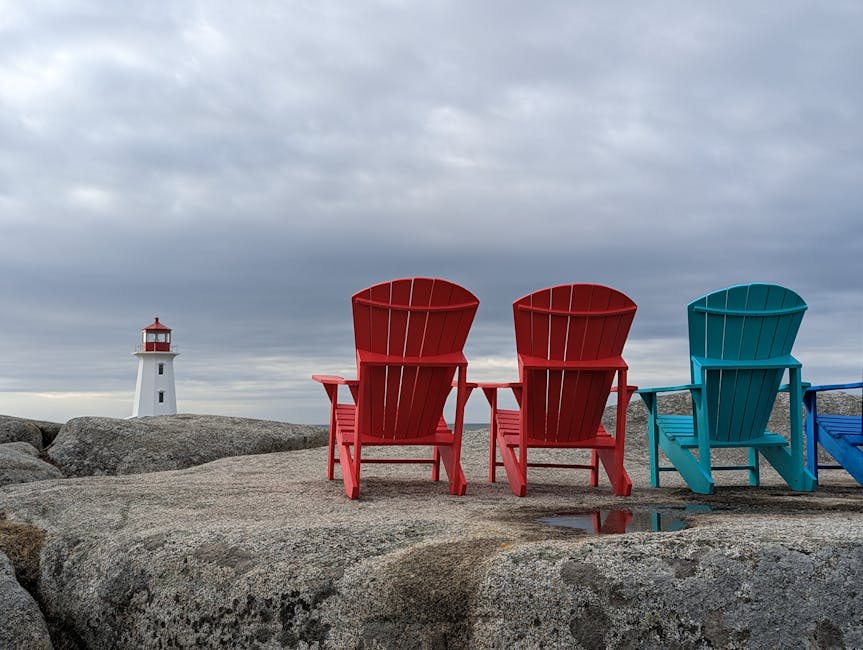
Peggy’s Cove is the standard cruise-line excursion to a tiny working fishing village an hour west, with one of the most photographed lighthouses in Canada. It is a cliché. Do it once. The Adirondack-chair pair facing the lighthouse is the photograph everyone takes; the better version of the day is to combine the Peggy’s Cove stop with a visit to the Bay Road monument to Swissair Flight 111 nearby. The memorial on the cliff is far less visited, with a view over to the crash site and a perspective that recontextualises the lighthouse-postcard pleasantness.
The Halifax food scene is much better than most cruise passengers expect. Bar Kismet, Field Guide and Edna are all worth a lunch ashore if your operator is overnighting; for a single port day, the Saturday Halifax Seaport Farmers’ Market on Lower Water Street is twenty minutes from the ship and well worth an hour. Smoke meat, lobster, and a meaningfully good local cheesemaker presence.
Sydney, Nova Scotia: Cape Breton Highlands, the Cabot Trail
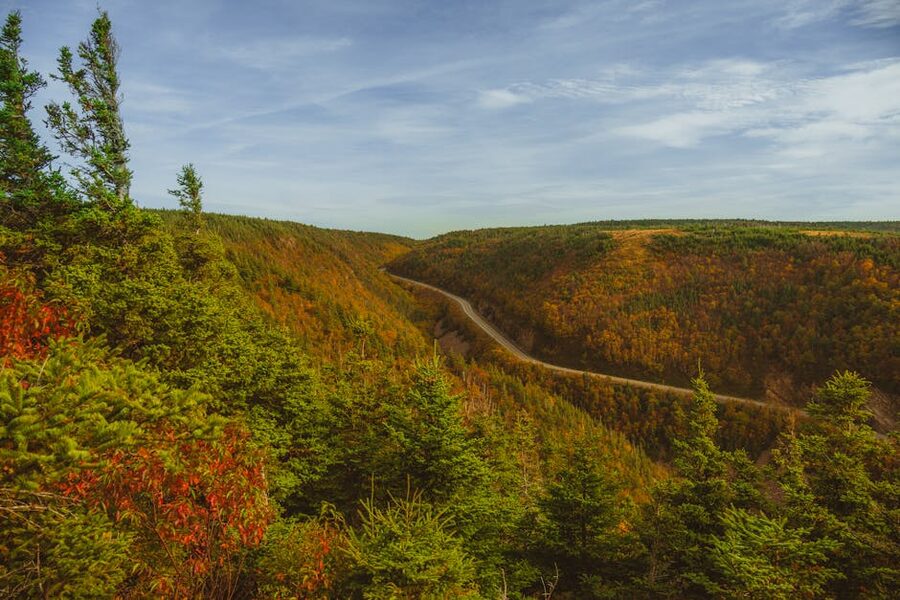
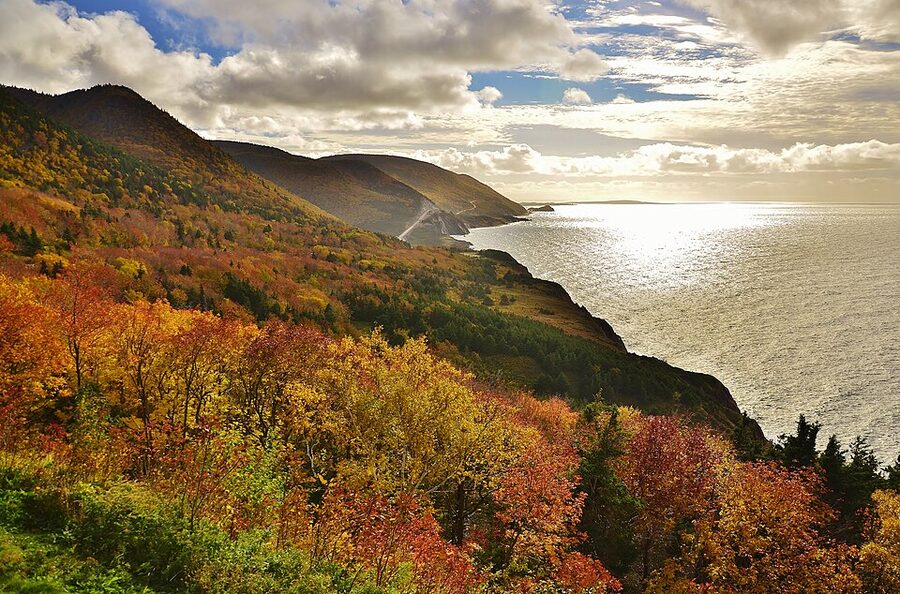
This is the foliage-photography port. Sydney itself is small (the famous big fiddle on the cruise berth, two blocks of restaurants, a museum about the coal-mining past), and the port does not exist for the town. The port exists for Cape Breton Highlands National Park and the Cabot Trail. The Skyline Trail in the park has, new for the 2026 season, a paid timed-parking reservation system in place from 26 June to 25 October. Parks Canada introduced this to manage the autumn surge that was overwhelming the trailhead in foliage week. Coach-tour operators handle the reservation as part of the included excursion, but if you are doing a self-drive day from Sydney (rental car bookable through the cruise port) you need to book the Skyline parking slot in advance through the Parks Canada system. Worth the trouble: the Skyline boardwalk descends through the highland plateau to a railed viewpoint over the Gulf of St Lawrence with the Cabot Trail visible 300 metres below winding along the coast, and at peak foliage the orange-and-red of the slopes against the dark Atlantic is the photograph the entire trip is built around.
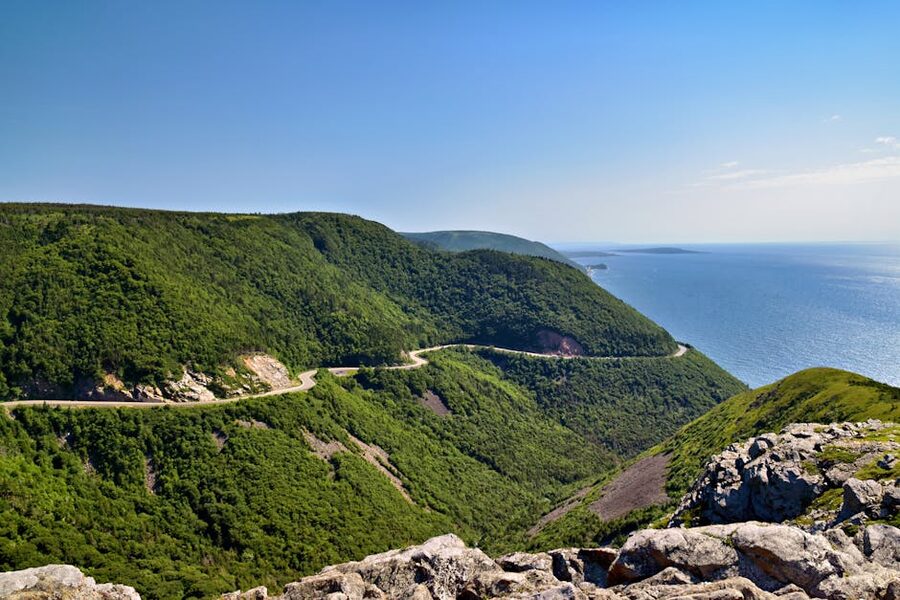
The full Cabot Trail loop is roughly 300km and takes a long day on a coach. Most cruise excursions do a shortened version covering the western park section (Skyline, Pleasant Bay) and returning via Baddeck, where the Alexander Graham Bell National Historic Site is genuinely worth the 45 minutes. If your itinerary calls Sydney as a single day-port, the structured coach excursion is the better call than self-drive; the geography rewards a guide who can pace the stops.

Charlottetown, Prince Edward Island: the smaller scale
The least dramatic port on the route and that is the point. Charlottetown is a small Canadian provincial capital with a 19th-century downtown that you can walk in 90 minutes, a properly good seafood scene, and the Anne of Green Gables tourism layer running through everything. The tourism layer is intense (green-gabled-house tours, “Anne shoppes”, musical theatre adaptations), and if you have any feeling for the L. M. Montgomery books at all, the Cavendish day trip to the Green Gables Heritage Place is genuinely satisfying. If you do not, the better use of the day is the Charlottetown Founders’ Food Hall and Market for a long lunch (oysters from Malpeque Bay, PEI mussels, cider from a local producer) followed by a walk along Victoria Park and the harbour.
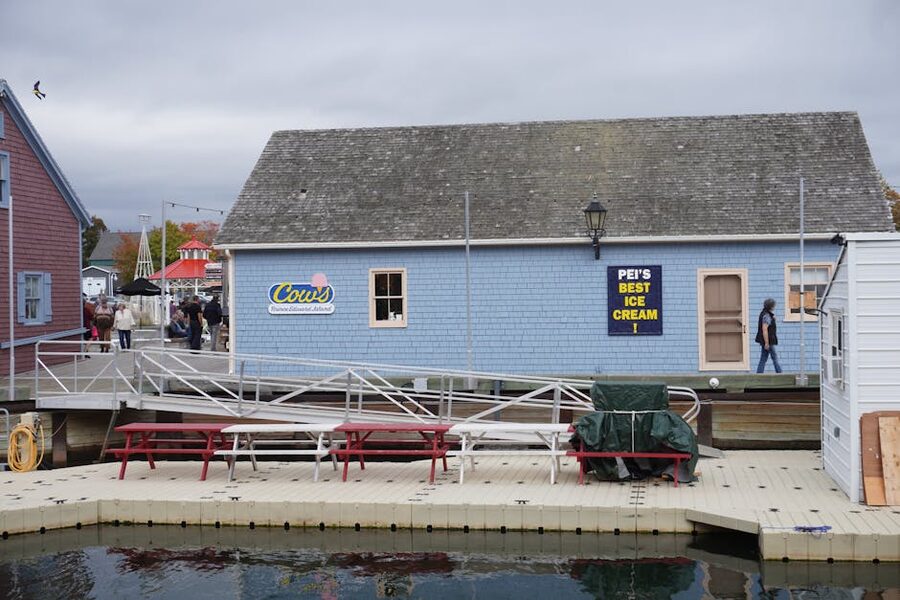
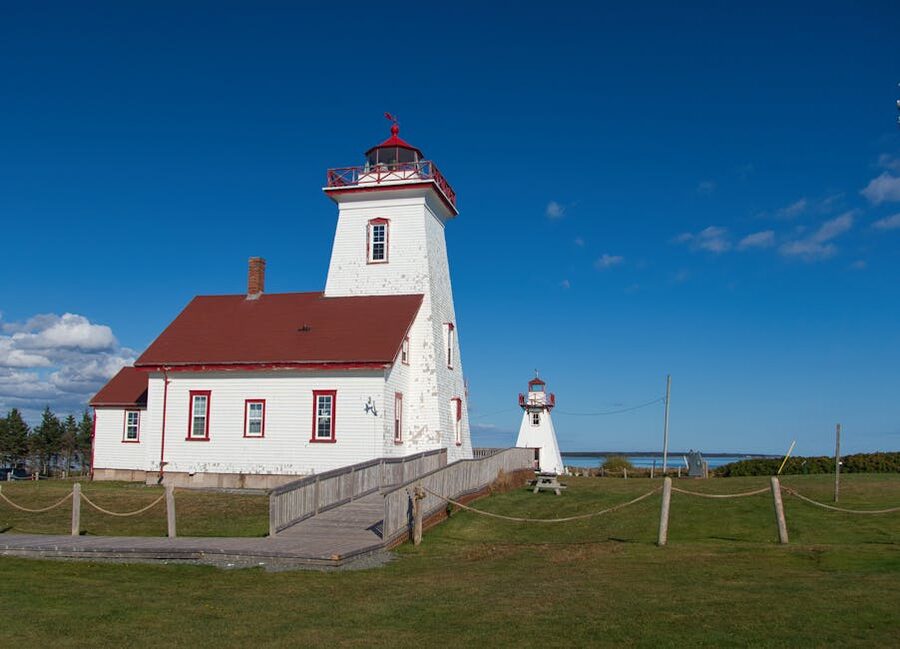
PEI’s foliage is later and weaker than the mainland Maritime ports (the island is mostly farm country rather than hardwood forest), and the agricultural patchwork of red soil, harvest stubble and yellow maple along the country roads is the look here, not blazing red maples. The lighthouse circuit (Wood Islands, East Point, North Cape) is the alternative day if you have already done Cavendish; PEI claims more lighthouses per square mile than any province in Canada and the drive is genuinely lovely.
Saguenay Fjord: the day that earns the trip
If your itinerary does not include Saguenay Fjord, look at a different itinerary. The Fjord-du-Saguenay National Park (managed by Sépaq, Quebec’s parks authority) is the most dramatically beautiful single port on the route: a 105-kilometre fjord cut deep into the Canadian Shield, with cliffs running 200 to 300 metres straight up from the water and hardwood forest carpeting the rims. In peak foliage week, the colour reflected on the dark water of the fjord is genuinely something I have not seen anywhere else on the eastern seaboard.
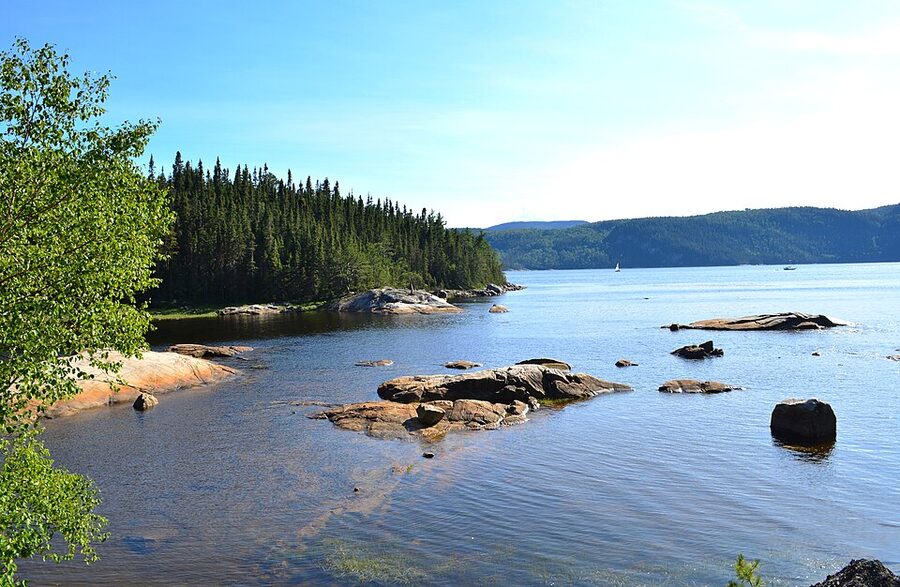
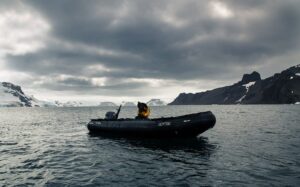
Most operators offer a Zodiac excursion within the fjord itself (usually run from the cruise berth at La Baie or Anse-Saint-Jean), which gets you off the parent ship and into the fjord at water level, with the cliffs straight up over you. Take it. The standard cabin-day-on-board option is the wrong call; you can have a cabin day on any of the four sea days. The fjord at water level on a Zodiac, with the autumn cliffs above, is the experience the entire region’s marketing photography is built around. Princess, Holland America and most of the small-ship operators run versions of this; on Ponant the small-ship vessels themselves can navigate further into the fjord than the bigger ships, which is part of why the operator does this region well.
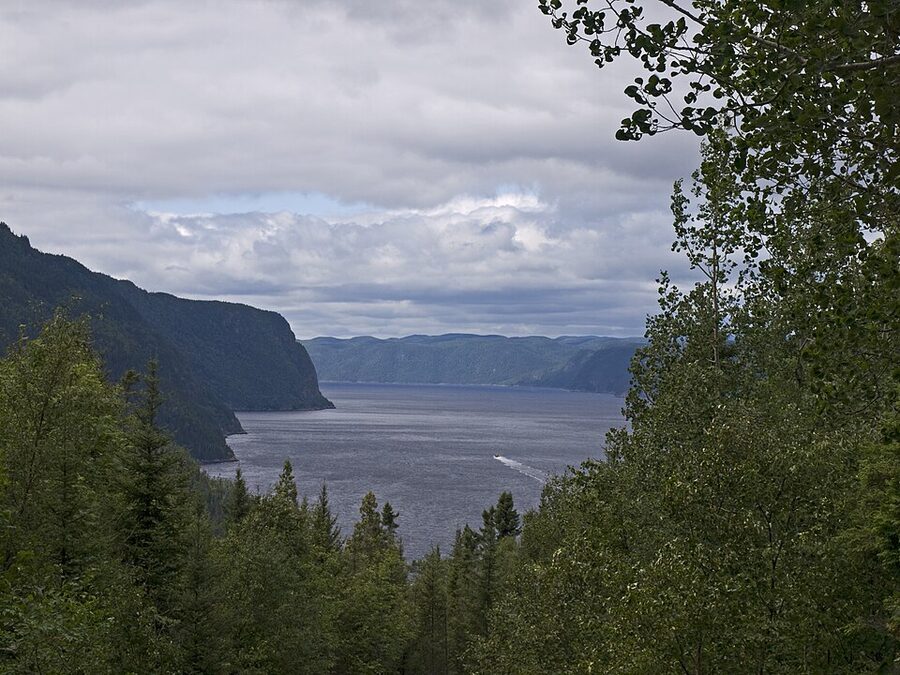
Tadoussac, at the mouth of the fjord, is also worth knowing about. It is one of the world’s premier whale-watching ports for blue, fin, minke and beluga whales, and several operators include a half-day whale-watching excursion as the alternative to the Zodiac fjord run. If your trip is later in the season (mid-October onward) the whales are still feeding here; if it is late September, both excursions are options. I would still take the Zodiac fjord run first.
Quebec City: the overnight that the small-ship lines build into the schedule
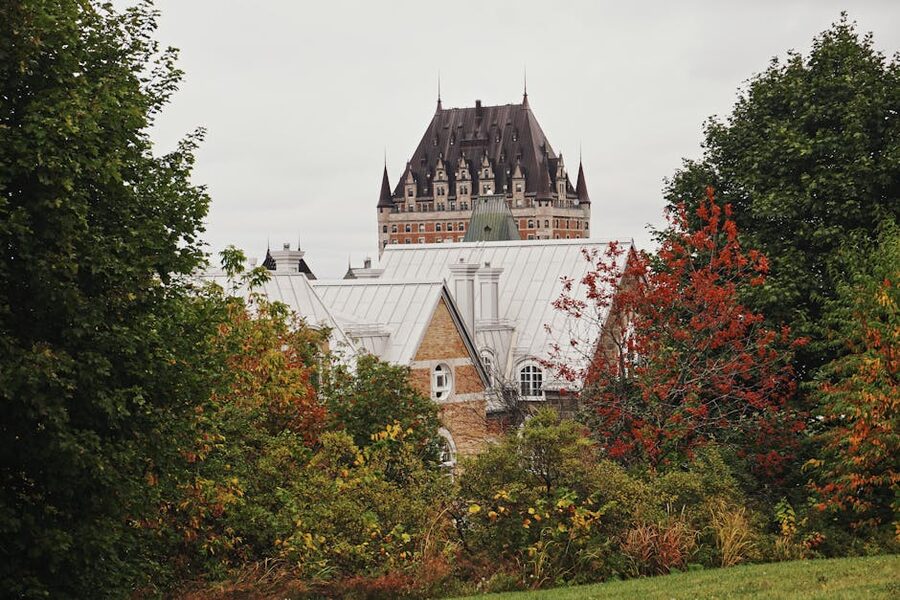
The walled old city is the only walled-fortified town in North America north of Mexico. The standard cruise-stop excursion is a half-day walking tour of the Upper Town (Château Frontenac, the Citadelle, the Place d’Armes) and the Lower Town (Petit-Champlain, Place Royale), which covers the obvious highlights in three hours with a guide. If your itinerary overnights in port (Silversea, Seabourn, Windstar, Ponant and Regent all do this for the autumn season), use the second day for what the cruise excursions skip: lunch at Le Saint-Amour (Old Quebec, French haute-cuisine, two-star at the Michelin level although Quebec City is outside the Michelin guide proper), then the ferry crossing to Lévis on the south bank for the photograph back to the ramparts (the postcard view of Quebec City is from Lévis, not from inside the walls), then dinner at Légende for the ingredient-driven Québécois fine dining that makes this one of the best food cities in eastern Canada.
Île d’Orléans is the half-day side trip if your overnight gives you a full second day. The island sits in the St Lawrence ten minutes drive from the old city, with cider houses, sugar shacks and farms along its perimeter road. The cider house circuit (Cidrerie Verger Bilodeau, Cidrerie La Cidrerie du Vignoble) is good in any season and excellent in October when the apples come off. The drive is a 40-minute loop; combine with lunch at one of the auberges along the route. Île d’Orléans is the inland-flavour of the trip. Most of what you see from the ship is coast; the island is farm country and apple orchards.
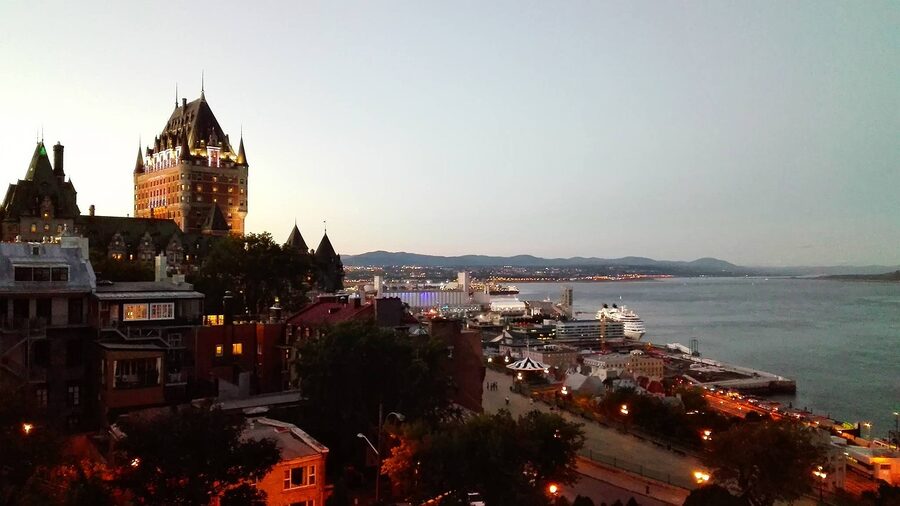
The Château Frontenac itself is a Fairmont property and you can sit in the Champlain Bar for an early-evening drink without staying there. Book ahead; the bar holds a small set of tables for non-residents and the view from the windows over the Lower Town and the river at sunset is the right way to bookend a Quebec City day.
When to go for peak colour
The colour gradient through the season runs roughly south to north. Bar Harbor and Boston have the latest peak (mid- to late October), Saguenay and the Cape Breton highlands the earliest (late September to first week of October), Quebec City and Halifax somewhere in between (first to second week of October). What this means for itinerary booking:
- Late September sailings catch the maritime ports at peak (Cape Breton, Saguenay, Quebec) but Bar Harbor and the southern Maine ports are still mostly green. Best if Saguenay and Cape Breton are why you booked.
- First half of October sailings are the consistent winners across the whole route. Maritime ports a touch past peak by the second week, Bar Harbor and Boston coming into peak. If you can only book one window, this is the one.
- Second half of October sailings are gambling on the maritime ports. By mid-October the high winds in the Gulf of St Lawrence start stripping leaves and the Cape Breton hills can lose their colour fast. The southern ports (Bar Harbor, Newport, Boston) are at peak.
- Late October is past peak across most of the route. Some sailings still run into early November on a few of the operators; consider this a different product (autumn-into-winter, more dramatic light, fewer leaves).
The current colour-prediction sources to check before locking dates: SmokyMountains.com runs a national fall foliage prediction map updated weekly through September and October that is the most-cited single source, and the Vermont Department of Tourism Foliage Tracker covers the New England states with real-time reporter updates from the field. The Quebec province publishes its own autumn-colour map through Bonjour Québec; Parks Canada updates the Cape Breton Highlands and Fundy National Park foliage status weekly. None of these is a contract. Fall is variable by 7 to 10 days year-on-year, and a wet August can pull peak two weeks earlier than expected. But checking three or four of them in early September the year you sail will tell you how the season is shaping up.

Weather and what to pack
Cold mornings on deck. Cool to mild days ashore. The Bar Harbor and Boston ports are typically 50 to 62°F (10 to 17°C) by day in early October, dropping to 38 to 45°F (3 to 7°C) at night. Halifax and the Maritime ports are similar but with more wind. Saguenay and Quebec are the cold end; overnight can drop near freezing in late October, with daytime highs in the 40s F (5 to 9°C). Pack layers: a base of merino or fine wool, a fleece or wool mid-layer, a wind- and rain-proof shell. A warm hat and gloves for the morning deck-watching that is half the reason you came. Walking shoes for the towns and proper boots if your excursions include the Skyline Trail or the Acadia carriage roads. Most ships keep public spaces at a comfortable indoor temperature; you do not need to dress for cold inside.
The other thing to know: late September and October are the tail end of Atlantic hurricane season, and the larger storms can affect this route. In a typical season one or two sailings out of forty get rerouted around weather; usually the southern ports get swapped or a sea day gets added. The luxury small-ship operators handle this transparently and rebooking policies are generally accommodating; Princess and Holland America also have well-developed weather-routing protocols. Cruise the route understanding that the published itinerary is approximate; the captain has the final call on port access.
The land trip versus the cruise: different products
The most common confusion in autumn-trip planning for this region is treating a foliage cruise as a substitute for a land-based New England fall driving trip. They are not the same product.
The cruise is a coastal trip. You see the coastal hardwoods, the Maritime port towns, the St Lawrence and the fjord. The colour is everywhere but it is the coastal version of it: wind-shaped, mixed with white pine and spruce, set against the water. The driving trip is an inland trip. Vermont, New Hampshire, the White Mountains, the Berkshires, the back roads of the Green Mountains and the river valleys of the Connecticut. The colour is denser, the forests are bigger, the views from the high-elevation passes are wider. The two trips show you genuinely different things.
If you have done one and want the other, do the other. If you have done neither, do the cruise first. It is the lower-effort version, the ports and meals are organised for you, and the foliage is properly there. The land trip is then the complement when you come back, in another year, and want the inland forests with a rental car and a self-paced itinerary.
The cousin to this question, if you have done both and want a third autumn product, is European autumn travel: the Black Forest in late October, the Danube and Rhine corridors in early November when the riverbank vineyards have turned. We cover the latter as part of the central European autumn pattern in the Black Forest and the Baden-Baden guides; the Christmas markets shoulder season picks up the calendar from there, covered in the Christmas markets guide.

The shore excursion call
The single biggest practical difference between the small-ship operators and the mega-ship lines on this route is what is bundled into the fare. Silversea’s All-Inclusive Plus, Regent’s all-inclusive across the board, Seabourn’s included Ventures-by-Seabourn programme: between them they cover most of the standard excursions on this route (Acadia, Cape Breton coach tour, the Saguenay Zodiac, the Quebec walking tour). Windstar and Crystal include some, charge for others. Ponant tends to include the headline excursions in fare but charge for the deeper-immersion options. Hapag-Lloyd is more à la carte.
The mega-ship lines almost universally charge extra for shore excursions on top of the cruise fare, typically $80 to $250 per person depending on what is involved, with the Cabot Trail coach the most expensive single line item (often $200+ per head because of the duration). For a couple on a 12-night Holland America or Princess cruise booking five excursions, the extra spend can land somewhere between $1,500 and $2,500. Factor that into the line-by-line comparison; the all-inclusive small-ship fare that looks higher at the headline number often comes out closer than expected when you add the excursion cost back to the mass-market fare.
The excursion to skip if you are paying à la carte: the Halifax city tour. Halifax is small enough and walkable enough from the cruise terminal that you do not need a coach for it. The excursion to take regardless: the Saguenay fjord Zodiac. The other ones (Cadillac sunrise at Acadia, the Cabot Trail loop from Sydney, the Quebec walled-city tour) are worth what most operators charge.
Practical bookings: how far ahead, what to ask
Twelve to eighteen months in advance for the small-ship cruises in peak foliage week (late September to mid-October). The Silversea, Seabourn, Regent and Windstar autumn 2026 sailings have been booking heavily since spring 2025; for autumn 2027 the prime dates open in mid-2026 and start to fill by autumn the same year. Cabin-category matters less on these ships than length of voyage; the standard suite on Silversea or Seabourn is more space and amenity than a junior suite on a mega-ship line, and the upgrade to a higher tier is the kind of decision that earns its keep on a 14-night transatlantic but is more discretionary on a 10-night Boston-Quebec. Same call as on the broader small-ship luxury cruising question; the cabin-vs-suite premium is voyage-length-sensitive.
If you are thinking about combining a fall foliage sailing with the rest of the cruising calendar, the natural pair is the Mediterranean small-ship season that ends in mid-October just as the New England season is wrapping. Some travellers do an October Med (Greek islands, Croatia, the Adriatic) and follow with a New England autumn the next year, alternating coasts. The expedition end of the small-ship category, covered in our expedition cruising guide, is the third leg of the small-ship triangle; expedition season in Antarctica runs November to March, so an autumn New England crossing pairs cleanly with a January Antarctica trip if that is the next category you want to try.
Travel agent or direct: this region is one where a specialist luxury cruise agent (the Virtuoso network, Cruise Holidays, Largay Travel) earns their keep. The fall sailings have been the home turf of the Northeast luxury-cruise specialists for thirty years and they hold blocks with onboard credit, dining-credit and excursion-credit packages on the popular sailings that you do not see on the operators’ direct websites. Unless you have a direct relationship with the cruise line that includes loyalty perks, the agent route is generally the better economics on this specific region.
One last piece of advice
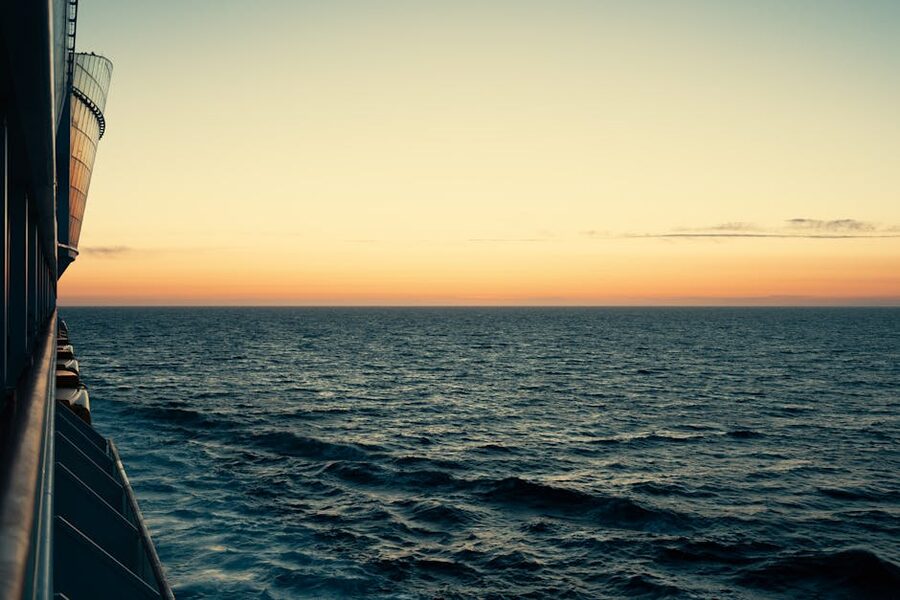
Get up early. The deck at first light, Halifax sliding into view past Eastern Point or the Cape Breton coast coming up out of the dark on a north-running morning, is the experience that justifies the entire trip. The dining rooms open at seven, the included excursions push off the ship at nine. The two-hour gap between is the trip’s gift, and most passengers sleep through it.
Bring the warm hat. Pour the coffee. Watch the coast come in.