You leave the changing room in a thin cotton sheet, walk down a marble corridor, and a uniformed attendant points you toward the next door. You push it open expecting another corridor. What opens up instead is a domed hall the size of a small cathedral, faced floor-to-ceiling in cobalt and ochre tile, with a circular pool at the centre under a glass cupola that throws a column of soft light onto the water. There are perhaps eight people in it, none of them speaking, none of them dressed. Steam ribbons over the surface. A single attendant moves between stations like a sacristan. You are at station six of seventeen, and you understand for the first time what Mark Twain meant when he wrote that here at the Friedrichsbad, you lose track of time within ten minutes and of the world within twenty.
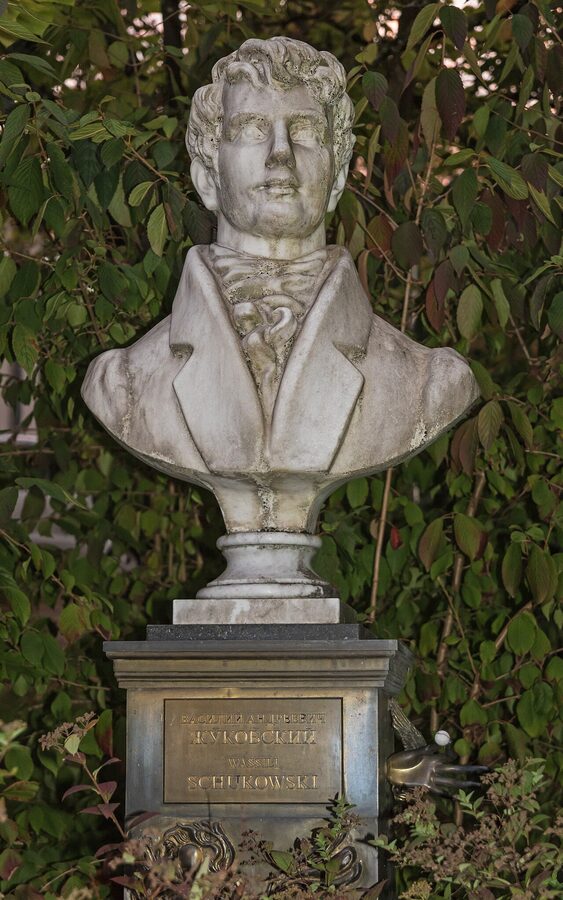
Baden-Baden is the rare European luxury holiday town that has never stopped being one. The Romans piped its springs. The Russian aristocracy made it their summer capital in the 1850s and 1860s. Brahms came every summer from 1865 to 1874 and wrote parts of the Second Symphony in a small Lichtental house. Dostoyevsky lost his shirt at the Casino and turned the experience into The Gambler. Twain was treated for arthritis. Marlene Dietrich, walking out of an evening at the Spielbank in the 1950s, called it the most beautiful casino in the world. Two world wars passed it almost untouched. The town that stands today is the same town those people described, with the wifi quietly added.
In This Article
- Three rituals build the trip
- The Friedrichsbad
- The schedule and what to expect
- Caracalla Therme as the alternative
- The Casino in the Kurhaus
- Dress code, hours, the architectural tour
- Where to stay
- Brenners Park-Hotel & Spa (Booking | Official)
- Hotel Belle Epoque (Booking | Official)
- Roomers Baden-Baden (Booking | Official)
- Hotel Atlantic Parkhotel (Booking | Official)
- Make the call
- The Festspielhaus
- The Lichtentaler Allee
- Brahms summers
- Where to eat
- Park-Restaurant at Brenners
- Le Jardin de France
- Rizzi
- Schlossrestaurant Hohenbaden
- Day trips
- The Schwarzwaldhochstraße and the Black Forest
- Strasbourg
- The Alsace wine route
- Schloss Hohenbaden
- When to go
- A three-night plan
Three rituals build the trip
You can complicate Baden-Baden if you want to. Most people do, on first visit, and then come back and simplify. The town earns its place in the European luxury travel calendar on three rituals that don’t really need anything else around them: an afternoon at the Friedrichsbad, an evening at the Casino in the Kurhaus, and dinner at Brenners Park-Hotel & Spa. Add a long walk on the Lichtentaler Allee in either direction, and a Festspielhaus programme if your dates work out, and you have the trip. Three nights is enough. Four is generous. A week is a different kind of holiday, and that’s the one with the day trips.
The Friedrichsbad
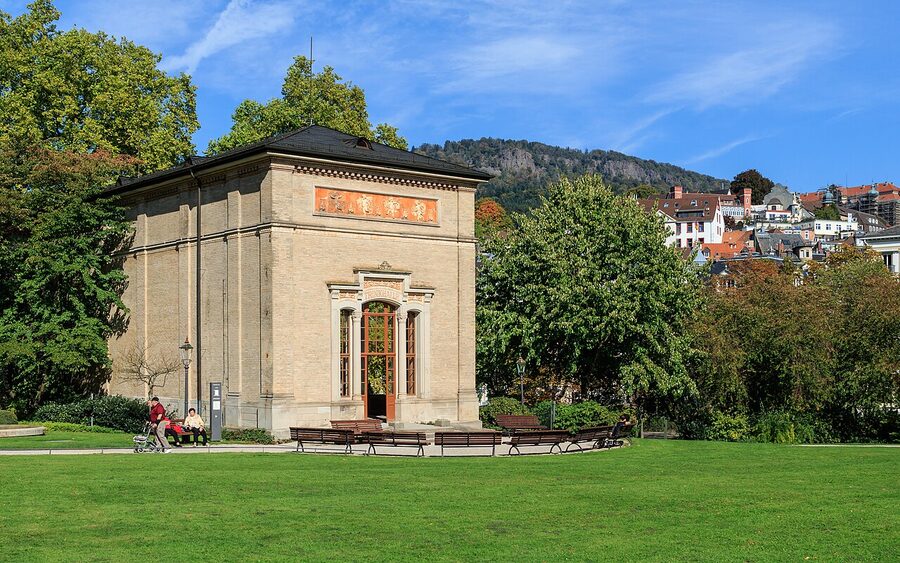
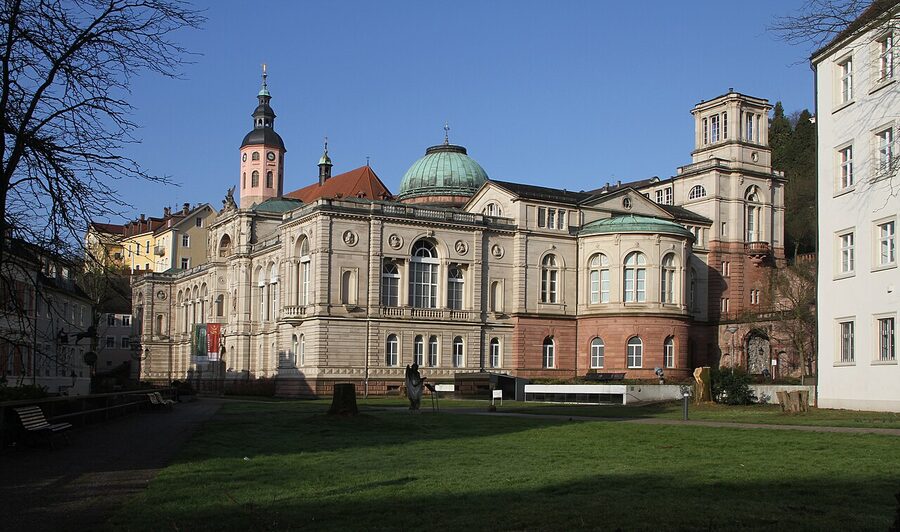
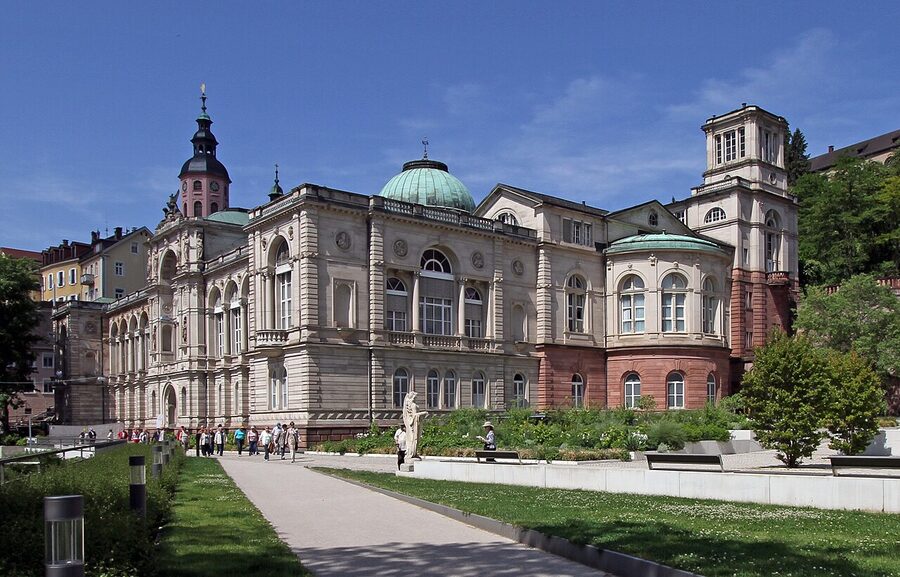
The Friedrichsbad opened in 1877 as the Romisch-Irisches Bad, the Roman-Irish bath. Its model was the heated-then-steamed-then-immersed circuit invented by a Dr Barter in Ireland in the 1850s, married to the architecture of a small Roman thermae. The result is a 17-station ritual that takes about two hours start to finish, mostly performed in silence, mostly without anything on. The water is the same thermal water the Romans piped two thousand years ago. The point is not exercise, and not socialising. It’s the closest thing to a meditative practice you can do in a hotel afternoon.
The schedule and what to expect
This is the question every reader Googles before booking a flight. Five days a week, the Friedrichsbad is a traditional nude bath, mixed-gender. Those days are Monday, Tuesday, Thursday, Friday and Sunday. Two days are textile days when swimwear is required and brought from home: Wednesday and Saturday. There are no longer separate-gender days at the Friedrichsbad itself. The Caracalla Therme next door is the swimwear option for any day of the week, including the textile-required days here.
If the nude question is the one that’s keeping you out, the answer to it is simpler than the internet makes it look. Nobody in the bath is looking at you. The lighting is dim. The first ten minutes are awkward; the next hour and fifty are not. Bring nothing. They give you slippers and towels and shampoo at reception. The ticket is €38 for the full Roman-Irish circuit, and that includes the soap-and-brush massage at station eight, which is the only station where someone touches you and which is also, in a quiet way, the heart of the experience. The bath is open daily from 9am to 10pm; last admission is three hours before close because you genuinely need that long to do the circuit properly. Aim for a weekday morning. Saturday afternoons are the other extreme: families, hen weekends, queues at the entrance. The Friedrichsbad in February at 10am, with snow on the rooflines and steam fogging the cupola, is the trip’s quiet peak.
Caracalla Therme as the alternative
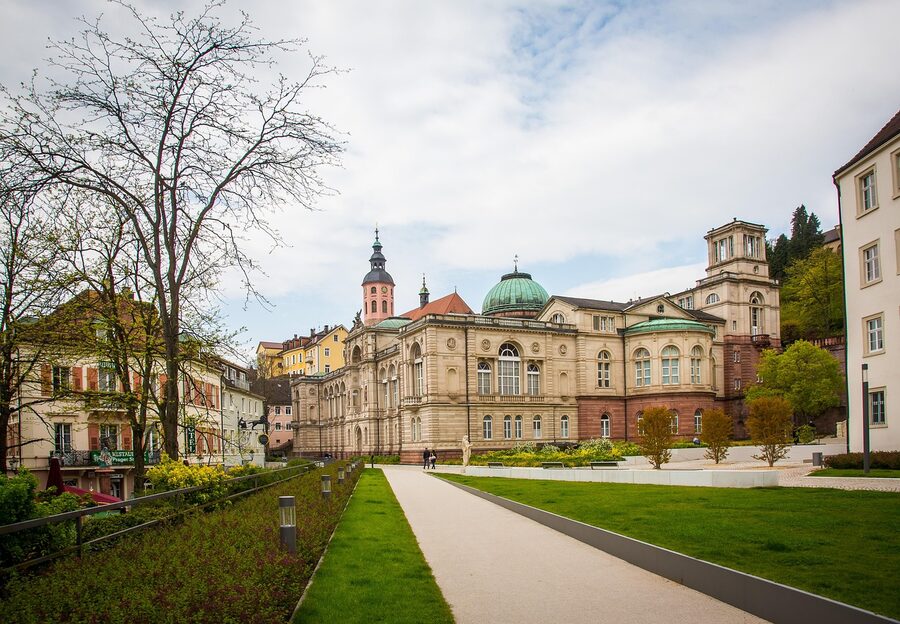
Right next door, the Caracalla Therme is the modern thermal complex: indoor and outdoor pools, sauna landscape, fountains, swimsuits required, families welcome, casual. If you don’t want the full Roman-Irish ritual, this is the place to spend a couple of hours getting wet in thermal water without the choreography. €21 for two hours in the bath area, €25 for three, €35 for the full day. Add €5 a tier for sauna access. Open daily 8am to 10pm. The Caracalla is a perfectly nice spa; it just isn’t the Friedrichsbad. If you have an afternoon to fill and don’t want to repeat the ritual, come here for the outdoor pool, which steams in winter and is the prettier of the two complexes from the outside.
The Casino in the Kurhaus
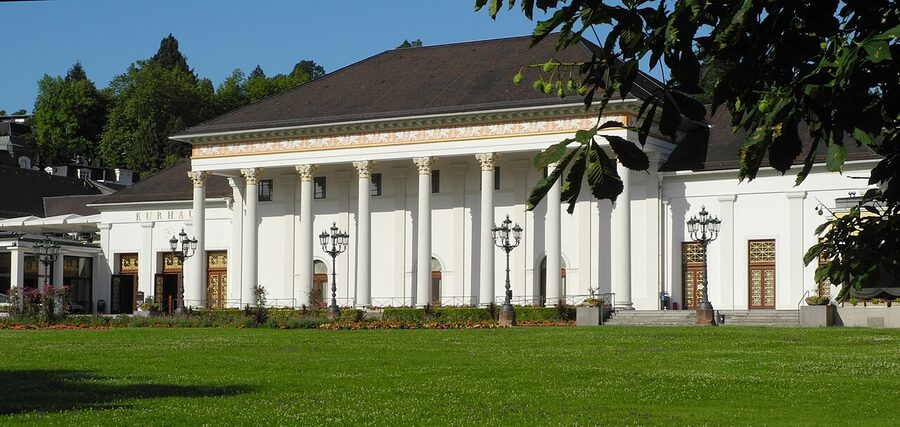
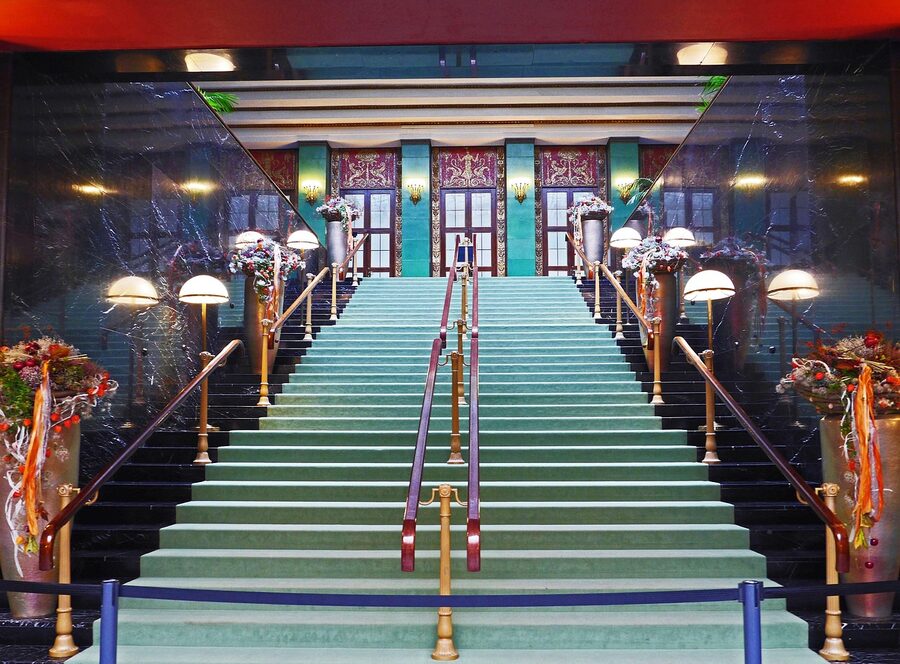
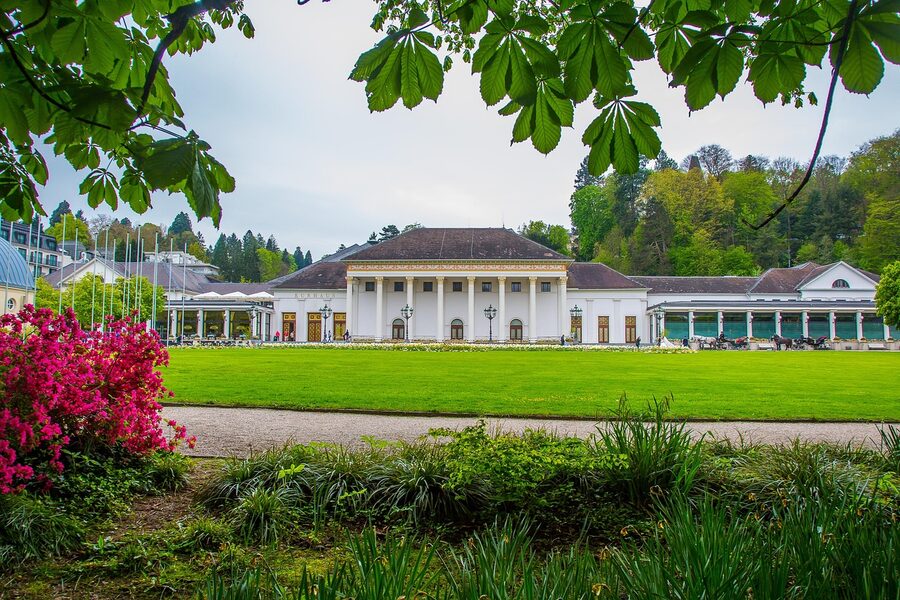
The Kurhaus sits at the centre of town behind a colonnade of eight Corinthian columns, set back from the Kaiserallee in its own short formal garden. Built between 1821 and 1824 in the prevailing neoclassical idiom, it was redecorated in the 1850s by Charles Garnier, who would later design the Paris Opera, and the rococo gaming halls he installed are still the rooms you walk into now. Red and gold. Crystal chandeliers. Fresco ceilings with allegorical women holding things. The roulette and blackjack tables sit at the centre of those rooms looking exactly as they would have looked when Dostoyevsky was losing whatever he had left to lose.
Dress code, hours, the architectural tour
Two things to know before you go. First: there is a real dress code in the classic gaming rooms, and it is enforced. Men: a suit jacket or tuxedo, with a shirt and tie strongly preferred. If you turn up without a jacket they’ll rent you one for €10 at the door, which is fine for an emergency but not the same as wearing your own. Women: elegant evening wear, less formally specified, in practice meaning a cocktail dress or a sharp pant suit. The slot machine area runs a smart-casual code that will let you in in a clean shirt and decent shoes, but the slot room is the airport-lounge end of the experience and not the room you came for.
Second: the schedule. The classic roulette tables run Sunday through Thursday from 3pm to 2am, and Friday-Saturday from 3pm to 3am. Black Jack starts a bit later: Sunday from 3pm, Monday-Thursday from 5pm, Friday-Saturday 5pm to 3am. Slots are open from 11am to 2 or 3am. Admission is €5 and ID is required, since the legal entry age is 21. If you want a quiet first look at the rooms before the croupiers arrive, the casino runs a guided architectural tour in the morning when the gaming halls are empty, and that’s the visit to make even if you don’t intend to gamble. The tour is the better Garnier experience. The actual gambling is fine if you like roulette, and beautiful if you don’t.
Where to stay
There are perhaps fifteen serious hotels in Baden-Baden and four that anchor the choice. The case for each is different enough that the call is genuinely a personal one, not a question of which is best.
Brenners Park-Hotel & Spa (Booking | Official)
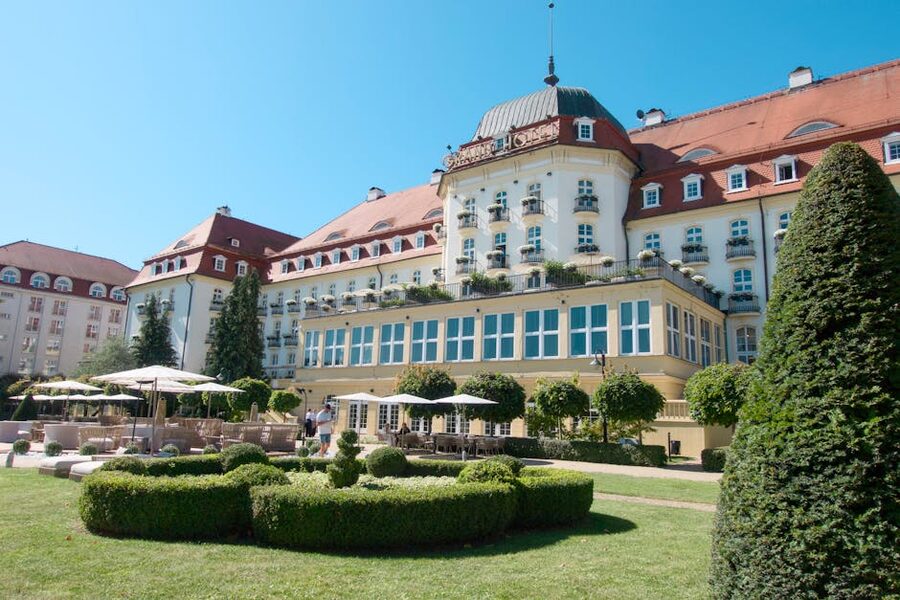
If you do not want to think about it: Brenners. The hotel was founded in 1872, has been part of the family-owned Oetker Collection for decades, and is the address that names like Brenners-and-Schwarzwaldstube get linked together at by people who are talking about German hotels. Eighty rooms. Park-Restaurant runs at one Michelin star with a Mediterranean-French menu and a wine list that will sell you a 2010 Chateau Margaux if you ask. The spa, Villa Stephanie, is in a separate 1920s villa up a flight of steps from the main hotel and is the genuine differentiator: a six-storey wellness compound with a medical-spa wing on the top floor that runs the kind of programmes Swiss clinics charge twice as much for. Rooms start around €700 a night in shoulder season, climbing through €1,000 for a park-facing junior suite. The Lichtentaler Allee runs along the back garden so you can walk out the rear gate onto the Oos and be on the promenade in fifteen seconds.
If you don’t want to make the call: stay here. The other addresses are not worse, but Brenners is the one you’ll wish you’d stayed at if you don’t.
Hotel Belle Epoque (Booking | Official)
The boutique alternative: 16 rooms in a Renaissance-revival villa from 1874, set back from the road on its own gravel forecourt, two minutes’ walk from the Lichtentaler Allee in one direction and the Friedrichsbad in the other. The owners run it themselves, the breakfast room is the sort of room you want to linger in, and afternoon tea is included in the rate, which the staff treat as a real meal rather than a check-the-box gesture. Rooms start around €280, climb to €500 for a junior suite. Choose this if Brenners feels too institutional, if you want to be recognised by name on day two, and if you don’t need a 2,000 square-metre spa attached.
Roomers Baden-Baden (Booking | Official)
The contemporary option, opened by the Frankfurt-based Roomers brand in 2017 in a building behind the Festspielhaus. Designer rooms in a moody, low-lit, dark-wood register, a sushi-and-Asian-fusion restaurant called Moriki on the ground floor, a rooftop pool that’s better in concept than in execution, and a small Cinq Mondes spa. From around €260. Choose this if you specifically don’t want the dynasty experience, if Brenners’ brand of formality is exactly the thing you came on holiday to escape, and if you want the hotel itself to feel like a piece of design rather than a relic. The location is fine but unspectacular; everything is a 10-minute walk away.
Hotel Atlantic Parkhotel (Booking | Official)
The older grand hotel sitting in the town centre with views over the Kurhaus park. Slightly faded, perfectly comfortable, and well-located if you want to be inside the town’s central pedestrian quarter rather than on the spa side of the river. From around €180. The Atlantic is the hotel for people who want a nice weekend without the dynasty pricing, which is a respectable use of three nights here even if it isn’t the version of the trip this article is built around.
Make the call
Brenners for the legend and the spa. Belle Epoque if you want to be remembered. Roomers if you want the hotel itself to feel current. The Atlantic if you want to spend less without staying somewhere wrong. Most first-time visitors stay at Brenners, walk past Belle Epoque on day two and wonder if they should have stayed there instead, and then come back the second time and stay at Belle Epoque. Both are right answers. Roomers is a different conversation, for a different traveller, and a real one.
The Festspielhaus
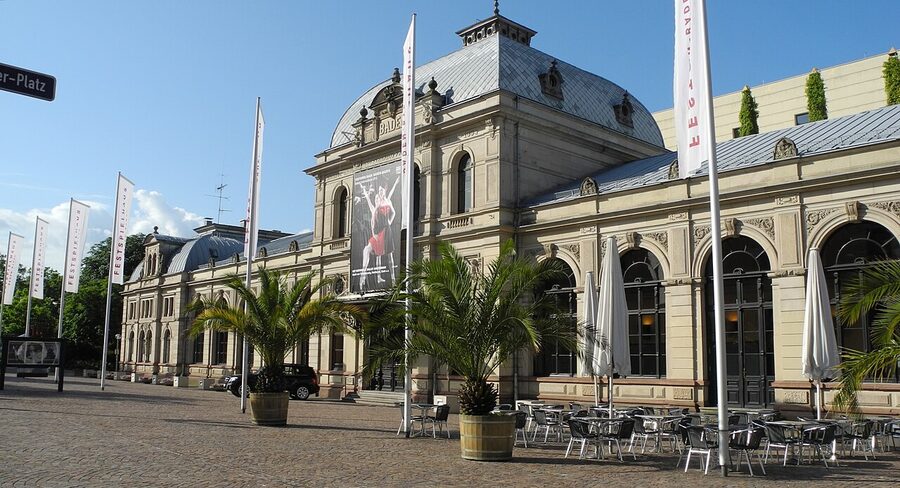
The Festspielhaus is one of the larger opera and concert halls in Europe, with 2,500 seats, in a converted railway station that opened in 1898 and was decommissioned in 1977. The conversion happened in the 1990s and was finished in 1998. The acoustics are excellent. The programming is unembarrassed by the venue: the Berliner Philharmoniker have a long-standing residency that brings them down for Easter and other slots through the year, the Lucerne Festival Orchestra appears in summer, Cecilia Bartoli is a regular, and the opera programme runs the heavy German romantic repertoire alongside the occasional contemporary commission. If your dates overlap with anything that interests you, plan around it.
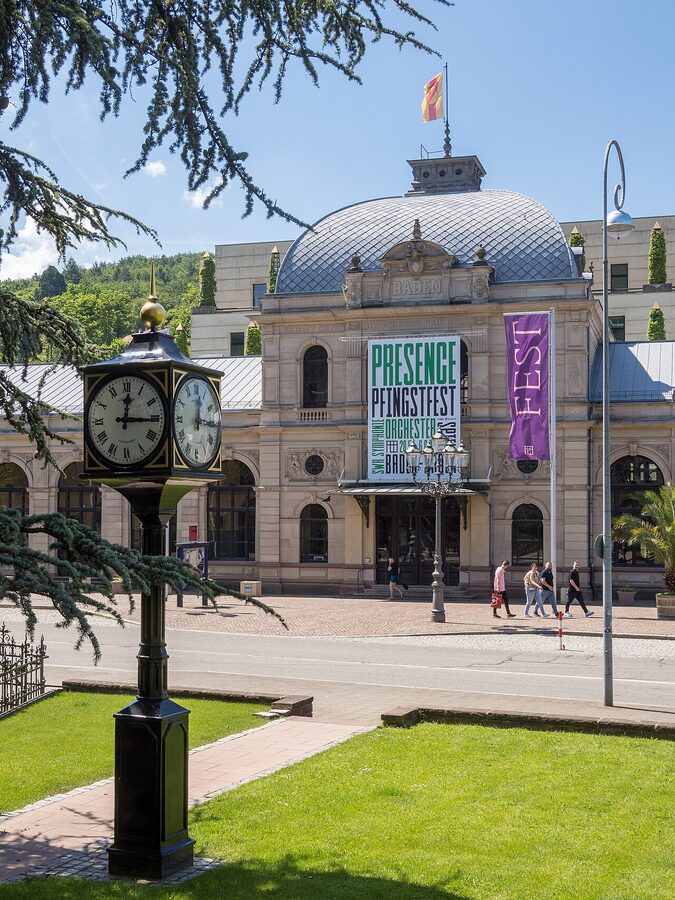
Practical: book the tickets two months out for the Berlin Philharmonic dates, two weeks out for most of the rest. The hall is a 12-minute walk from Brenners through the back of the Lichtental quarter and the same from the centre, slightly farther from Belle Epoque. Wear what you’d wear to the Royal Opera House. The post-concert restaurant traffic concentrates at Rizzi and Park-Restaurant; book.
The Lichtentaler Allee
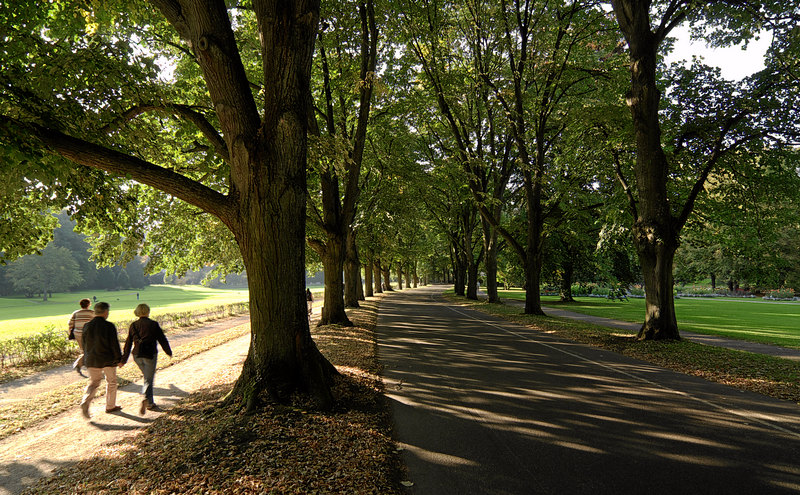
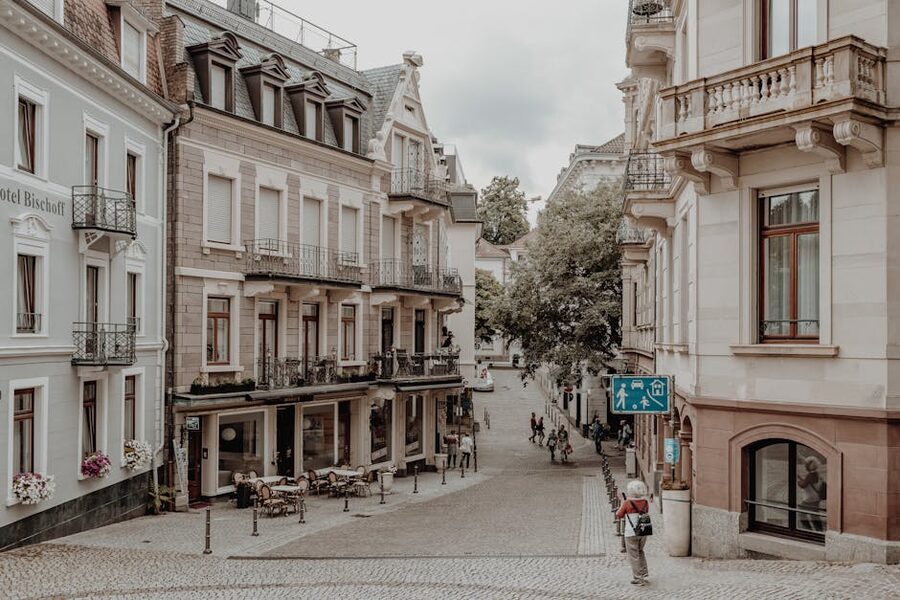
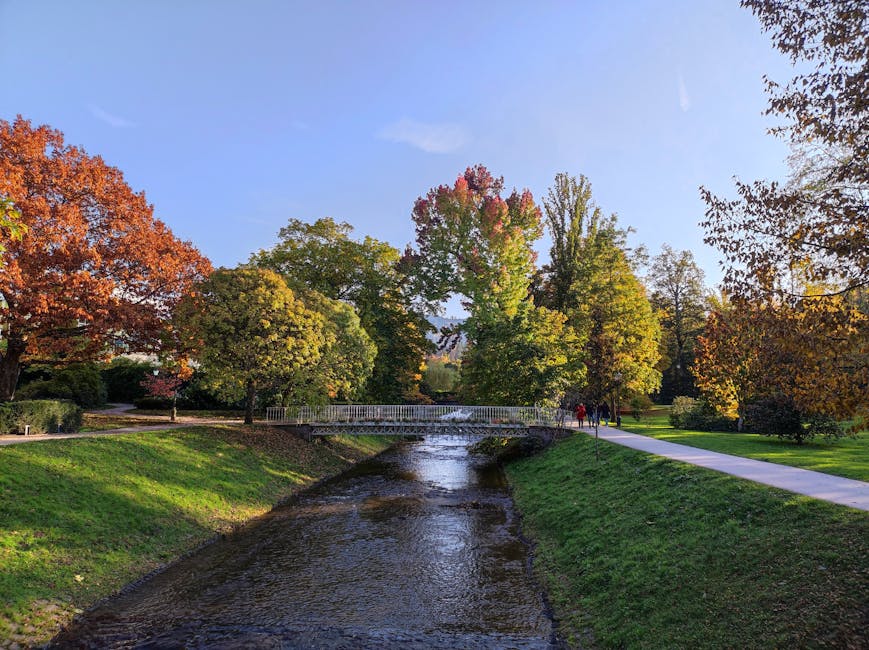
If you do nothing else here, walk the Lichtentaler Allee. Twice. Once each direction. The promenade runs 2.3 kilometres along the Oos river from the back of the Kurhaus to the Lichtentaler Abbey at the south end, lined with rare and unusually old trees: tulip trees, ginkgos, copper beeches, a few sequoias planted in the late 19th century that are now thirty metres high. There are sculpture gardens halfway down, a small rose garden tucked off the path, and an art museum (the Frieder Burda) that you can either visit for the Frieder Burda collection of post-war German painting or skip entirely depending on whether that interests you.
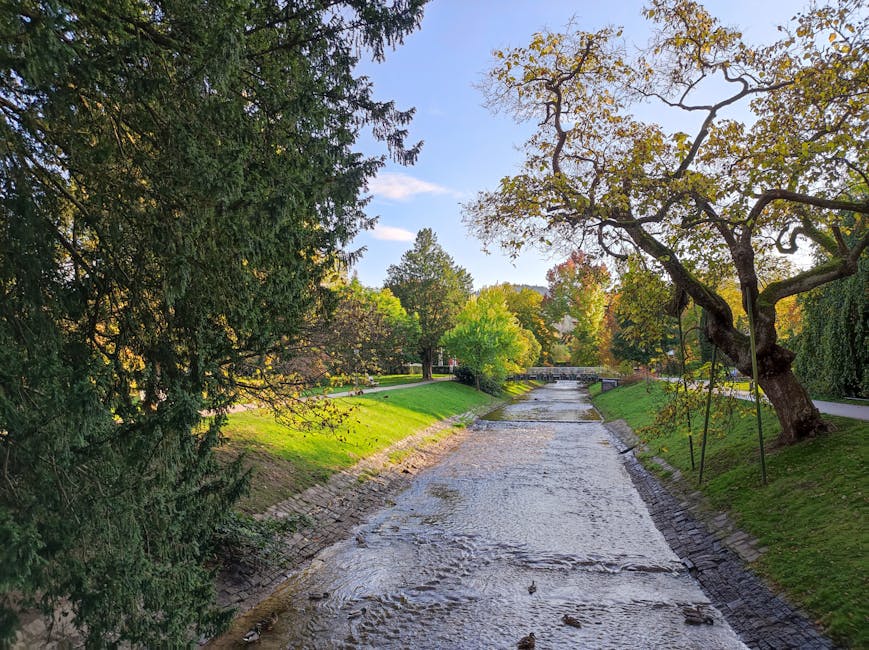
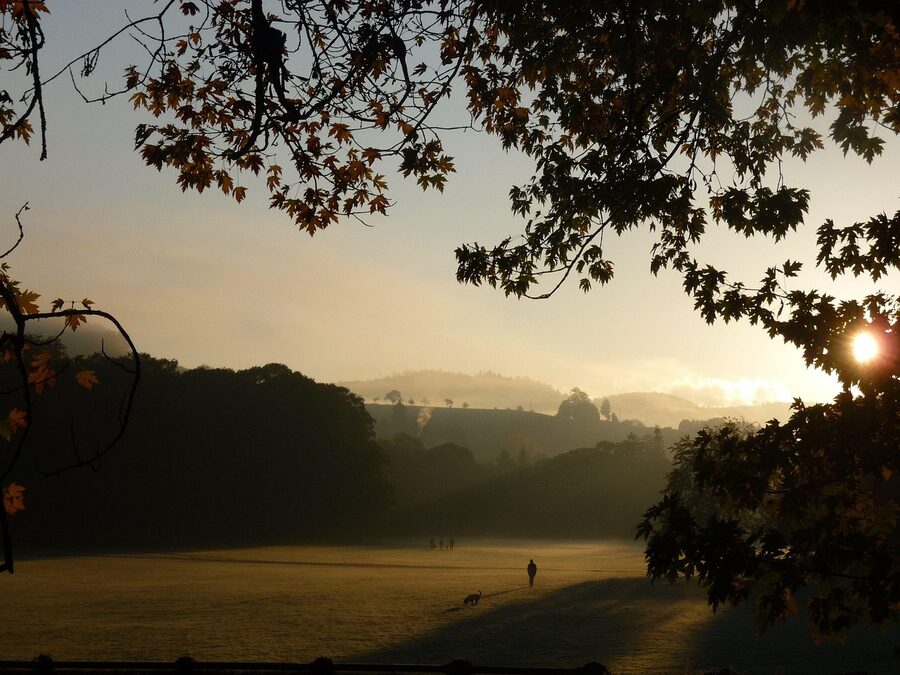
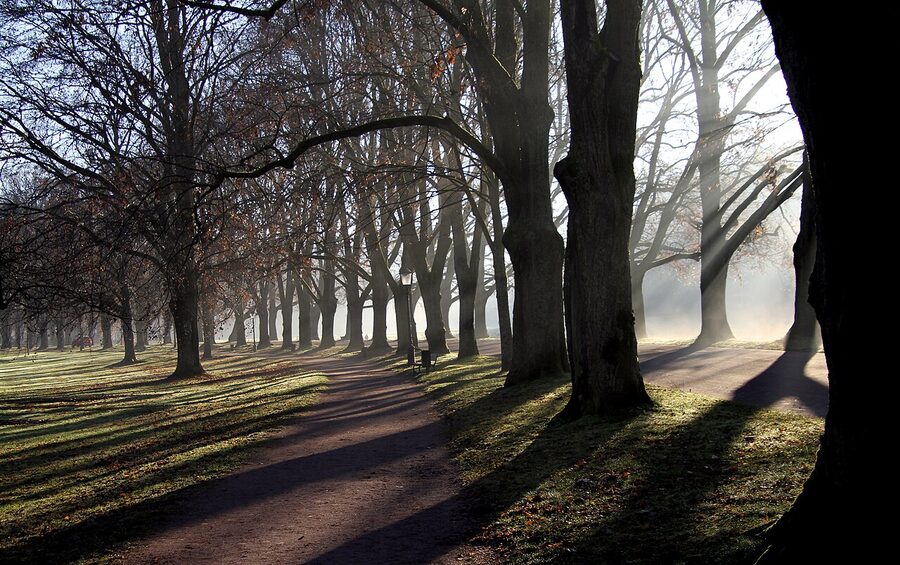
The walk takes 30 minutes one way at a slow pace, which is the only pace it’s worth doing it at. Brahms walked this every morning of every summer he spent here. The trees are signed in three places along the route with their botanical names and planting dates. In late October the copper beeches turn and the Allee becomes one of the better autumn walks in southern Germany. In February with snow on the path it is even quieter, and you’ll often have a kilometre to yourself.
Brahms summers
Brahms spent every summer in Baden-Baden from 1865 to 1874, ten years in a row, in a small two-storey house in the Lichtental quarter. He wrote parts of the Second Symphony, the Liebeslieder Walzer, and the choral works of that period in the upstairs room. Clara Schumann lived a few doors down. The two of them walked the Allee together most evenings. The house is now the Brahmshaus museum, with the original piano, the writing desk, and a small collection of letters and scores. The visit takes about 45 minutes and is worth that for any reader interested in the music. For everyone else, it’s a small, atmospheric house in a quiet street ten minutes’ walk south of the centre, and the walk down through Lichtental to get there is the better part of the visit anyway.
Where to eat
Baden-Baden is not a destination food town in the way Lyon or San Sebastian are, but it has a small, dependable upper tier of restaurants you can eat at four nights running without repeating yourself. The trick is to book all of them on day one.
Park-Restaurant at Brenners
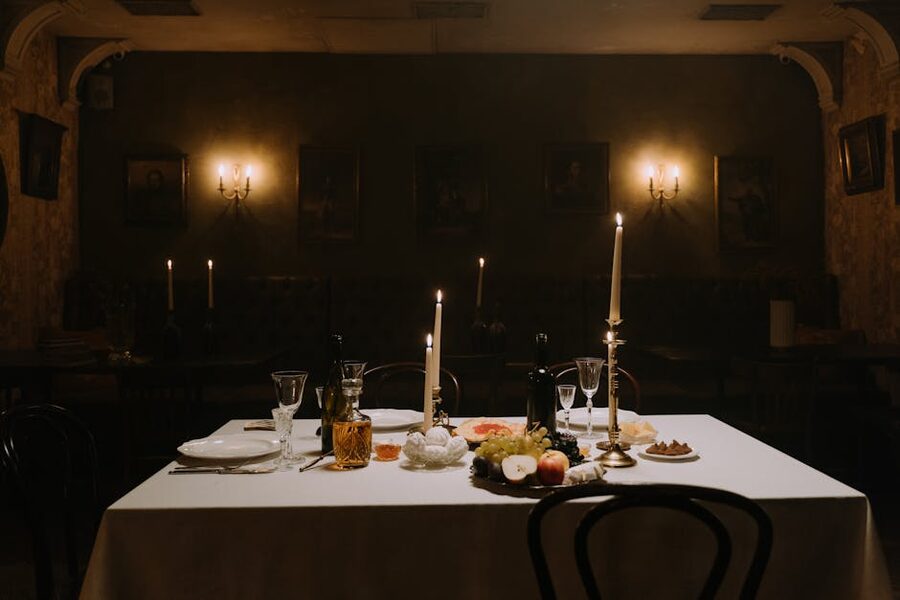
The hotel restaurant at Brenners, one Michelin star, run with the formality of a hotel that has been doing this for 150 years. The food is Mediterranean-French with German-product anchors: a turbot from the Atlantic served with a butter sauce and a horseradish foam; venison from the local Black Forest hunters in season; a pre-dessert that’s usually some version of an unprocessed sorbet. Tasting menus run €185-€240 depending on length and pairings. Book a window table on the park side. The wine list is one of the deeper hotel cellars in southern Germany; ask for the sommelier.
Le Jardin de France
French cooking by a French chef who’s been in Baden-Baden for over twenty years, in a small dining room a few minutes off the main pedestrian street. Classic register: a quenelle de brochet, a saddle of lamb with rosemary jus, a tarte au citron that comes with the kind of crust most people no longer make. Tasting menus around €130. The room is intimate, the service is the right level of formal, and it’s the dinner to book on the night you don’t want a hotel restaurant.
Rizzi
Mediterranean, more casual, on a terrace facing the Lichtentaler Allee. Excellent in summer, when you can sit outside under the chestnut trees with the river running past. Risottos, grilled fish, a long cocktail list. Books out fast; reserve. The Rizzi crowd is half post-Festspielhaus, half post-spa, all in town for some version of the same week, and it’s a good place to feel that.
Schlossrestaurant Hohenbaden
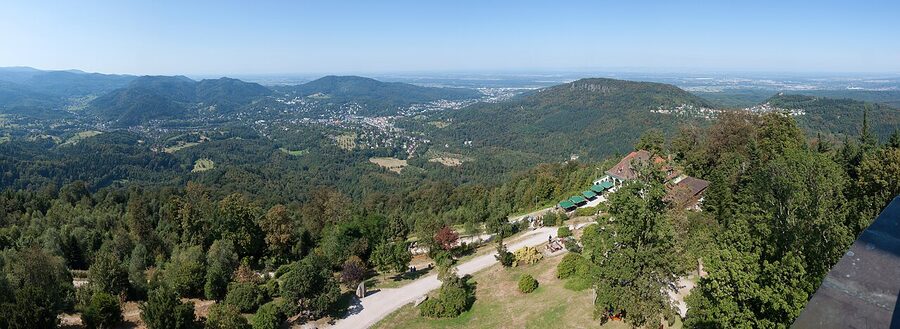
The view restaurant. Up at the old castle ruins on the hill above town, reached by a 15-minute drive or a steep 45-minute walk through the woods, with a terrace looking down over the Rhine valley to the Vosges on a clear day. The food is hearty, regional, German rather than French: schnitzel, Spaetzle, Black Forest pork. Lunch is the right meal here, with a glass of Markgraflerland Pinot Noir, on a clear afternoon between June and September. Skip in winter or weather.
Day trips
Baden-Baden is built for staying put, but the geography around it is unusually good. Three day trips earn the time.
The Schwarzwaldhochstraße and the Black Forest
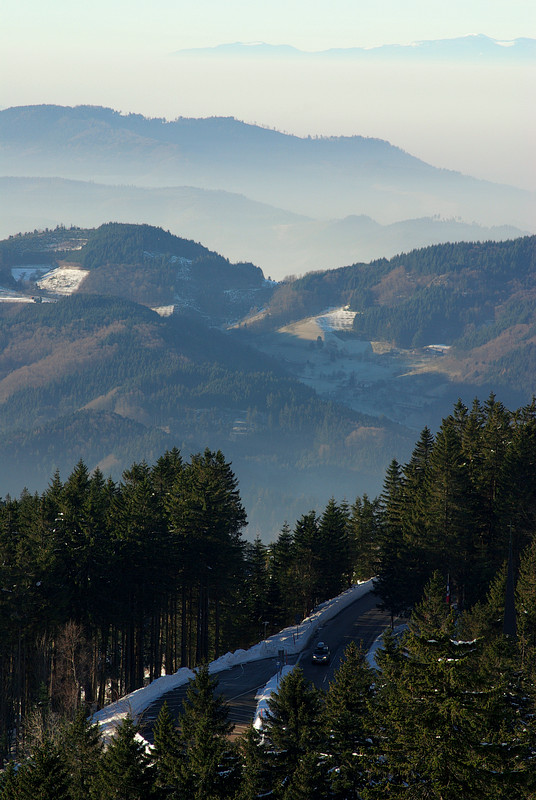
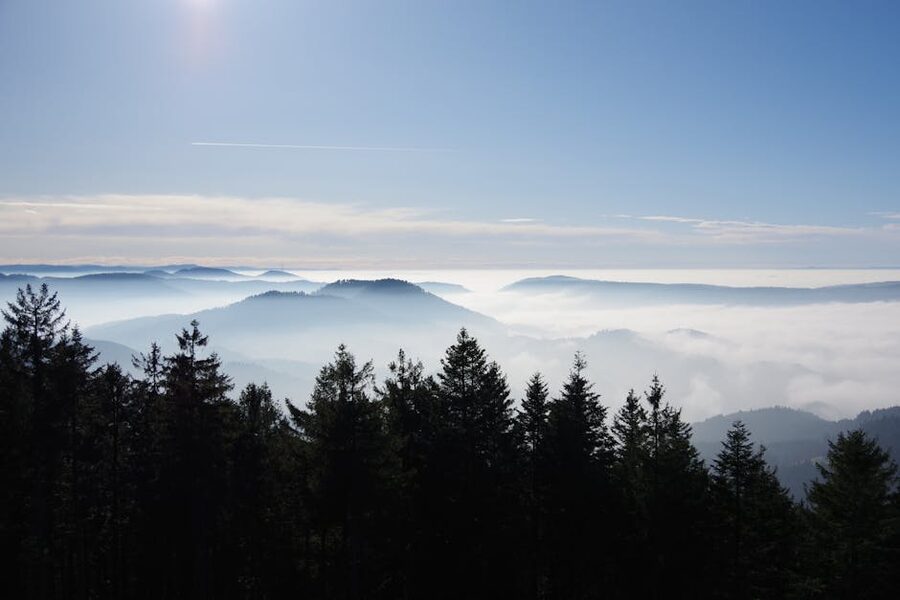
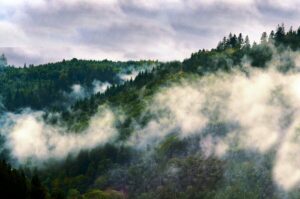
The B500, called the Schwarzwaldhochstraße, runs 60 kilometres south from Baden-Baden along the high ridge of the northern Black Forest at 800 to 1,000 metres of elevation. The drive at sunset between the Mummelsee, a small alpine lake at the road’s midpoint, and Hornisgrinde, the ridge’s high point at 1,164 metres, is the best three hours in the region for first-timers. Stop at the Mummelsee for half an hour, walk to the Hornisgrinde summit from a road pullout (twenty minutes), and end up at one of the village restaurants in Sasbachwalden or Baiersbronn for dinner. We cover the full Black Forest case, the Baiersbronn Michelin valley, and the proper hiking, in our Black Forest guide; the day-trip from Baden-Baden is the Reader’s Digest version.
Strasbourg
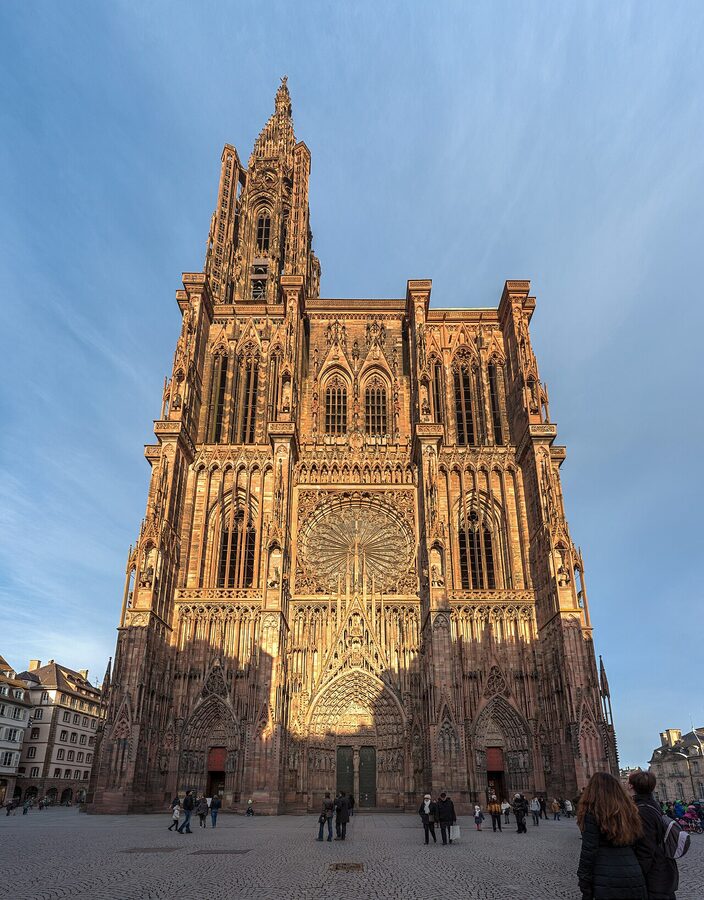
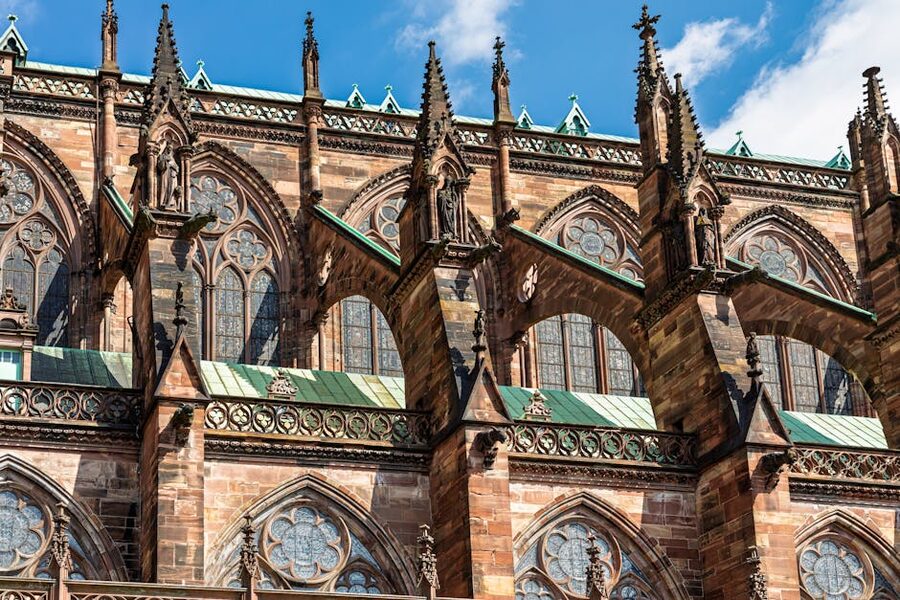
Sixty kilometres west across the Rhine, in France. A different country in 45 minutes’ driving. Park at the Rivetoile garage outside the centre and walk in along the Quai des Bateliers; the cathedral is straight ahead. Lunch at La Maison des Tanneurs in Petite France for a tarte flambee and a glass of Riesling, then walk it off through the Petite France quarter and back to the Place Kleber. You can do Strasbourg as a long lunch and be back at Brenners in time for an evening drink. In December the Christkindelsmarik takes over the centre and the day becomes a different kind of trip; we cover that case in our European Christmas markets guide.
The Alsace wine route
If Strasbourg is the day trip for the cathedral and the lunch, the Alsace wine route is the day trip for the wine. Drive south from Strasbourg along the D422 through Riquewihr, Ribeauville and Eguisheim, three of the prettier villages in France, with the Vosges to the west and vineyards on either side. Stop at one or two of the producer cellars (Trimbach in Ribeauville, Hugel in Riquewihr) for a Riesling and a Gewurztraminer tasting. End up at the Auberge de l’Ill in Illhaeusern if you want to eat at one of the older three-star restaurants in France, but book six weeks ahead. This is a long day. Worth it once.
Schloss Hohenbaden
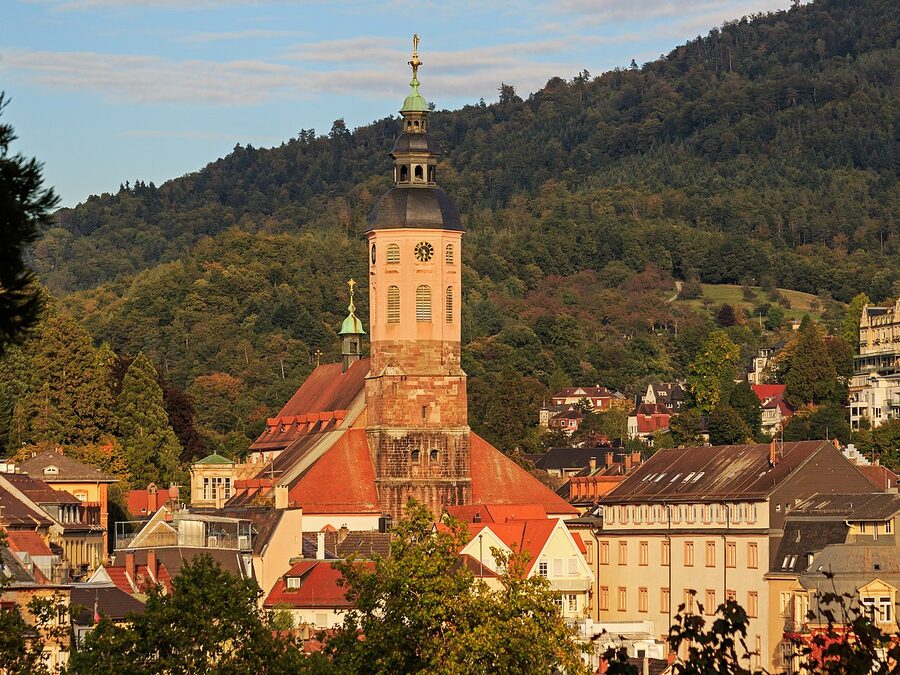
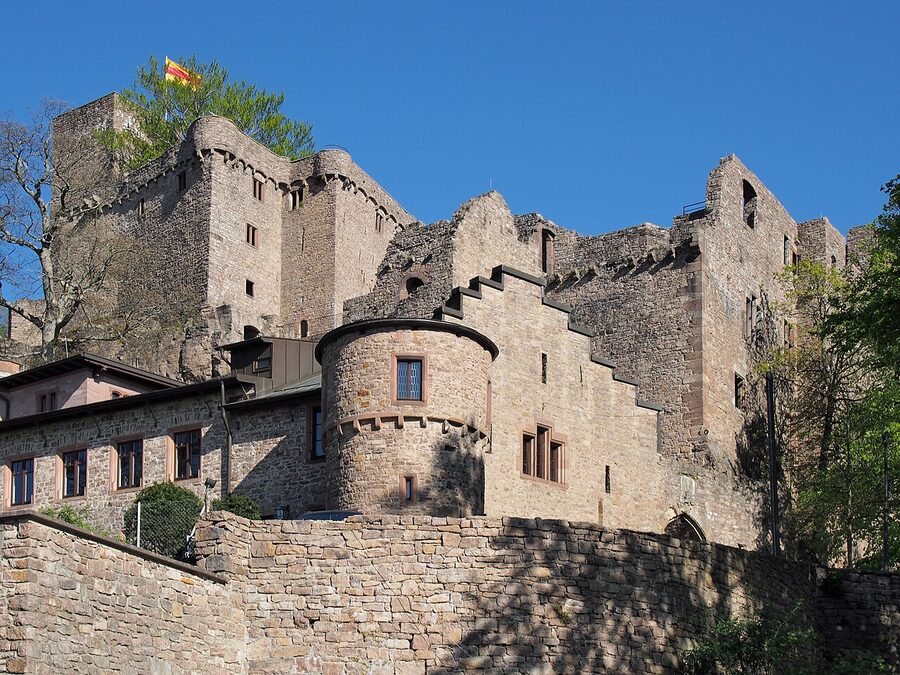
Closer to home: the ruined castle on the hill above Baden-Baden, the one you can see from the centre. A 45-minute walk uphill through the woods, or a 15-minute drive up the Battertstrasse. The ruins themselves are atmospheric in the right way (a roofless 12th-century banqueting hall, a viewing terrace looking west over the Rhine plain). The Schlossrestaurant on the terrace serves the lunch you should eat up here. Half a day, easy.
When to go
Baden-Baden is not a hot-weather destination and never has been. The best months are May through September for the warm-weather promenade culture, the Festspielhaus summer programme, and the outdoor terraces at Rizzi and the Schlossrestaurant. October through November are the autumn colour months on the Lichtentaler Allee and a quieter version of the same trip, with the spas more atmospheric in cool weather. December brings the Christmas market in front of the Kurhaus, a small but genuine one that lasts a few weeks before Christmas.
January through March is the under-recognised window. The town empties out, the Festspielhaus runs heavier programming through February and March, the Friedrichsbad in February when there’s snow outside is the trip’s quiet peak that I keep mentioning, and Brenners cuts rates by a quarter on the shoulder weeks. If the bath culture is the reason you’re going, go in February. If the music is the reason, look at the late-winter Festspielhaus calendar.

A three-night plan
If you’re trying to make the trip work and don’t want to overthink it: arrive in the afternoon on day one, walk the Lichtentaler Allee from the Kurhaus to the Lichtentaler Abbey and back, eat dinner at Park-Restaurant. Day two: Friedrichsbad in the morning (book a 10am admission), lunch in town, an hour at the Frieder Burda or another walk on the Allee, dinner at Le Jardin de France, the Casino in the evening if you have the energy. Day three: Schwarzwaldhochstrasse drive in the morning ending with lunch at the Schlossrestaurant Hohenbaden or in Sasbachwalden, the spa at Brenners or another quick visit to the Caracalla in the afternoon, dinner at Rizzi if the weather wants the terrace. Day four: a slow morning, a final walk on the Allee, drive away by lunchtime.
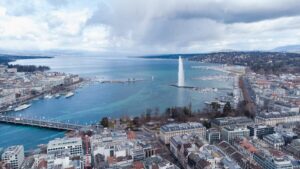
Baden-Baden runs on the assumption that you’ve come for the rituals, not the sightseeing. That’s the right assumption. The best afternoon you’ll have here is the one you spend doing nothing in particular: a long walk, a long bath, a long dinner, an evening at the Casino because Garnier built the rooms and you want to look at them. If you’ve planned this trip alongside our pieces on Geneva and the Black Forest, the three together make a good two-week loop through the southern German-Swiss-French luxury triangle: Baden-Baden for the bath culture and the Casino, the Baiersbronn valley for the Michelin density, Geneva for the lake and the hotels. Three towns, three different rhythms, the same continuous luxury idea.
The town has been doing this for two hundred years. It will keep doing it. You can come back.




.jpg)


