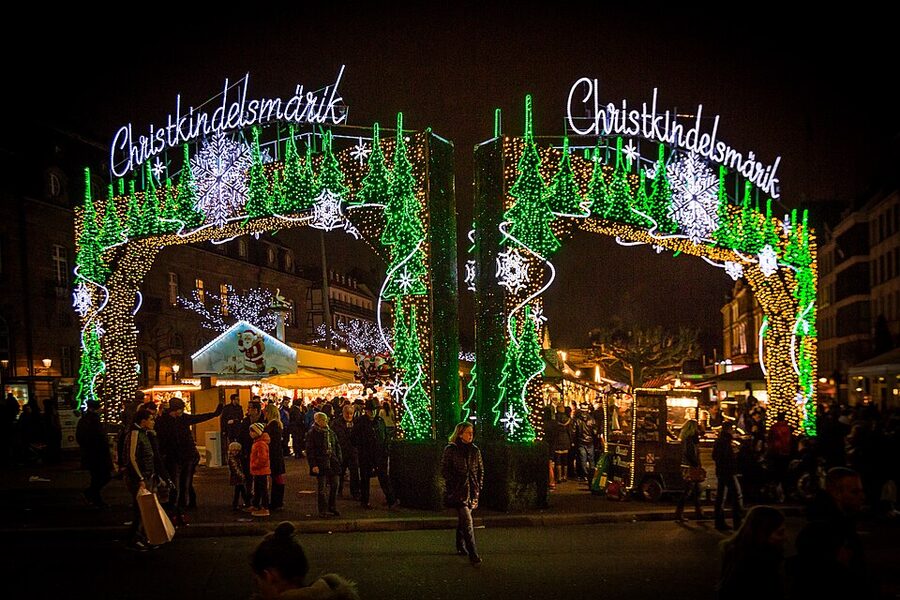
The smell hits you before the lights do. Cinnamon and clove and warm orange peel; the resinous bite of fir on the cold air; somewhere a charcoal brazier turning chestnuts. You walk out of the tram on Place Broglie at four in the afternoon and the Christkindelsmärik is already glowing under a sky that hasn’t quite given up the day. A woman two stalls down ladles vin chaud from a copper pot into a stoneware mug stamped with the year, and you cup it with both hands and stand there for a minute before you do anything else. This is what people who have been doing this for a long time do first. They stop, drink, look. Strasbourg has been holding this market since 1570. There is no rush.
Christmas markets in Europe have become one of those things every travel publication writes about as if they were uniformly enchanting. They aren’t. There are markets that feel like the medieval origins they descend from, and there are markets that have been ground down by a decade of cruise crowds and influencer queues into something closer to a German-themed shopping concourse. The trick on a serious trip is knowing which is which, where to base yourself for three or four nights so the markets are an evening pleasure rather than a forced march, and whether to do the whole thing from a river cruise or from a single great hotel. This guide assumes you have one Christmas window a year and want to spend it well.
In This Article
- The hierarchy: not all markets are equal
- Strasbourg, France: the original
- Vienna, Austria: the imperial market
- Dresden: home of the Stollen
- Nuremberg: the most famous, the most touristed
- Salzburg: mountain backdrop, smaller crowds
- Cologne: skip it
- Tegernsee, Bamberg, Rothenburg: the small towns
- Where to stay: the bases
- Vienna
- Strasbourg
- Salzburg
- Munich, as a Bavaria base
- Dresden
- Cruise or land: the actual choice
- Three itineraries that work
- Vienna and Salzburg, 5 nights
- Strasbourg and Alsace, 4 nights
- Bavaria, 5 nights with Tegernsee
- What you’ll eat and drink
- When to go
- What to skip
- Practical notes
The hierarchy: not all markets are equal
If you go to nine or ten of these in a season, as I have over the years, the rankings sort themselves out fast. Some places earn their reputation. Some lost theirs to volume. Two markets are essentials. A handful are second-tier worth the trip. A few smaller towns reward the traveller who skips the blockbusters entirely. And one of the famous ones, Cologne, you can comfortably leave off your list.
Strasbourg, France: the original
The Christkindelsmärik has been running since 1570 in some form, which makes it the oldest continuous Christmas market in Europe. The Alsatian capital is small, walkable, and stitched together by canals, half-timbered houses, and a sandstone Gothic cathedral that turns rose-gold at sunset. The market itself is now spread across about a dozen squares. Place de la Cathédrale and Place Broglie hold the two anchor markets; Petite France, the lace-curtained quarter along the Ill, runs a string of smaller satellites that are often the best ones to wander after dinner. The 2026 dates run from late November through to the days before Christmas; check the official tourism site closer to your trip for the exact opening, since they shift each year by a day or two.
What makes Strasbourg work is the city itself. You aren’t just visiting a market, you’re walking a small Alsatian capital that happens to be in full Christmas dress. The food and drink lean French and German at the same time, which is the Alsatian way: vin chaud rather than Glühwein (lighter, more orange-and-clove forward, and often offered with a slice of fresh orange in the cup), bredele (the buttery little Christmas cookies that Alsatian grandmothers spend November baking in batches of forty), kougelhopf, tarte flambée out of a wood oven. Eat a proper dinner first at one of the winstubs (Maison des Tanneurs, Le Tire-Bouchon) and treat the market food as the late-evening hot-cup-and-snack circuit it actually is.
Vienna, Austria: the imperial market
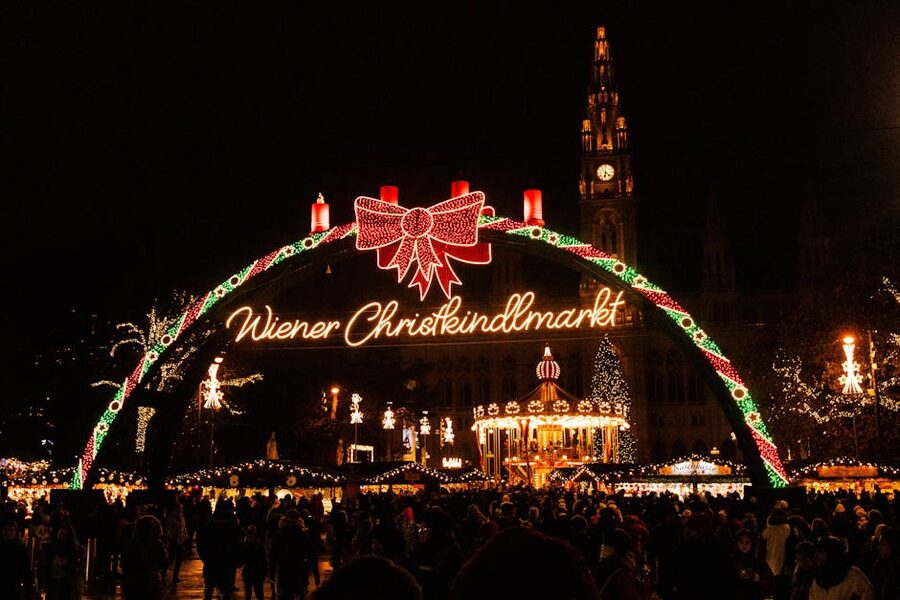
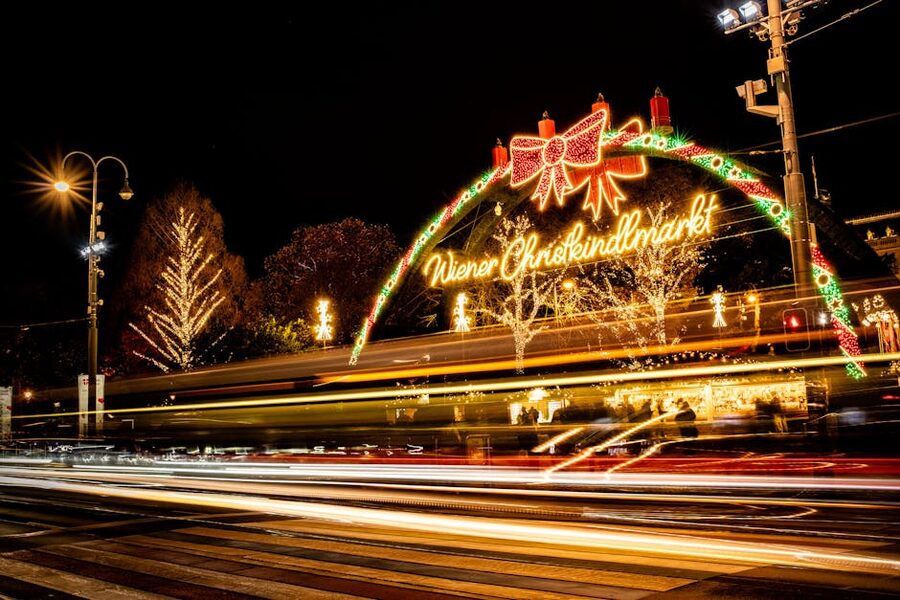
Vienna runs a market the way Vienna does most things: with imperial scale and a sense that this has been going on for a long time. The Wiener Christkindlmarkt at Rathausplatz, in front of the neo-Gothic City Hall, is the headline market: about 150 stalls, the giant lit tree, the carousel, and from mid-November through 26 December the whole square turns into the postcard. It’s also the most crowded. If you go, go on a weekday, before five.
The city’s other markets are where a serious traveller actually spends their evenings. Schönbrunn Palace runs a more refined market in front of Maria Theresa’s summer residence, with high-quality crafts and proper Punsch (Vienna’s rum-based answer to Glühwein, considerably stronger; one cup is the right number). Karlsplatz, in front of the great Karlskirche, is artier and lower-key. Spittelberg, in the cobbled lanes of the 7th district, is the boutique-feeling small market that most visitors never find; twenty-odd stalls in narrow streets between Biedermeier facades, the one I would plan a Vienna December trip around. And Am Hof, in the inner city, runs a tighter design-forward market that has become the locals’ favourite over the last few years.
Vienna is also a city you’d happily spend four nights in for reasons unrelated to markets; the Kunsthistorisches, an evening at the Staatsoper, a long Sunday breakfast at Café Sperl. The markets are the season’s overlay on a city that’s already first-rate. That’s why Vienna is the single best base for a luxury Christmas market trip. If you do only one place, do this one.
Dresden: home of the Stollen
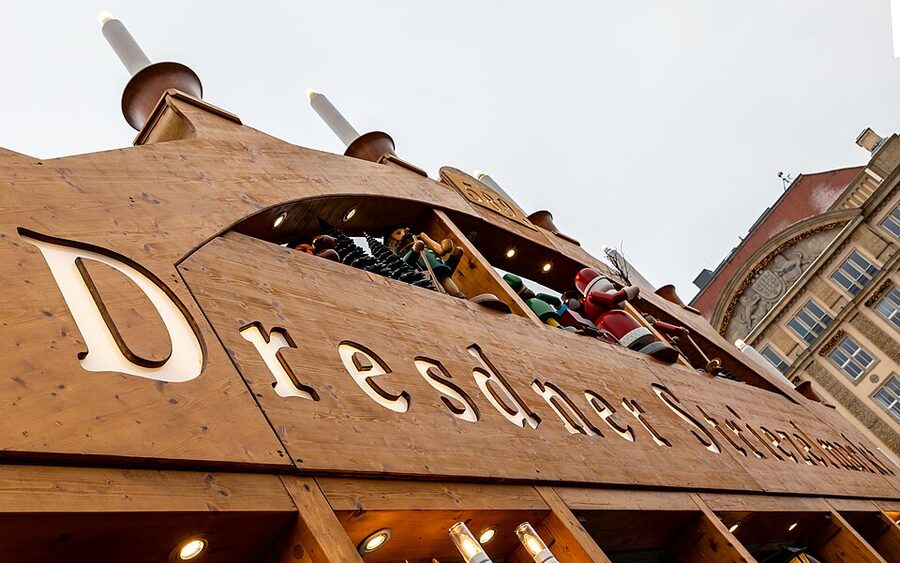
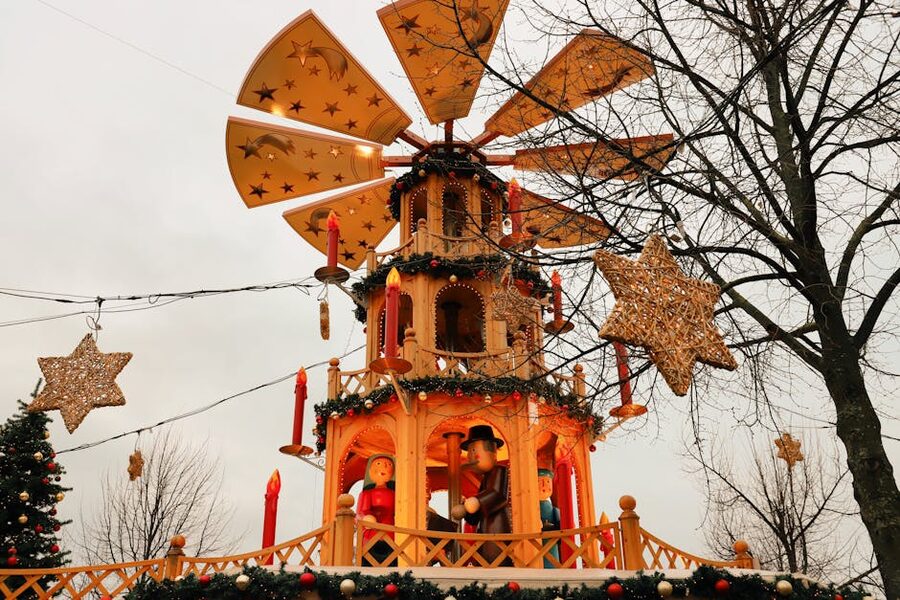
Dresden’s Striezelmarkt traces back to 1434, which makes it Germany’s oldest. It runs on the Altmarkt square in front of the rebuilt Frauenkirche, with a giant Christmas pyramid (the rotating wooden tower with candles and figurines) that locals will tell you is the world’s tallest. The reason to be in Dresden, though, is the Stollen; the dense, marzipan-cored Saxon Christmas bread that has been baked here since the 15th century and is protected like Champagne. The Stollenfest falls on the second Saturday of Advent (5 December in 2026), when bakers parade a four-tonne giant Stollen through the old town and cut the first slices on the Altmarkt. If you can structure your trip around that Saturday, do it. If not, every bakery in the Altstadt sells the proper article from late November.
Dresden is the second-tier market I’d most strongly argue is worth a long weekend on its own. The Frauenkirche reconstruction, the Zwinger collections, the Brühl’s Terrace at night with the Elbe black below; this is one of the great old Saxon residence cities, and the market is the cherry on a serious art-and-architecture trip.
Nuremberg: the most famous, the most touristed
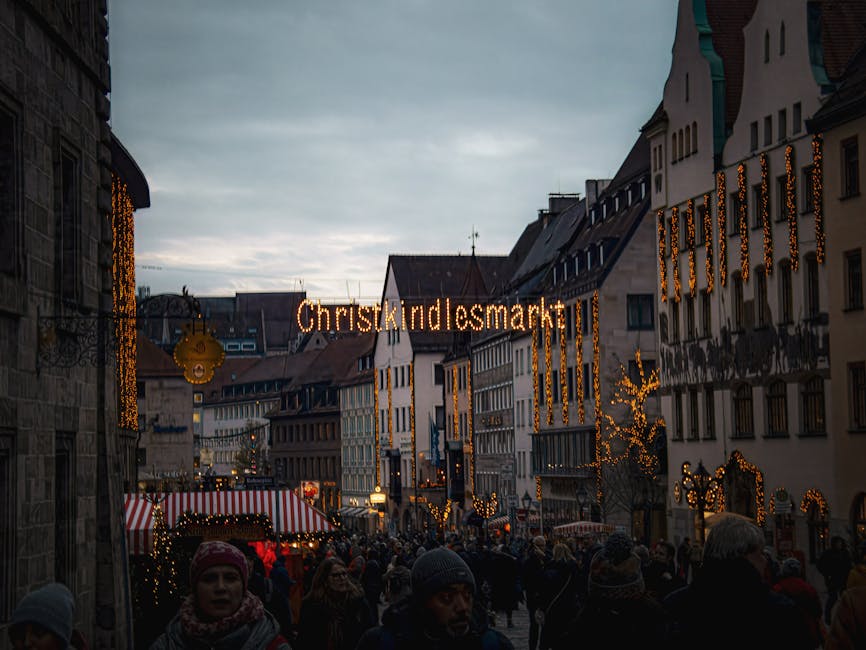
The Nuremberg Christkindlesmarkt opens with the Christkind, a young woman elected biennially to deliver a prologue from the balcony of the Frauenkirche on the first Friday of Advent. It’s been doing this since 1628 in roughly its current form. The market on the Hauptmarkt square is the single most photographed Christmas scene in Germany; the wooden stalls under the red-and-white striped roofs, the gingerbread (Lebkuchen, the Nuremberg version is the gold standard), the little plum-people figurines (Zwetschgenmännle) that vendors have been making here for 250 years.
It is also extremely busy. Nuremberg is a day visit, not a base. Day-trip in from Munich or come over from Bamberg in the morning, walk the market for two or three hours, eat three small Nuremberg sausages in a hard roll from one of the Bratwurst stands, buy your Lebkuchen at Lebkuchen-Schmidt, and leave by mid-afternoon before the buses fully unload.
Salzburg: mountain backdrop, smaller crowds
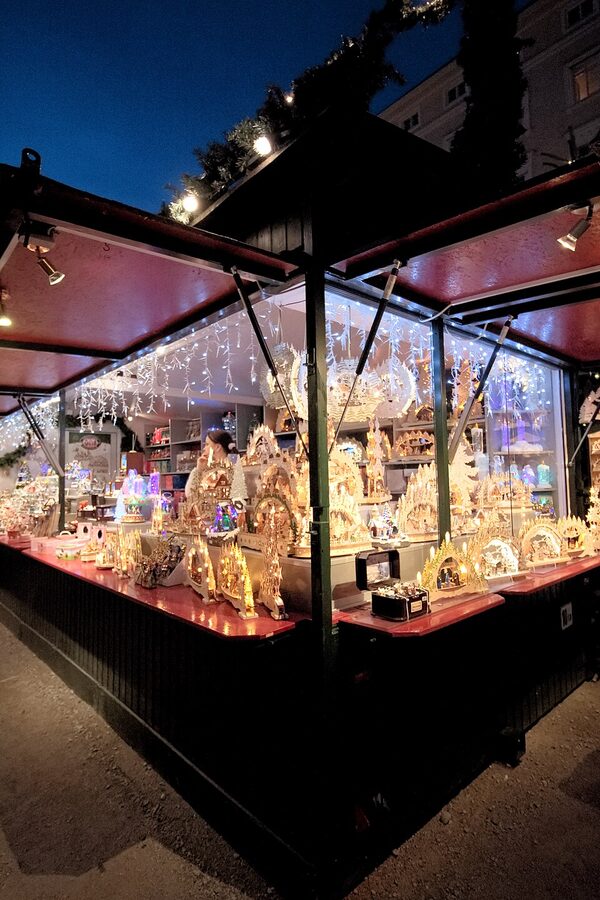
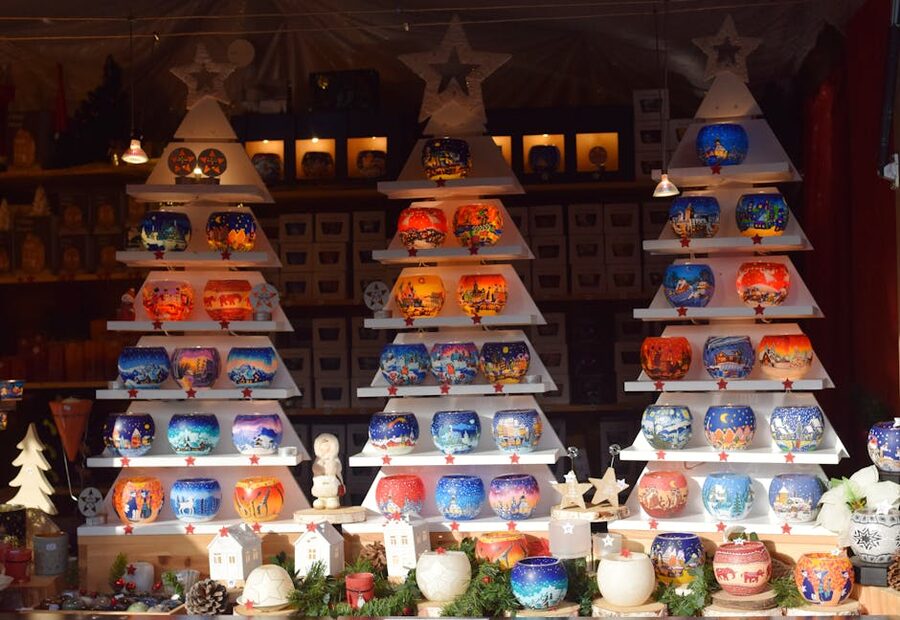
Salzburg’s market sits on Domplatz and Residenzplatz, framed by the cathedral and the Hohensalzburg Fortress on the rock above. The mountain light at four in the afternoon is the differentiator here. The market is smaller than Vienna’s by an order of magnitude and feels properly Austrian in a way the bigger ones can lose: woven wool slippers from a man who has been cutting them for forty years, hand-blown glass ornaments, the Salzburger Kiachl (a deep-fried yeast disc with sauerkraut or jam that you can only seem to find in this part of Austria). Don’t fight the Sound of Music association; it’s part of the city. Just don’t let it dominate your time.
Salzburg pairs naturally with Vienna on a five-night trip: four nights in Vienna, the train down (about two and a half hours), and one or two nights in Salzburg before flying out. Or it stands alone as a mountain base if you also want to spend time at Baden-Baden‘s thermal baths or in the Bavarian Alps.
Cologne: skip it
Cologne runs seven separate markets across the inner city, anchored by the one in front of the cathedral. On paper that sounds like an embarrassment of riches. In practice the city has become so over-touristed during Advent that the Hauptbahnhof crowd flow alone is unpleasant. The cathedral square market in particular has been ground into a sort of beer-tent food court. There’s nothing wrong with Cologne the rest of the year, but on a four-night December trip you have other options. Use the budget for a second night at the Sacher in Vienna instead.
Tegernsee, Bamberg, Rothenburg: the small towns
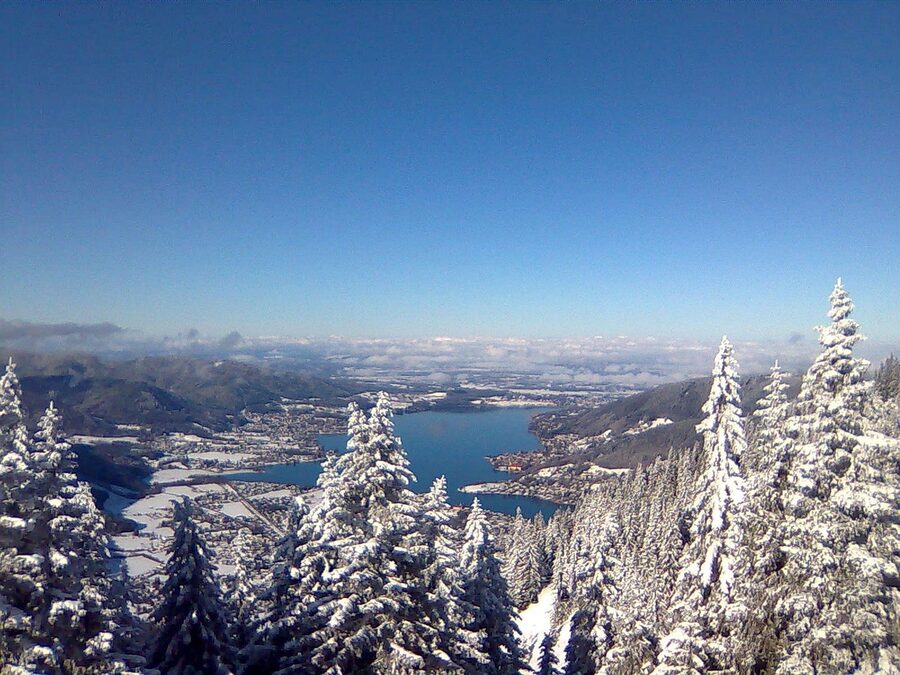
Bavaria’s small towns are where the markets feel most like the medieval village affairs they descend from. Tegernsee, an hour south of Munich, runs a small lakefront market in front of the old monastery (now a brewery, still excellent Helles). On a snowy Saturday evening the lake is silent except for the bells from the parish church and the murmur of fifty people drinking glogg under fir. This is the lowest-volume market on this list and one of the best.
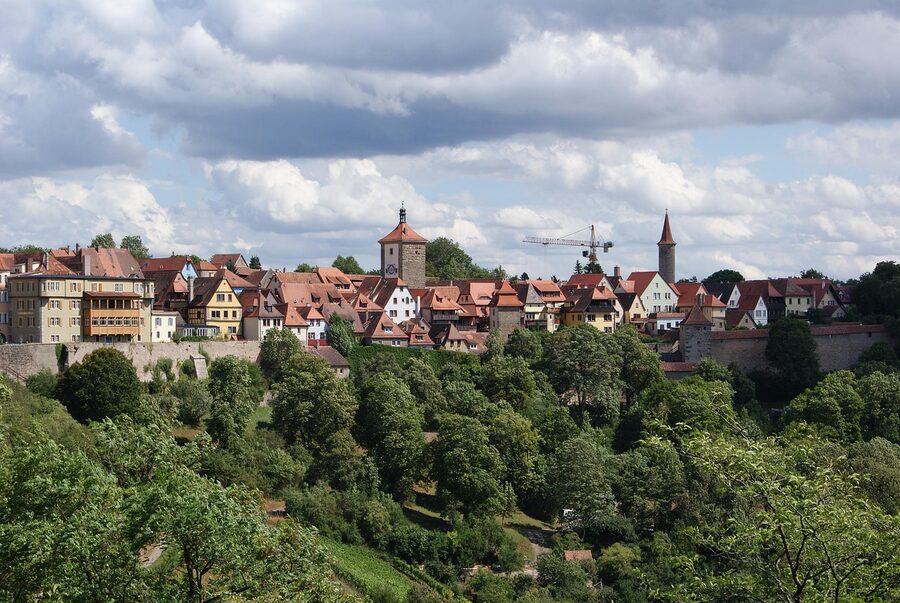
Rothenburg ob der Tauber’s Reiterlesmarkt has been running since the 15th century. The town is the postcard-Germany silhouette: city walls, red roofs, the Plönlein corner that has been on every Bavaria poster since the invention of postcards. In daylight Rothenburg is a tour-bus magnet (the day visitors come in waves from Frankfurt and Munich). Overnight is the answer. Stay at Hotel Eisenhut or Burg Hotel inside the walls and you get the town to yourself from six in the evening until ten the next morning. The market is small and traditional; the experience is the empty-cobbled-streets-after-dark part.
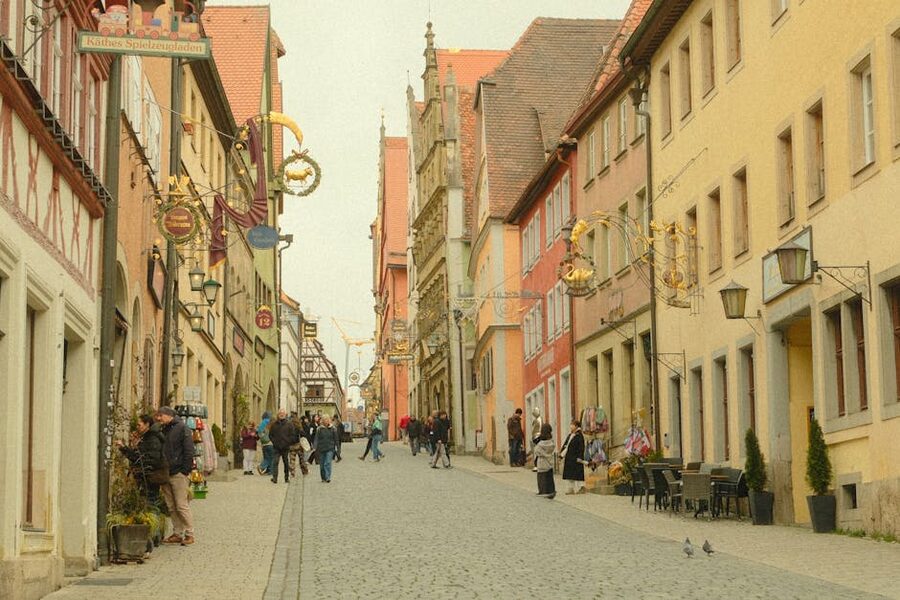
Bamberg, north of Nuremberg, runs a quieter market on Maximiliansplatz with a Franconian flavour, twenty-odd Rauchbier breweries within a fifteen-minute walk, and far fewer tourists than its more famous neighbours. The medieval old town is a UNESCO site. A two-night Bamberg base for the Franconian markets (combined with a single Nuremberg day trip) makes more sense than basing in Nuremberg itself.
Where to stay: the bases
The right Christmas market trip is built around three or four nights at a serious hotel rather than a country-hopping march. Here is the hotel call I would make for each city, with the version of the trip that hotel suits best.
Vienna
Hotel Sacher (Philharmonikerstraße 4, opposite the Staatsoper, rooms from around €700 in December) is the obvious answer and probably the right one. Family-owned for five generations, the place where the Sachertorte was invented in 1832, the Anna Sacher restaurant for a proper Viennese dinner, the Blaue Bar for a martini and an early evening before you go out into the markets. The location is the whole point: walk five minutes north to the Graben, ten minutes north-west to Spittelberg, twenty minutes via the Rathaus Christkindlmarkt. A doorman who takes your gloves and gives them back warm.
Park Hyatt Vienna (Am Hof 2, from around €750) sits in the converted Austro-Hungarian Bank, its banking-hall lobby preserved as the lounge. Quieter and more design-forward than the Sacher, with the closest hotel access to the Am Hof market (literally across the square) and an excellent spa in the converted bank vault. For a traveller who wants contemporary calm rather than imperial heritage.
Hotel Imperial (Kärntner Ring 16, from around €650) was built as the Württemberg city palace in 1863 and converted to a hotel for the 1873 World’s Fair. Ring Road location, walking distance to the Staatsoper and the Karlsplatz market. The afternoon tea in the Café Imperial is the Viennese institution. Slightly more traditional than the Sacher; both are first-rate.
Rosewood Vienna (Petersplatz 7, from around €900) opened in 2022 in a converted late-19th-century bank just off the Graben. The newer, the more design-led; the rooftop bar Asaya looks straight at the Peterskirche. A traveller who already knows the city should consider this one.
The Sans Souci (Burggasse 2, from around €450) is the hotel for travellers planning around the Spittelberg market specifically; three minutes’ walk through the back streets. Less famous than the others; perfectly comfortable; and meaningfully less expensive without feeling so.
The call: Sacher if it’s your first serious Vienna trip, Park Hyatt for return visitors who want the design-forward version, Sans Souci if Spittelberg is the market you most want close.
Strasbourg
Cour du Corbeau (Rue des Couples 6-8, from around €280 in December) occupies a 14th-century half-timbered Renaissance building on the quai across from the Petite France. The galleried courtyard, the timber-frame guest rooms, the breakfast served on the gallery looking down at the courtyard; this is the property the city’s regular visitors all return to. The location is six minutes’ walk from the cathedral market, three minutes from the Petite France satellite stalls.
Régent Petite France (Rue des Moulins 5, from around €350) is the other serious option, sitting on the Ill in a converted ice factory with a glass-roofed restaurant looking onto the canals. Bigger and more conventionally five-star; book a riverside room.
Maison Rouge (Rue des Francs-Bourgeois 4, from around €260) is the grande dame, recently refurbished, and well-positioned between the cathedral and the station for travellers arriving on the TGV from Paris.
For Strasbourg I’d choose Cour du Corbeau. The half-timbered Renaissance courtyard makes a December breakfast feel like a small private piece of Alsace.
Salzburg
Hotel Sacher Salzburg (Schwarzstraße 5-7, from around €600) is the sister property to the Vienna original, river-fronting on the Salzach with the old town across the water. The Café Sacher branch here is the proper Salzburg Sachertorte stop. Position is the draw: walk across the bridge to the Domplatz market in three minutes.
Schloss Fuschl (Schloss Strasse 19, Hof bei Salzburg, from around €700, 30 minutes from the city) is a 15th-century lakeside castle that became a Rosewood property after a 2024 reopening. Worth the drive out for travellers who want palace-on-a-lake instead of city. Empress Sissi stayed here, the dining room looks straight onto Fuschlsee; and pair the stay with day trips into the Salzburg market in the late afternoon.
Goldener Hirsch (Getreidegasse 37, from around €450) is the old-town option, a 1407 inn on Mozart’s birth street, low ceilings and antique armoires. The 1407 part shows; if that’s what you want, this is the only option.
Sacher Salzburg for a city base, Schloss Fuschl if the trip is about the lake setting and you’d happily make the markets a single afternoon visit.
Munich, as a Bavaria base
Bayerischer Hof (Promenadeplatz 2-6, from around €550) has been family-owned since 1841 and runs the most famous rooftop bar in Munich. Six minutes’ walk to the Marienplatz market (which on a Saturday is impassable, but on a Tuesday afternoon is the city’s heart). The hotel’s atrium-bar Falk’s is a proper post-market evening drink.
Mandarin Oriental Munich (Neuturmstraße 1, from around €700) is smaller, more refined, and has the only luxury rooftop pool in the inner city. For travellers who want to combine the Munich market with day trips down to Tegernsee and across to Salzburg, this is the calmest base.
Hotel Königshof (Karlsplatz 25, from around €600) reopened in 2024 in a fully rebuilt eight-storey building on Karlsplatz, with a rooftop restaurant looking over the inner city. The newest of the three; the Karlsplatz location puts you between the train station and Marienplatz with easy U-Bahn to everything.
Bayerischer Hof for the dynasty-hotel feel; Mandarin Oriental for the contemporary calm; Königshof for travellers who want the brand-new option.
Dresden
Hotel Taschenbergpalais Kempinski (Taschenberg 3, from around €350) is the rebuilt baroque palace Augustus the Strong commissioned for his mistress Countess Cosel in 1707, restored in the 1990s after the war damage. Location is the point: it sits between the Zwinger and the Frauenkirche, four minutes from the Striezelmarkt on the Altmarkt. On the Stollenfest Saturday in December, the parade route runs almost past the front door.
Hotel Suitess is the smaller boutique alternative on Neumarkt, ten suite-style rooms in a townhouse looking onto the Frauenkirche square. For travellers who don’t want a 200-room palace-hotel.
Cruise or land: the actual choice
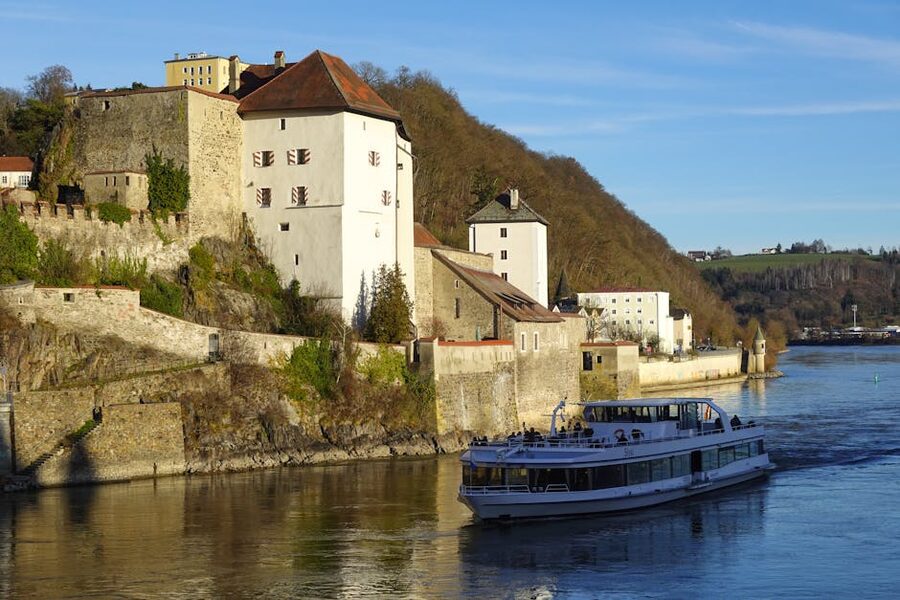
The river cruise question is the one most travellers spend the most time deliberating and the one with the clearest answer once you’ve done both. Viking, AmaWaterways, Tauck, and Avalon all run Christmas markets cruises late November through mid-December, on either the Danube (typically Budapest to Passau or Nuremberg, sometimes onward to Regensburg) or the Rhine (Basel to Cologne, often via Strasbourg, Heidelberg, and the Middle Rhine castles). Standard length is 7 to 10 nights. Pricing for 2026 runs roughly $3,000-$5,500 per person on Viking depending on cabin and date, $4,000-$7,000 on AmaWaterways for the better suite categories, and $5,500-$9,000 on Tauck, which sits at the top of the river-cruise market and includes essentially everything (shore excursions, gratuities, premium spirits, transfers).
The cruise format is genuinely well-suited to Christmas markets. You unpack once and the boat moves, you wake up moored at the foot of a different old town every morning, the dining is consistently good, the evenings on board with caroling and tree-trimming have a real warmth that surprises sceptics. AmaWaterways’ twin-balcony suites in particular are a comfortable winter cabin; the French balcony lets you stand at the glass without freezing.
What the cruise doesn’t give you is full evenings at the markets. Most ports run a 4-to-6-hour stop that includes a guided morning excursion plus afternoon at the market plus dinner back on board. You see seven or eight markets in a week but you don’t sit on a square at nine in the evening with a third Glühwein, watching the locals come out after work. That part, which is the actual best part of a Christmas market, is land-only.
The call: cruise if you want efficiency and breadth, and you’ve never done this circuit before. Land if you want to feel a city through its market over four nights, and you’re back in Europe in December for the second or fifth time. I have done both. After the cruise I went back land-based and never looked at a Danube itinerary again. Your mileage may genuinely vary, but the Tauck Rhine cruise that opens with a night in Basel and ends seven nights later in Cologne is, if you’re going to do this once, the version of the cruise to do.
Three itineraries that work
Vienna and Salzburg, 5 nights
Fly into Vienna on a Saturday morning, check into the Sacher, recover with Sachertorte in the café, walk the Graben markets after dark. Sunday: the Kunsthistorisches in the morning, Spittelberg in the afternoon, dinner at Steirereck (book months ahead). Monday: Schönbrunn market mid-morning, walk back through the Naschmarkt, Karlsplatz at dusk, evening at the Staatsoper if the programme suits. Tuesday: train to Salzburg (2h22 from Wien Hauptbahnhof), check into the Sacher Salzburg, Domplatz market at twilight, dinner at Goldener Hirsch. Wednesday: Hohensalzburg in the morning, Mirabell Gardens, afternoon Residenzplatz, fly out Thursday morning. The version of the trip that lands the imperial register and leaves you wanting one more day, which is the right finish.
Strasbourg and Alsace, 4 nights
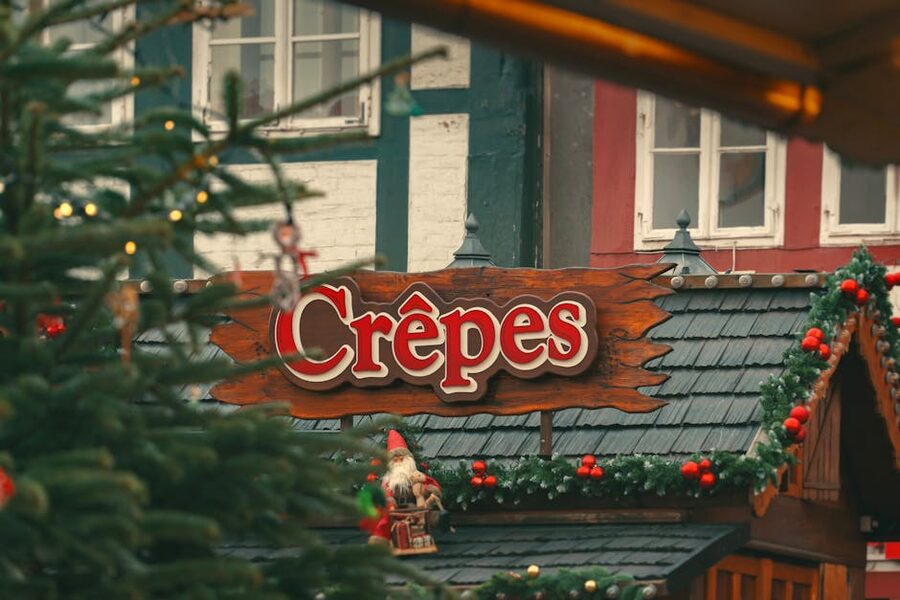
TGV from Paris Gare de l’Est to Strasbourg (1h47), three nights at Cour du Corbeau, evenings split between Place Broglie, the cathedral square, and the Petite France satellite markets. One day spent on the Alsace wine route. Riquewihr and Eguisheim both run small Christmas markets that are pictures-of-Christmas-card pretty; and one overnight in Colmar at La Maison des Têtes, where the Marché de Noël on Place Jeanne d’Arc is the smaller atmospheric Alsatian alternative. Train back to Paris on the fifth morning. This is the trip for a francophile or a returning visitor who wants intimate scale.
Bavaria, 5 nights with Tegernsee
Fly into Munich Friday afternoon, three nights at the Bayerischer Hof or Mandarin Oriental, market evenings at Marienplatz (a Tuesday or Wednesday, never a Saturday), Residenzplatz, and the smaller Schwabinger Weihnachtsmarkt in the bohemian quarter. One day-trip to Nuremberg by ICE (1h10) for the Christkindlesmarkt before the bus crowds (in by 10am, out by 2pm). Two nights at Althoff Seehotel Überfahrt on Lake Tegernsee for the lakefront market and the spa; the country base that lets you actually exhale. Drive back to Munich for the Sunday flight.
What you’ll eat and drink
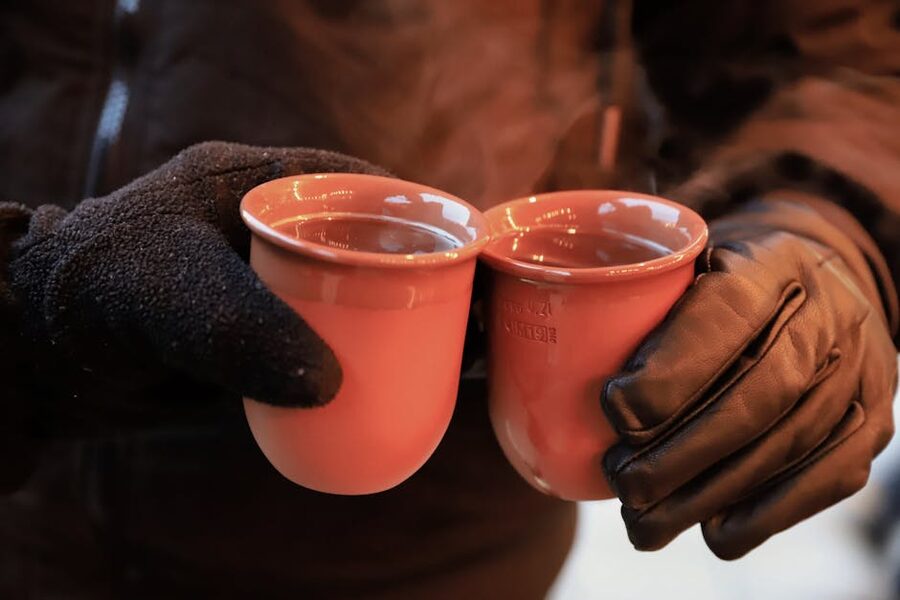
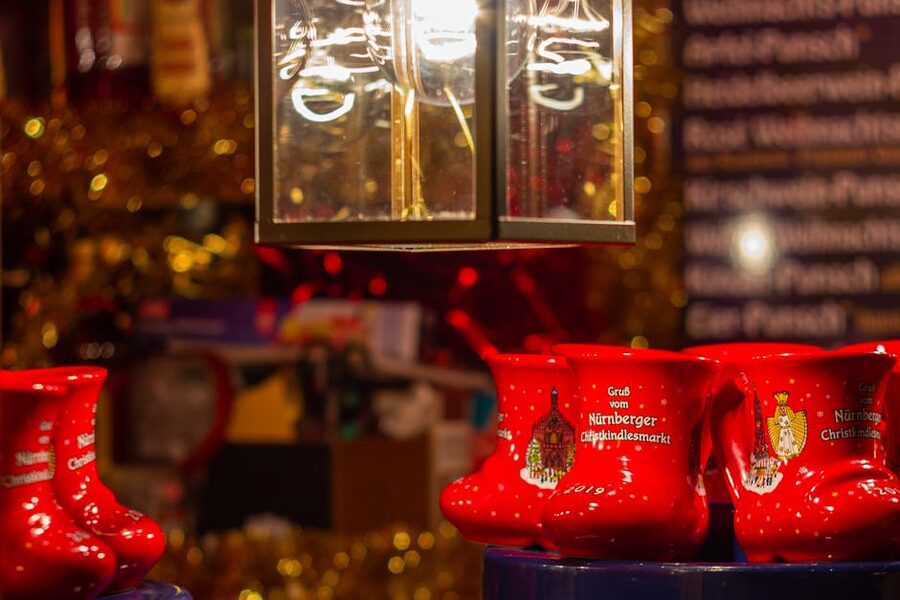
The hot wine is the whole evening’s structure. It’s regional, and the regional differences matter. Bavarian and German Glühwein is red wine warmed with cinnamon, clove, citrus peel, and sugar; the better stalls use a proper Spätburgunder rather than a generic supermarket red and you can taste it. Vienna’s Punsch is rum-based, much stronger, and at the right stall (try the ones at Spittelberg) is house-made with citrus and tea; one cup is enough. Strasbourg’s vin chaud is lighter, more orange-and-spice forward, and often comes with a slice of fresh orange. Order from the stand with the longest queue of locals, not the longest queue of tourists. The ceramic mug is yours for the night for a small deposit (a Pfand of €3-5); you can return it at any stall with the same mug design or keep it as a souvenir, which is what most people do.
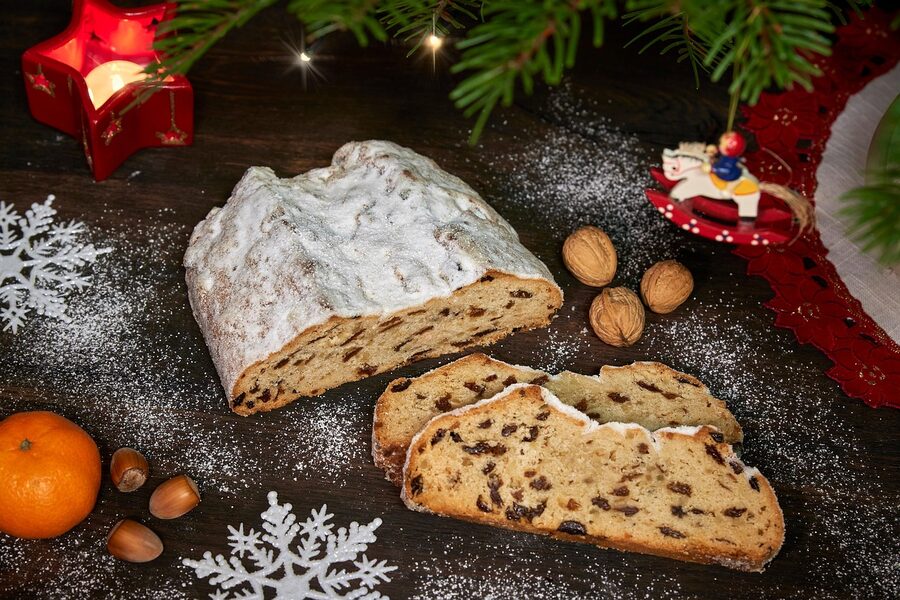
The food is regional too. Lebkuchen is the gingerbread; Nuremberg’s version (Elisenlebkuchen with little or no flour, made with hazelnuts and almonds) is the gold standard. Stollen is the dense Dresden Christmas bread, baked with raisins, candied citrus, almonds, and a marzipan core in the proper Dresdner version; the marzipan one is the right one, don’t argue with this. A Schwarzwälder Schinken sandwich at one of the German market stalls is a better lunch than another Bratwurst. In Vienna, the Maroni stand (roasted chestnuts in a paper cone) is a constant; in Munich, the Stollen-and-Glühwein combination at Marienplatz is the city’s cliché for a reason. And the formal Christmas goose (Weihnachtsgans) is the proper sit-down December dinner at any of the Bavarian or Austrian luxury hotels; book ahead.
When to go
The markets typically open the last week of November and run through 23 December (Vienna’s Rathausplatz extends to 26 December most years). The first week of December is the sweet spot. The markets are operating, the crowds haven’t yet built to peak, weekday afternoons (Tuesday through Thursday before 5pm) are still pleasantly walkable, and there’s still time before the major holiday-period travel surge that starts the second weekend.
Avoid: weekend evenings anywhere (Friday through Sunday, after 5pm), the Saturday before Christmas at any major market (impossible), the second-half-of-Advent Saturday at the Marienplatz in Munich or the Dom Square in Cologne or the cathedral market at Strasbourg (also impossible). The closer you get to Christmas Eve, the more local the crowds become, which is charming in Tegernsee or Bamberg, and overwhelming in Munich or Vienna.
Weather varies but assume cold and damp. Strasbourg sits at sea level on the Rhine plain and gets fog more than snow; Vienna runs typically 0-5°C in early December with occasional snow flurries; Bavaria and Salzburg are the ones that reliably go properly white. Pack like you mean it; wool layers, a coat that handles drizzle, boots with grip, and a hat. The good news: you can always escape to a Café Sacher or a hotel bar to reset.
What to skip
Cologne’s main market, as covered above. The bigger Berlin markets at Gendarmenmarkt and Charlottenburg on weekend evenings; both are atmospheric in their own right, but the volume now puts them in the same category. The Berlin neighbourhood markets at Sophienkirche or Kollwitzplatz are the better choice if you’re already in the city. The Munich Marienplatz on a Saturday afternoon or any evening after 5pm; Tuesday lunchtime is the version that works. Prague’s Old Town Square market on a December weekend (Prague is best in shoulder season anyway). And the river-cruise day stops at Bratislava and Vienna’s outer-ring markets that some itineraries include; they’re padding.
Practical notes
Currency is euros across all the cities listed, except Prague (Czech koruna; cards work everywhere). Glühwein and Punsch run €4-7 per cup with a separate €3-5 mug deposit. Most stalls now take card; carry €30-50 in cash for the older vendors. The markets are largely outdoor and stand-up affairs; there are no reservations and no dress code beyond warmth. Hotel booking for the first two weeks of December should be done by August at the latest for the headline properties; the Sacher, Park Hyatt Vienna, Cour du Corbeau, and Schloss Fuschl all sell out months in advance. Tauck and Viking Christmas cruises sell into the following year by spring.
If this is your first Christmas market trip, do Vienna with a Salzburg overnight. If you’ve been before and want the smaller-scale version, do Strasbourg or Bavaria. If you want to see many markets in a week and the boat is part of the appeal, take the Tauck Rhine cruise. And if your December extends into the rest of the German-speaking Alpine region, a few days at Baden-Baden for the Friedrichsbad and the Brenners is the right post-market thaw, with a drive through the Black Forest if the snow has come down.
The single best thing about doing this properly is that it changes how you think about December. After a few years of going, the season stops being something to grit your way through and becomes something to plan. A four-night anchor trip somewhere good. Cold air, hot wine, the smell of fir, the quiet between the cathedral bells. The lights came on, you stood still, you held your cup with both hands. The markets have been doing this for five centuries. They are not going to disappoint you if you give them the time.
For other winter ideas in the same European luxury orbit, see our pieces on Geneva for the Swiss Alpine side of the season, and the broader destinations archive for the rest of the year.




.jpg)

