The picture most people carry into Morocco is consistent. Pink walls, mint tea, a camel silhouette against a Saharan dune. The picture is not wrong, but it is thin, and the trip most ten-day visitors plan ends up squashing four very different countries into a long blur of medinas and minivans. The luxury Morocco worth ten or fourteen nights is structural: four regions, weighted differently, in a particular order, in a particular season.
This guide builds the trip the country actually rewards. Marrakech first, three or four nights, riad and hotel split. Then Fez, two or three nights, more medieval and more authentic and quieter. The Atlas Mountains for two or three nights, where the trip becomes special. The Sahara as a one or two-night theatrical bookend. Essaouira optional if you have fourteen nights, Casablanca skipped on a first trip. The hotel calls — La Mamounia for the legend, Royal Mansour for the suites, Amanjena for the calm; in Fez, Riad Fes or Palais Amani — are spelled out below.
In This Article
- The four-region split (and how to weight your nights)
- Marrakech: the riad-or-hotel decision
- The riad case
- The hotel case
- What to actually do in Marrakech
- Riad or hotel: the call
- Fez: more medieval, more authentic, less polished
- Where to stay in Fez
- What to do in Fez
- The Atlas Mountains: where the trip becomes special
- Kasbah Tamadot
- Kasbah Bab Ourika
- What to do up here
- The Sahara: theatrical, brief, worth it
- A 10-night and a 14-night itinerary
- The 10-night version
- The 14-night version
- Essaouira and the coast (when 14 nights makes the case)
- What about Chefchaouen?
- The food, briefly
- When to go
- What to skip
- How to get around
- The shopping question
- One final structural thought
The four-region split (and how to weight your nights)
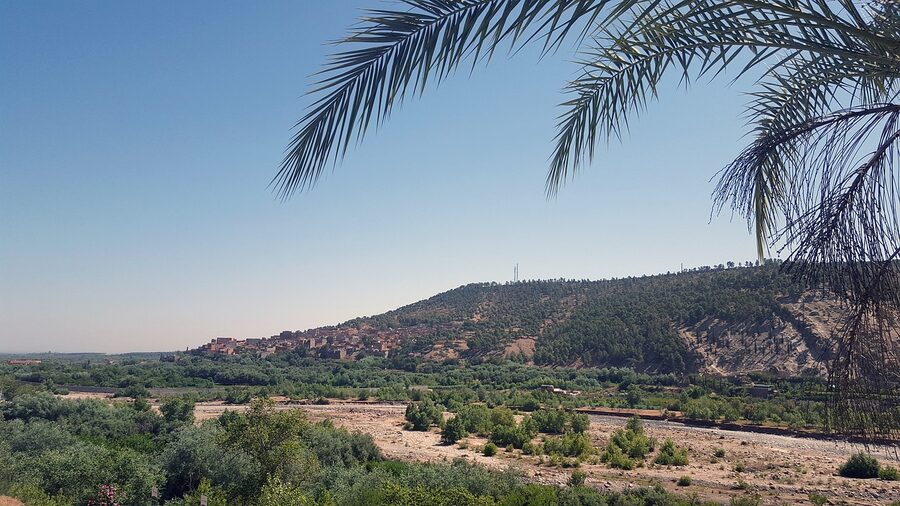
For a real luxury Morocco trip, plan on 10 to 14 nights. Less than ten and you’re going to feel the driving distances. The split that works for almost every first-time visitor:
- Marrakech: 3 to 4 nights. The arrival shock, the riad-or-hotel call, the souks, the cooking class, the day trip into the foothills.
- Fez: 2 to 3 nights. The medieval medina, the tannery, a guide for at least the first day, and a slower pace than Marrakech.
- The Atlas Mountains: 2 to 3 nights. Where the trip becomes special. Most people don’t give this enough.
- The Sahara: 1 to 2 nights. A bookend, not a chapter. The driving is real and a third night in a desert tent is one too many.
- Essaouira (optional): 2 nights. Coastal counterweight if you’ve got 14 nights to play with.
Skip Casablanca on a first trip. The Hassan II Mosque is impressive and the rest of the city is a working business hub that doesn’t pay back the night. Rabat the same: half a day on a Marrakech-to-Fez routing if you’re driving, but no reason to overnight there unless you’ve already done the bigger four. Chefchaouen, the famous blue town, is in practice a 90-minute walk in a small medina that’s four hours’ drive north of Fez. The photos are great and the experience is short. We’ll come back to it.
The most common mistake I see is the four-night Marrakech-only trip with a one-night dash to the Sahara bolted on. You spend two of your seven daylight hours each way in a minivan crossing the High Atlas, you arrive at a desert camp at sunset, you ride a camel for forty minutes, you sleep in a tent, you eat tagine, you drive back. It’s a long way to go for a single dune.
Marrakech: the riad-or-hotel decision
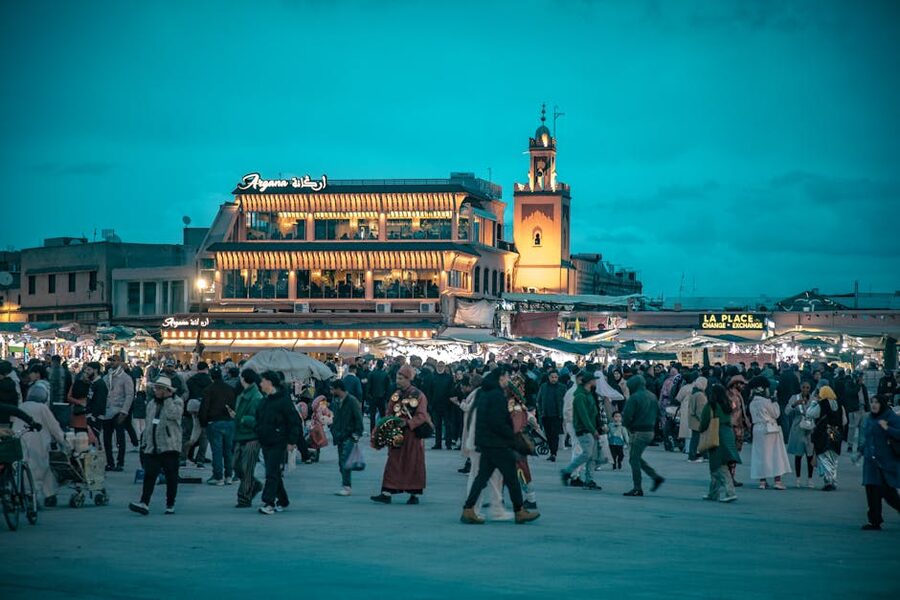
Marrakech is intense in a way that catches even seasoned travellers slightly off guard. The medina is a tangle of unsigned alleys, the souks are louder than you remember from the photos, and the cars and scooters share whatever space the donkeys leave behind. It’s also one of the most photogenic cities in the world. You’ll either love the sensory pile-up or want a wall around it. Where you sleep decides which.
The luxury choice in Marrakech is binary: a riad in the medina, or a hotel in the new city or the palmery. Both work. They give you very different trips.
The riad case
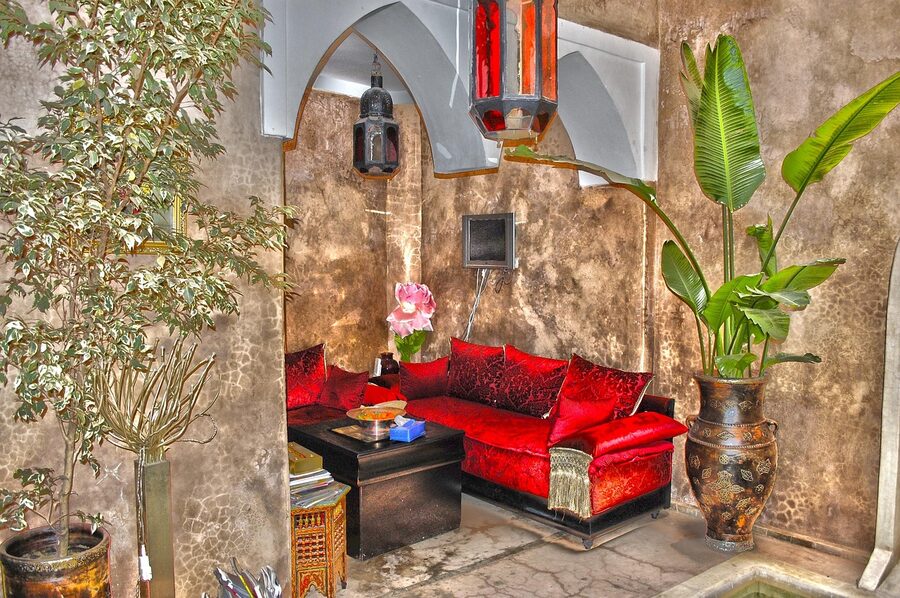
A riad is a traditional house built around a central courtyard. The luxury versions are 8 to 15 rooms, the architecture is the experience, and you walk out the door into the medina. The pros: the immersion, the courtyard breakfast, the rooftop sunset. The cons: small spas (or none), small pools (often plunge-only), and the medina is a maze. Most riads will send a porter to meet you at the closest car-accessible point because GPS does not work down there.
The three to put on a shortlist:
- El Fenn. The Vanessa Branson property, co-owned by Richard Branson’s sister, opened slowly from 2004 onwards in a former pasha’s residence in the Bab el Ksour quarter of the medina. It now spans nine connected riad buildings with around 40 rooms, three pools, and an art collection that justifies a wander on its own. Slightly less polished than a hotel-level operation, which is part of the charm. The rooftop is worth a sundowner even if you’re not staying.
- La Sultana. A 28-room riad complex tucked behind the Saadian Tombs in the Kasbah quarter, made up of five interconnected riads. Bigger than most riads, with a proper pool and a spa, but still feels like a private house. Strong service.
- Riad Kniza. The dean of Marrakech riads. Nine rooms in the Bab Doukkala quarter, family-owned, the original luxury riad before the term “luxury riad” existed. The owner is a long-time Marrakech tour guide who has shown the city to several heads of state and writers, and the house feels like a continuation of a private welcome rather than a hotel concept.
The hotel case
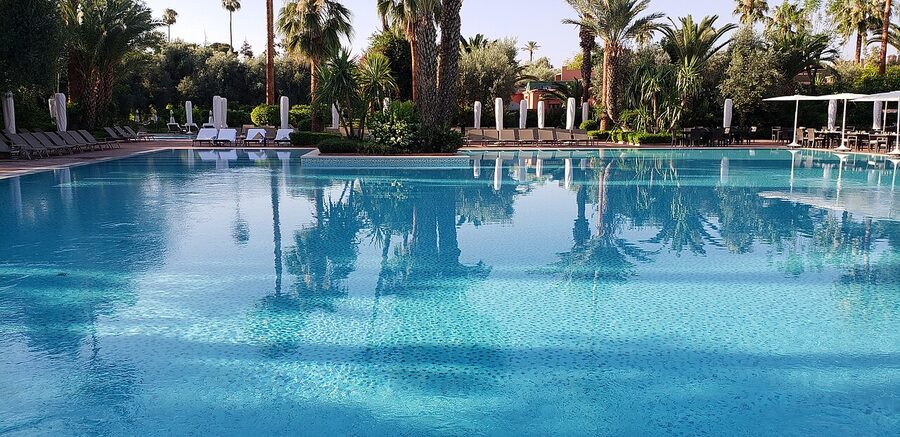
The hotel-tier properties sit in the new city or the Palmery, the date-palm oasis north of town. They give you full resort facilities, big pools, real spas, and a quiet retreat to come back to after the medina. The trade-off is that you’re driving into the medina rather than walking out into it.
My call on the top tier:
- La Mamounia, for the legend. Opened in 1929 (not 1923 as you’ll often see), on the 15-hectare garden Sultan Mohammed ben Abdallah gave to his son Moulay Mamoun in the 18th century. Churchill called it “one of the best hotels I have ever used” in a 1935 letter to his wife and there’s a Churchill bar to remind you. A three-year Jacques Garcia overhaul reopened the hotel in September 2009; a second 2020 redesign by Jouin Manku added new restaurants by Pierre Hermé and Jean-Georges Vongerichten. Some readers think the 2009 redesign overdid the colour palette. Either way, this is the hotel you book for the history and the gardens, not for the most contemporary luxury room in town.
- Royal Mansour Marrakech, for the suites. Mohammed VI’s project, opened in 2010. The conceit is that every guest “room” is its own three-storey riad with its own private courtyard and pool, connected by underground service tunnels so the staff are essentially invisible. Fifty-three private riads on a 5-hectare estate, a 2,500 sqm spa, four signature restaurants. The Superior riad is 140 sqm; the Grand riad is 1,800 sqm. It is the most expensive hotel in Africa and it earns the rate by giving you an actual building rather than a bedroom.
- Amanjena, for the calm. Aman’s Marrakech property in the Palmery, set on a 15-acre estate around a central reflecting basin. Standalone Pavilions and Villas, many with private pools, with views across olive groves to the High Atlas. If you want the medina-as-day-trip rather than as front door, and you want to come back to silence, Amanjena is the one. Quietest of the top tier by a wide margin.
Below those three, the rest of the famous-name Marrakech hotels are fighting over fourth place. Selman Marrakech is interesting if you care about horses: there are 27 thoroughbreds in the on-site stables and the architect Jacques Garcia designed the property around them. Mandarin Oriental Marrakech has the best spa in town if that is your priority. Four Seasons Resort Marrakech is the most family-friendly of the top tier. None of them are bad. None of them give you a story to tell back home.
What to actually do in Marrakech
The standard sights are short and worth doing in this order:
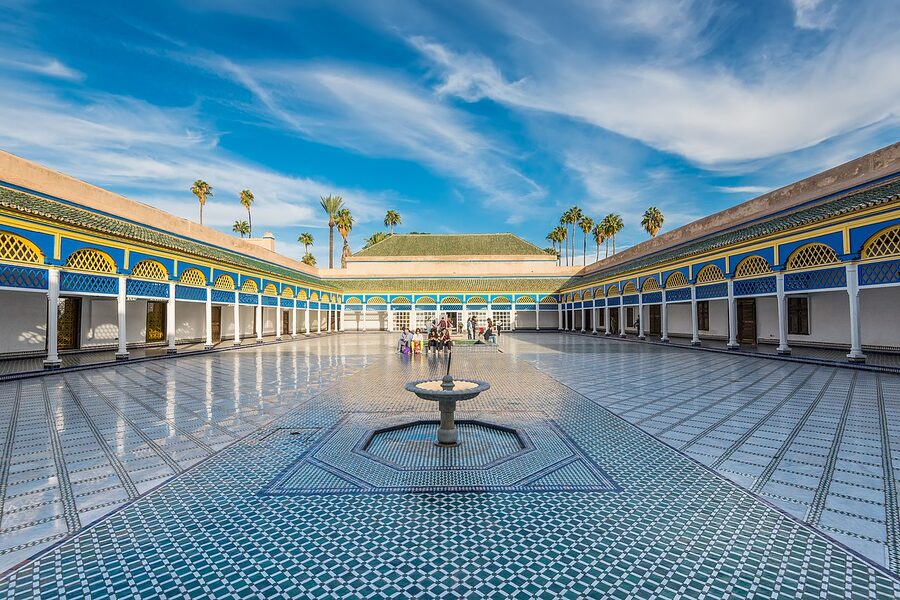
- Bahia Palace. Late-19th-century palace built by the grand vizier Si Moussa and his son Bou Ahmed. Allow 90 minutes. Best in the morning before the tour groups.
- Saadian Tombs. Sealed off in 1672 by Moulay Ismail and rediscovered in 1917. Small site, big history, half an hour.
- Ben Youssef Madrasa. A 14th-century Quranic school, recently restored, with the kind of zellige tilework and carved cedar that makes you stop talking. Allow an hour.
- Majorelle Garden and the Yves Saint Laurent Museum. The garden Pierre Bergé and Yves Saint Laurent bought in 1980 to save it from development, plus a serious YSL museum next door. Book the museum in advance because slots sell out.
- Jemaa el-Fnaa at dusk. Unesco “intangible cultural heritage” since 2008. Watch from the terrace of Café de France or Le Grand Balcon for the first half hour, then walk through.
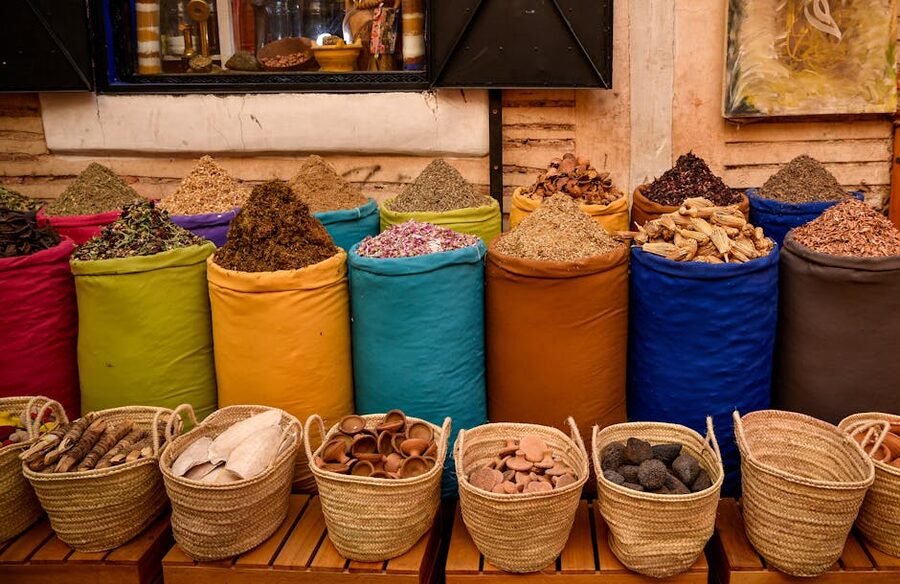
The thing nobody tells you about Marrakech: the souks are not a single market but a sprawl of specialised guilds. Leather here, copper there, spices and dyes around the corner. With a guide on day one, you understand the layout. On day two, you can walk back to the spice bazaar without help, find the rug seller you met yesterday, and buy something at half the morning’s quoted price. Without a guide on day one you spend three hours getting lost and end up somewhere being shown rugs in a back room with the door closed. Both endings are part of the experience. One is more fun.
Riad or hotel: the call
For a first Marrakech trip, the cleanest answer is two nights riad, two nights hotel. Start in the medina to get the immersion, then move to the palmery or the new city for two nights of pool and spa to recover. You see both faces of the city, you don’t burn out on the medina, and the move itself takes 25 minutes. If you only have three nights, pick the riad. If you want to do nothing but eat and swim, pick the hotel.
Fez: more medieval, more authentic, less polished
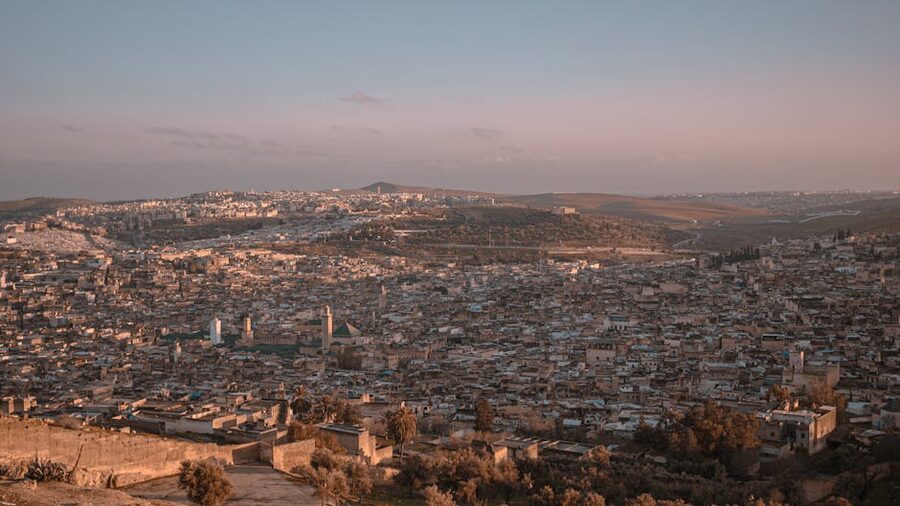
Fez is the country’s intellectual and religious capital and the medina, Fes el Bali, is the largest car-free urban area in the world. Founded in the 9th century, walled in the 13th, and now a Unesco site since 1981. Roughly 10,000 streets and alleys, around 150,000 people still living inside the walls, almost no concession to tourism in the way Marrakech has been pulled around for visitors.
If you have to choose between Fez and Marrakech, choose Fez. If you have time for both, do Marrakech first. The contrast favours Fez. Marrakech is the show; Fez is the country. Most readers who go to both come home talking about Fez.
Where to stay in Fez
The Fez riad scene is older and less commercial than Marrakech’s. Three to know:
- Riad Fes. The biggest of the top-tier Fez riads, a Relais & Châteaux, with two pools (one indoor, one rooftop) and a serious spa. About 30 rooms across an interconnected complex of historic houses near Bab Guissa. Best for the traveller who wants the immersion of a riad with full hotel facilities.
- Palais Amani. Boutique, intimate, around 18 rooms in a restored 1920s palace just inside the medina walls near Rcif. The spa is genuinely good and there is a cooking school on site. The kind of place where the staff remembers what you drink at sundown.
- Hotel Sahrai. The contemporary alternative: modern design, perched on the hill above the medina with a panoramic view across all of Fes el Bali. Big pool, Givenchy spa, smart restaurant. Pick this if a centuries-old riad sounds claustrophobic and you want a window onto the medina rather than to be inside it.
What to do in Fez
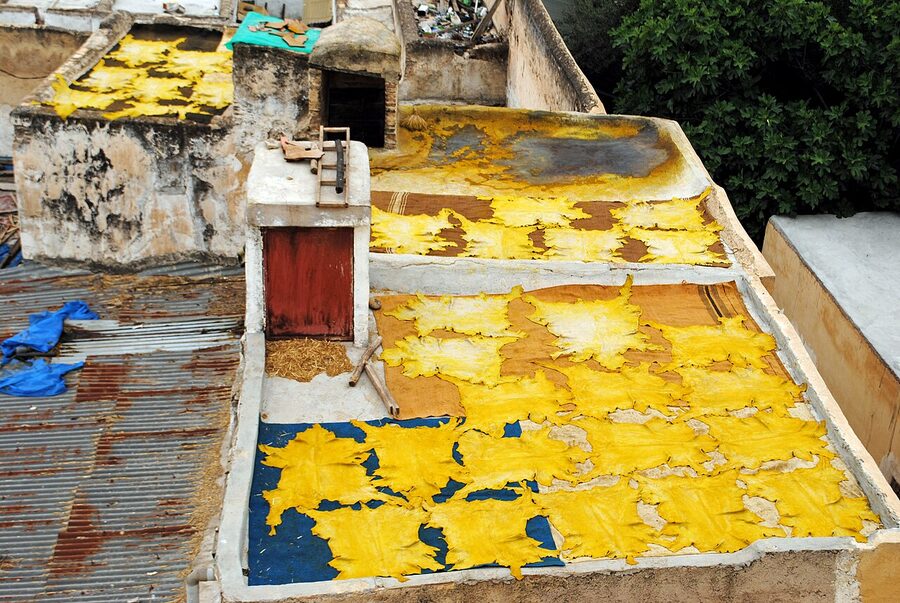
The non-negotiable list:
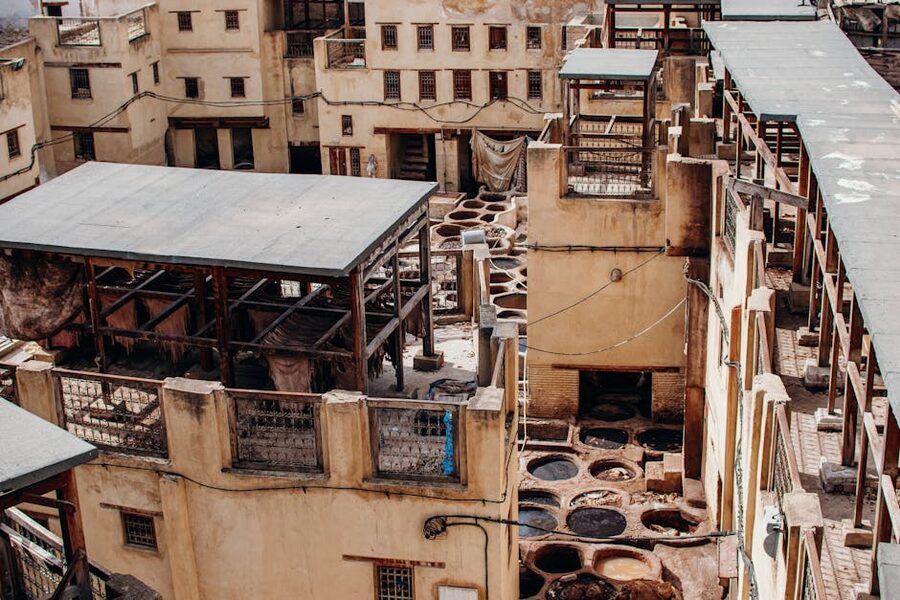
- The Chouara Tannery. The signature photo of Fez: round stone dye pits, men in waders, raw skins drying on every surface. The smell is genuinely intense; the leather shops above the pits hand you a sprig of fresh mint at the door. The view is theatrical and the leather is good. Bring a small budget for a jacket and a willingness to haggle.
- Medersa Bou Inania. A 14th-century theological college on Talaa Kebira, recently restored. Free to enter for non-Muslims. Allow 30 to 45 minutes for the courtyard, the carved cedar, and the calligraphy band along the wall.
- The Kairaouine (al-Qarawiyyin) complex. Founded in 859 CE by Fatima al-Fihri, it is the oldest continuously-operating educational institution in the world according to Unesco and Guinness. Non-Muslims can’t enter but you can look in from the gates and the surrounding alleys.
- Place Nejjarine and the Nejjarine Museum of Wooden Arts and Crafts. A restored caravanserai. The fountain alone is worth the walk; the museum is a calm, well-arranged 90 minutes off the main alleys.
- Borj Sud at sunset. The southern fort above the medina, ten minutes by taxi. The whole of Fes el Bali turning gold in the evening light, the call to prayer rolling up the hillside from a hundred mosques. Free, simple, the best view in the city.
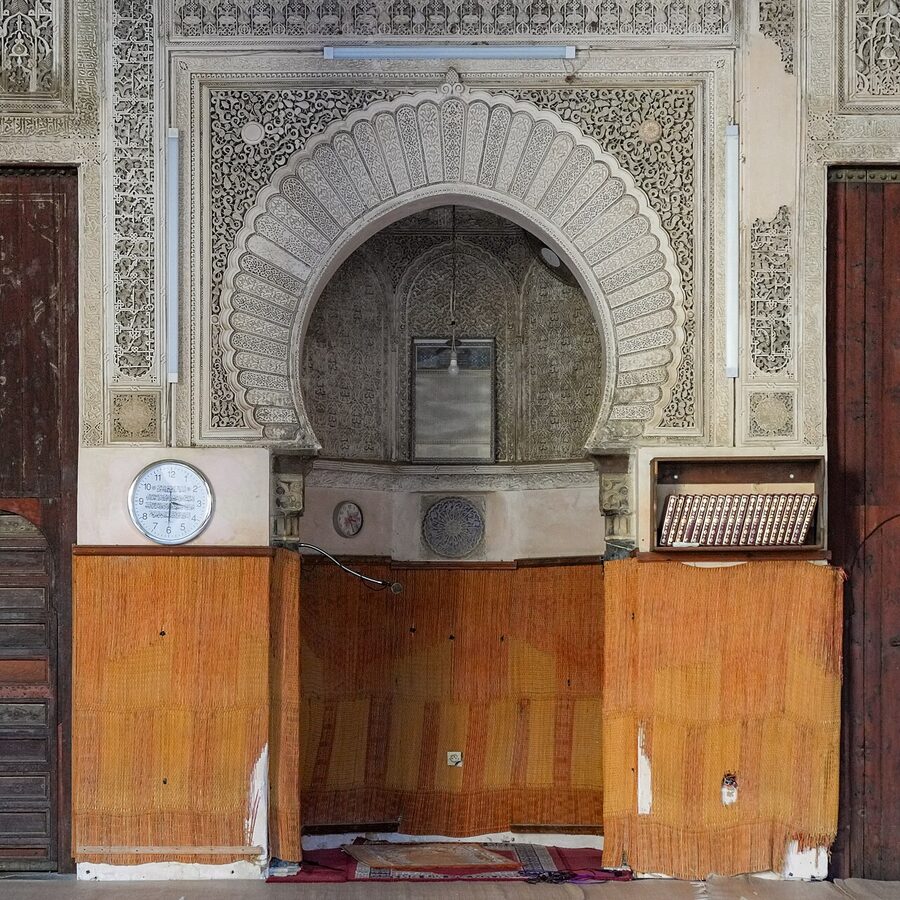
You need a guide for the first day. Not optional. The medina is genuinely confusing and a good guide turns three frustrating hours into a much better story. Most of the top riads have one on retainer; expect to pay roughly 800 to 1,200 dirhams for a full day with a licensed guide, plus tip.
The Atlas Mountains: where the trip becomes special
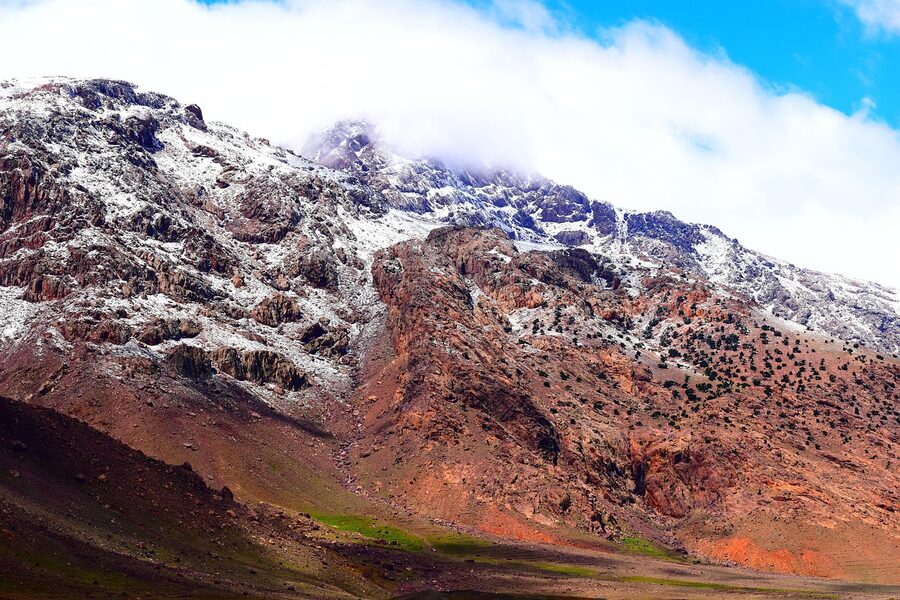
This is the section that the standard ten-day Morocco itinerary shorts. Most operators sell you a single day-trip from Marrakech to the Atlas: one valley, lunch at a Berber house, a short walk, back by sundown. That is the wrong shape. Spending two or three nights in the Atlas changes what kind of trip you came home from. It is also where the best mid-trip wind-down lives.
Two property types matter at this level:
Kasbah Tamadot
Richard Branson’s lodge in the Atlas, an hour by car south of Marrakech in the village of Asni at the foot of Toubkal, North Africa’s highest peak. Branson bought the property in the 1990s after spotting it from a hot-air balloon and had it restored as a Berber kasbah. About 28 rooms and tented suites; a long horizon-pool that sits above the valley; a spa carved into the hillside. Dinner is on the terrace looking up at the mountains. Guests are mostly couples on the Marrakech-then-Atlas circuit.
It is the most famous luxury Atlas property and rates reflect that. A portion of room revenue funds the Branson-supported Eve Branson Foundation, which runs craft and skills training for local Berber women in the surrounding villages. You can visit the foundation as part of your stay. This is one of the few luxury hotels where the philanthropic add-on is actually visible on the ground.
Kasbah Bab Ourika
The boutique alternative to Tamadot, on a hilltop above the Ourika Valley. Around 27 rooms in a more traditional Berber-architecture building, panoramic 360-degree Atlas views, a smaller pool, a quieter atmosphere. Family-owned rather than brand-attached. Slightly less polished than Tamadot, more characterful. Pick this if you want the Atlas without the famous-name halo.
What to do up here
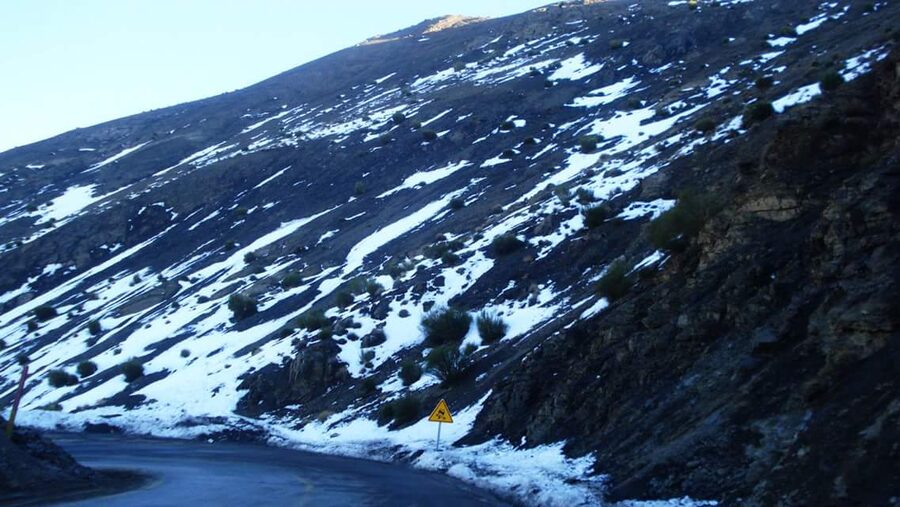
Less than you might think, on purpose. Walk one of the Berber-village circuits: your lodge will arrange a guide and you’ll get a 3-to-4-hour loop through walnut groves and terraced fields, stopping at a village house for tea. Visit the Ourika Valley waterfalls if you’re staying at Bab Ourika; do the Asni weekly Saturday souk if you’re at Tamadot. Drive up to Imlil and walk the first thirty minutes of the trail toward Toubkal for the panorama. None of this is strenuous unless you choose for it to be. The point is to slow the trip down between Marrakech and whatever comes next.
Note on the Royal Mansour name: there is now a Royal Mansour Tamuda Bay, the third property in the Royal Mansour Collection, on the Mediterranean coast between Tetouan and Tangier. Fifty-five villas and suites on a 10-hectare estate with a 700-metre beach. It is a serious property and a different trip. Tamuda Bay is the north coast Mediterranean play, not an Atlas option. If a beach finish to a luxury Morocco trip appeals more than the desert, this is the new alternative to consider.
The Sahara: theatrical, brief, worth it
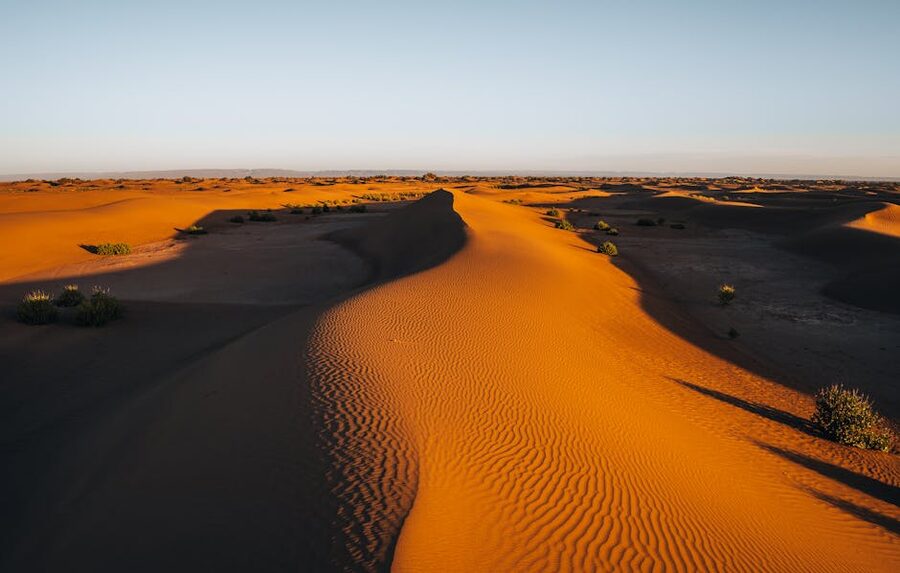
Two real choices at the luxury level: Erg Chebbi, the more accessible big-dune sea near Merzouga in the east, or Erg Chigaga, the wilder one near M’Hamid in the south. There is a third option, the Agafay desert closer to Marrakech, that is technically not the Sahara at all. It is a stony pre-desert about an hour out of town. The camps in Agafay (Scarabeo, Inara, La Pause) are stylish and well-run but if you have come to Morocco for sand dunes, you have to go further.
Erg Chebbi is the easier logistical play. The dunes rise to about 150 metres at the highest point and stretch about 28 km north to south. The standard luxury approach: fly Casablanca or Marrakech to Errachidia, then drive 90 minutes to Merzouga. You arrive at the camp in late afternoon, ride a camel out to the dunes for sunset, eat under the stars, sleep in a tent that has a real bed and a proper bathroom, ride back at dawn. Camps to know are the Azalai Desert Camp and the Erg Chebbi Luxury Desert Camp, both at the foot of the big dunes near Merzouga.
Erg Chigaga is more remote. The drive in is longer (around 60 km of off-road from M’Hamid) and you get fewer fellow travellers. The camp to know here is Erg Chigaga Luxury Camp, run by the Wild Morocco team. If you want the empty-quarter version of a Sahara night, this is the choice.
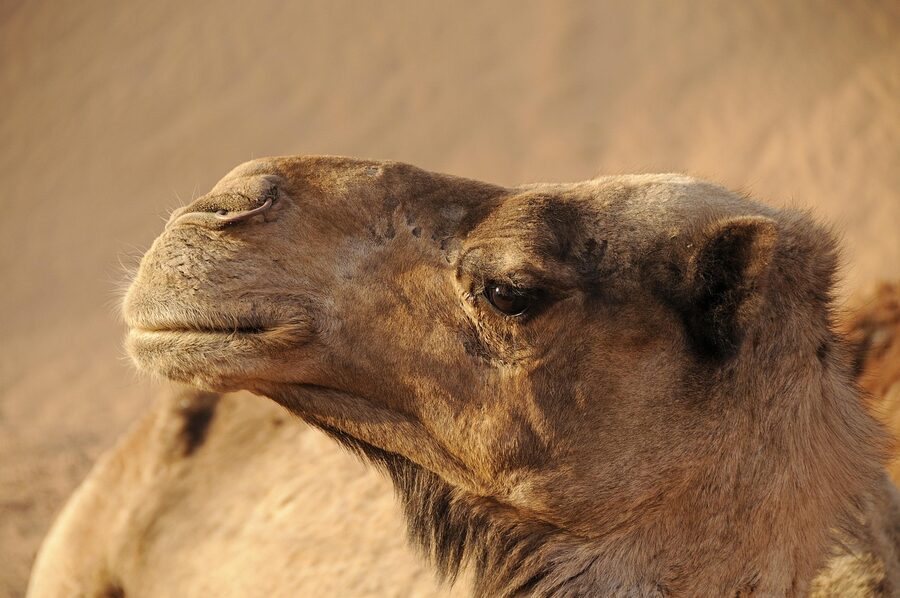
Said again: two nights in the Sahara is plenty. One night and the drive ratio is brutal. Three nights and you’ve used up Atlas time on a single horizon. The Sahara works as a bookend to the trip, high theatre between the cities and the mountains, a story to tell, then home. Not as a destination to settle into.
A 10-night and a 14-night itinerary
The 10-night version
The clean version, no Essaouira:
- Nights 1–4: Marrakech. Two riad, two hotel. Day 1, settle in and Jemaa el-Fnaa at sundown. Day 2, guided medina morning, Bahia Palace, Yves Saint Laurent Museum. Day 3, day-trip to the Ourika Valley or a hammam afternoon. Day 4, transfer hotel side, pool day, Patek Philippe Museum if you happen to be a horology reader (just kidding, that’s Geneva).
- Night 5: Atlas. Drive 90 minutes south, check into Kasbah Tamadot or Bab Ourika.
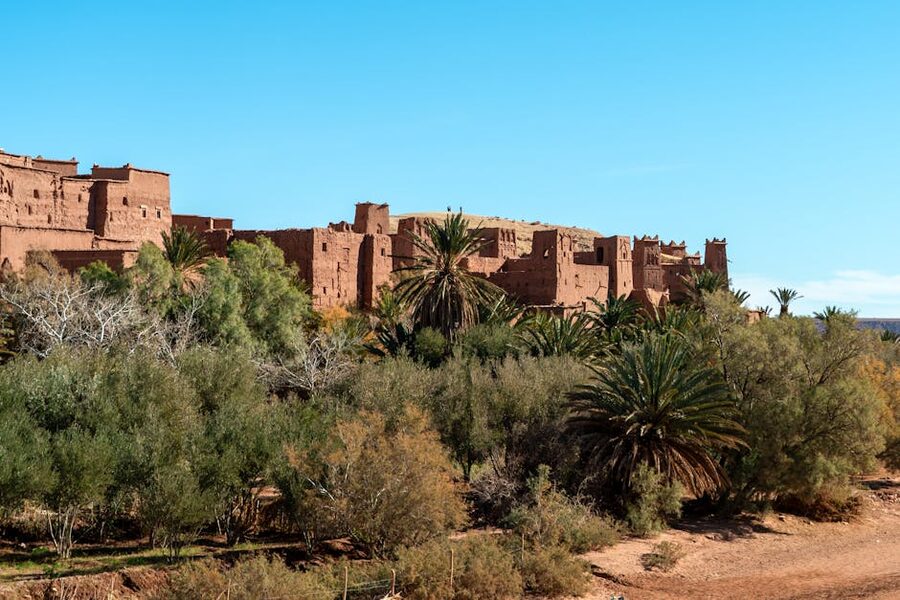
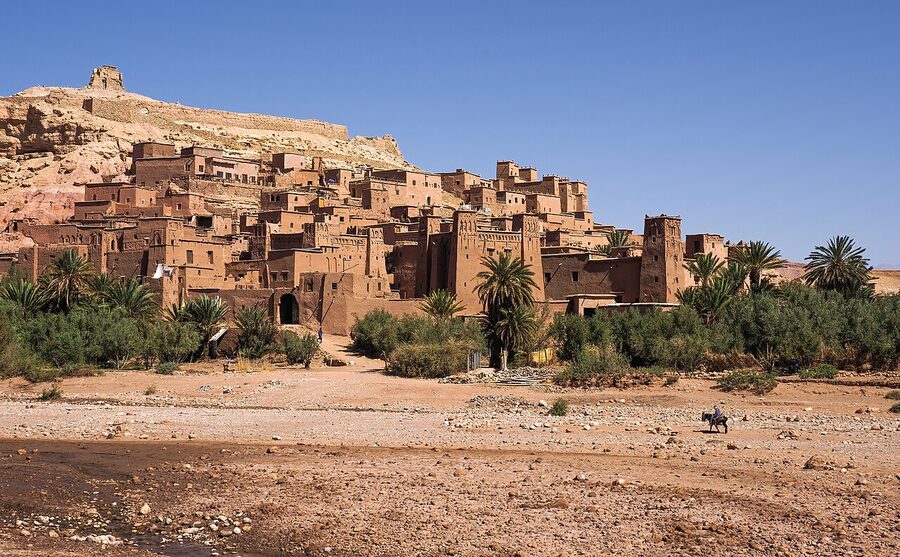
- Nights 6–7: Sahara. Drive over the Tizi n’Tichka pass to Ait Benhaddou for lunch and the ksar visit, then continue to Merzouga (a long day; consider a private driver or a small charter to Errachidia). Night 6 in a luxury desert camp at Erg Chebbi. Day 7, dawn dunes, slow morning, drive or fly to Fez.
- Nights 8–10: Fez. A guided medina day, the tannery, Medersa Bou Inania, the Borj Sud sunset. A free morning. Fly home from Fez.
The 14-night version
The 10-night plus four extra nights well spent:
- Add a third Atlas night. The lodge experience deserves it.
- Add a third Marrakech night before the Atlas, for an unrushed riad-to-hotel switch.
- Add two Essaouira nights between Marrakech and the desert. Three hours by car west to the coast, an entirely different colour palette (white and blue against the Atlantic), the kite-surfing scene, the seafood, the slower pace. Sofitel Essaouira or Heure Bleue Palais are the two luxury options.
Essaouira and the coast (when 14 nights makes the case)
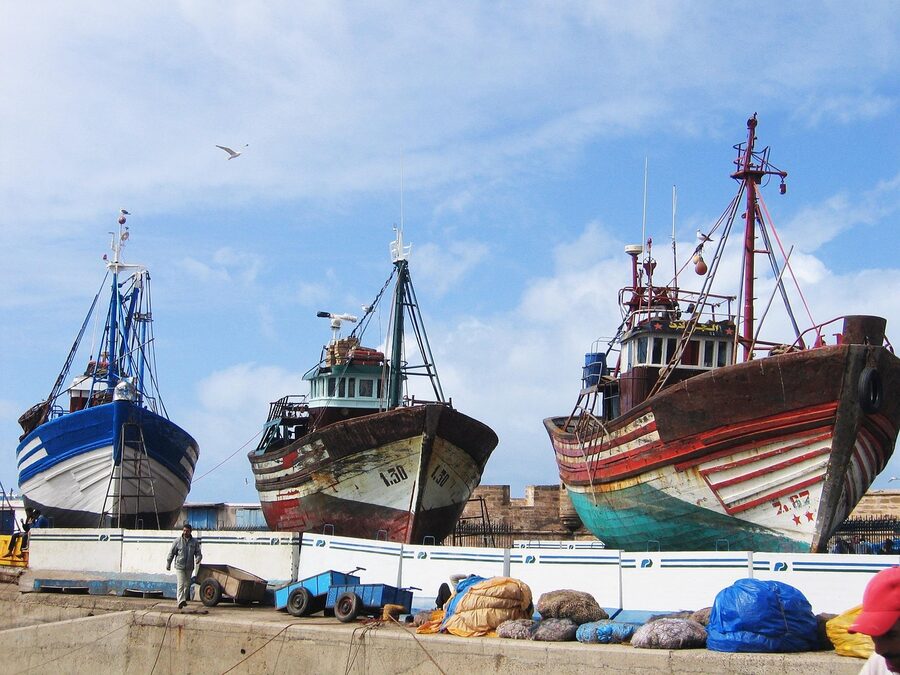
Essaouira is the coastal counterweight to Marrakech. A fortified medina built on a Portuguese-era plan, Unesco-listed since 2001, washed by an Atlantic wind that almost never stops. The kite-surfing crowd has been here for thirty years and the fishing port is still a working port. Heure Bleue Palais is the in-medina riad-hotel. Sofitel Essaouira Mogador Golf & Spa is the resort option, just south of the town with golf and the beach. The town is small. Two nights is enough; three if you came for the surf.
What about Chefchaouen?
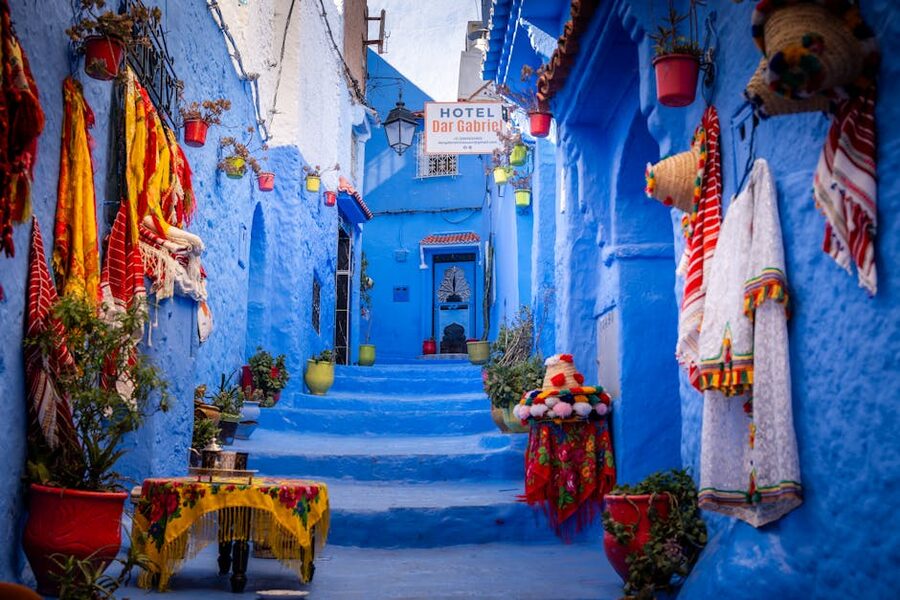
The blue town in the Rif Mountains, painted that particular soft indigo since the 1930s. The photos are great. The visit is, in practice, a couple of hours of slow walking through a small medina, plus a hike up to the Spanish Mosque for the sunset view. The drive in from Fez is about four hours and there is no luxury hotel that justifies the slot. If you’re already in the north (say, finishing a Tangier or Tamuda Bay trip), Chefchaouen is a worthwhile day-or-overnight stop. If you’re not, the photos cost you a day of Atlas or Sahara time. Choose accordingly.
The food, briefly
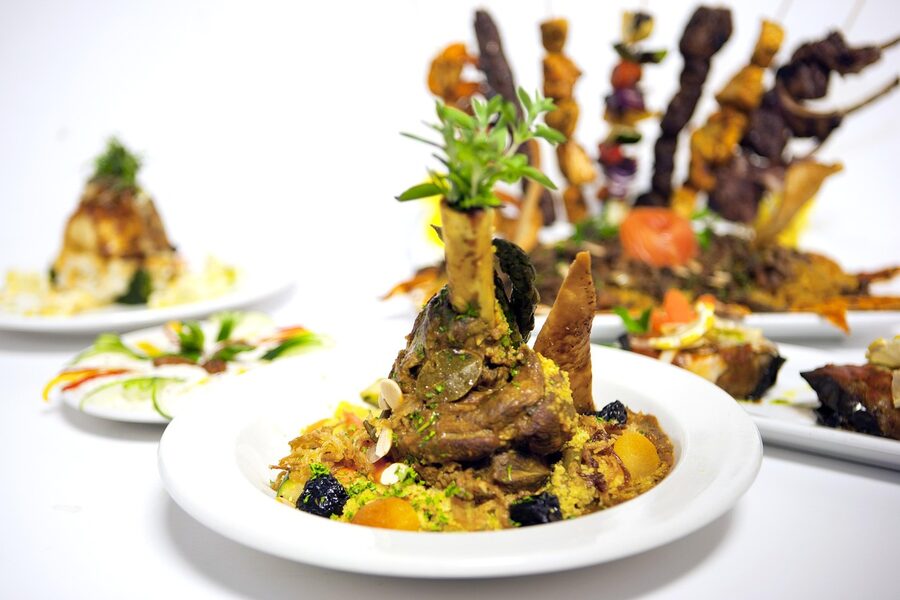
Moroccan home food is wonderful. Restaurant Moroccan food is more hit-and-miss because the formula gets repeated everywhere: same trio of harira soup, tagine, couscous, sometimes mediocre. The luxury riads and hotels do it better than the standalone restaurants in the medina, and a private chef dinner at your riad is one of the small luxuries that pays back. Order lamb tagine with prunes and almonds at least once; eat the chicken-and-preserved-lemon tagine if your host can do a good one; have couscous on a Friday because that’s when it is made fresh.
For higher-end dining, the names worth knowing in Marrakech are La Grande Table Marocaine at the Royal Mansour, L’Italien at La Mamounia (or Asian by Jean-Georges, or the Pierre Hermé café), and Nomad for a non-hotel dinner with a rooftop and a modern Moroccan menu. In Fez, The Ruined Garden is the foreigner-favourite garden lunch spot, and the dinner at Riad Fes is genuinely good if you are staying there or want a reason to walk through the property.
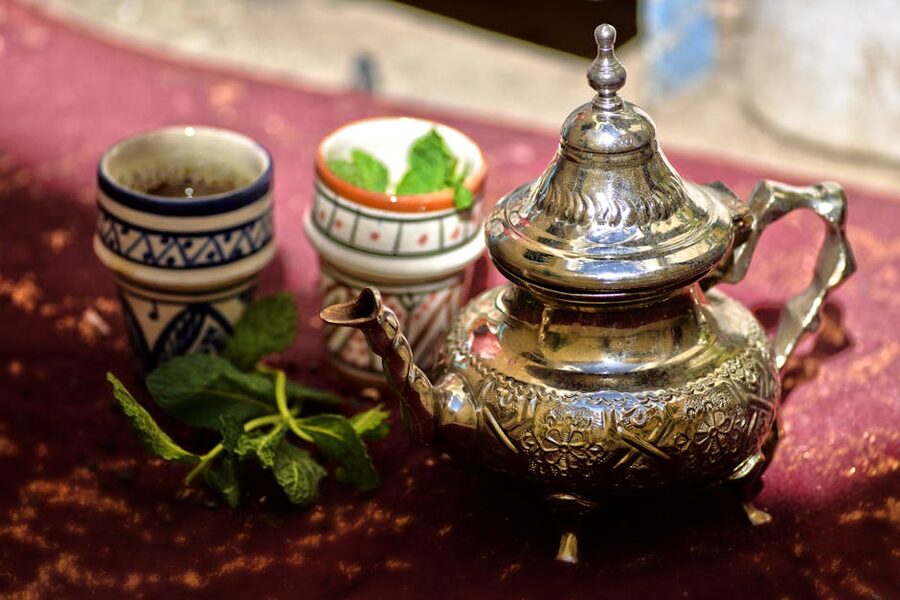
A small note on alcohol: Morocco is a Muslim country and most medina restaurants don’t serve it. Hotel restaurants and riad bars do. If wine matters to your evening, eat at the property; if you’re happy with mint tea and a lemon-and-honey citron pressé, you have the run of the medina.
When to go
October–November and March–April are the two ideal windows. Daytime highs in Marrakech around 22–26°C, cool nights, almost no rain, festival activity. May–June is hot but workable. July–August is brutal in Marrakech and the desert (40°C-plus daily highs, Sahara nights still hot enough that a tent without aircon is uncomfortable). December–February is properly cold in Fez and the Atlas, with snow on the High Atlas peaks and the kind of damp riad cold that 50 cm of stone wall earns you. The Sahara nights in winter drop to single digits.
For the desert specifically, October to early April is the right window. Past mid-April the camp logistics work but the daytime temperatures take the romance off the long camel ride.
What to skip
Worth saying clearly:
- Casablanca on a first trip. Hassan II Mosque is genuinely impressive (the only mosque in Morocco non-Muslims can enter for a guided tour) but the rest of the city does not justify a night.
- The 8-hour drive Marrakech-to-Merzouga in a single day. Break it at Ait Benhaddou or fly the back leg.
- A fourth Marrakech day if it would mean dropping the Atlas. The Atlas is the better way to spend the budget.
- The Agafay “desert” if you have the time to do real Sahara. Agafay is well-styled and convenient. It is also stones, not dunes.
- A combined Morocco-and-Spain trip in the same week. The flights work but the rhythm fights itself. Pick one.
How to get around
For a luxury Morocco trip, the right answer is almost always a private driver-guide for the in-country portions. Roads are good between the major cities; the Tizi n’Tichka pass between Marrakech and the south was upgraded in 2022 and is now a smooth two-lane mountain road, but you don’t want to be self-driving it your first time. A good driver costs roughly 1,800 to 2,500 dirhams a day all-in for a private vehicle, and your riad or hotel concierge can arrange one. Reputable in-country DMCs include Plan-It Morocco (Fez-based, good on the imperial cities), Wild Morocco (excellent on the desert and Atlas), and Original Travel or Black Tomato on the foreign-operator side if you want everything packaged from home.
Trains run between the major northern cities. The high-speed Al Boraq line opened in 2018 and connects Tangier and Casablanca via Rabat in just over two hours; the older ONCF lines link Casablanca, Rabat, Fez, and Meknes. There is no train south to Marrakech-and-beyond; the railway ends at Marrakech. Internal flights on Royal Air Maroc connect Casablanca, Marrakech, Fez, Errachidia, and Ouarzazate; useful for skipping the long desert drives.
The shopping question
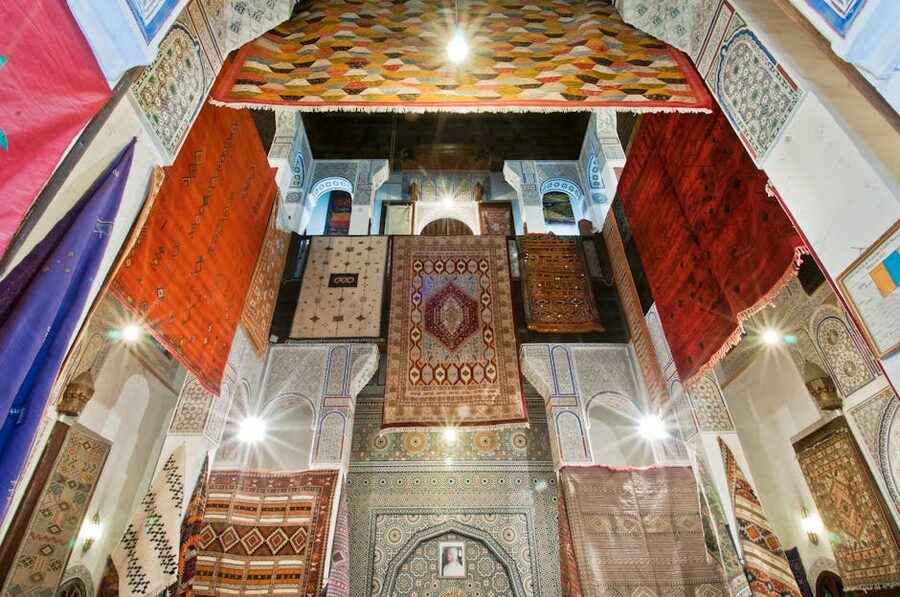
Morocco is one of the great craft economies. Worth buying, and worth haggling for: rugs (Berber Beni Ourain, Boucherouite, the flatweave kilims; go to Fez or to a single named shop in Marrakech with a fixed-price section if haggling exhausts you), leather (jackets, poufs, slippers; buy in Fez near the Chouara, not Marrakech), brass and silver (lamps, teapots, trays from the Marrakech souks), argan oil (look for cooperatives near Essaouira; the city centre stuff is often cut), and spices and preserved lemons (a small bag of ras el hanout from Fez beats almost anything you’ll find at home).
What to skip: painted tagines (cracked by the time you land), fossils (90% counterfeit), and the camel-bone “antique” boxes (sold as antique, made last week).
For the rug purchase specifically: ask your riad to recommend a single shop with quoted, fixed prices. The relentless haggling experience is part of Morocco; spending two hours over mint tea while a 30-rug pile is opened in front of you is part of the romance the first time. The second time, you want a price.
One final structural thought
The hotels and riads will sell you Morocco as a magic carpet. The country is more like a textile, woven from four different threads (the imperial cities, the mountains, the desert, the coast), and it’s the weave that makes it work. The trips that disappoint are the ones that grab one thread and pull. The trips that come home as the trip of the year give each thread the time it asks for.
Marrakech for the show. Fez for the country. The Atlas for the slow middle. The Sahara for the bookend. La Mamounia for the legend, Royal Mansour for the suites, Amanjena for the calm. Two nights in the desert and three in the mountains and four in the souks. A driver who knows the Tizi n’Tichka in the dry and in the snow.
And, somewhere about the eighth evening, a sky full of stars over a valley you’d never heard of two weeks ago. That’s the trip you came for.
Reading further on the site: our Lebanon guide sits in the same Mediterranean-edge tradition; the Geneva piece is the European luxury counterweight; and the Bhutan guide is the other end of the gated-luxury spectrum. The full Destinations index is the home for everything.


.jpg)


