A 10-night first trip to Turkey rewards a choice rather than a list. The classical circuit — balloons over Cappadocia, the Library of Celsus at Ephesus, the white terraces of Pamukkale, the old harbour at Antalya — is what most luxury readers picture. The Mediterranean coastal trip, gulet country, lives in our Turquoise Coast guide. And there is a third Turkey, eastern Anatolia: Mardin and the Syriac monasteries, Şanlıurfa, the 12,000-year-old monumental architecture at Göbekli Tepe. That last is the most rewarding part of the country for a serious traveller and the wrong choice for a first visit.
This guide commits to the first of the three. Ten to twelve nights on the classical circuit, the cave hotels in Cappadocia worth booking, the day-to-day routing between Cappadocia, Ephesus, Pamukkale and Antalya, and the things the standard guides under-warn you about (Pamukkale is half a day; Antalya gets cut from itineraries that should keep it; balloon flights cancel for weather). Eastern Anatolia gets a paragraph at the end.
One framing note before we start. Turkey is currently 30 to 50 percent cheaper than Greece, Croatia or Italy for equivalent quality, because the Turkish lira has lost roughly 80 percent of its value against the dollar since 2020. Five-star cave hotels in Cappadocia run €350-700/night for what would cost €1,000+ in equivalent European destinations. State that up front because it changes the calculus on a luxury trip. The budget that buys a midweek stay in Tuscany will buy a serious week in Turkey.
In This Article
- The Three Trips: Why You’re Picking the Classical Circuit
- The Routing in One Paragraph
- Cappadocia: The Reason Most Luxury Readers Come
- Booking the Balloon
- Where to Stay in Cappadocia: Cave Hotels Done Properly
- What to Do Beyond the Balloon
- Cappadocia: How Many Nights and What to Skip
- Ephesus: Better Than You’re Expecting
- The Terrace Houses: Pay the Extra Ticket
- Beyond the Main Site
- Where to Stay for Ephesus
- Pamukkale: Half a Day, Not a Destination
- What You’re Actually Visiting
- Where to Stay
- Antalya: The Stop Most Itineraries Skip and Shouldn’t
- The Antalya Archaeological Museum
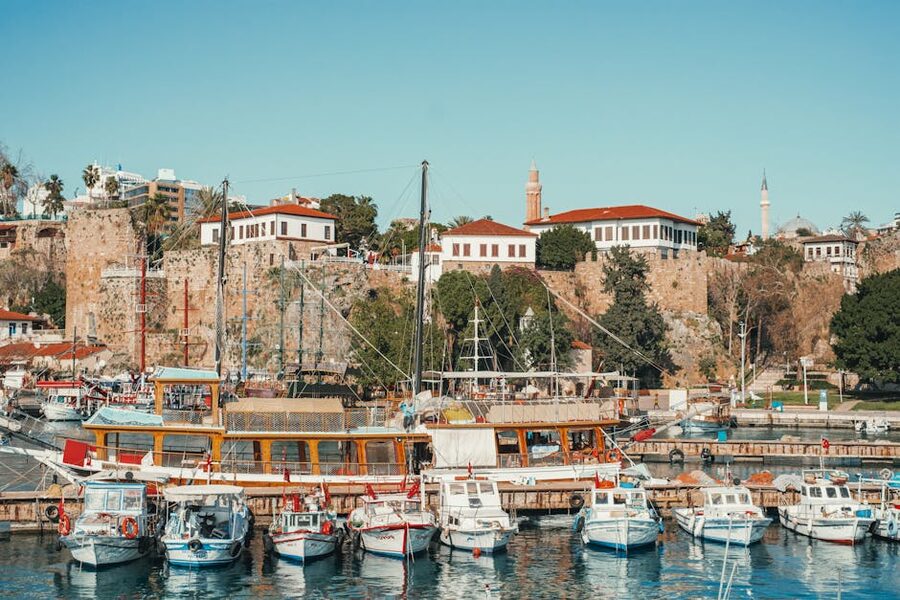
- Kaleiçi: The Walled Old Town
- Where to Stay in Antalya
- The Day-by-Day Itinerary
- When to Go
- The Eastern Anatolia Note
- What to Take Home From This
The Three Trips: Why You’re Picking the Classical Circuit
Most country guides try to fit Istanbul, Cappadocia, Ephesus, Pamukkale, the Turquoise Coast and a beach week into one itinerary. They assume the reader will accept being moved every night. For a luxury traveller spending real money on this trip, that’s the wrong shape. Three nights minimum per stop, never less. So the geography forces a choice.
Trip one: the classical circuit (this article). Istanbul plus Cappadocia plus Ephesus plus Pamukkale plus Antalya. Ten to twelve nights. Two to three flights inside Turkey. Hits the photographs everyone has seen. Mostly cultural and historical with one spectacular landscape stop in Cappadocia. The trip described in this guide.
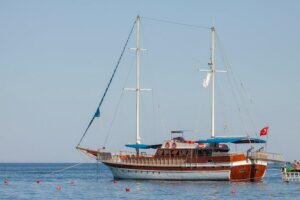
Trip two: the Turquoise Coast. A week or more on a private gulet (the traditional Turkish two-masted wooden boat with crew) cruising from Bodrum to Marmaris or Göcek to Kekova, plus a few land nights in Kalkan or Bodrum. We cover this fully in Turkey’s Turquoise Coast. Different trip, different season window, different reader.
Trip three: eastern Anatolia. Mardin (the Syriac Orthodox monasteries), Şanlıurfa (Göbekli Tepe, roughly 12,000 years old), Diyarbakır (the basalt-walled Kurdish city). Currently more challenging on security. Verify your government’s advisory before booking, and use a specialist operator. This is the most rewarding part of Turkey for someone who’s been twice already. It’s the wrong first trip.
The classical circuit is the right trip for most first-timers because the photographs are real, the logistics work cleanly with two or three internal flights, and you cover three completely different landscapes (Bosphorus city, Anatolian volcanic moonscape, Aegean Roman ruins) in one route.
The Routing in One Paragraph
Fly into Istanbul, three nights there (covered in the Istanbul guide). Fly Istanbul to Kayseri or Nevşehir for Cappadocia, three or four nights to give yourself two morning balloon attempts. Fly Cappadocia to Izmir for Ephesus, two nights based in Selçuk or Kuşadası. Drive or take the bus three hours east to Pamukkale, one night, half a day at the terraces and Hierapolis. Drive or fly to Antalya, two nights for Kaleiçi old town and the archaeological museum. Fly Antalya back to Istanbul to connect home.
That’s eleven nights, three internal flights, one drive. You can shorten by skipping Antalya (don’t) or extend by adding two nights for the Turquoise Coast east of Antalya. The single most common mistake is putting Istanbul at the end and trying to fly an international leg out of Antalya. The international connections are limited and risky. End in Istanbul.
Cappadocia: The Reason Most Luxury Readers Come
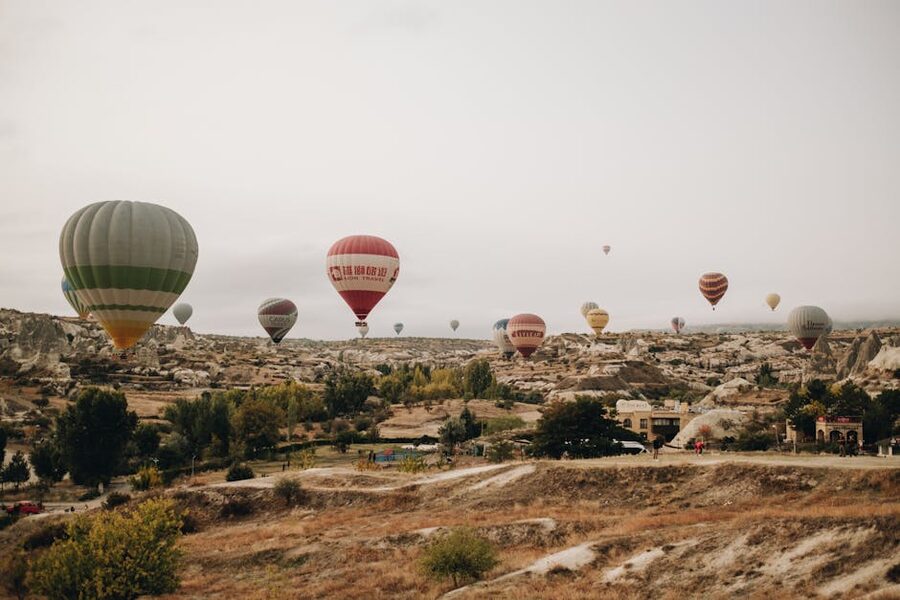
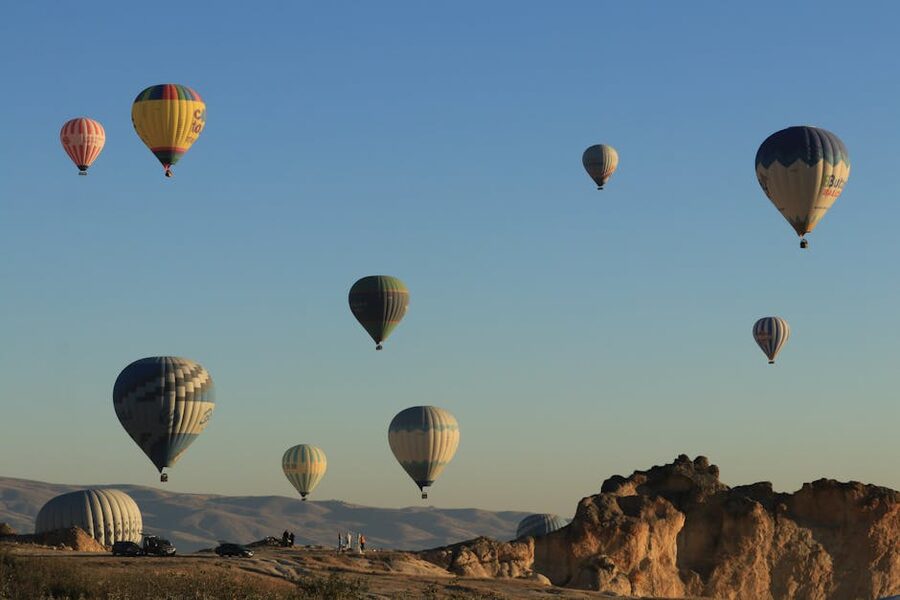
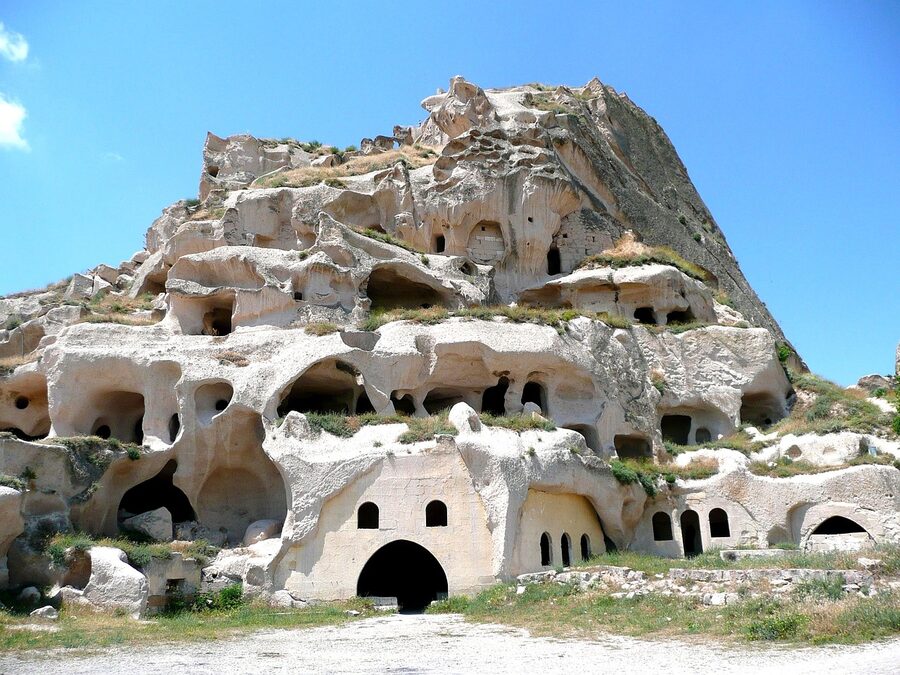
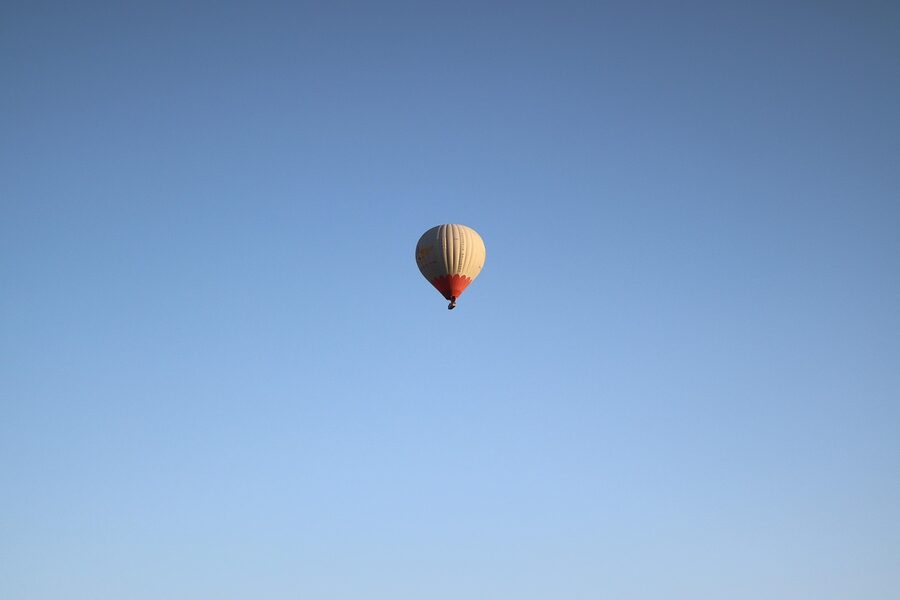
If the balloon flies on day one of Cappadocia, you’ve made the trip. That’s not hyperbole. The geological landscape, soft volcanic tuff carved by 60 million years of erosion into pinnacles, valleys and the distinctive “fairy chimney” formations, is unlike anywhere else on earth. From the basket of a hot-air balloon at sunrise, with two hundred other balloons rising around you in the cold morning air, it is one of the few travel experiences that genuinely lives up to the photographs.
The catch: balloons fly weather permitting, and “weather permitting” in Cappadocia means winds under 10 km/h at all altitudes the balloon will reach. In high summer (July-August) the cancellation rate is low. In winter and shoulder seasons it can run 30-40 percent on any given morning. The fix is structural: book three nights minimum so you have at least two morning attempts. If your first morning gets cancelled and you have only two nights, you’re playing for one shot.
Booking the Balloon
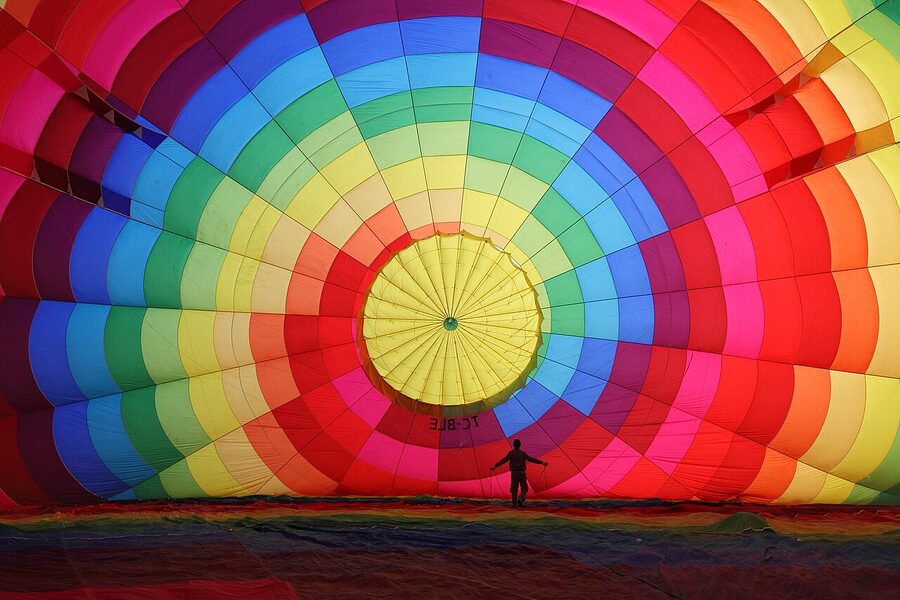
Three operators have the long-standing reputation: Royal Balloon (the most polished, English-speaking pilots, champagne breakfast at the landing site), Voyager Balloons, and Butterfly Balloons. Pick whichever has your morning slot, they’re broadly comparable. Expect to pay €300-450 per person for a one-hour standard flight, €450-650 for the smaller “comfort” baskets (12 passengers instead of 20-24). Your hotel will book it; pay your hotel rather than direct, so if there’s a weather cancellation the rebooking is their problem to solve.
Pickup is between 4:30 and 5:30 am depending on season. Bring layers, the launch field is cold and the basket is warmer than you’d think once the burner is firing. The flight itself is one hour wheels-up to wheels-down. Champagne and a certificate at the landing field, back to the hotel by 8:30 am for actual breakfast.
Where to Stay in Cappadocia: Cave Hotels Done Properly
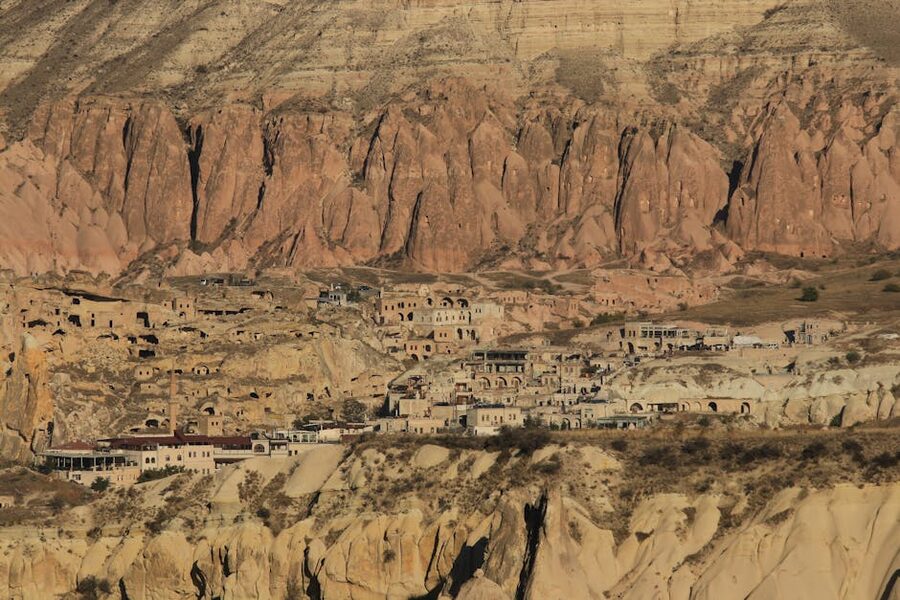
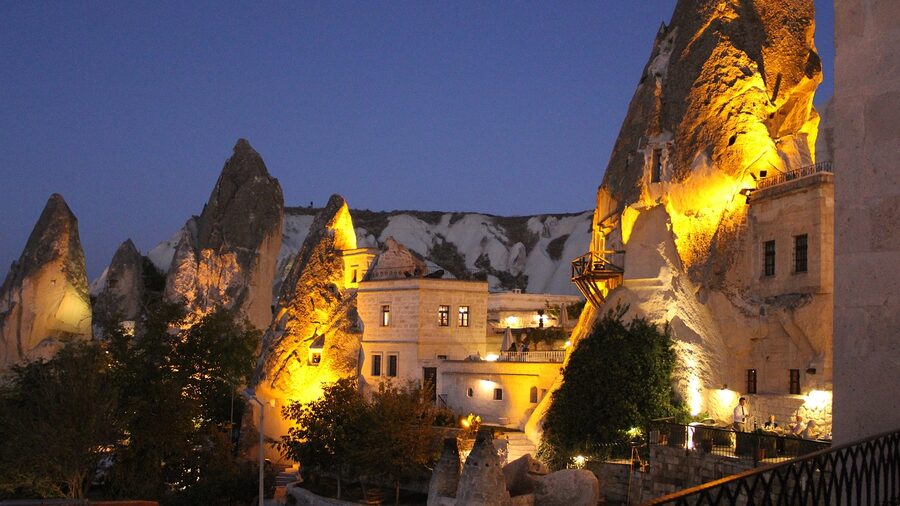
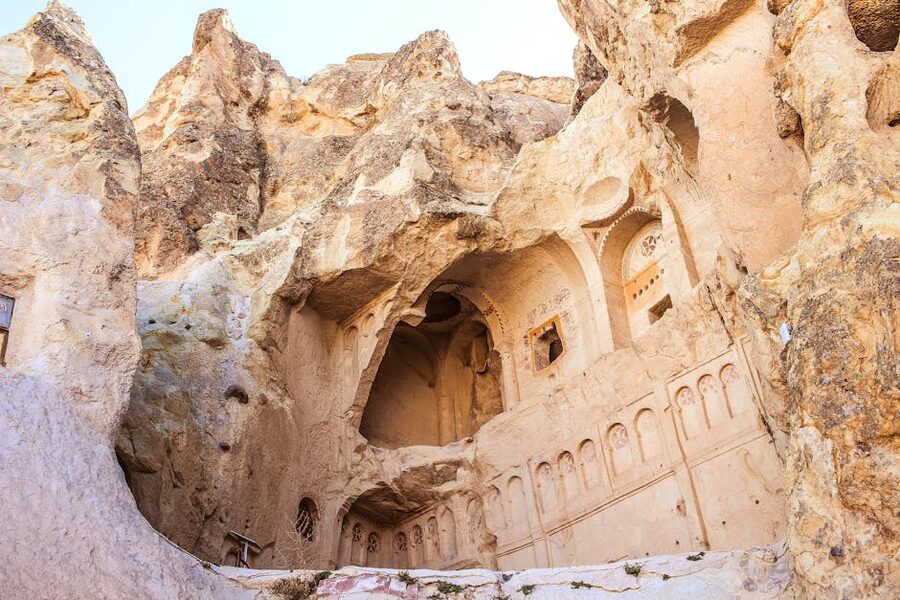
The defining accommodation experience here is sleeping in a real cave. Not a faux-cave hotel, not a “cave-themed suite” carved last decade, but a genuine restored 5th-to-12th-century rock-cut dwelling, retrofitted with discreet plumbing and underfloor heating, with the original tuff walls and arched stone ceilings preserved. Three properties get this right at the high end:
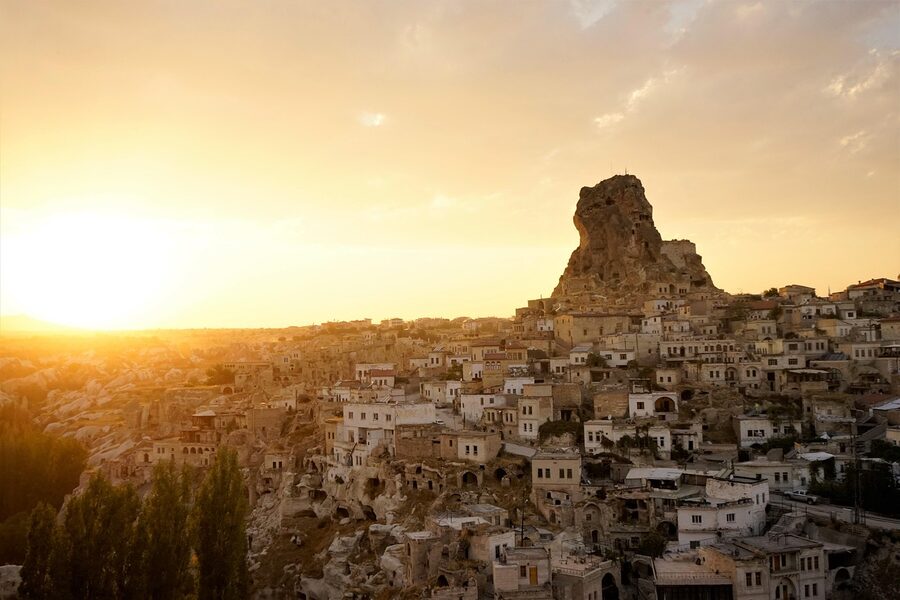
Museum Hotel Cappadocia in Uçhisar is the best-known one. A Relais & Châteaux property built into the slope of Uçhisar Castle, with the heated outdoor pool that gets photographed alongside the morning balloons in roughly half the Cappadocia images you’ve seen on Instagram. The owner, Ömer Tosun, is a serious antique collector; the public rooms are essentially a private museum of Anatolian artefacts. Doubles from around €450/night in shoulder season; suites with the balloon-view terrace €700-1,200.
Argos in Cappadocia is the design-led alternative. Also in Uçhisar, but architecturally more restrained, The rooms are stripped back to the rock, the textiles are excellent, and the whole property feels more like a private estate than a hotel. The on-site restaurant Seki has the best view in the region. Doubles from €350/night, the Splendid Suite around €900.
Yunak Evleri in Ürgüp is the more boutique end, six restored mansion houses dating from the 5th to 19th century, terraced into the cliff face and run as a 30-room hotel. Quieter than Uçhisar, slightly less of a balloon view but a more intimate atmosphere. Doubles €280-450/night.
One word on location. Uçhisar is the high point of Cappadocia and the best balloon-watching village, your hotel terrace at sunrise is part of the experience. Göreme is the centre of mass for the open-air museum and most of the day tours, but more touristy. Ürgüp is quieter and more elegant. For a luxury trip, pick Uçhisar or Ürgüp; book the cave hotel, and don’t compromise to save €100/night. The cave is the point.
What to Do Beyond the Balloon
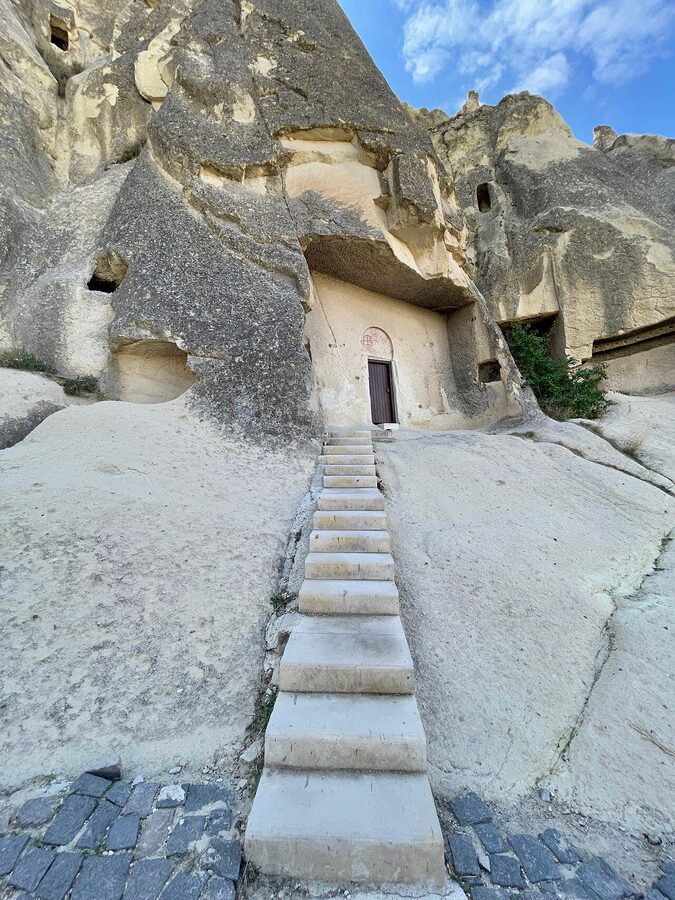
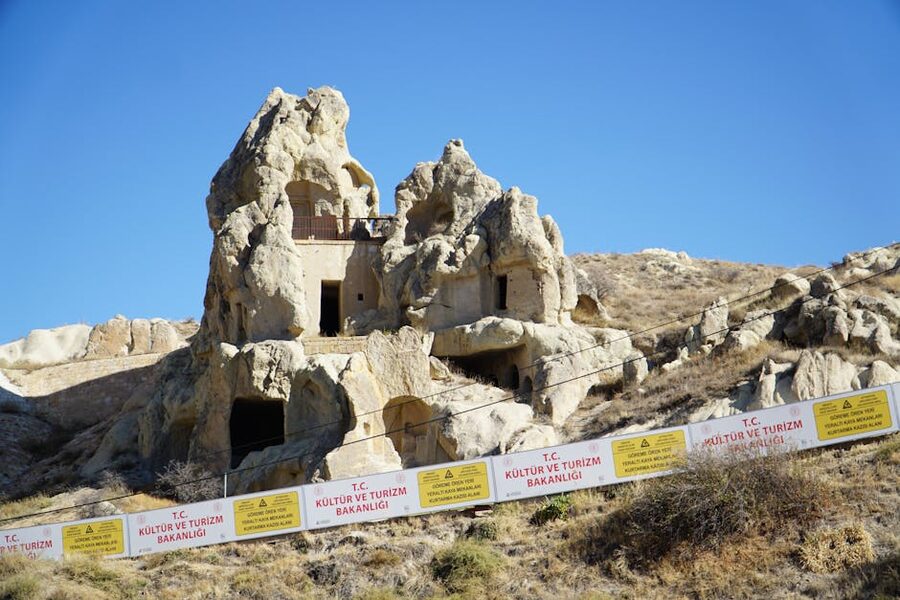
The Göreme Open-Air Museum is the unmissable cultural site, a complex of 10th-to-12th-century Byzantine cave churches with the best-preserved fresco cycles in central Anatolia. Pay the extra €5 for the Karanlık Kilise (Dark Church). The frescoes inside are the reason you came. Two hours minimum, three is comfortable. Open daily 8 am to sunset, around 600 lira entry.
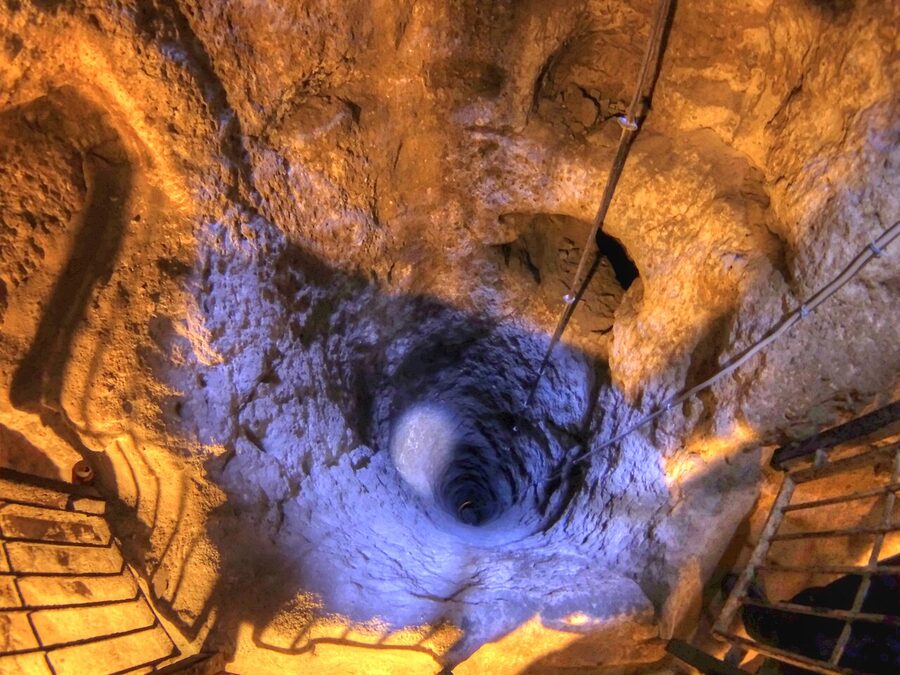
The Derinkuyu Underground City is the second cultural anchor. Eight excavated levels going 60 metres deep into the rock, built across centuries from the Hittite period through the Byzantine, used by early Christians to hide from persecution. Up to 20,000 people lived here for months at a time. Claustrophobic in places (there is a reason for the warning at the entrance) but extraordinary. An hour with a guide is the right amount.
The Ihlara Valley walk is the natural complement, a 14 km canyon cut by the Melendiz River, with rock-cut Byzantine chapels along the route and a riverside café halfway through where local women cook trout for hikers. You don’t need to do the full distance: drive in to the Belisırma section (the middle), walk an hour up the river to lunch, walk back. Three hours total including the drive. Beautiful.
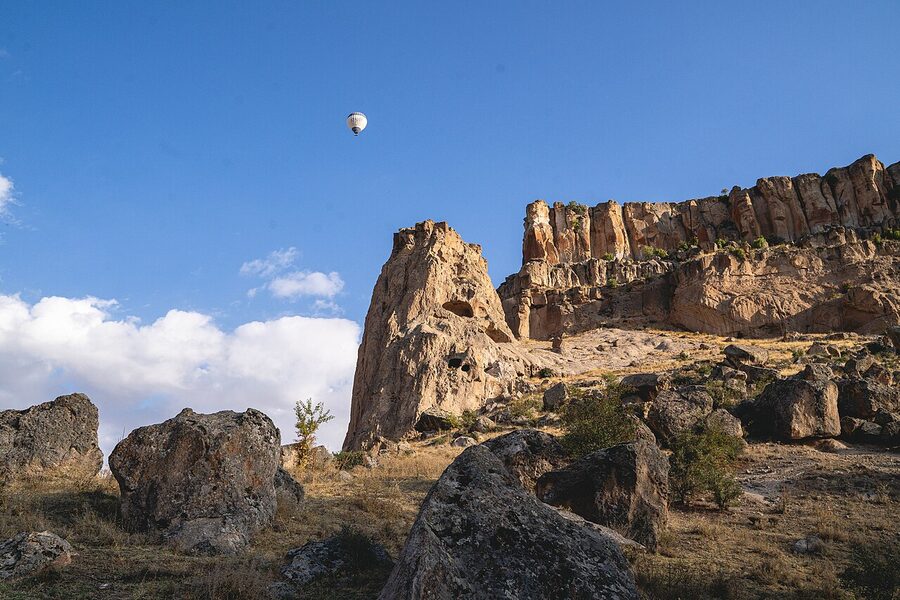
The valley walks closer to home (Love Valley, Rose Valley, Red Valley, the panorama point at Uçhisar Castle) are all worth doing in pieces, ideally with a private driver who knows the trailheads and can pick you up at the other end. Hotels arrange this; expect €120-180 for a full day with driver and 4×4.
Cappadocia: How Many Nights and What to Skip
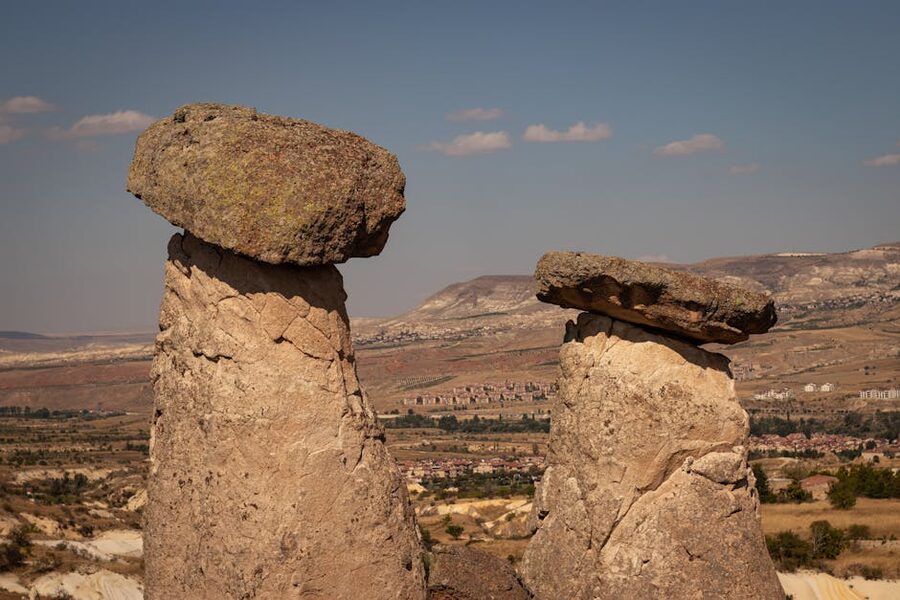
Three nights minimum. Four is better and accounts for weather. The cliché tour-bus add-ons, Pasabag “Monks Valley,” Devrent “Imagination Valley,” every variant of “Three Sisters Rock”, are five-minute photo stops that travel agents pad itineraries with. They’re fine if you’re on a guided coach; skip them if you’re with a private driver. Your driver knows.
The three things you should not skip: the balloon (obviously), Göreme Open-Air Museum, and one underground city (Derinkuyu is the deepest, Kaymakli the most accessible if mobility is an issue). Everything else is bonus.
Ephesus: Better Than You’re Expecting
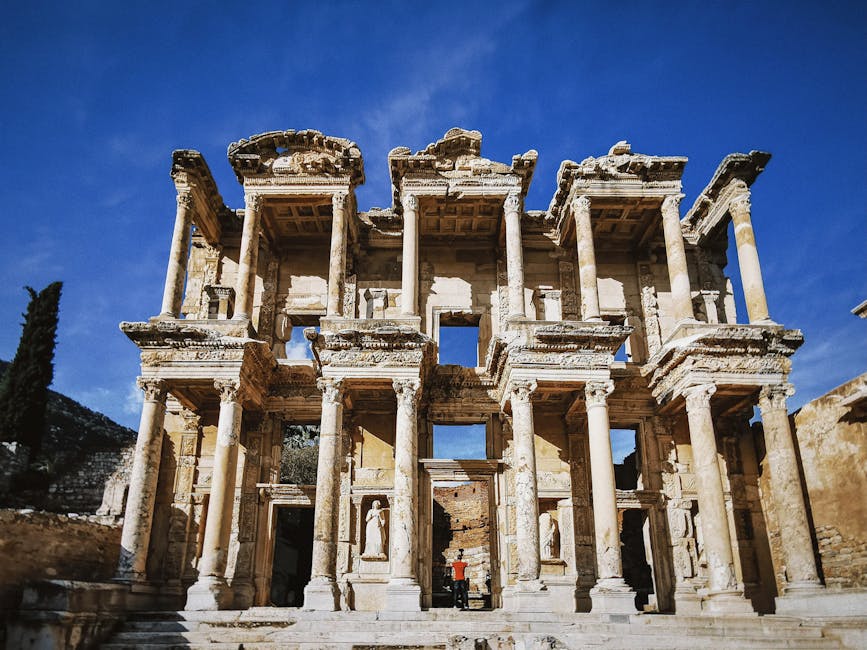
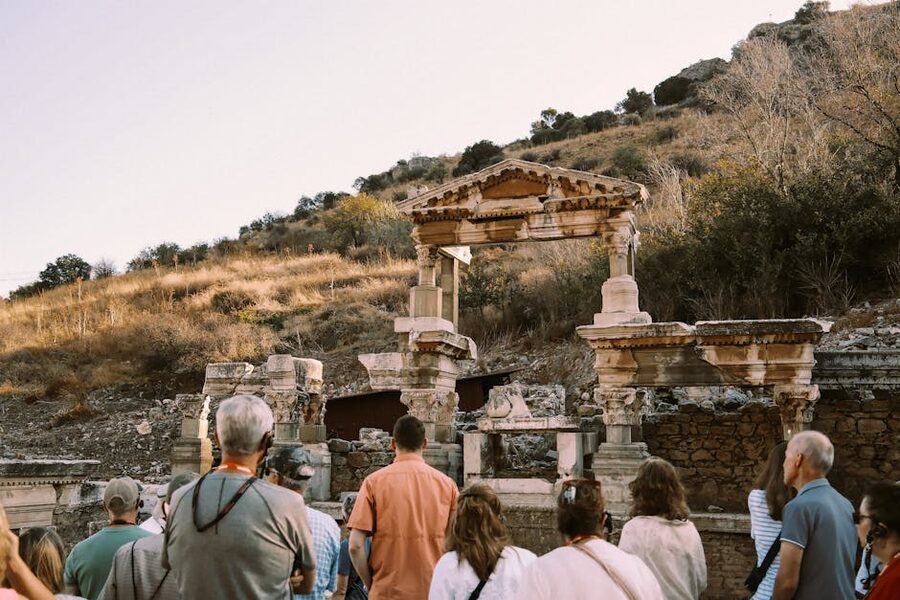
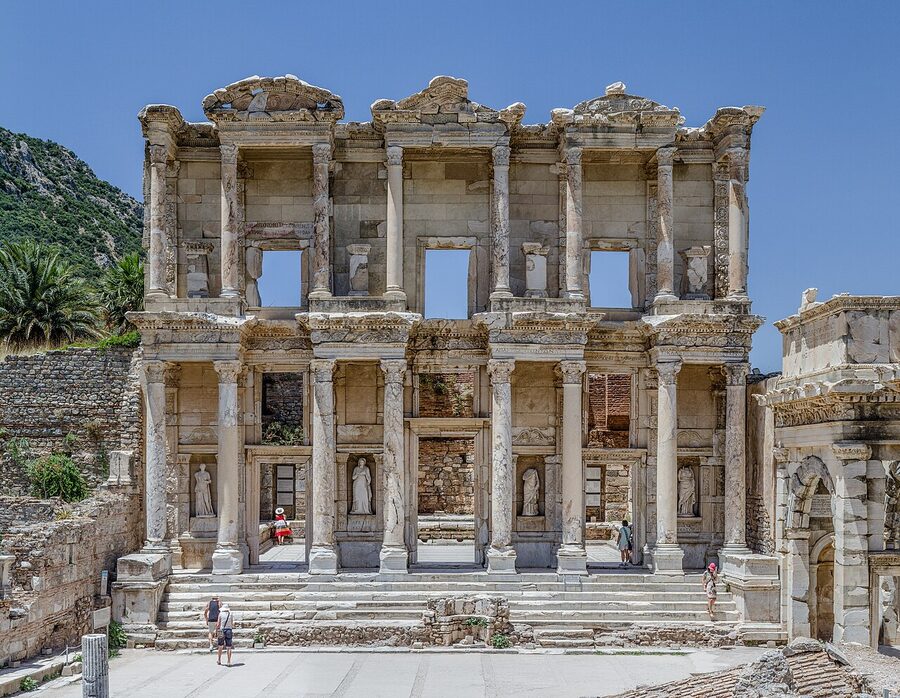
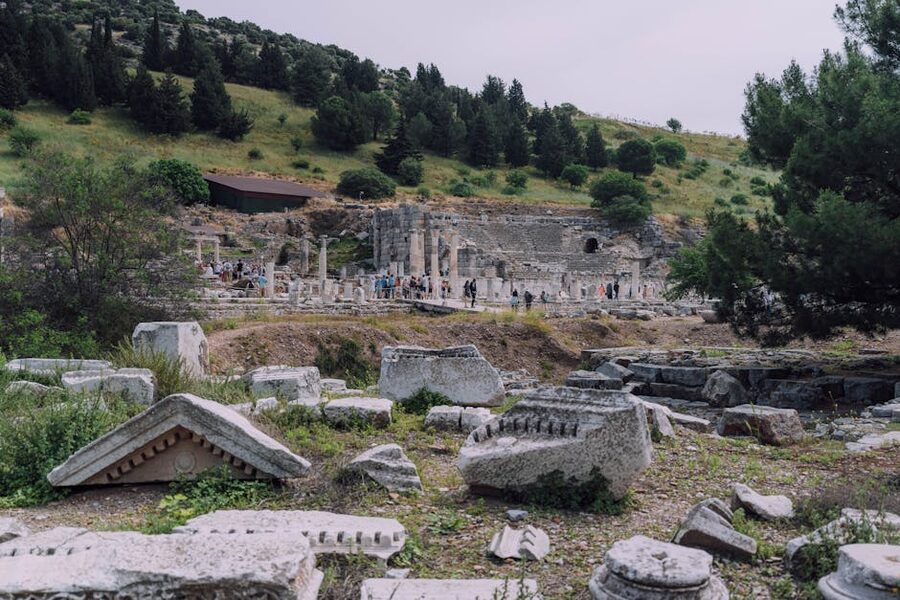
Most readers come to Ephesus expecting “another Roman ruin” and leave saying it’s the best preserved classical site in the eastern Mediterranean. They’re right. At its peak around 100 BC the city held a quarter of a million people, making it one of the largest in the ancient world. What stands today (the marble Curetes Street, the Temple of Hadrian, the 24,000-seat Great Theatre, and above all the two-storey façade of the Library of Celsus reconstructed from original blocks) is more complete than Pompeii and on a more dramatic scale than anything in the Greek mainland except the Acropolis.
You will spend three to four hours minimum on site. Come at 8 am opening, before the cruise-ship day-trippers arrive from Kuşadası. The Aegean sun gets serious by 11 am even in October.
The Terrace Houses: Pay the Extra Ticket
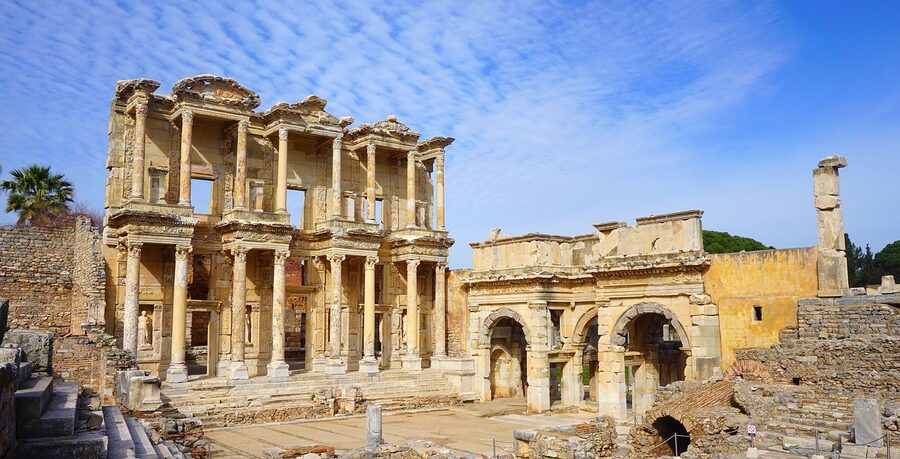
The single best thing you can do at Ephesus is pay the additional ticket (around 250 lira on top of the main entrance) for the Terrace Houses. These were the homes of the Roman elite, six houses excavated in their full domestic detail, with original mosaic floors, frescoed walls, marble cladding and underfloor heating systems intact. You walk on glass-and-steel platforms above the excavations. Essentially nobody on a coach tour does this; it’s quieter than the main site and substantially more interesting. Allow 45 minutes.
The on-site Ephesus Museum is closed; for the museum collection, drive into Selçuk and visit the Ephesus Archaeological Museum (250 lira). Small but excellent, the original cult statues of Artemis from the Temple, household items from the Terrace Houses, sarcophagus reliefs.
Beyond the Main Site
The Basilica of St. John in Selçuk sits on what tradition holds is the apostle’s burial site, a Justinian-era cruciform church, partly reconstructed, with a fine view back toward the citadel. Half an hour. The House of the Virgin Mary is in the hills above Selçuk; quieter, atmospheric, a place of pilgrimage that has been visited by three Popes. Worth the drive whether or not you’re religious. The Temple of Artemis, one of the seven wonders of the ancient world, is now a single re-erected pillar in a marshy field. See it for the historical association, but don’t expect anything dramatic. It takes ten minutes.
Where to Stay for Ephesus
Two choices. Stay in Selçuk, the small town five minutes from the site, at a boutique hotel like Akanthus Hotel Ephesus (a converted Greek house, 12 rooms, dinner garden under fig trees, around €130-180/night). It’s a small-town stay with no resort facilities; the upside is being five minutes from the gate at 8 am. Or stay 30 minutes south at Kuşadası, the cruise port, at a proper resort like Korumar Ephesus Beach & Spa Resort or DoubleTree by Hilton Kuşadası for a more conventional resort experience and a sea-view room.
For two nights it’s a coin toss. For one night I’d pick Selçuk, you save the Kuşadası drive on both ends and the small-town atmosphere is more interesting than another resort.
Pamukkale: Half a Day, Not a Destination
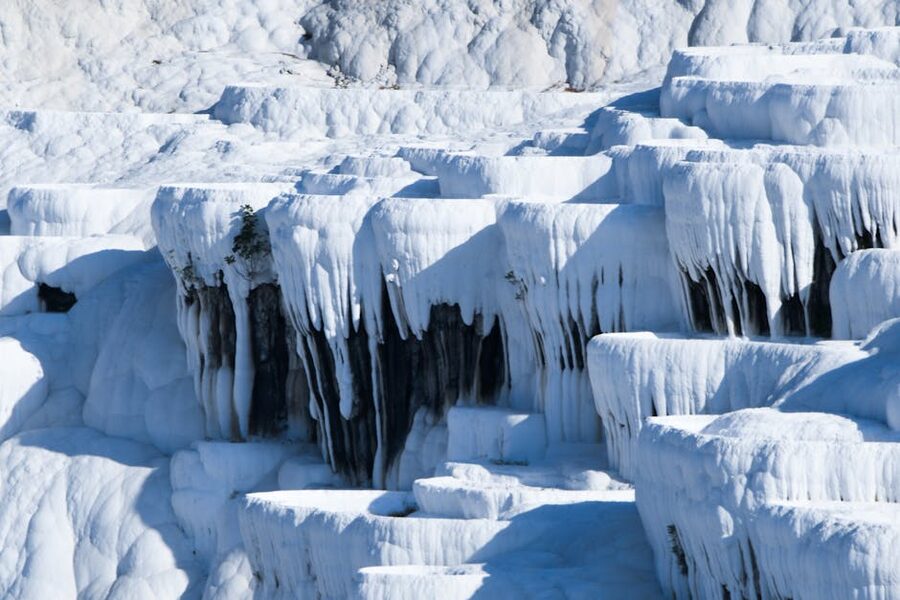
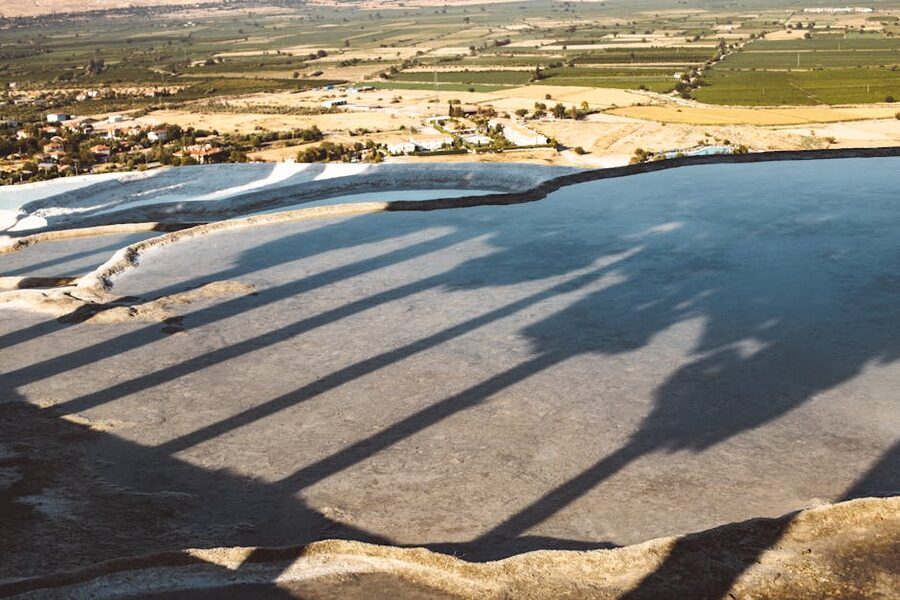
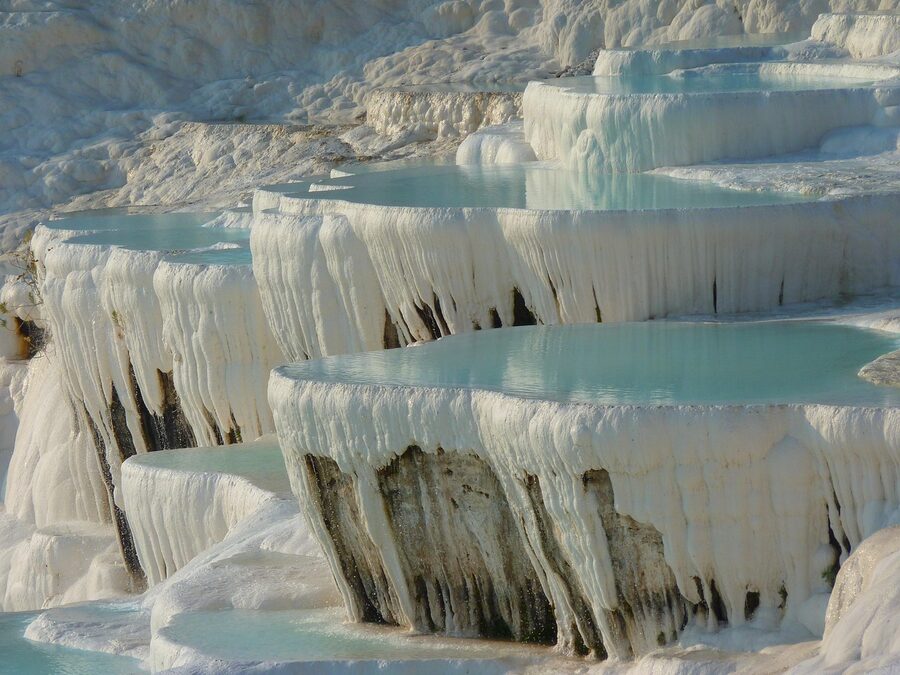
The white calcium-carbonate terraces of Pamukkale are one of the most photographed natural sites in Turkey. The photos are real. The visit is shorter than you think, three to four hours covers it, including the adjacent Roman ruins of Hierapolis. Almost no one needs more than one night here.
This is the most important practical point in this section: do not plan Pamukkale as a destination. Plan it as a stop between Ephesus and Antalya: one night, half a day on site, drive on. Itineraries that allocate two or three nights here are wrong; you will spend the second day looking for things to do and finding nothing.
What You’re Actually Visiting
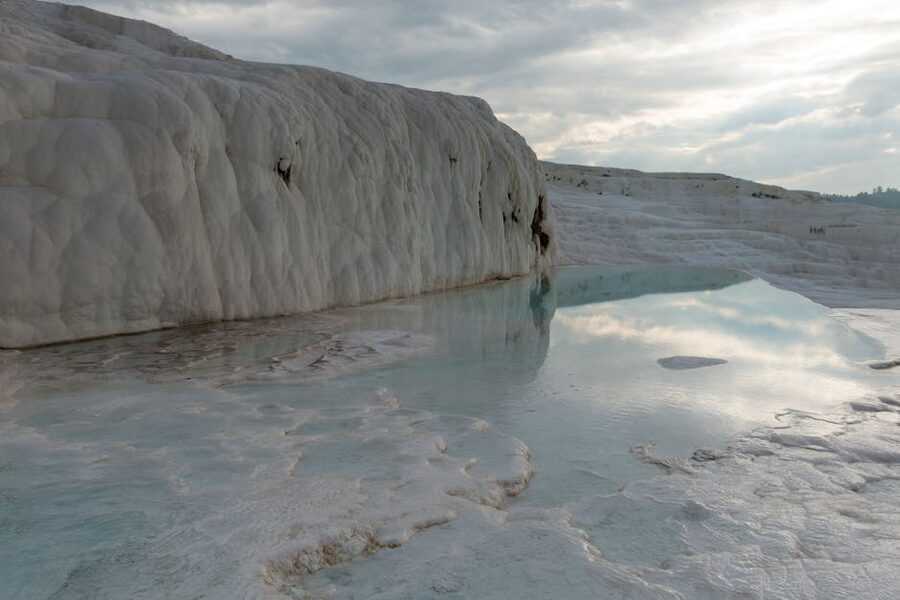
Two sites on the same hill, one ticket. The travertine terraces are the photograph: thermal water, naturally rich in calcium bicarbonate, has been depositing layers of white limestone down the hillside for thousands of years, creating cascading shallow pools. You walk barefoot up the terraces (shoes not allowed, to protect the surface), wading through ankle-deep mineral water. Pleasant, brief, photogenic. About an hour to walk up.
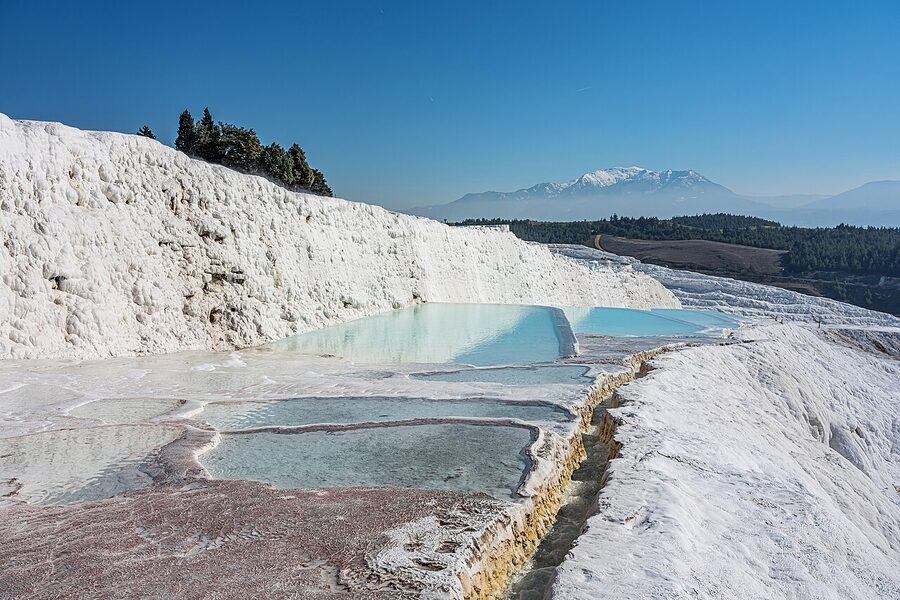
Two practical warnings. First, water flow on the terraces is managed seasonally. By late summer some of the lower terraces are dry. If the photograph is the point, come in spring or early summer. Second, the entry point at the bottom of the hill is the touristy way; the entry from the top of the hill (Hierapolis side) is far less crowded and avoids the climb in the heat.
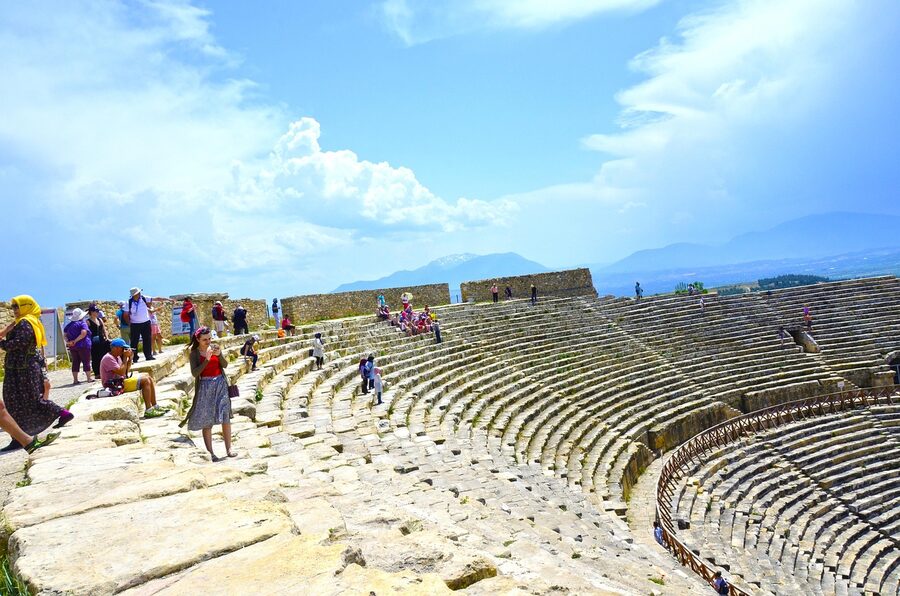
Hierapolis, the ancient Greco-Roman spa city built around the thermal springs, sits at the top of the hill. Two hours minimum here. The 12,000-seat Roman theatre is intact, the necropolis is one of the largest in Anatolia, and the Antique Pool (the so-called Cleopatra’s Pool) is a swimming pool fed by the thermal spring with submerged Roman columns lying on the bottom, €25 to swim, gimmicky but the columns are real.
Where to Stay
The town of Pamukkale itself, at the base of the terraces, is a tour-group dump, pension-style hotels for backpackers and Russian package tours. Don’t stay there. Drive 4 km north to Karahayit, a small village with a cluster of thermal-spa hotels feeding off the same mineral spring. Doğa Thermal Health & Spa is the standard pick, large outdoor thermal pools, hammam, mineral mud treatments. €120-200/night. It is a Turkish thermal-spa hotel, which is its own thing, comfortable, somewhat dated in feel, and a fair use of one night between Ephesus and Antalya. Don’t expect Argos or Museum Hotel quality; expect a clean, functional thermal resort with the after-mineral pools that are the regional speciality.
Antalya: The Stop Most Itineraries Skip and Shouldn’t
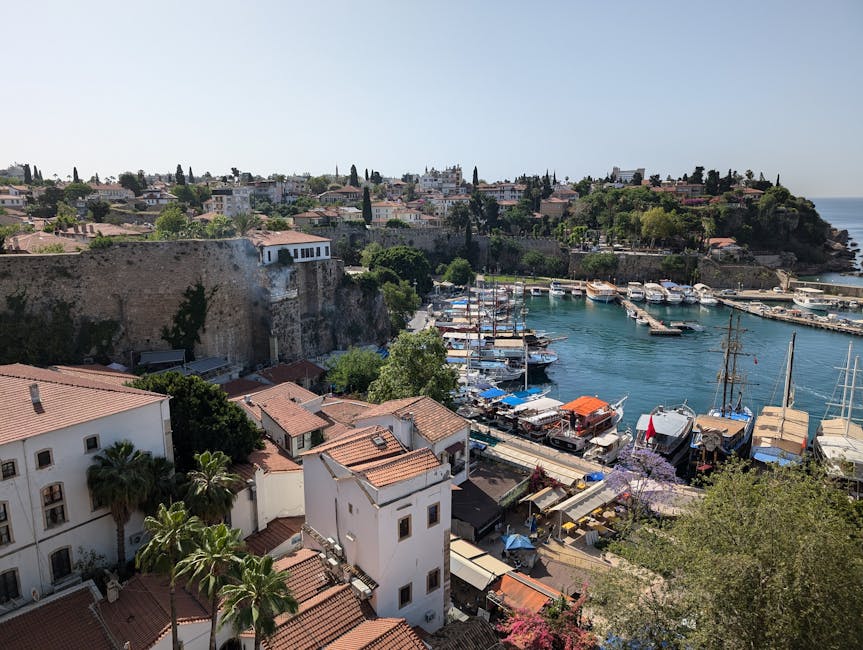
Most “classical Turkey” itineraries cut Antalya. The thinking is that it’s “just a beach city” or “where you fly to for the package resorts in Belek.” Both are wrong reads. Antalya has the second most photogenic old town in Turkey after Istanbul (Kaleiçi, the walled Roman-Ottoman quarter on the harbour), and the Antalya Archaeological Museum holds some of the finest Roman statuary outside Italy. Two nights here closes the circuit properly. Don’t skip.
The Antalya Archaeological Museum
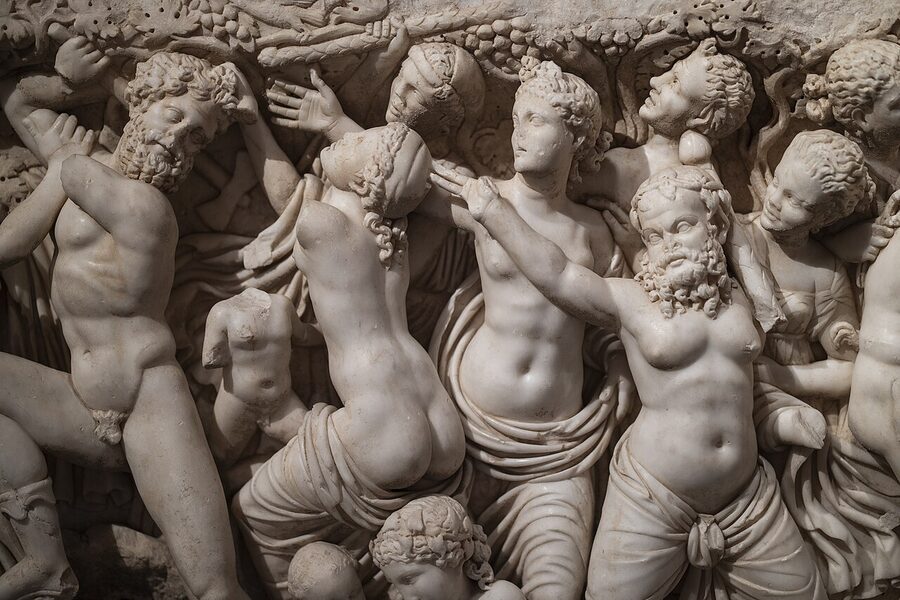
The collection here came mostly from the nearby Roman cities of Perge, Aspendos and Side, sites that were systematically excavated by Italian and Austrian archaeologists from the 1940s onwards. The Hall of Gods has a row of larger-than-life Roman copies of Greek originals (Hermes, Aphrodite, Three Graces, the dancing girl from Perge) that are extraordinarily preserved. The Hall of Sarcophagi has the Dionysus sarcophagus and several others with intact narrative reliefs.
The museum is small enough that two hours covers it without rushing. Open 8:30 am to 6:30 pm in summer (closes 5 pm in winter), entry around 350 lira. Closed Mondays. Get a guide if you can, the labelling is sparse and the historical context for these sculptures is the half of the experience that the labels don’t give you.
Kaleiçi: The Walled Old Town
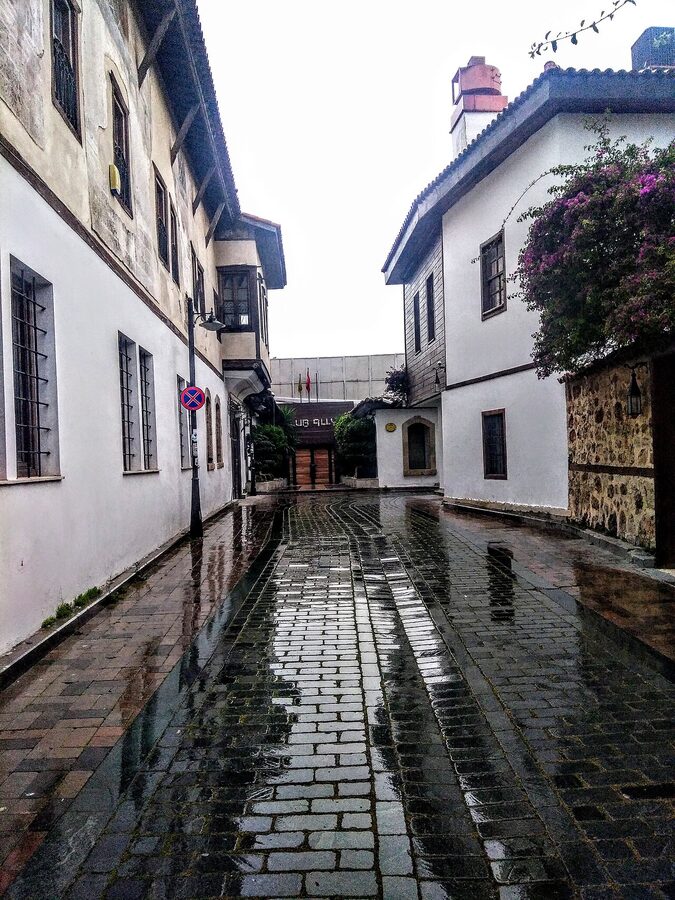
Kaleiçi is the historic walled quarter wrapped around the Roman harbour. Ottoman wooden houses with overhanging upper storeys, narrow lanes that funnel down to the water, the second-century Roman Hadrian’s Gate at the inland edge, the Yivli Minaret (the symbol of Antalya: a fluted Seljuk minaret from 1230), the harbour-front cafés. Walk it once in the morning and once at sunset; the light is completely different.
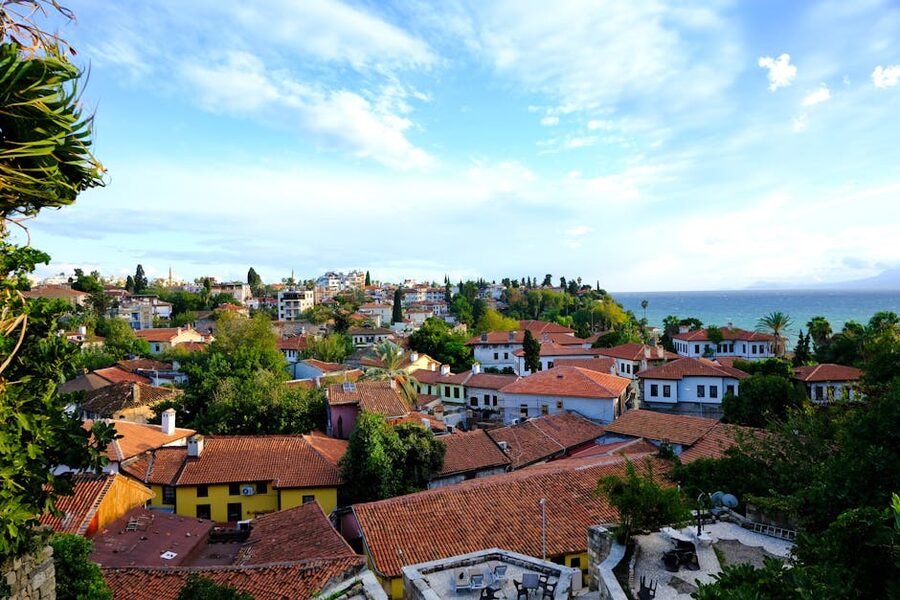
The harbour itself is a small Roman/Byzantine man-made basin, now full of charter sailing boats. A two-hour gulet day-cruise out of Kaleiçi marina to the Düden Waterfalls (a river that drops directly into the sea over a 40 m cliff) is one of the better-spent half-days; expect €25-40 per person on a shared boat, more for private.
Where to Stay in Antalya
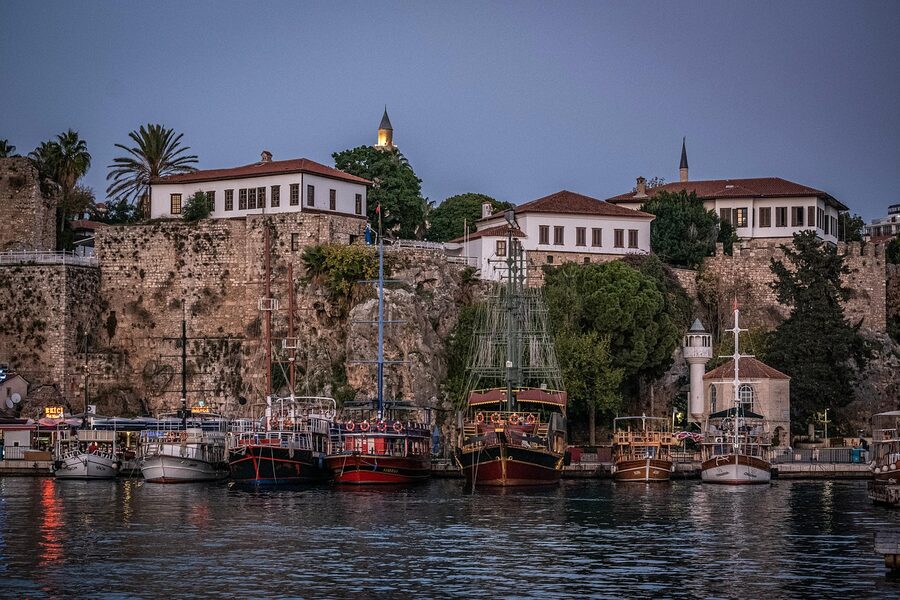
Two distinct options. Inside Kaleiçi, at a converted Ottoman house. Boutique scale, eight to twenty rooms, on cobbled lanes you can only reach on foot. Tuvana Hotel is the standard recommendation, a 17-room mansion on a quiet lane near Hadrian’s Gate, swimming pool in the courtyard, around €180-280/night. Hadrianus Boutique Hotel is the smaller alternative. Both prioritise the experience of staying inside the old walls over hotel facilities.
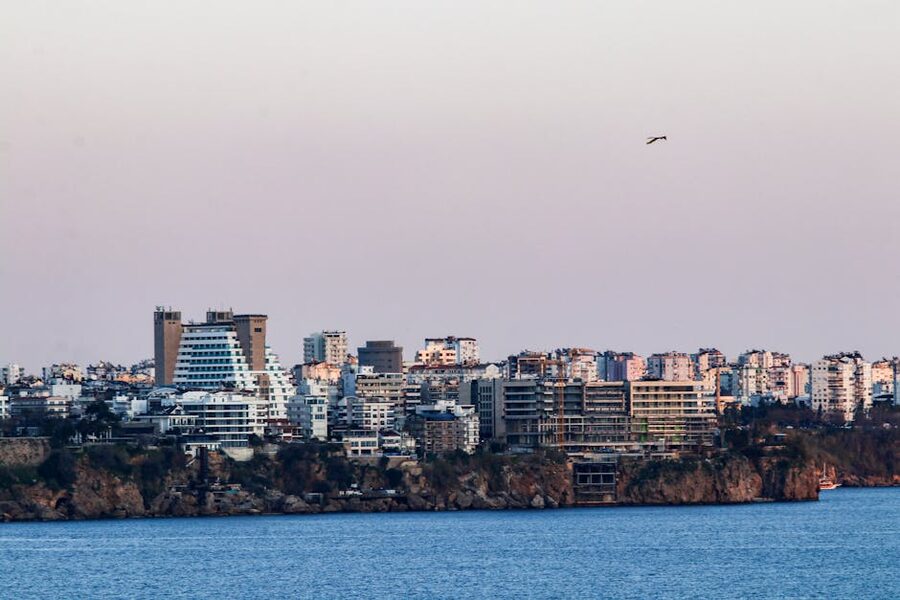
Or stay just outside the old town at Akra Hotel, a 286-room five-star on the cliff above Konyaaltı Beach with the city’s best swimming pool, full spa, and a 15-minute walk into Kaleiçi. €280-450/night for a sea-view room. Akra is the move if you want resort facilities. Tuvana or Hadrianus is the move if you want the old town to be the experience itself.
Skip the Belek and Lara resort strips for this trip, Belek is the Turkish answer to the Algarve (huge all-inclusive golf resorts, 20-30 minutes east of Antalya proper) and a different kind of holiday. We cover them in the Turquoise Coast guide.
The Day-by-Day Itinerary
An eleven-night classical circuit, written for arrival in Istanbul Tuesday morning and departure the following Saturday week.
Nights 1-3, Istanbul. See the Istanbul guide for the day-by-day. In short: Hagia Sophia and the Sultanahmet core day one, Topkapi Palace and Basilica Cistern day two, a Bosphorus boat day three with lunch in Bebek and a crossing to the Asian side at Kadıköy.
Day 4 morning, fly Istanbul to Kayseri (1h15) or Nevşehir (1h20). Kayseri has more flights and a better airport; Nevşehir is closer to Cappadocia. Either way, your hotel sends a transfer (€60-90) to bring you to Uçhisar or Ürgüp; the drive is 60-75 minutes from Kayseri, 35 minutes from Nevşehir. Check in to Museum Hotel, Argos or Yunak Evleri. Afternoon: walk Uçhisar Castle to settle in and get the panorama.
Night 4, Cappadocia. Early dinner, you’re up at 4:30 am.
Day 5, balloon morning. 5 am pickup, in the air by 6:30 am, back to the hotel by 8:30 for actual breakfast. Sleep an hour. Afternoon: Göreme Open-Air Museum (3 hours), late lunch in Göreme village, sunset at the Rose/Red Valley overlook.
Day 6, Cappadocia full day with driver. Derinkuyu underground city (1h), drive south-west to Ihlara Valley (90 min), walk the Belisırma section with riverside lunch (3h with the walk), drive back via Selime Monastery. Hotel by 6 pm. €150-200 day for car, driver, English-speaking guide.
Day 7, buffer day or balloon retry. If your day 5 balloon was cancelled, this is your second attempt. If not: a slower morning at the hotel pool, an afternoon valley hike (Love Valley or Pigeon Valley), late afternoon at Uçhisar Castle for the second sunset.
Day 8 morning, fly Cappadocia to Izmir (1h15). Either Kayseri-Izmir or Nevşehir-Izmir; book whichever has a 9-10 am departure. Hotel transfer or rental car at Izmir; drive 75 minutes south to Selçuk. Check in to your Selçuk hotel, late lunch in town, afternoon: Basilica of St. John and the Ephesus Archaeological Museum in Selçuk town. Dinner at one of the courtyard restaurants in Selçuk.
Day 9, Ephesus. 8 am at the gate. Walk the site north to south (downhill), Library of Celsus mid-morning, the Terrace Houses with the extra ticket, Great Theatre at the end. Out by noon, hot. Lunch in Şirince (the hill village 10 km away, the Tuscany of Turkey, decent winery there). Afternoon: House of the Virgin Mary if you haven’t done it. Dinner in Selçuk.
Day 10 morning, drive Selçuk to Pamukkale (3h, A30 motorway). Or take the Pamukkale Express bus from Izmir for €15. Check in to Doğa Thermal in Karahayit, lunch by the pool. Afternoon: top-of-hill entry to Hierapolis and Pamukkale terraces. Stay on the hill for sunset, the white terraces in the late light are the best photographs of the day.
Day 11 morning, drive Pamukkale to Antalya (4h, the route is over the Taurus mountains and is genuinely beautiful). Or fly from nearby Denizli airport to Antalya, €60-100, 50 minutes. Check in to Tuvana or Akra. Afternoon: walk Kaleiçi, drinks at a harbourside café, dinner in the old town.
Day 12, Antalya. Morning at the Antalya Archaeological Museum (2-3 hours). Lunch at a Kaleiçi courtyard restaurant. Afternoon: the harbour boat to Düden Waterfalls, or spend it at the hotel pool. Final dinner with a sunset view from Kaleiçi.
Day 13, fly Antalya to Istanbul, connect home. Antalya-Istanbul is 1h15. Build in three hours of connection time at IST. Done.
When to Go
The classical circuit works best in April through early June and September through October. Cappadocia is at altitude (1,000-1,200 m) and gets cold in winter, December through February sees regular snow, which is its own remarkable look but with a far higher balloon-cancellation rate. Ephesus and Pamukkale are punishingly hot in July and August (38-40°C is normal, with no shade on the Curetes Street). Antalya runs even hotter and more humid; the resort strips are designed for it but the city itself is uncomfortable in midsummer.
The best single window is mid-September to mid-October: warm but not punishing, the cruise crowds are off the Aegean, the balloon weather window in Cappadocia is at its best for the year, and the autumn light at Ephesus and Pamukkale is excellent. May is similar but with more rain risk. April and November are shoulder, cheaper but with weather variability, and the balloon-cancellation rate climbs.
The Eastern Anatolia Note
I want to flag what this trip is not. East of Cappadocia is the Anatolian heartland, Mardin, Şanlıurfa, Diyarbakır, Van, and beyond that the Kurdish region and the Syrian/Iraqi border zones. Göbekli Tepe, near Şanlıurfa, is the world’s oldest known monumental architecture, dating to roughly 9,500 BC: a 7,000-year head start on Stonehenge, a paradigm-shifting site that’s redrawing the textbook history of human civilisation. Mardin is a sandstone old city overlooking the Mesopotamian plain, with active Syriac Orthodox monasteries (Mor Gabriel, founded 397 AD, is the oldest continuously functioning Christian monastery in the world) in the Tur Abdin highlands south of the city.
This is the most rewarding part of Turkey for someone interested in deep history, religious culture and a part of the country tourists barely visit. It is also the most logistically challenging. The political situation around the Kurdish region remains tense; the security advisory for the Iraqi and Syrian border provinces (which includes Şanlıurfa) is non-trivial. Most luxury operators won’t include eastern Anatolia in a standard package.
The right way to do it is a separate trip with a specialist operator, Crooked Compass, Eastern Turkey Tours and Wild Frontiers all run small-group or private programmes through the region with local guides who track the security situation in real time. Plan it as your second Turkey trip after you’ve done the classical circuit. Budget seven to ten nights specifically for the east; don’t try to graft it onto the route in this article.
What to Take Home From This
Three things, if you’re picking up the phone to your travel agent now.
One: book Cappadocia first in the routing, with three nights, and overspend on the cave hotel. The balloon morning at a Museum Hotel terrace is the photograph of the trip; the cave room is the bed of the trip; everything else flows from those two decisions being right.
Two: don’t skip Antalya. Two nights, Tuvana inside Kaleiçi or Akra outside, the archaeological museum on day one and the old town on both days. It’s the one stop most planners cut and most travellers wish they’d kept.
Three: end in Istanbul. Don’t try to fly an international leg out of Antalya or Izmir. The connections are limited, the risk is real, and Istanbul is the right exit anyway. One extra day at a Bosphorus hotel for a final dinner before the flight home is the right shape for this trip.
For a different cultural overview of the broader region, our Lebanon guide covers the eastern Mediterranean from a Beirut anchor, the same Phoenician-Roman-Ottoman layered history seen from the Levantine side. And if a sail along the southern Turkish coast is part of the same trip or a separate one, our Turquoise Coast guide walks through gulet versus villa versus resort, with the routing for both.
The official Türkiye tourism site is the best free resource for current opening hours and ticket prices at the major sites, they update it consistently and most third-party guides are months behind.

.jpg)


