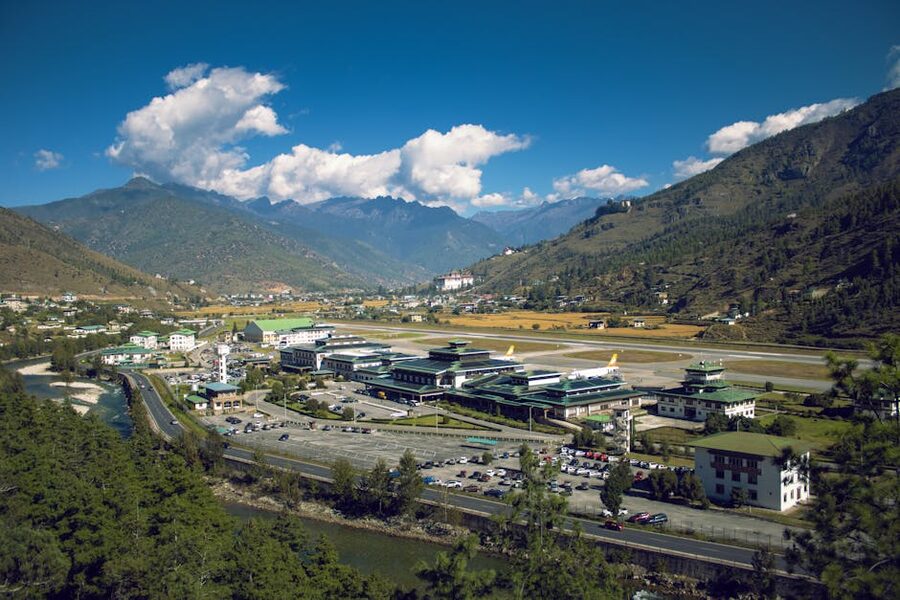
The flight into Paro is the trip’s first set piece. The Druk Air Airbus banks hard between two ridges of the Himalayan foothills, drops to within what feels like rooftop height of farmhouses and prayer flags, and lands on a single runway in a valley enclosed by mountains. Only a small number of pilots in commercial aviation are certified to make this approach. By the time you have cleared a bilingual customs hall and met the licensed guide who will be with you for the rest of the week, you are already inside something the country has carefully built.
That carefulness is the architecture of luxury Bhutan. The government has kept the country deliberately gated for fifty years through the licensed-operator requirement, the per-night Sustainable Development Fee, the ban on foreign mountain climbing above 6,000 metres, and the regulation of which valleys foreigners can stay in overnight. The result, for the visitor, is that Bhutan is one of the very few destinations on earth where the structural decisions made decades ago still shape the entire trip. This guide is for the traveller who is considering one of the four serious luxury circuits — Aman, Six Senses, COMO Uma, Bhutan Spirit Sanctuary — and wants to know how the country actually works once you arrive.
What follows is the practical guide to choosing properly. Which of the four luxury operators fits which kind of traveller. What the Sustainable Development Fee actually buys you. Which sites are worth your day and which are worth your photo. And the calls on the country that the brochures won’t make.
In This Article
- The Sustainable Development Fee, in plain English
- Why you can’t book this trip yourself
- The four luxury operators, and who should pick which
- Amankora, the pioneer, and still the standard
- Six Senses, the wellness-led alternative
- COMO Uma, the option for the traveller who’s tired of brands
- Bhutan Spirit Sanctuary, the wellness specialist
- What about the rest
- What the SDF and the price tag actually buys
- The Druk Air problem, and why you build a buffer day
- The headline sites, and what they are really like
- Tiger’s Nest, the photo everyone has, and still worth doing
- Punakha Dzong, and why it might be the photo to take home
- Gangtey Valley and the black-necked cranes
- Thimphu, the capital, in proportion
- The food, in plain terms
- When to go
- The 7-night and 10-night itineraries that actually work
- What Bhutan does not have, and other Himalayan trips that might fit you better
- Bhutan as part of a private jet circuit
- The bottom line
The Sustainable Development Fee, in plain English
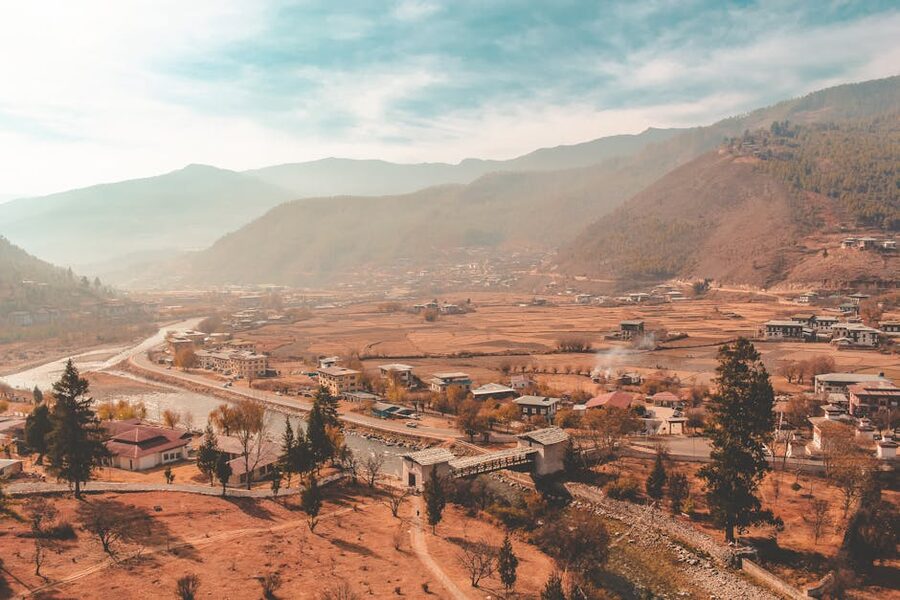
Every international visitor to Bhutan pays a daily fee called the Sustainable Development Fee, or SDF. As of 2026 the rate is US$100 per person per night, and that rate is locked in until 31 August 2027. (Indian, Bangladeshi and Maldivian nationals pay a much lower rate; children between 6 and 12 pay half; under-6s are exempt.) You pay it in advance as part of the visa application, and it is on top of everything else, your lodge rate, your guide, your driver, your meals, your flights.
The history is worth knowing because it tells you where the policy is going. Pre-pandemic the fee was US$65 per night and was bundled into a “minimum daily package” that included your guide and accommodation. In September 2022 the country reopened post-COVID with a clean break: the fee jumped to US$200 per night, was unbundled from accommodation, and was rebranded the SDF. The hospitality industry took a hit. In 2023 the government halved the rate back to US$100 as a stimulus and has extended that discount twice since. The next scheduled review is mid-2027 and small increases are signposted from January 2026 in some operators’ pricing sheets, so confirm the live number when you book.
Here’s what the SDF pays for. Roughly 30 to 40 percent goes to free healthcare for Bhutanese citizens, free public education through university, environmental conservation, and forest cover (Bhutan’s constitution mandates 60 percent forest cover in perpetuity, the country is currently above 70 percent and is one of the only carbon-negative nations on earth). The rest goes into general infrastructure. You can decide whether you find that an admirable use of your money or a cost of admission, but it is what the line item is for.
The practical implication is the one this article keeps coming back to. There is no cheap version of Bhutan. The SDF is a hard floor of US$700 per couple per week before you’ve paid for a single bed, meal, or kilometre of driving. If your trip budget can’t carry that as a base rate, the country will feel like an expensive disappointment rather than a special one, and there are better places to spend your money. Sri Lanka, Nepal, and Ladakh all sit in the same Himalayan-Buddhist register at a fraction of the cost.
Why you can’t book this trip yourself
By Bhutanese law, every international visitor (again, except Indian, Bangladeshi and Maldivian nationals) must enter the country through a licensed Bhutanese tour operator, or via a foreign operator partnered with one. There is no independent travel. There is no walking up to the visa counter at Paro Airport and improvising. Your visa is issued only after the operator has logged your itinerary, accommodation and SDF payment with the Department of Tourism.
This sounds restrictive and it is, but the practical effect on a luxury trip is mostly invisible. You’re going to want a guide and a driver in this country anyway, the road network is one main highway threading mountain passes, the signage is in Dzongkha script, and your dzong visits genuinely benefit from someone explaining what you’re looking at. The licensed-operator rule just means you book that guide and driver up front instead of trying to find one on arrival.
Three categories of operator handle the actual booking. The first is the international luxury hotel groups, Aman, Six Senses and COMO all run their own ground operations and will design the whole trip if you stay with them throughout. This is the simplest path and what most luxury readers will end up doing.
The second is foreign luxury tour designers who hold partnerships with Bhutanese operators. Mountain Kingdoms, Audley Travel, Original Travel, Black Tomato, and Cazenove + Loyd all package Bhutan with their usual high-end Asia services. They’re useful if you want to combine Bhutan with another country (Nepal, India, the Maldives) on a single booking, or if you already work with a travel designer you trust.
The third is the local Bhutanese DMCs (Destination Management Companies) that work direct with foreign clients. Bridge to Bhutan, Druk Asia, MyBhutan and Heavenly Bhutan are the names that come up repeatedly in the luxury travel community. They tend to be cheaper than going through a foreign packager, the on-the-ground experience is identical, and you’re paying a Bhutanese family-run business directly. The trade-off is the comms run on Bhutan time, payment is by international wire, and there’s no Western-office hand-holding when your flight gets delayed in Bangkok.
The four luxury operators, and who should pick which
This is where the choice actually gets interesting. Bhutan has more international luxury hotel inventory per visitor than almost anywhere else on earth, but only four brands are doing it at a level a serious traveller would notice. The thumbnail summary, which I’ll defend in the rest of this section: Aman if you want the most polished experience, Six Senses if you want the most thoughtful, COMO if you don’t want a brand at all, Bhutan Spirit Sanctuary if you’ve come for the wellness specifically. Skip the rest on a first trip.
Amankora, the pioneer, and still the standard
Amankora opened in Bhutan in 2004 as one of the first international luxury hotels in the country. The name combines “Aman” (Sanskrit for peace) with “kora” (Dzongkha for pilgrimage), and that phrase, peaceful pilgrimage, is the design idea. There are five lodges, in Paro, Thimphu, Punakha, Gangtey and Bumthang, and they share the same minimalist aesthetic, the same room layout (suites from 52 sqm, all with a Bhutanese bukhari wood stove), and the same communal-dining approach. You are meant to circuit them. A 7-night Aman trip moves you through three or four valleys; a full ten-night trip hits all five.
What you get with Aman is what you get with Aman everywhere. The polish is total. Hot drinks are ordered to the room rather than made by you. Laundry comes back the same day. The almond bath oil is genuinely good, you’ll buy a bottle. House wines and spirits are included in the rate, which matters in Bhutan because alcohol is otherwise expensive. The Punakha lodge is housed in a historic farmhouse owned by the royal family, and it is the most special of the five, the only one with a swimming pool, set in rice terraces, with the warmest weather of the circuit. The Paro lodge has the best onsen-style hot bath, perfect for the evening after the Tiger’s Nest hike. Total room count across all five is 72, so the place never feels crowded.
The price. Aman is the most expensive of the four by a clear margin. A 7-night journey for two, all-inclusive with the SDF and visa, lands around US$25,000 in low season and US$30,000-plus in March-May or September-November. A 12-night full circuit is closer to US$45,000 a couple. If money isn’t the constraint and you want the trip you’ll still be talking about ten years later, this is the booking.
Six Senses, the wellness-led alternative
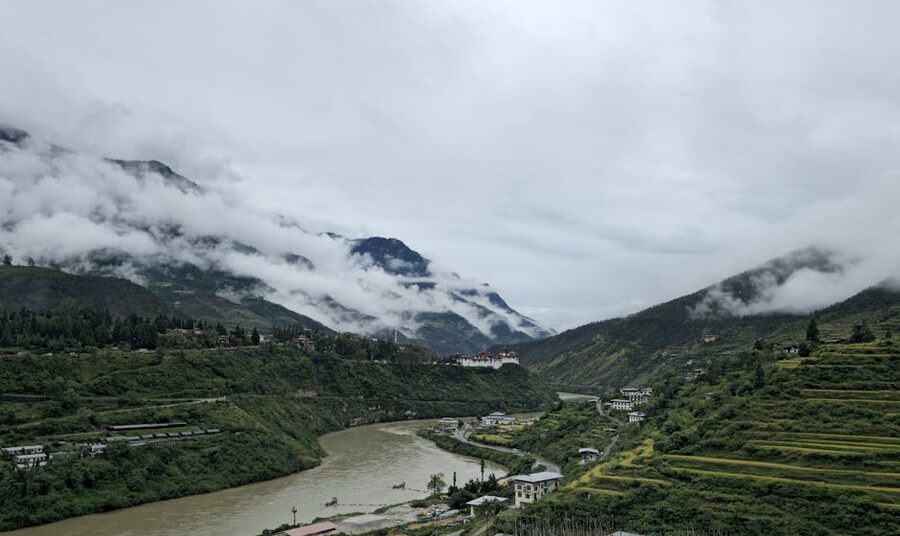
Six Senses Bhutan arrived in 2018 with five lodges in the same five valleys Aman uses (Paro, Thimphu, Punakha, Gangtey, Bumthang) and 82 suites in total. They essentially copied Aman’s geography. Where they diverge is in design philosophy. Each Six Senses lodge has its own architectural character built around a story specific to its valley: Paro’s spa overlooks historic ruins, Thimphu has high pine-forest views and traditional hot stone baths, Punakha is the only one with an outdoor pool and is sleep-themed, Gangtey has a meditation pyramid for the crane-watching season, Bumthang is forest-bathing focused.
This is the trip for the traveller who reads the menu before they order. The wellness program is genuine, daily meditation and yoga are bookable at every lodge, the spa treatments draw on local Bhutanese herbal traditions (Hingsangsa Zoni hot stone bathing is the signature), the food leans cleaner and more vegetable-forward than Aman’s. Suites start at 60 sqm and run larger; the design is contemporary-rustic rather than minimalist. House non-alcoholic drinks are included; alcohol is not.
The journey itineraries are called “Khamsa,” meaning royal walk, and run between 4 and 10 nights. A 7-night Khamsa for two, with full board, transport, guide, driver, SDF and visa, comes in around US$18,000-20,000. The pricing isn’t transparent online (you have to enquire), which is the one operational frustration. Choose Six Senses if you want a luxurious trip but also want each day to add up to something, the spa morning leads into the meditation session leads into the local-monk audience leads into the chilli-cheese cooking class, rather than just five days at a beautiful hotel.
COMO Uma, the option for the traveller who’s tired of brands
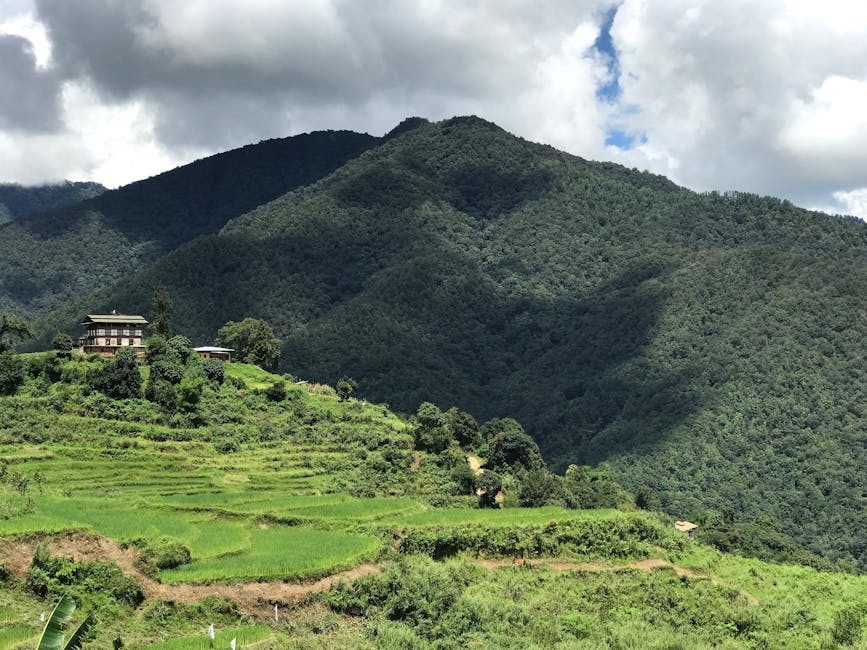
COMO Uma Paro opened the same year as Aman (2004) and was the country’s other founding luxury hotel. They have only two properties, Uma Paro (29 rooms, indoor pool, the largest property in the COMO portfolio worldwide) and Uma Punakha (11 rooms, much smaller, more intimate). For valleys beyond Paro and Punakha, COMO partners with Gangtey Lodge or arranges fully serviced overnight camps.
This is a different proposition from the other two. The rooms are smaller (Valley View starts at 32 sqm) and not as recently refurbished. The food is good, not Six Senses-tier. The COMO Shambhala wellness concept is real, daily yoga is included, the spa is small but the treatments are taken seriously. But where COMO wins is character. The trip feels less branded. You’re staying at a small hotel run by people who know their valley, not at a global flag flying a Bhutanese theme. Couples who’ve done Aman everywhere often pick COMO for Bhutan precisely because it feels different from the other Aman trip they had in Tokyo or Marrakech.
It’s also the most affordable of the four. Room rates start around US$400 per night at Uma Paro, US$500 at Uma Punakha. A 7-night COMO journey for two, all-in with SDF and visa, lands around US$13,000-15,000 in low season, meaningfully less than Six Senses, almost half of Aman. If your budget is tight at the entry-level luxury floor, COMO is how you make Bhutan work.
Bhutan Spirit Sanctuary, the wellness specialist
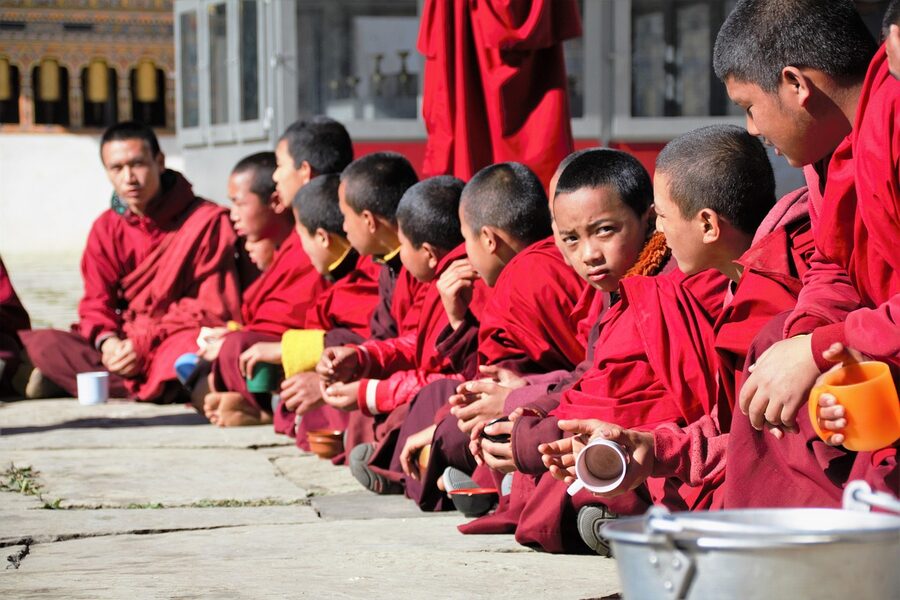
The fourth name to know is the country’s first traditional spa-inclusive resort, Bhutan Spirit Sanctuary, a single property 15 minutes from Paro Airport. This is the booking for travellers who are coming to Bhutan specifically for the wellness side and don’t need or want the lodge-circuit format. Room rates start around US$550 per night and include all wellness treatments, daily yoga or meditation, conversations with traditional Bhutanese medicine doctors, all meals, the infinity pool, the steam room, sauna, and the hot stone bath. It’s all-in in a way the other three are not.
The trade-off is that you’re not circuiting the country. Most guests pair four or five nights at Bhutan Spirit Sanctuary with a few nights elsewhere, a Punakha excursion, a Tiger’s Nest day from Paro, sometimes a night at one of the Aman or Six Senses lodges to taste it. For someone whose actual interest is the traditional medicine and the ritual side rather than the dzongs and the photography, this is a better fit than booking Aman and then mostly using its spa.
What about the rest
You’ll see other names in any Bhutan accommodation list, Le Méridien Paro and Thimphu, the Pemako, Gangtey Lodge (which is genuinely good and which COMO’s circuit uses), Zhiwa Ling, Naksel Boutique. None are at the level of the four above on a first trip. If you’re returning to Bhutan, or building an itinerary that hits a valley the four don’t cover well (eastern Bhutan beyond Bumthang, for example), some of these come into play. On a first trip, pick from the four and don’t second-guess it.
What the SDF and the price tag actually buys
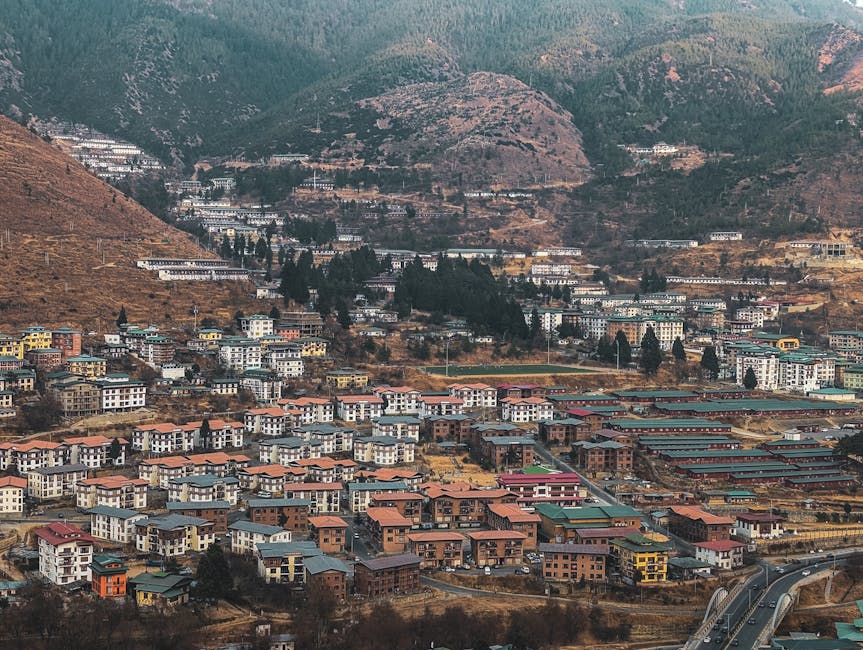
It’s worth pausing on what the spend gets you, because it’s a fair question and the answer isn’t entirely intuitive. The naive comparison is Bhutan against neighbouring Himalayan destinations on the dollar-per-night metric, where Bhutan loses badly. The fair comparison is Bhutan against itself with and without the policy, which is the comparison the policy is designed to provoke.
What you get, in practice. You get a country with no obvious tourist saturation, Thimphu is a small, walkable capital of around 100,000 people without a single traffic light (the one set installed in the 1990s was dismantled because nobody liked it). You get monasteries and dzongs that aren’t full of selfie-stick crowds because the SDF mathematically caps how many visitors are in the country at once. You get a population that is not visibly tired of you. You get over 70 percent forest cover and the only place in the Himalayas where you can see black-necked cranes wintering in their natural valley without travelling to Tibet or Sichuan. You get free education, healthcare and infrastructure for the people who actually live here, which is both the source of the country’s reasonable mood and the thing your money is paying for.
You also get a few specific irritants. Internet is patchy, particularly in the more remote lodges. Wine and spirits outside Aman’s bundled service are expensive. There is no nightlife in any meaningful sense, even in Thimphu. The roads are mountain roads, which means motion sickness is real (take medication preventively for the Dochula and Pele passes). And the country’s flight schedule is genuinely fragile, see below.
The Druk Air problem, and why you build a buffer day
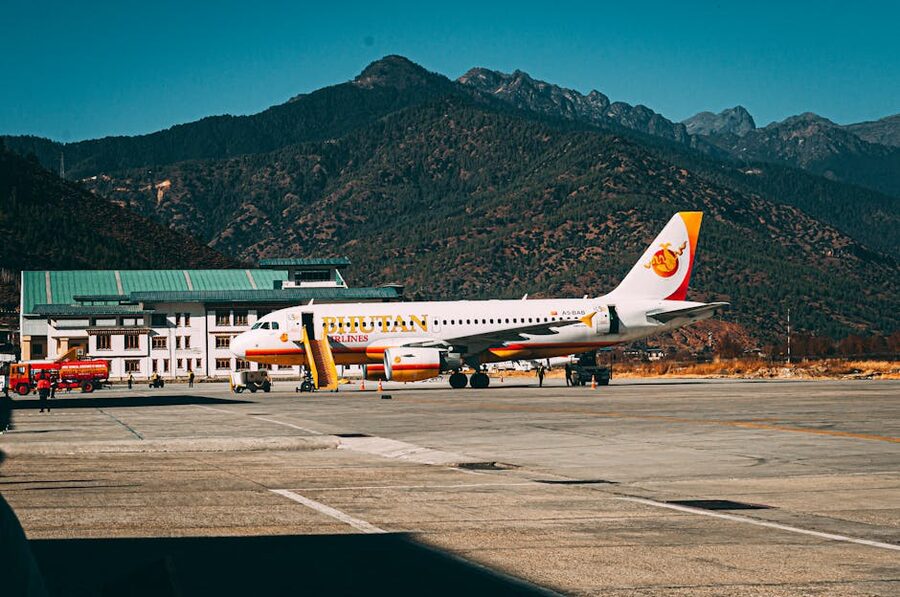
Bhutan has two carriers. Druk Air (Royal Bhutan Airlines) and Bhutan Airlines. They are the only airlines licensed to fly into Paro, and they run between Paro and a handful of regional hubs: Bangkok, Singapore, Delhi, Kolkata, Kathmandu, Dhaka. There are no direct flights from Europe, North America, or anywhere else.
The reason Paro flights matter to your itinerary planning is the runway. Paro is one of the most challenging commercial airports in the world to land at, the runway is in a narrow valley between 5,000-metre peaks, the approach involves banking turns through mountain passes at low altitude, and only a few dozen pilots worldwide are certified to land there. The flights are visual approach only. If the cloud ceiling drops, the flight diverts or cancels. In monsoon season (June through August) cancellations are common; even in shoulder seasons, weather delays of half a day or more happen.
The implication for your itinerary: build a buffer day at the start of the trip. If you’re flying Bangkok-Paro and your Bhutan trip is scheduled day-by-day from arrival, a delayed flight knocks out the first day of the circuit and you can’t get it back. Spend a night in Bangkok at the start, or arrive a day early and take a slow morning at your first lodge. The buffer day costs you a hotel night and saves you the trip. Fly on a flexible ticket if you can.
The other Druk Air thing worth knowing: book early for high season. Both airlines run small fleets, and during the festival weeks of October and the cherry blossom of late March, the Bangkok and Singapore routes sell out. Three months ahead is fine; six months for Tsechu festival timing.
The headline sites, and what they are really like
This section is where most Bhutan guides dissolve into “10 things you must see,” which is the wrong frame. The country’s headline sites are concentrated in a small area (Paro, Thimphu, Punakha and Gangtey) and a 7-night trip naturally covers the four worth seeing. The questions are which of them deserve the photo, what the realistic experience is on the ground, and where the marketing oversells.
Tiger’s Nest, the photo everyone has, and still worth doing
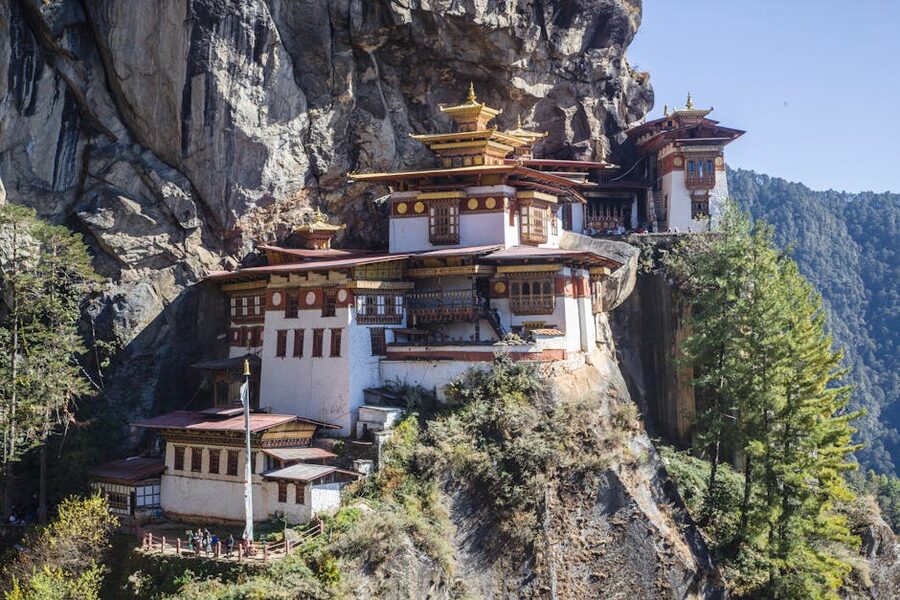
Paro Taktsang, the Tiger’s Nest Monastery, is the photo of Bhutan that everyone has seen. The monastery clings to a near-vertical cliff at 3,120 metres, looking impossible. The legend (told to you by every guide) is that Guru Rinpoche, the Indian master credited with bringing Buddhism to Bhutan in the 8th century, flew here on the back of a tigress to meditate in a cave for three months. The current monastery was built in 1693 over the cave; it burned down in a 1998 fire and was carefully restored, reopening in 2005. What you visit today is a faithful reconstruction.
The hike is everything everyone says it is and slightly easier than the photos suggest. The trail starts from a parking area at about 2,500 metres and climbs to a midpoint cafeteria in around 90 minutes. From the cafeteria the trail steepens for another 45 minutes to a viewing platform across a small canyon from the monastery (this is where most of the famous photos are taken). To enter the monastery itself you cross a narrow bridge over a waterfall and climb several hundred stone steps. Total round-trip time, taken slowly with a 30-40 minute interior visit, is 5-6 hours.
Practical notes from people who’ve done it. Start early, the monastery typically closes to entry at 11am. You’ll need to leave bags, cameras and phones outside before going in (no photography is allowed inside). Wear actual hiking shoes, not sneakers. Bring water and a snack; the cafeteria has both but the prices are tourist prices. Trekking poles help. Horses can take you to the midpoint cafeteria but not beyond, and the descent is on foot only. If you’re not used to altitude, time the hike for day 4 or 5 of the trip after you’ve acclimatised, the monastery is at 3,120 metres and the air feels thinner than the elevation alone suggests.
One thing worth knowing about what the visit actually feels like. The hike is the experience. The interior of the monastery is small, the lhakhangs (chapels) are intimate but not architecturally remarkable compared to dzongs you’ll visit elsewhere in the trip, and you’ll be there for under an hour. What stays with you is the trail, the prayer flags strung between trees, the moment the monastery first appears from the cafeteria viewpoint, and the descent through pine forest in the afternoon light. Don’t expect the interior to do the heavy lifting; the journey is the point.
Punakha Dzong, and why it might be the photo to take home
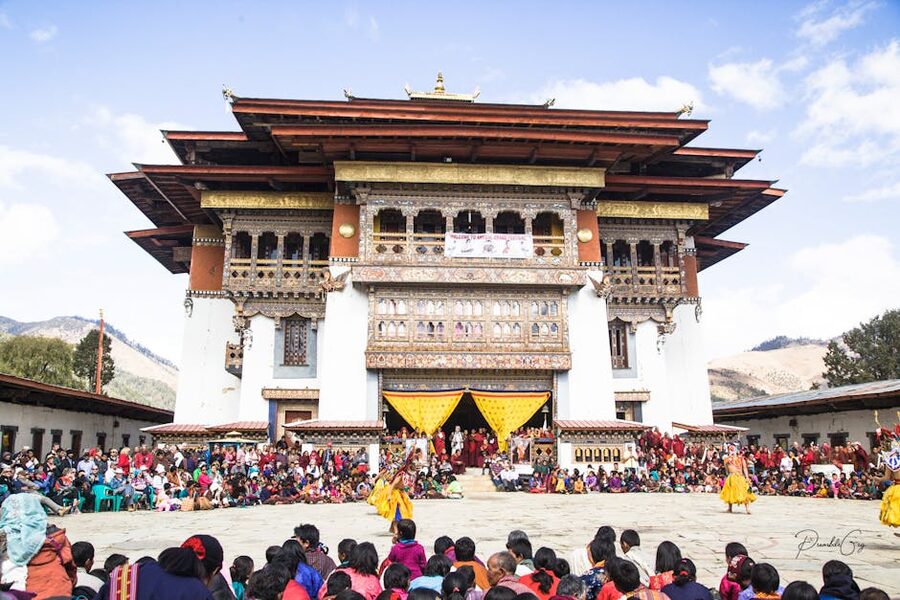
Here’s the contrarian take I’ll defend. If you only have one Bhutanese photo to take home, take it at Punakha Dzong, not Tiger’s Nest. The Tiger’s Nest photo is famous and has been published a thousand times. Punakha Dzong is the building that rewards being there.
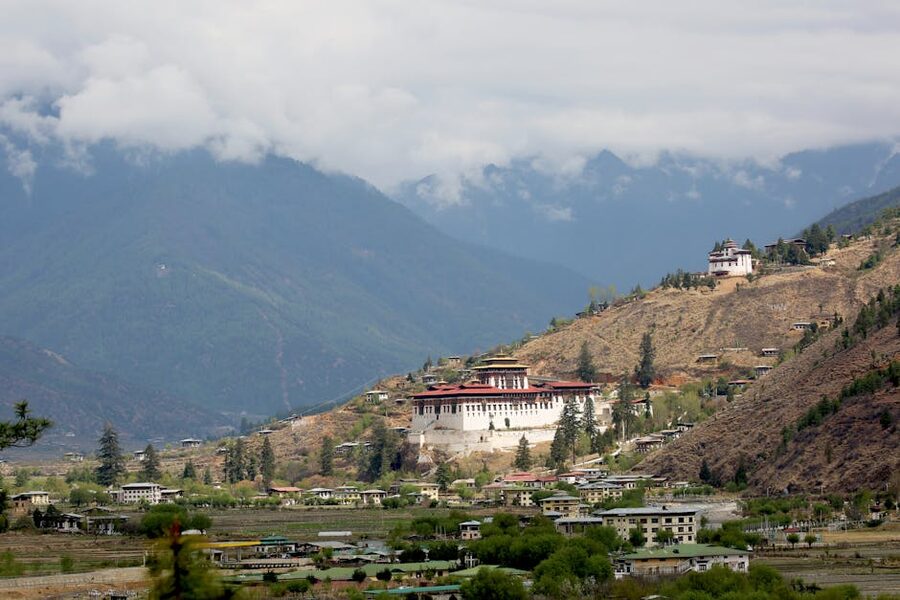
The dzong sits at the confluence of the Pho Chhu and Mo Chhu rivers, the father river and mother river, at the bottom of a wide valley about three hours’ drive east of Thimphu. It was built in 1637 by Zhabdrung Ngawang Namgyal, the same figure who unified Bhutan, and it served as the country’s capital and seat of government until the 1950s. It is still the winter residence of Bhutan’s chief abbot. The architecture is Bhutanese dzong at its grandest scale, six storeys of whitewashed walls, intricately carved wooden upper galleries, a courtyard interior with three temples, and a 1,000-Buddha mural that is genuinely worth the slow walk-around.
The reason it makes a better photo than Tiger’s Nest is the setting. You approach across a covered wooden bridge, the river splits around the dzong like an island, and the surrounding valley is open and warm (Punakha sits at around 1,200 metres, much lower than Thimphu or Paro, with subtropical fruit trees and rice terraces). In late spring the jacaranda trees flower purple along the riverbank. There is no climb, no altitude, no pre-dawn alarm. You walk across the bridge in the morning light, and the photograph composes itself.
If you can time your trip to coincide with the Punakha Tshechu festival in February or March, do it, the dzong courtyard fills with cham mask dancers and a thousand-strong audience of villagers in their best gho and kira. Otherwise, an ordinary morning is enough.
Gangtey Valley and the black-necked cranes
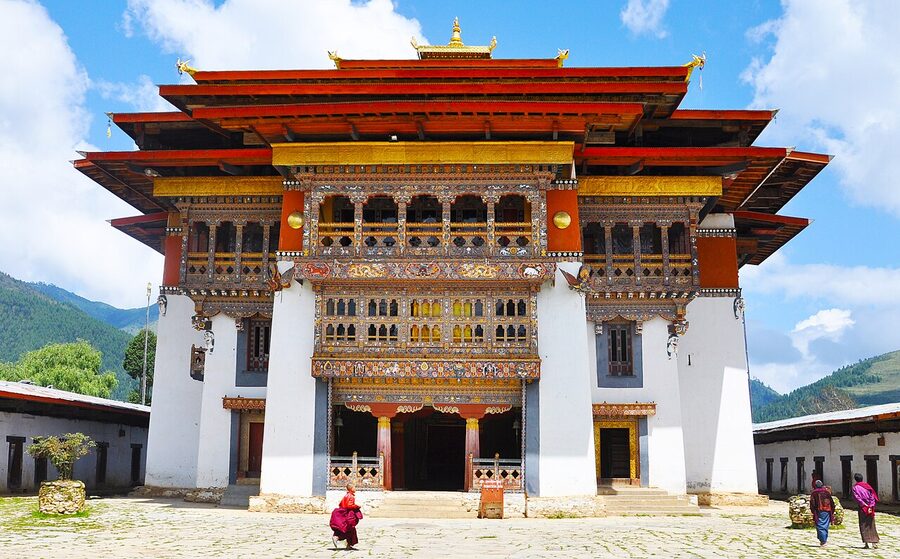
Gangtey, also called the Phobjikha valley, sits at around 3,000 metres in central Bhutan, about four hours’ drive east of Punakha. It is the wide, treeless, U-shaped glacial valley you’ve seen in coffee-table books, the kind of landscape that makes you stop the car. Gangtey Gompa, a 17th-century monastery, sits on a low ridge above the valley floor.
The reason to go is the black-necked cranes. Around 500 of them, about a third of the global wild population, winter in Phobjikha from late October to mid-February, having flown over the Himalayas from the Tibetan plateau. The valley is protected, electricity was buried underground specifically to prevent collisions with the cranes, and there’s a small Royal Society for Protection of Nature centre on the valley floor where you can watch them with a spotting scope and learn the ritual significance (the cranes circle Gangtey Gompa three times when they arrive each autumn, which the locals take as a blessing).
If you’re not visiting during the crane season, Gangtey is still worth a night for the landscape and the hiking, the Gangtey Nature Trail from the monastery to the village is a gentle two-hour walk with broad valley views. Outside the wintering window, the valley is quieter and easier to photograph but the spectacle is missing.
Thimphu, the capital, in proportion
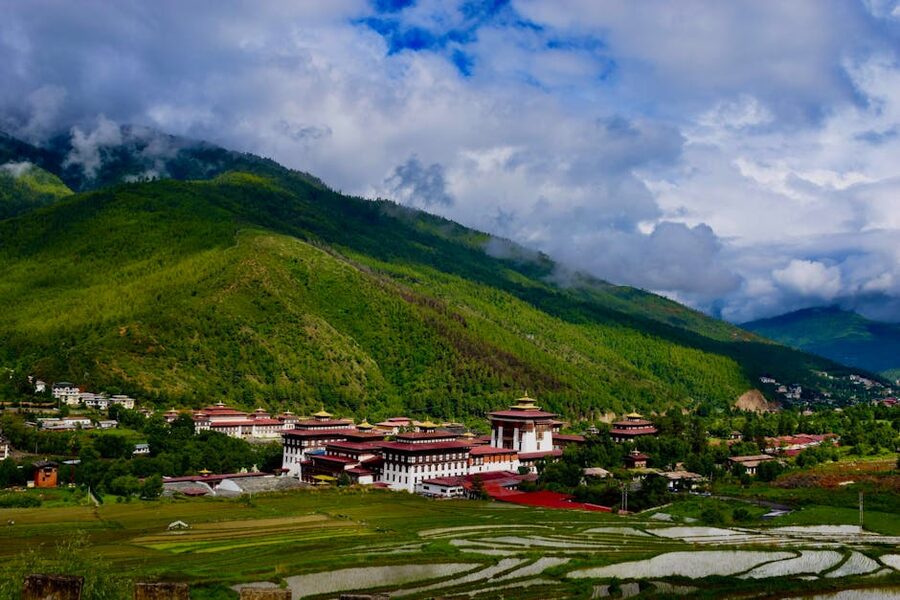
Thimphu is the only national capital in the world without traffic lights and one of the smallest by population (about 100,000). It is not a city you come to Bhutan to see, but it’s a city you’ll spend half a day in on either end of the trip, and a few stops are worth your time.
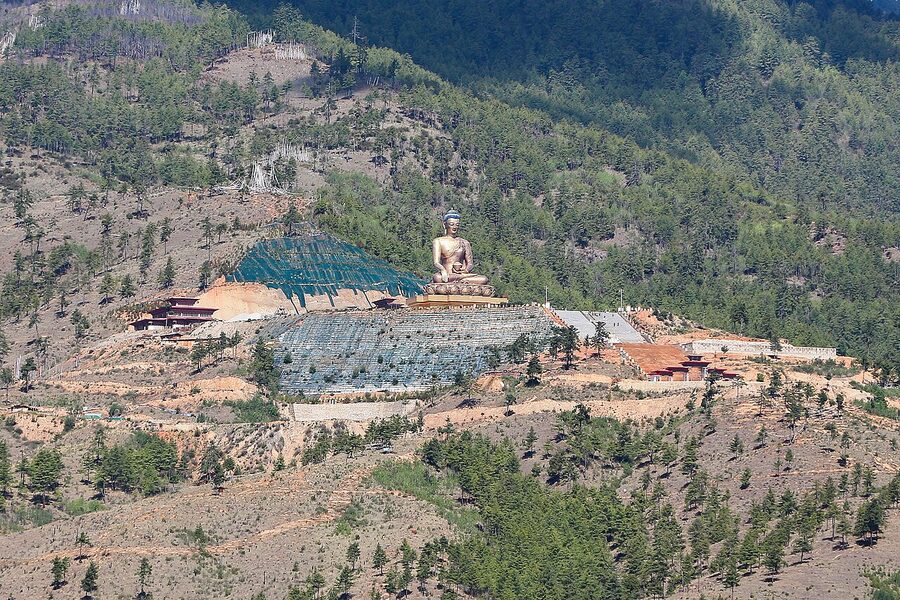
Tashichho Dzong is the principal one, it houses both the throne room of the king and the offices of the central government, plus the summer residence of the chief abbot. It’s open to visitors after government working hours (5pm) and all day on weekends. The 51-metre Buddha Dordenma statue on a hill above the city is the world’s largest seated Buddha and is worth the photo from the base, even if the up-close experience is more impressive in scale than in soul. The National Memorial Chorten is a pilgrimage site for older Bhutanese, circle it clockwise with the locals, spin the prayer wheels, and don’t try to get a religious explanation that goes deeper than your guide’s. The Folk Heritage Museum is a small but well-presented three-storey traditional house if you have an extra hour.
Skip the Buddha statue if pressed for time; do the dzong and the chorten if you have an evening. Thimphu’s restaurant scene is improving slowly; ask your guide for the current best Bhutanese-cuisine spot rather than relying on a list that’s already out of date.
The food, in plain terms
I want to manage expectations on Bhutanese cuisine because the brochures don’t. The national dish is ema datshi, green chillies stewed in cheese, and it tells you most of what you need to know about the food. Chillies aren’t a flavouring in this cuisine, they’re a vegetable. A typical local meal is rice, ema datshi, a meat curry (usually pork or yak, sometimes dried), a vegetable side, and pickled chilli on the side. It is genuinely spicy in a way that takes acclimatisation if you’re not used to chilli-heavy food.
The lodges adapt heavily for international guests. At Aman and Six Senses, the menu is a mix of international dishes (steak frites, smoked trout, schnitzel) and a rotating Bhutanese set menu where the chillies are dialled back. The Bhutanese set menu is good and worth ordering at least once at every lodge, momos (the local stuffed dumplings), red-rice porridge, jasha maru chicken stew. But if you’re imagining yourself discovering the soul of the country through its cuisine in the way that you might in Mexico City or Bangkok, recalibrate. The food is part of the trip, not the reason for it.
The one thing worth seeking out: real ema datshi at the strength a Bhutanese family eats it. Ask your guide on day three or four to find you a roadside lunch spot rather than a hotel meal. The dish at correct strength will make your eyes water and your sinuses clear; this is the genuine article and it’s the closest you’ll get to eating like a local on a luxury circuit.
When to go
Two windows are clearly best. Late September through November is the strongest, clear post-monsoon air, mountain views every day, the Thimphu Tshechu festival in late September or early October, comfortable daytime temperatures (15-22°C in the central valleys), cool nights. This is also the high season pricing-wise; book lodges at least four months ahead.
March through early May is the secondary window, rhododendrons in bloom in the higher valleys, the Paro Tshechu festival in March or April, jacarandas in Punakha, occasional showers but mostly clear. Slightly less reliable for distant mountain views than autumn, slightly fewer crowds.
The other windows. June through early September is monsoon, heavy rain in the south, intermittent in the centre, frequent flight delays into Paro, leech country if you’re hiking. Avoid unless you have a specific reason. Late November through February is winter, the highest passes (Dochula, Pele) close intermittently with snow, Bumthang and Gangtey are cold (below freezing at night), but Paro and Punakha are crisp and clear and you’ll have the country largely to yourself. The cranes are in Phobjikha. Lodge rates are at their lowest. If the cold doesn’t bother you, late January is a quietly excellent time to visit.
The 7-night and 10-night itineraries that actually work
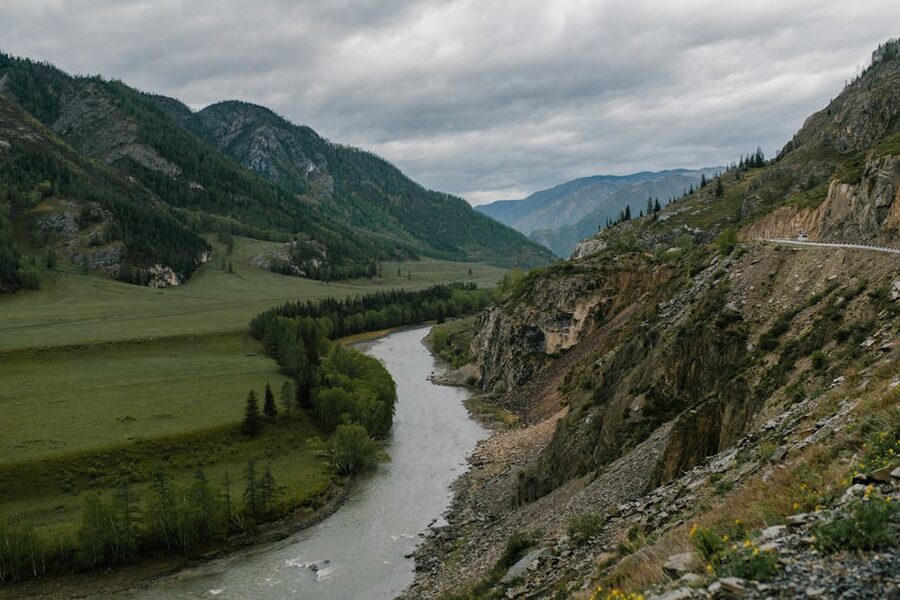
Most luxury circuits run a clockwise loop from Paro through Thimphu, Punakha and (sometimes) Gangtey, then back to Paro for the Tiger’s Nest hike near the end. The standard 7-night version:
Day 1: Arrive Paro. Most flights from Bangkok and Singapore land late morning. Drive to Thimphu (one hour) and check in to the Thimphu lodge. Easy afternoon, short walks, settle in, adjust to altitude (Thimphu is at 2,300 metres).
Day 2: Thimphu sightseeing. Tashichho Dzong, Buddha Dordenma, the National Memorial Chorten, the weekend market if your trip overlaps. Optional: Cheri Monastery, a 45-minute uphill walk that doubles as your altitude warm-up for Tiger’s Nest.
Day 3: Drive Thimphu to Punakha (3 hours) over the Dochula Pass at 3,100 metres, stop for the chortens at the top and, on a clear day, the eastern Himalaya panorama. Afternoon at Punakha Dzong. Check in to the Punakha lodge.
Day 4: Punakha day. Suspension bridge walk, Chimi Lhakhang temple visit (the fertility temple, your guide will explain the phallic motifs), optional rafting on the Mo Chhu, archery if there’s a local match.
Day 5: Drive back to Paro via Thimphu (4-5 hours). Light afternoon, early dinner, early sleep. Tiger’s Nest is tomorrow.
Day 6: Tiger’s Nest hike at first light. Allow 5-6 hours. Long afternoon at the lodge spa for the recovery (Aman Paro’s hot bath is the best in the country for this).
Day 7: Paro day, Rinpung Dzong, the National Museum (housed in the watchtower above the dzong, and the museum is genuinely good), riverside walk. Quiet evening.
Day 8: Morning flight out.
The 10-night version adds Gangtey and ideally Bumthang. Add two nights at the Gangtey lodge between Punakha and the return to Paro (drive Punakha to Gangtey is 4 hours over the Pele Pass). For the full circuit including Bumthang, add another two nights in central Bhutan and either drive out (a 9-hour day back to Paro that nobody enjoys) or fly Bumthang-Paro on the limited domestic service.
For a short trip, and I’d argue 4 nights is the absolute minimum that justifies the price floor, keep it simple: two nights Paro, one night Thimphu, one night back in Paro for the Tiger’s Nest hike. You’ll skip Punakha and the dzong this article calls the country’s best photo, but you’ll save 8 hours of driving. Don’t try a 4-night trip that includes Punakha; the drive back to Paro will eat your last morning.
What Bhutan does not have, and other Himalayan trips that might fit you better
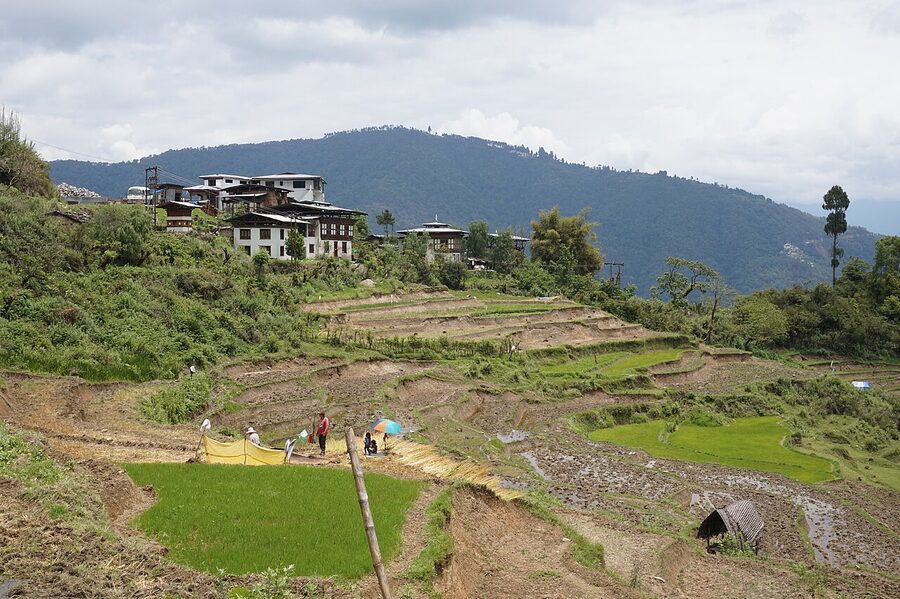
Worth being clear about what Bhutan does not offer, because the marketing language (“the last Shangri-La”) implies it offers everything and it doesn’t. There are no foreign-accessible high peaks, climbing is banned above 6,000 metres for spiritual reasons (the peaks are sacred), and Gangkhar Puensum, the country’s tallest mountain at 7,570 metres, is the highest unclimbed peak in the world. There’s no real archaeological tourism in the European or Egyptian sense; Bhutanese material history is largely religious and architectural rather than excavated. There’s no Buddhist art on the scale of the Tibetan monasteries of Lhasa or the Mogao caves of Dunhuang. There’s no wildlife on the scale of African safari, the Royal Manas tiger reserve in the south is real but you go to Bhutan for monasteries, not for big-cat sightings.
If your interest is Himalayan trekking specifically, Nepal is the better trip. If it’s Tibetan Buddhist art and monastery culture at the scale of pilgrimage, Ladakh or Tibet (where allowed) deliver more. If it’s a luxury Asian wellness trip without the SDF cost floor, Sri Lanka or Bali do that more efficiently. Bhutan is a destination, not a substitute for any of those.
And one more thing the brief asked me to make explicit. Don’t try to combine Bhutan with a serious Nepal or India trip in one go. People do this, Kathmandu plus Bhutan plus Delhi in 14 nights, and the schedules don’t breathe. The Druk Air weather risk eats your transition days, the cultural register is different enough that you’ll feel rushed in both countries, and you’ll arrive in Bhutan tired from a tougher itinerary in Nepal. Bhutan deserves to be the trip, not a stop on it. Pair it instead with a long stopover in Bangkok or Singapore (the natural connection points) for a clean three-day urban bookend.
Bhutan as part of a private jet circuit
If you’re considering Bhutan as part of a multi-country private jet itinerary, it’s a natural inclusion, Paro is on most around-the-world luxury jet routings between South Asia and South-East Asia, and the small-jet runway certification means the trip doesn’t need a separate commercial connection. We’ve written about the wider format of these trips in our piece on around-the-world private jet tours; for Bhutan specifically, you’ll still need the licensed operator and SDF, but ground operations can be arranged at the same level as Aman and Six Senses provide. Two nights minimum on the ground; three is better.
The bottom line
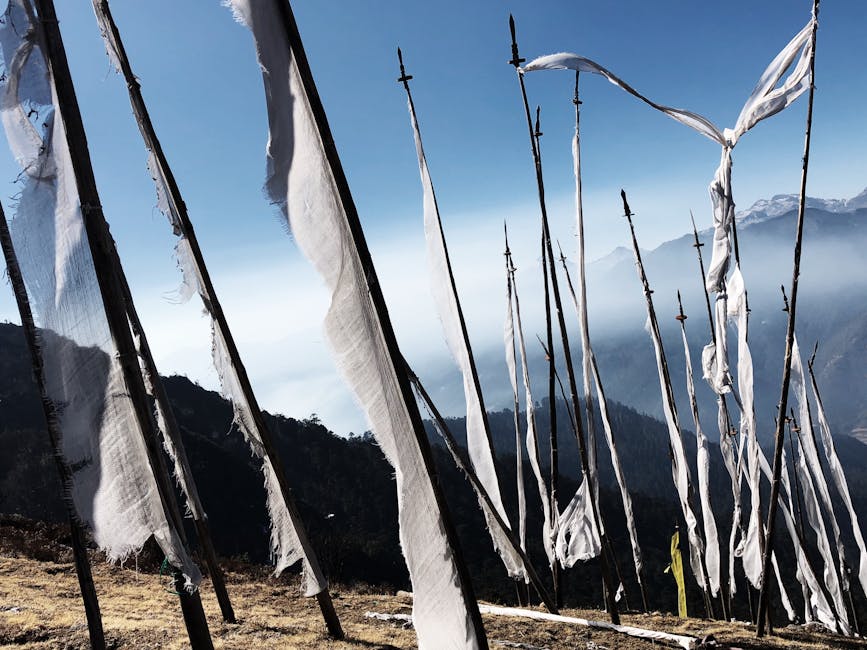
Bhutan is one of the rare luxury destinations where the marketing language and the on-the-ground experience genuinely line up. The hotels are at international standard, the country is as well-preserved and as low-traffic as the policy intends, the people are reasonable and patient with foreign visitors in a way that will register if you’ve travelled the over-touristed parts of South-East Asia recently. The price floor is real, the licensing is real, and the SDF is non-negotiable, but what you get for the money is a trip that doesn’t exist anywhere else.
If you’re spending US$15,000 to US$30,000 a couple for a week, this is the right country for that money. Choose Aman if you want it perfect, Six Senses if you want it thoughtful, COMO if you want it understated, Bhutan Spirit Sanctuary if you’ve come for the wellness specifically. Build a buffer day at the start. Take the photo at Punakha, not Tiger’s Nest. Don’t try to combine it with Nepal. And if you’re considering other Himalayan options, look at our guide to the wider region from our work on under-rated luxury destinations for the broader context, or browse the rest of our destination guides for European and African alternatives.
If your budget for a 7-night couple’s trip is genuinely under US$15,000 this year, look elsewhere. Bhutan rewards travellers who’ve decided the price is worth paying. It does not reward travellers who’ve come hoping the price isn’t quite what it looks like.