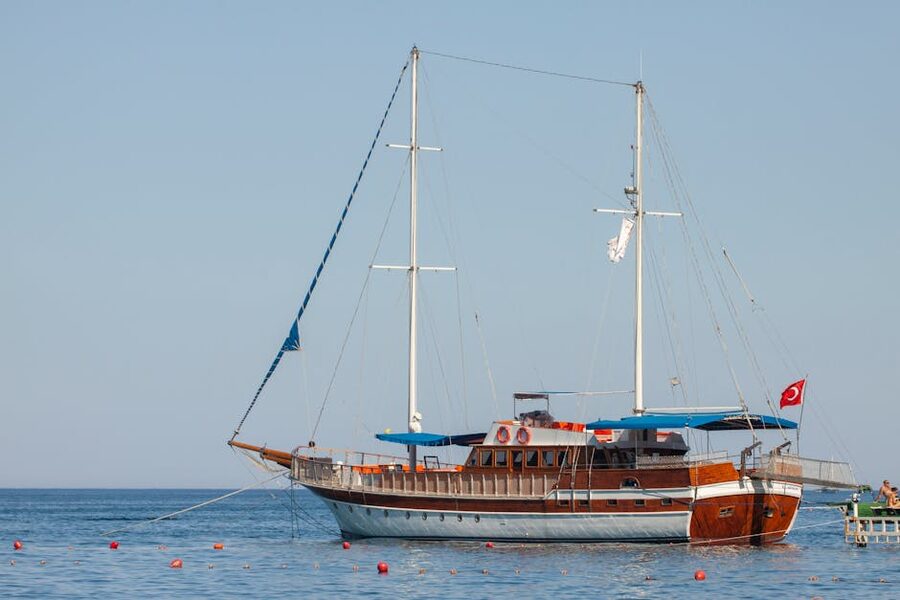
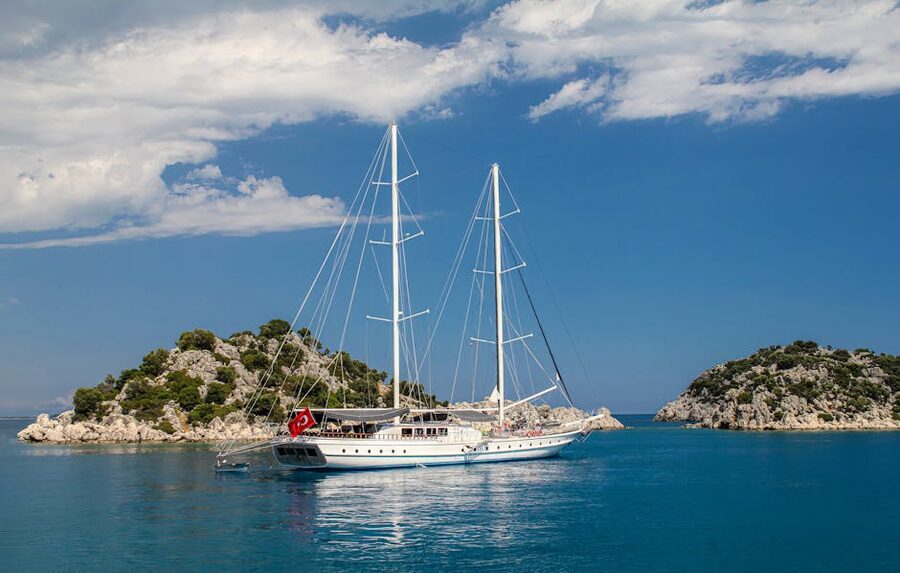
A traditional Turkish gulet is a wooden two-masted boat built in Bodrum or Marmaris by hand, often from a keel laid down a century ago and rebuilt in the same shipyard the family has owned for three generations. Eighteen to forty metres on deck, six to twelve cabins below, a captain who has worked the same coastline since he was a teenager, a cook who buys the day’s fish off the dock at Datça. A week on a gulet from Bodrum to Marmaris, or Göcek to Kekova, is a sailing trip, a swimming trip, a Lycian-archaeology trip, and a long slow lunch trip stitched together by an unhurried wooden hull. It is, more than anything else this coast offers, the trip the Turquoise Coast was built for.
The structural call for any luxury traveller planning a week here is gulet first, hotel second, resort third. The villas in Kalkan are a defensible alternative for families who want a base. Maxx Royal Bodrum and Mandarin Oriental Bodrum are real options for travellers who do not want to sail. But none of it touches the boat. The article that follows starts with the gulet (operators, routings, what to look for) and works outward to the land alternatives, then to the smaller coastal towns most luxury readers under-visit (Kalkan, Kaş, Çıralı, Göcek), then to the Lycian archaeological layer (Myra, Patara, the underwater ruins at Kekova, the Roman theatre at Aspendos).
This is the guide to all of it. The boat first. Then the land bases, in order of who they’re for. Then the smaller towns where the in-the-know money goes. Then the ruins, which are a much bigger part of the story than most people expect.
In This Article
- The gulet charter, in detail
- The four start ports, and which one to pick
- Standard 7-night routings
- How to actually book one
- The land base alternative: Bodrum
- Mandarin Oriental Bodrum
- Maxx Royal Bodrum
- Six Senses Kaplankaya
- The Marmara Bodrum
- D-Maris Bay
- The Antalya region resorts
- Maxx Royal Belek Golf Resort
- Akra Antalya
- The smaller towns worth knowing
- Kalkan
- Kaş
- Olympos and Çıralı
- Göcek
- The historical layer
- Myra (modern Demre)
- Patara
- Kekova
- Aspendos
- When to go
- The Mediterranean comparison
- Standard itineraries
- The 7-night gulet week
- The 10-night land combination
- The 14-night classic Turkey trip
- Practical notes
- The short version
The gulet charter, in detail
A gulet is a wooden motor-sailing yacht built in the shipyards of Bodrum and Marmaris. The original boats were sponge-diving vessels. The modern luxury versions keep the lines (sweeping bow, twin masts, broad teak decks) and add air conditioning, en-suite cabins, a 360-degree sun deck, and the kind of crew-to-guest ratio you’d expect at a small boutique hotel. Twenty to forty metres long, four to eight cabins, six to sixteen guests. The beam (the width of the boat) is what makes them livable: most modern fibreglass yachts feel pinched after three days. A gulet does not.
You can charter one of these on three rough tiers, with current market pricing as I track it:
- Up to €20,000 a week. Older boats, smaller cabins, simpler service, food good rather than great. Fine for a group that’s there for the swimming and the islands and doesn’t need much else.
- €20,000 to €50,000 a week. Where most quality bookings sit. Recently refitted boats, full air-conditioning, proper en-suites, water toys (paddleboards, sea bobs, sometimes a jet ski), and a chef who can do Turkish meze and grilled fish at a level that justifies the day.
- €50,000 to €100,000+ a week. The ultra-luxury tier. Bigger, newer, often with a hot tub on deck, a tender that doubles as a serious speedboat, and a five-star service standard from a six-person crew. These are the boats Turkish industrialists and the occasional Hollywood family book.
For most readers planning a first gulet week with friends or family, aim at the upper half of tier two. €30,000 to €45,000 for the boat, divided across six to eight people, lands you in the territory of an excellent five-star hotel per person per night with food, drink, and the boat itself thrown in. It is one of the better-priced luxury experiences left in the Mediterranean.
The four start ports, and which one to pick
Four towns serve as gulet bases. Each has a flavour, and the choice matters more than people realise because it dictates which stretch of coast you’ll see.
Bodrum is the largest fleet and the deepest pool of luxury boats. Fly into Milas-Bodrum (BJV); the airport is a 45-minute drive to the marina. Bodrum suits the classic Bodrum-to-Gökova-Gulf “Blue Cruise” loop, taking in Cleopatra Island, Knidos at the tip of the Datça peninsula (a ruined Greek port city you can walk in alone at sunset, the kind of thing that doesn’t exist on the Côte d’Azur), and the long slow swim coves of the Hisarönü Gulf. Bodrum’s town centre is loud in summer; you won’t see much of it.
Göcek is the closest port to Dalaman airport (DLM), about a 30-minute drive. It is the yacht crowd’s favourite: a small protected bay, a stand of marinas, the Riva-and-Aston-Martin set, an absurd density of fine restaurants for a town of its size. From Göcek, the standard route runs east through the “12 Islands” archipelago, then on toward Fethiye, Ölüdeniz, Butterfly Valley, Kaş, and Kekova. This is the route I’d pick for a first trip.
Marmaris is busier and louder than Göcek, and the old castle and harbour are nicer than people give credit for. The transfer from Dalaman is closer to two hours. From Marmaris you can run the Bodrum loop in reverse or head south toward Datça and Knidos. Good pricing, slightly thinner luxury fleet than Bodrum.
Fethiye sits between the two. Bigger fleet than Göcek, more relaxed than Bodrum, and a 90-minute transfer from Dalaman. Useful as a flexible middle option.
If you’ve never done this before, fly to Dalaman, drive 30 minutes to Göcek, and board there. If you want the bigger luxury fleet and the sponge-diving heritage of the gulet itself, fly to Bodrum and board on the Bodrum side.
Standard 7-night routings
Two routings dominate. Both are seven nights because the boat is paid by the week and the rhythm is genuinely better at seven than at five.
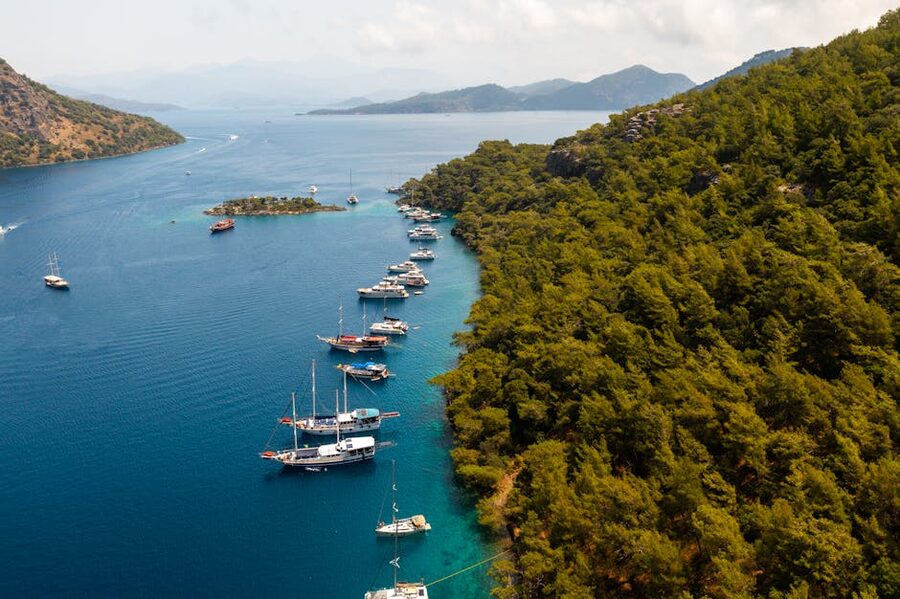
The Bodrum loop (Bodrum-Gökova-Bodrum, 7 nights): Bodrum > Çökertme > Sedir Island (Cleopatra Beach) > English Harbour > Cleopatra Island > Knidos > Datça > Bodrum. Mostly the Gulf of Gökova on the way out, the open Aegean on the way back. Fewer crowds, more swimming, less sightseeing.
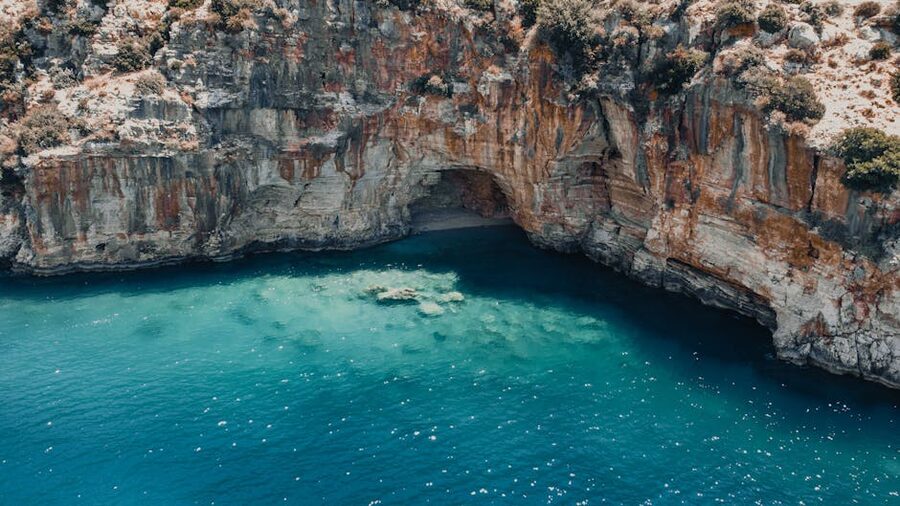
The eastern route (Göcek-Kekova, 7 nights): Göcek > Tersane Island (the 12 Islands) > Fethiye > Ölüdeniz/Butterfly Valley > Kaş > Kekova (the underwater ruins) > Kalkan > back. More variety: the Fethiye coast, the Lycian villages, and the underwater archaeology of Kekova all in one week. This is the route I’d send a first-timer on.
For a 10-night charter you can stitch the two together: Bodrum > Datça > Marmaris > then continue east along the Hisarönü to Göcek or Fethiye, with a one-way drop fee. Plan the route with the captain a few weeks out; weather and wind change the practical version of any plan.
How to actually book one
Two roads. First, a yacht broker who specialises in Turkish gulets and curates the fleet for you (try Goolets, Guletbookers, or Boatbookings; for the ultra-luxury end, Northrop & Johnson or Burgess). Second, the operator directly, which can save 10-15% but means you’re vetting the boat yourself from photos. For a first trip, take the broker. They’ve seen the kitchens and met the captains; you have not.
Book six to twelve months ahead for high season (July-August). For May-June and September-October you can sometimes find availability four months out; in shoulder season you’ll often get a discount on top of the better weather and emptier coves.
The land base alternative: Bodrum
If the boat is too much, or you want a hybrid (a few nights on land, a long weekend on a smaller charter), Bodrum is the luxury hub. The peninsula is its own ecosystem: Türkbükü, Yalıkavak, Göltürkbükü, all north-coast bays where the brand-name resorts cluster. Bodrum town itself is a different proposition (busier, louder, the Bodrum Castle is genuinely worth a morning), but the hotels you’d actually book are spread along the peninsula’s quieter inlets.
Mandarin Oriental Bodrum
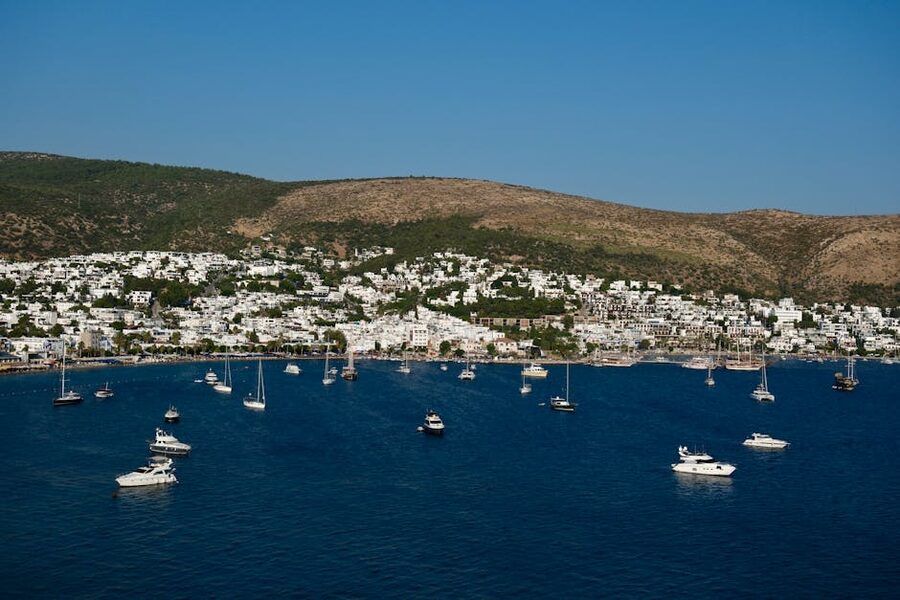
Set in the horseshoe-shaped Paradise Bay on the Bodrum peninsula’s north coast, the Mandarin Oriental remains the design and service benchmark on this coast. Two private beaches (one quiet, one with a beach club and music), a spa that runs the brand’s full signature treatment menu, a private harbour where guests’ yachts dock alongside the resort, and a staff-to-guest ratio that approaches one-to-one when the property is full. Five minutes by car to the village of Göltürkbükü, twenty minutes to Bodrum town, forty minutes from Milas-Bodrum airport. Pick this if you want the most polished service on the peninsula and don’t mind paying for it. Check rates on Booking.com.
Maxx Royal Bodrum
I do not write the words “all-inclusive” with enthusiasm often. The Maxx Royal Bodrum, which opened in May 2024 on the peninsula’s north coast, has earned them. 282 suites and villas across 28 hillside acres, six pools, eight restaurants (including a Wolfgang Puck Spago, a Caviar Kaspia outpost, and a Soho House-affiliated Scorpios beach club), a 21-room spa using Biologique Recherche and Santa Maria Novella, and a service standard that more than one industry friend has compared favourably to Aman’s. Doubles from around $957 a night when I last checked, which is a fair five-star price for an all-inclusive that delivers the food at that level. The villa category comes with butler service and private pools; the Laguna villas open onto a shared seawater lagoon. Fifty minutes from Milas-Bodrum. Book on Booking.com.
Six Senses Kaplankaya
An hour north of Bodrum proper, Six Senses Kaplankaya sits on a deeply secluded stretch of Aegean coast above the village of Akbük. 141 rooms and suites, every one with an ocean view, and what the brand has long claimed is the largest spa in any European hotel. The wellness programme is the centre of gravity here, not a side amenity. The trade-off is the location: you are not really in Bodrum, and getting to dinner in town is a drive. For a couple’s wellness week or a honeymoon that prioritises hiking, swimming, and a ten-day spa schedule over restaurant-hopping, it is one of the best on the coast. Worth knowing: in-resort food and drink prices are punishing (€9 for a Coke, €12 for a freshly squeezed orange juice). Check on Booking.com.
The Marmara Bodrum
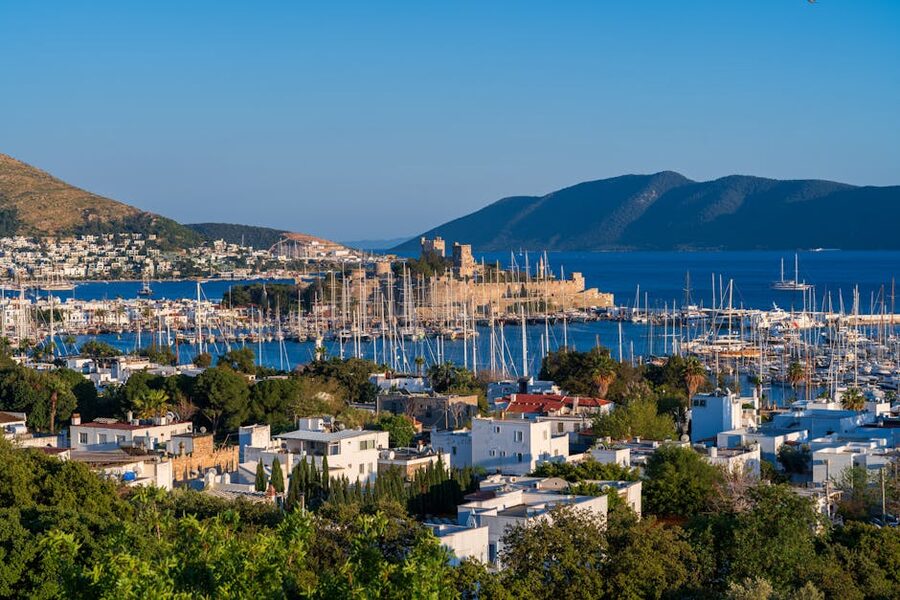
The design-led boutique alternative on the peninsula. White-painted, hilltop, with a pool that drops away over a panoramic view of Bodrum Bay. Smaller and quieter than the brand-name resorts, with a personality that the larger properties don’t have. Better for couples than families. Check on Booking.com.
D-Maris Bay
An hour south on the Datça peninsula (closer to Marmaris than to Bodrum), D-Maris Bay is the cult choice on this coastline among people who actually keep coming back. Five private natural beaches, 196 rooms, a Zuma outpost, a La Guérite from St. Barts, the Datça-side Nusr-Et, and a fleet that includes a private 100-foot gulet for guests. Speedboats shuttle you between the beaches; sun-loungers have a button to summon champagne. It is, as one regular put it to me, “the closest thing to Eden Roc you can find without paying Eden Roc prices.” If you want the resort experience and the gulet experience without choosing between them, this is it. Book on Booking.com.
The Antalya region resorts
East of the gulet coast, around the Bay of Antalya, the resort culture changes shape. The land flattens, the beaches get longer (the Belek and Lara coastlines run for kilometres of golden sand), and the all-inclusive sector dominates. Antalya itself is a real city with a real history (covered in our Turkey country guide); the resorts cluster east of the city in Belek and west in Kemer.
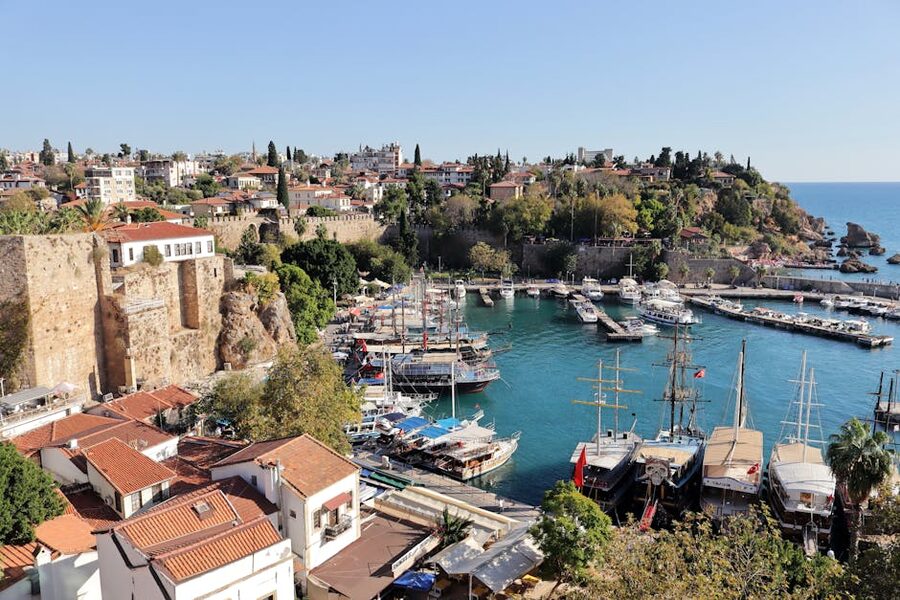
Maxx Royal Belek Golf Resort
The Belek sister property to the Bodrum opening, and the most-awarded all-inclusive in Turkey. 512 rooms, butler service via the resort’s own app, free helicopter transfers from Antalya airport for villa guests, a private chocolatier on site, and an adjoining Colin Montgomerie-signature golf course. Suites start at 80m². The all-inclusive tier covers top-shelf alcohol, all the restaurants (five à la carte, three of them complimentary), and round-the-clock dining. If you’re playing golf in Turkey, this is the address. If you’re not playing golf, the Bodrum sister is closer to the gulet coast and the better stay. Book on Booking.com.
Akra Antalya
City-edge rather than resort-strip. Akra sits on the cliffs at the western edge of Antalya, walking distance to Kaleiçi (the old walled town). 246 rooms, four pools, the rotating restaurant on the top floor that Antalya regulars all rib me about (it does, in fact, rotate), and a much shorter cab ride to the Antalya Archaeological Museum than from the Belek strip. Pick this if you want to see the city, not hide from it. Check on Booking.com.
The smaller towns worth knowing
This is where the in-the-know luxury crowd ends up. The brand-name resorts on the Bodrum peninsula are excellent and well-known. The towns below are the ones you stay in when you’ve done Bodrum twice and want a different version of the coast.
Kalkan
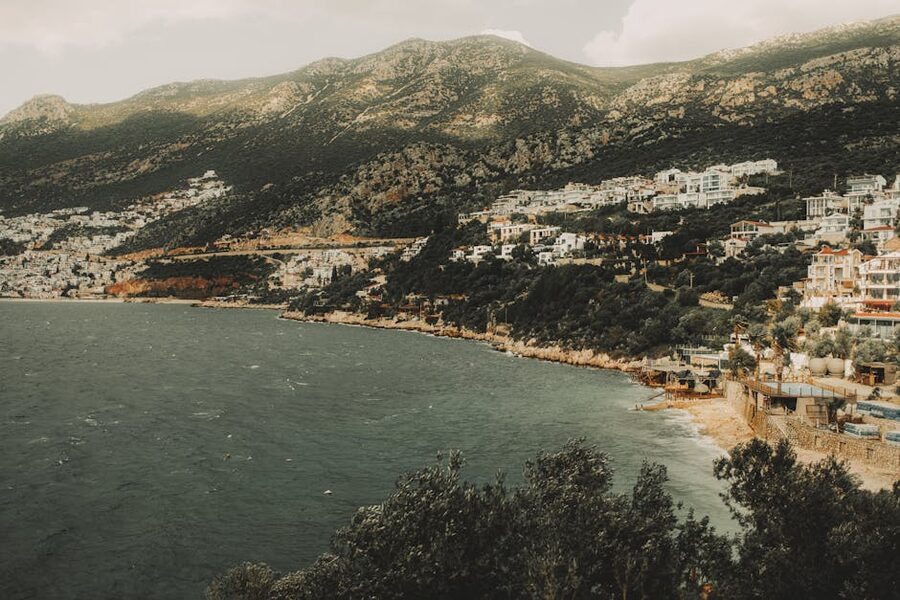
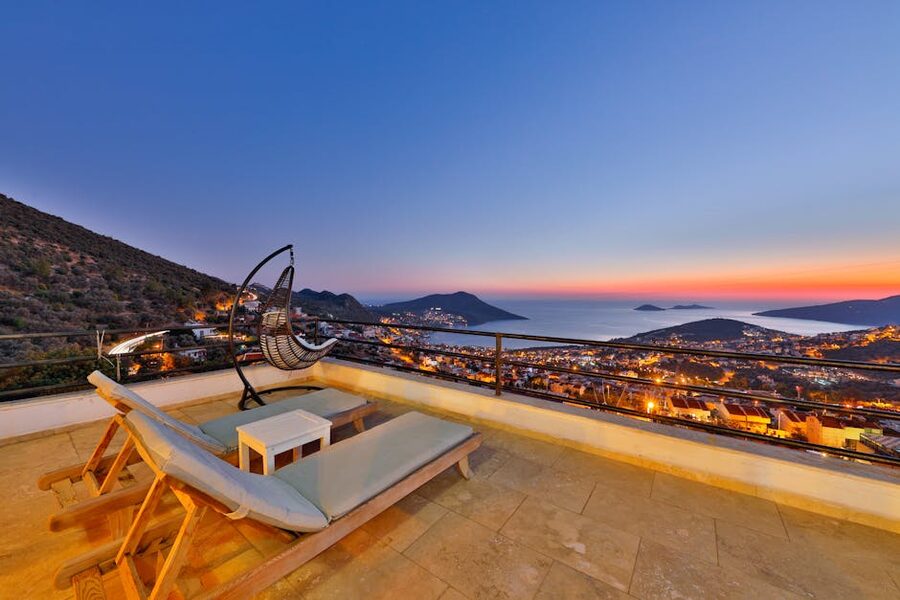
If you ask the people who actually return to this coast each summer where they go, an unreasonable percentage will say Kalkan. A small old town of whitewashed Greek-built houses cascading down a cliff to a tiny harbour; rooftop terrace restaurants stacked four-deep up the hillside; the islands of Kastellorizo and Meis visible across the strait. The villa rental market here is the most developed on the coast: cliff-edge properties with infinity pools, sea views, and walking access to dinner. For two couples or a family, a Kalkan villa for a week often beats a Bodrum hotel of the same budget. The town itself has the best restaurant density on this stretch of coast: try Aubergine on the harbour, Mussakka on the high street, and Korsan Meze for a long lunch.
Bodrum has the brand names. Kalkan has the views. If you’ve already done Bodrum, do Kalkan.
Kaş
Forty minutes east of Kalkan, Kaş is its slightly more boho neighbour. A more relaxed harbour town, a strong diving scene (the cold-water visibility around Kaş is among the best on the coast), and a small but excellent collection of boutique guesthouses rather than full-service hotels. The Lycian sarcophagus that sits on the main street, blocking traffic with two and a half thousand years of historical right-of-way, is a fair summary of the place. Day-trip to Kekova from here.
Olympos and Çıralı
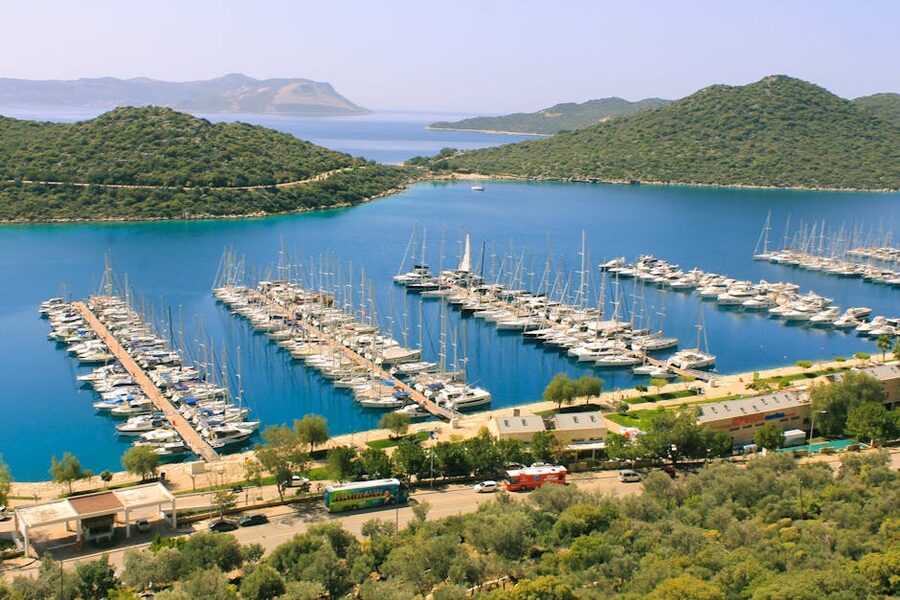
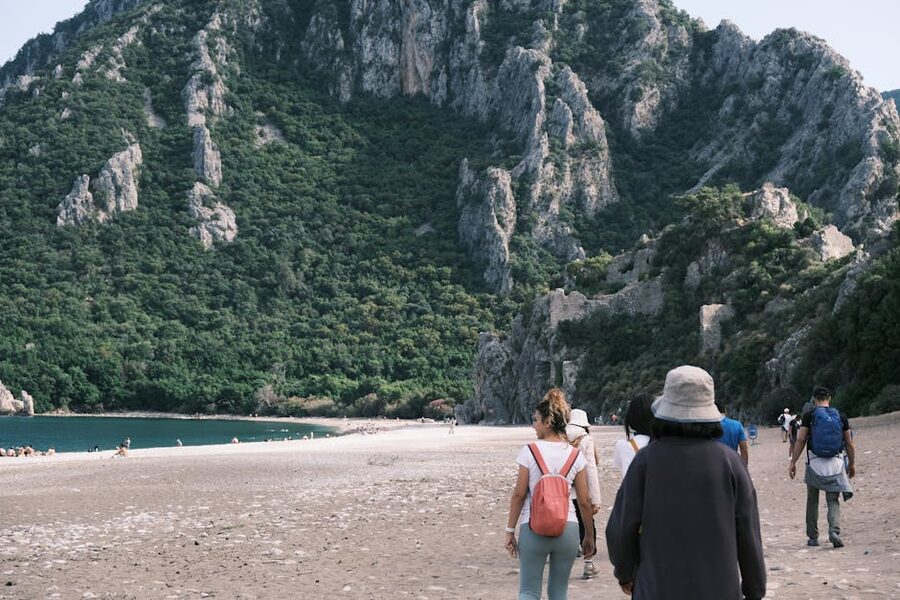
Two adjoining villages with two completely different personalities. Olympos is the long-running hippie-luxury overlap: Lycian ruins scattered through a forested valley that opens onto a long pebble beach. Stay at one of the higher-end tree-house compounds (Kadir’s is the legendary one, but the bar has risen and there are now several genuinely comfortable options). Çıralı, ten minutes’ walk along the same beach, is the quieter, more grown-up alternative: long sand, low-rise pensions, a strict no-development zoning rule that has kept the place visually intact. The Chimaera (the natural eternal flames in the rock face above the village, mentioned in Homer) is the local trick of geology you walk up to at dusk.
Göcek
I covered Göcek above as a gulet base. It also works as a land destination: a small, quiet harbour town with several genuinely good small hotels (try the D-Resort Göcek for the polished option), a row of restaurants along the marina that punch above their weight, and quick water-taxi access to the 12 Islands archipelago for day trips. If you want a quiet seaside week without booking a full charter, Göcek is the answer.
The historical layer
This part of Turkey is sown with ruins. The coast between Fethiye and Antalya was the heartland of Lycia, a federation of city-states that was old when the Romans showed up and that produced one of the first known democratic constitutions. The Lycians carved their tombs into cliff faces and stacked their sarcophagi on hillsides; you’ll see them everywhere from the side of the road. A few sites are non-negotiable.
Myra (modern Demre)
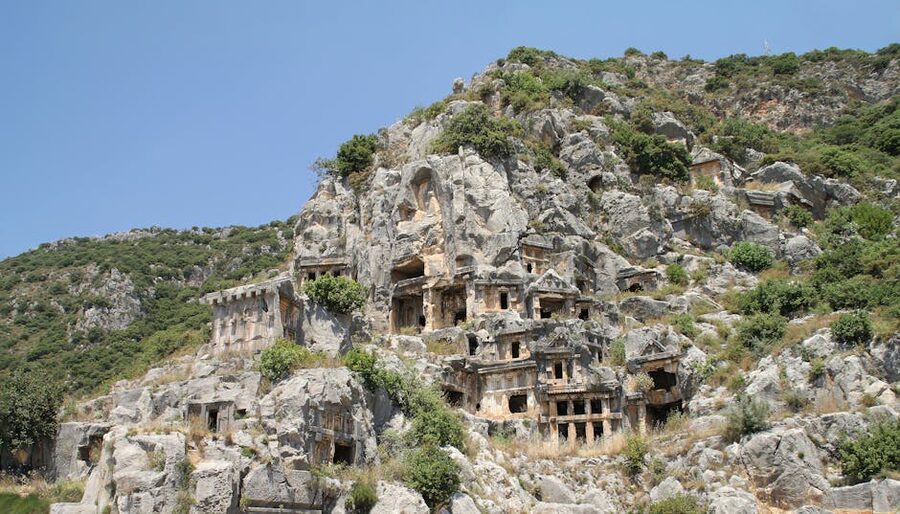
The most concentrated set of Lycian rock-cut tombs anywhere, carved straight into the cliff face above what was once a Lycian and then a Roman port. Combined with the largest Roman theatre in Lycia at the foot of the cliff, plus the Byzantine basilica of St. Nicholas (yes, that St. Nicholas; he was bishop of Myra in the 4th century before becoming Father Christmas) ten minutes away. Allow a half day with a guide. Reachable as a day trip from Kaş, Kalkan, or as a dedicated stop on a Göcek-Kekova gulet route.
Patara
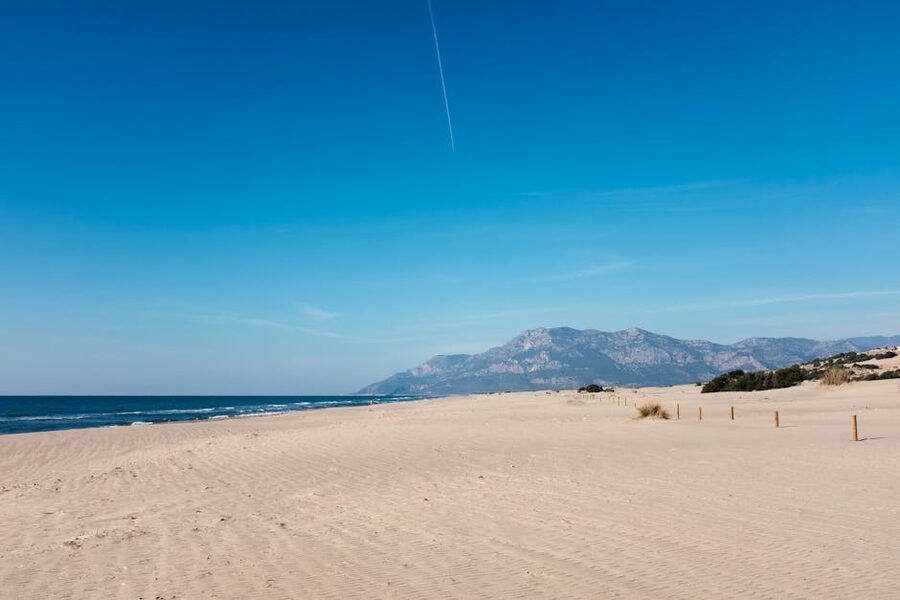
An eighteen-kilometre uninterrupted beach (the longest in the eastern Mediterranean) with the ruins of a Roman port city sitting just behind the dune. Patara was a major Lycian harbour, the seat of the federal council, the place St. Paul changed ships on his way to Rome, and the birthplace of St. Nicholas before he relocated up the road to Myra. The beach itself is protected as a sea turtle nesting ground and closes at sunset in summer. Combine with the Letoön sanctuary and hilltop Xanthos (both UNESCO-listed) on the same drive. The whole circuit makes a strong day trip from Kalkan.
Kekova
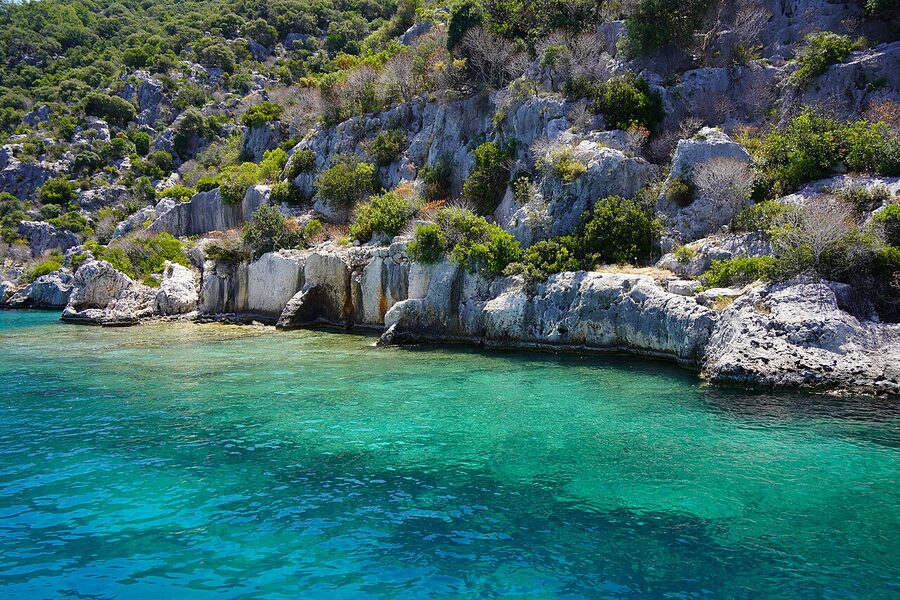
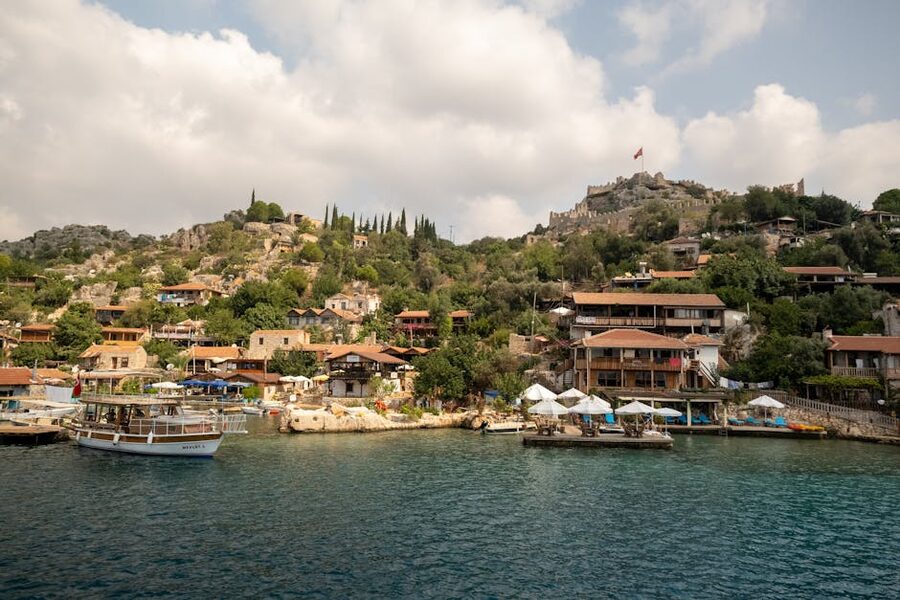
An entire Lycian-Byzantine settlement, dropped into the bay by an earthquake in the 2nd century, and visible from the surface in clear water. You see foundation walls, ancient staircases descending into the sea, the outlines of houses. Swimming directly above the ruins is forbidden (UNESCO protection), but glass-bottom boats and small charters take you over the visible sections. The ruins continue above water on Kekova Island and at Kaleköy (also called Simena) opposite, where a Crusader-era castle, built on Lycian foundations by the Knights Hospitaller, sits above a tiny harbour village reachable only by boat. This is the single most atmospheric stop on the eastern coast. Day-trip from Kaş; or, better, sleep on a gulet in the bay so you wake up there.
Aspendos
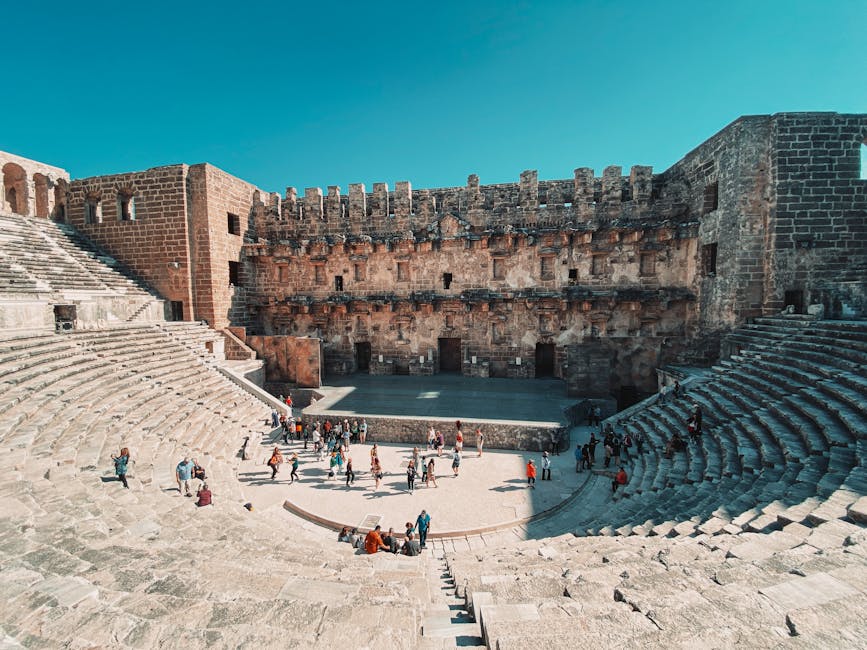
The best-preserved Roman theatre in the Mediterranean, an hour east of Antalya and the only one of these sites that requires a real detour from the coast. Built around 155 AD, still acoustically perfect, and still in use as a venue (the annual Aspendos International Opera and Ballet Festival runs from June through September; tickets are not expensive by Western standards and the experience of opera in a Roman theatre is one of the genuine reasons to plan a trip around a date). Worth a day trip from Antalya or a stop on a Belek-region resort week.
When to go
May through October is the season; the rest of the year a few towns turn off the lights and most boats go into winter storage. Inside the season the rhythm is real and the difference between months is large.
May and early June. The water is warm enough to swim, the air is in the high twenties, the wildflowers are still out on the hillsides, and the high-season prices haven’t kicked in. This is the month I’d send a first-timer. Some of the very smallest pensions don’t open until late May; the major hotels and the gulet fleet are all running by then.
July and August. The peak. Temperatures in the mid-thirties, harbours full, and the prices accordingly. Avoid if you can; if you can’t, book six to twelve months ahead and pay the going rate. The compensation is the long evenings and the social density of the marinas.
September and early October. The other window. Sea temperatures are at their warmest of the year (the Mediterranean takes a while to heat through), the crowds thin out after the European school holidays end, and the gulet brokers will sometimes negotiate. This is the month I’d send a returning visitor.
Late October through April: not the season. A handful of city hotels in Antalya and Bodrum stay open and you can do the ruins in winter sunshine, but the coast has gone quiet.
The Mediterranean comparison
This is the structural argument for the Turquoise Coast and the reason I keep sending people here. For the same week, at the same standard of accommodation and food and on the same kind of coastline, Turkey runs 30 to 50% cheaper than the Côte d’Azur, the Amalfi Coast, the Greek islands, or Croatia.
The exchange rate is part of it (the Turkish lira lost most of its value against the dollar and euro between 2020 and 2024, and the country is now structurally cheap for foreign-currency travellers). Most of it is supply: Turkey has more coastline, more bays, more luxury hotels, and far more boats than its competitors per kilometre. The gulet itself has no equivalent product anywhere else. The Croatian sailing scene is excellent and I love it (read our Croatia luxury guide for the comparison), but there is nothing in the Adriatic that does what a gulet does. Italian sailing is lovely and three times the price. The Greek islands have the brand recognition; Turkey has the better-priced version of the same sea.
If you’ve been to all of the above and you’d never quite considered Turkey because you assumed it was the budget option, that is exactly the assumption to revisit. The luxury Turkey product is the best value in the Mediterranean by a comfortable margin.
Standard itineraries
Three structures cover most luxury trips to this coast. Pick the one that matches your time and budget.
The 7-night gulet week
The classic. Fly into Dalaman, transfer 30 minutes to Göcek, board the boat the same afternoon. Six nights at sea (the route detailed above), arrive back in Göcek on the seventh morning, fly home or transfer to Kalkan for two added land nights. Best for groups of six to twelve who want one collective experience and don’t want to think about logistics for a week.
The 10-night land combination
Three nights Bodrum (Mandarin Oriental or Maxx Royal), three nights Kalkan (in a villa), three nights Antalya region (Akra in the city or Maxx Royal Belek for golf), one night for transfers. A wide cross-section of the coast for a couple or family who would rather sleep in the same bed for three nights at a time.
The 14-night classic Turkey trip
The most-requested structure I write itineraries for. Five nights Istanbul (covered in our Istanbul travel guide), three nights Cappadocia, six nights gulet from Göcek to Kekova. You’ll have done the city, the geology, and the coast; you’ll come home with the only gap being the eastern Anatolia trip we keep telling you to save for the second visit. This is the one I’d write for a first trip to Turkey by anyone who can afford the time.
Practical notes
A few specifics worth knowing before you book.
Airports. Three serve the coast: Milas-Bodrum (BJV) for Bodrum and the western peninsula, Dalaman (DLM) for Göcek-Fethiye-Kalkan-Kaş, and Antalya (AYT) for the eastern resorts and the Lycian east. All three have direct seasonal flights from major European hubs in summer; out of season you’ll route via Istanbul.
Currency. The Turkish lira moves daily and not in a friendly direction for Turks; carry cards rather than cash, and pay in lira at restaurants (you’ll be quoted in euros at some tourist-facing places, and the conversion is rarely in your favour). Most luxury hotels publish rates in euros now and that’s the currency to budget in.
Ground transport. Hire a driver rather than self-driving for the longer transfers (Dalaman to Kaş is three hours of mountain road; lovely, but you don’t want to be tired on it). A private driver costs roughly €150-€250 a day with car. The coast road is excellent; the inland mountain roads are slower and more interesting.
Visas. Most Western passport-holders enter Turkey visa-free for up to 90 days. Check the latest before you fly; the rules have changed several times in the last decade.
Tipping on a gulet. The convention is 5-10% of the charter price for the crew, paid to the captain in cash on the last day. For a €30,000 boat, that’s €1,500-€3,000. Build it into the budget; it makes a real difference to the people who’ve cooked your meals and made your beds for a week.
The short version
The gulet is the trip the Turquoise Coast was built for. Everything else is the second-best option. If the boat is genuinely too much for the group, base in Kalkan; if you need a resort, the Mandarin Oriental and the Maxx Royal Bodrum are the two that earn the prices. Go in May or September. Stay long enough to do at least one of the gulet routes and one of the Lycian sites. Come back the next year and try the other half of the coast.
For the wider Turkey trip, this guide pairs with the Istanbul and Cradle of Cultures articles in the same arc; for the closest Mediterranean comparison, our Croatia guide covers the only other yachting culture that comes close. The full library lives at our Destinations page.